Kirjojen hintavertailu. Mukana 12 390 323 kirjaa ja 12 kauppaa.

Kirjahaku

Etsi kirjoja tekijän nimen, kirjan nimen tai ISBN:n perusteella.

4 kirjaa tekijältä Daniel S. Levine

Healing the Reason-Emotion Split

Healing the Reason-Emotion Split

Daniel S. Levine

Routledge
2020
nidottu
Healing the Reason-Emotion Split draws on research from experimental psychology and neuroscience to dispel the myth that reason should be heralded above emotion.Arguing that reason and emotion mutually benefit our decision-making abilities, the book explores the idea that understanding this relationship could have long-term advantages for our management of society’s biggest problems. Levine reviews how reason and emotion operated in historical movements such as the Enlightenment, Romanticism and 1960s' counterculture, to conclude that a successful society would restore human connection and foster compassion in economics and politics by equally utilizing reason and emotion.Integrating discussion on classic and contemporary neurological studies and using allegory, the book lays out the potential for societal change through compassion, and would be of interest to psychologists concerned with social implications of their fields, philosophy students, social activists, and religious leaders.The Open Access version of this book, available at http://www.taylorfrancis.com, has been made available under a Creative Commons Attribution-Non Commercial (CC-BY-NC) 4.0 license.

Healing the Reason-Emotion Split

Healing the Reason-Emotion Split

Daniel S. Levine

Routledge
2020
sidottu
Healing the Reason-Emotion Split draws on research from experimental psychology and neuroscience to dispel the myth that reason should be heralded above emotion.Arguing that reason and emotion mutually benefit our decision-making abilities, the book explores the idea that understanding this relationship could have long-term advantages for our management of society’s biggest problems. Levine reviews how reason and emotion operated in historical movements such as the Enlightenment, Romanticism and 1960s' counterculture, to conclude that a successful society would restore human connection and foster compassion in economics and politics by equally utilizing reason and emotion.Integrating discussion on classic and contemporary neurological studies and using allegory, the book lays out the potential for societal change through compassion, and would be of interest to psychologists concerned with social implications of their fields, philosophy students, social activists, and religious leaders.The Open Access version of this book, available at http://www.taylorfrancis.com, has been made available under a Creative Commons Attribution-Non Commercial (CC-BY-NC) 4.0 license.

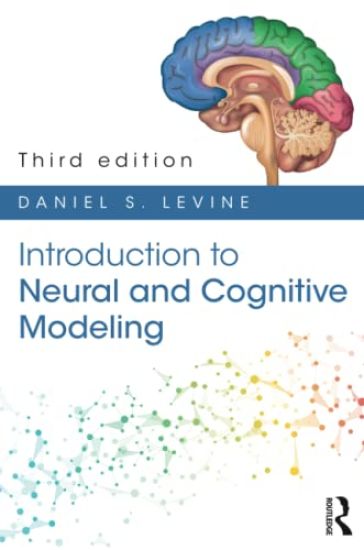
Introduction to Neural and Cognitive Modeling
This textbook provides a general introduction to the field of neural networks. Thoroughly revised and updated from the previous editions of 1991 and 2000, the current edition concentrates on networks for modeling brain processes involved in cognitive and behavioral functions. Part one explores the philosophy of modeling and the field’s history starting from the mid-1940s, and then discusses past models of associative learning and of short-term memory that provide building blocks for more complex recent models. Part two of the book reviews recent experimental findings in cognitive neuroscience and discusses models of conditioning, categorization, category learning, vision, visual attention, sequence learning, behavioral control, decision making, reasoning, and creativity. The book presents these models both as abstract ideas and through examples and concrete data for specific brain regions. The book includes two appendices to help ground the reader: one reviewing the mathematics used in network modeling, and a second reviewing basic neuroscience at both the neuron and brain region level. The book also includes equations, practice exercises, and thought experiments.
Introduction to Neural and Cognitive Modeling
This textbook provides a general introduction to the field of neural networks. Thoroughly revised and updated from the previous editions of 1991 and 2000, the current edition concentrates on networks for modeling brain processes involved in cognitive and behavioral functions. Part one explores the philosophy of modeling and the field’s history starting from the mid-1940s, and then discusses past models of associative learning and of short-term memory that provide building blocks for more complex recent models. Part two of the book reviews recent experimental findings in cognitive neuroscience and discusses models of conditioning, categorization, category learning, vision, visual attention, sequence learning, behavioral control, decision making, reasoning, and creativity. The book presents these models both as abstract ideas and through examples and concrete data for specific brain regions. The book includes two appendices to help ground the reader: one reviewing the mathematics used in network modeling, and a second reviewing basic neuroscience at both the neuron and brain region level. The book also includes equations, practice exercises, and thought experiments.