Kirjojen hintavertailu. Mukana 11 637 091 kirjaa ja 12 kauppaa.

Kirjahaku

Etsi kirjoja tekijän nimen, kirjan nimen tai ISBN:n perusteella.

6 kirjaa tekijältä Daniel Schwartz

Aquinas on Friendship

Aquinas on Friendship

Daniel Schwartz

Clarendon Press
2007
sidottu
Daniel Schwartz examines the views on friendship of the great medieval philosopher Thomas Aquinas. For Aquinas friendship is the ideal type of relationship that rational beings should cultivate. Schwartz argues that Aquinas fundamentally revises some of the main features of Aristotle's paradigmatic account of friendship so as to accommodate the case of friendship between radically unequal beings: man and God. As a result, Aquinas presents a broader view of friendship than Aristotle's, allowing for a higher extent of disagreement. lack of mutual understanding, and inequality between friends.
Aquinas on Friendship

Aquinas on Friendship

Daniel Schwartz

Oxford University Press
2012
nidottu
Daniel Schwartz examines the views on friendship of the great medieval philosopher Thomas Aquinas. For Aquinas friendship is the ideal type of relationship that rational beings should cultivate. Schwartz argues that Aquinas fundamentally revises some of the main features of Aristotle's paradigmatic account of friendship so as to accommodate the case of friendship between radically unequal beings: man and God. As a result, Aquinas presents a broader view of friendship than Aristotle's, allowing for a higher extent of disagreement. lack of mutual understanding, and inequality between friends.
Tracings

Tracings

Daniel Schwartz

THAMES HUDSON LTD
2023
sidottu
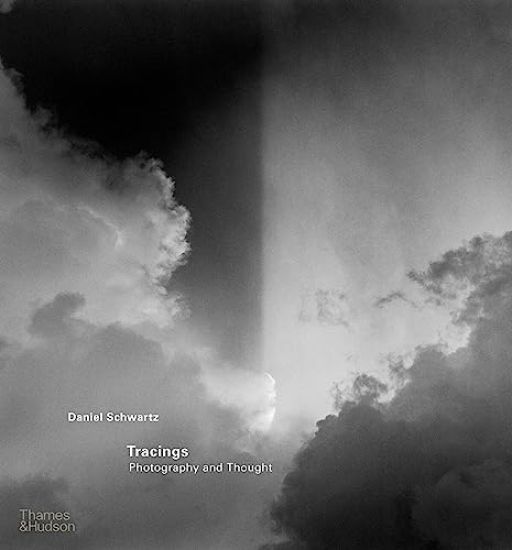
The first longterm appraisal of the photography of Daniel Schwartz. Daniel Schwartz's photographs explore human activities set against an immense range of political geography and cultural history, touching on such monumental themes as imperial warfare, ancient history, environmental collapse and the vanishing cryosphere. Tracings reveals a body of work that is humanistically motivated and anchored in reality, blurring the divide between photojournalism and art. Positioning Schwartz’s work to date in the wider history of the medium, Tracings draws together themes tackled in five monographs concerned with cultural history, political geography and the environment published by Thames & Hudson between 1986 and 2017. Essays by Beat Wismer, Giovanna Calvenzi and Carolin Emcke examine the ways Schwartz’s documentary photography intersects with the arts; look at photographic affinities and methods in Schwartz’s work, analysing the narrative of his previous books; and study Schwartz’s depiction of the individual at work, and how photographs of human activities are interwoven with photographs of nature. Tracings is not so much a retrospective as a project tracing and continuing an evolutionary line through all Schwartz’s projects to date.
The Political Morality of the Late Scholastics

The Political Morality of the Late Scholastics

Daniel Schwartz

Cambridge University Press
2019
sidottu
The Late Scholastics, writing in Europe in the Baroque and Early Modern periods, discussed a wide variety of moral questions relating to political life in times of both peace and war. Is it ever permissible to bribe voters? Can tax evasion be morally justified? What are the moral duties of artists? Is it acceptable to fight in a war one believes to be unjust? May we surrender innocents to the enemy if it is necessary to save the state? These questions are no less relevant for philosophers and politicians today than they were for late scholastic thinkers. By bringing into play the opinions and arguments of numerous authors, many of them little known or entirely forgotten, this book is the first to provide an in-depth treatment of the dynamic and controversial nature of late scholastic applied moral thinking which demonstrates its richness and diversity.
The Political Morality of the Late Scholastics

The Political Morality of the Late Scholastics

Daniel Schwartz

Cambridge University Press
2021
pokkari
The Late Scholastics, writing in Europe in the Baroque and Early Modern periods, discussed a wide variety of moral questions relating to political life in times of both peace and war. Is it ever permissible to bribe voters? Can tax evasion be morally justified? What are the moral duties of artists? Is it acceptable to fight in a war one believes to be unjust? May we surrender innocents to the enemy if it is necessary to save the state? These questions are no less relevant for philosophers and politicians today than they were for late scholastic thinkers. By bringing into play the opinions and arguments of numerous authors, many of them little known or entirely forgotten, this book is the first to provide an in-depth treatment of the dynamic and controversial nature of late scholastic applied moral thinking which demonstrates its richness and diversity.
Der Subjektive Tatbestand Der Vorsatzanfechtung Nach § 133 Inso
Der Kern der Vorsatzanfechtung nach 133 InsO besteht in den subjektiven Tatbestandsmerkmalen des Glaubigerbenachteiligungsvorsatzes des Schuldners und der Kenntnis des Anfechtungsgegners. Die Schwierigkeiten bei der Anwendung der Vorsatzanfechtung bestehen dabei weniger in den materiell-rechtlichen Anforderungen an diese Merkmale, als in der beweiskraftigen Feststellung der inneren Tatsachen in einem Anfechtungsprozess. Die Rechtsprechung und das Schrifttum haben bereits einige Beweis- und Gegenanzeichen entwickelt, die im Rahmen der Beweisfuhrung einen Ruckschluss auf die innere Einstellung des Schuldners und des Anfechtungsgegners zulassen. Das Ziel dieser Arbeit besteht darin, die dogmatischen Grundlagen der Vorsatzanfechtung herauszuarbeiten und auf dieser Basis eine Analyse der gegenwartig vertretenen Ansichten durchzufuhren. Schliesslich werden kunftige Entwicklungsmoeglichkeiten der Vorsatzanfechtung dargestellt.