Kirjojen hintavertailu. Mukana 11 635 937 kirjaa ja 12 kauppaa.

Kirjahaku

Etsi kirjoja tekijän nimen, kirjan nimen tai ISBN:n perusteella.

7 kirjaa tekijältä Daniel W. Drezner

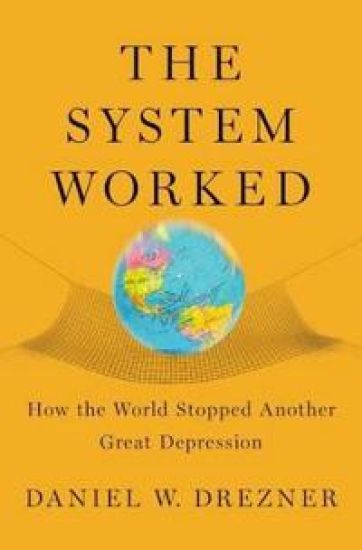
The System Worked

The System Worked

Daniel W. Drezner

Oxford University Press Inc
2016
nidottu
International institutions, from the International Monetary Fund to the International Olympic Committee, are perceived as bastions of sclerotic mediocrity at best and outright corruption at worst, and this perception is generally not far off the mark. In the wake of the 2008 financial crash, Daniel W. Drezner, like so many others, looked at the smoking ruins of the global economy and wondered why global economic governance structure had failed so spectacularly, and what could be done to reform them in the future. But then a funny thing happened. As he surveyed their actions in the wake of the crash, he realized that the evidence pointed to the exact opposite conclusion: global economic governance had succeeded. In The System Worked, Drezner, a renowned political scientist and international relations expert, contends that despite the massive scale and reverberations of this latest crisis (larger, arguably, than those that precipitated the Great Depression), the global economy has bounced back remarkably well. Examining the major resuscitation efforts by the G-20 IMF, WTO, and other institutions, he shows that, thanks to the efforts of central bankers and other policymakers, the international response was sufficiently coordinated to prevent the crisis from becoming a full-fledged depression. Yet the narrative about the failure of multilateral economic institutions persists, both because the Great Recession affected powerful nations whose governments managed their own economies poorly, and because the most influential policy analysts who write the books and articles on the crisis hail from those nations. Nevertheless, Drezner argues, while it's true that the global economy is still fragile, these institutions survived the "stress test" of the financial crisis, and may have even become more resilient and valuable in the process. Bucking the conventional wisdom about the new "G-Zero World," Drezner rehabilitates the image of the much-maligned international institutions and demolishes some of the most dangerous myths about the financial crisis. The System Worked is a vital contribution to our understanding of an area where the stakes could not be higher.
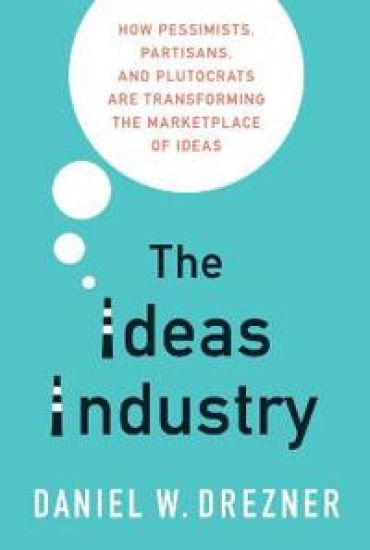
The Ideas Industry

The Ideas Industry

Daniel W. Drezner

Oxford University Press Inc
2019
nidottu
The public intellectual, as a person and ideal, has a long and storied history. Writing in venues like the New Republic and Commentary, such intellectuals were always expected to opine on a broad array of topics, from foreign policy to literature to economics. Yet in recent years a new kind of thinker has supplanted that archetype: the thought leader. Equipped with one big idea, thought leaders focus their energies on TED talks rather than highbrow periodicals. How did this shift happen? In The Ideas Industry, Daniel W. Drezner points to the roles of political polarization, heightened inequality, and eroding trust in authority as ushering in the change. In contrast to public intellectuals, thought leaders gain fame as single-idea merchants. Their ideas are often laudable and highly ambitious: ending global poverty by 2025, for example. But instead of a class composed of university professors and freelance intellectuals debating in highbrow magazines, thought leaders often work through institutions that are closed to the public. They are more immune to criticism--and in this century, the criticism of public intellectuals also counts for less. Three equally important factors that have reshaped the world of ideas have been waning trust in expertise, increasing political polarization and plutocracy. The erosion of trust has lowered the barriers to entry in the marketplace of ideas. Thought leaders don't need doctorates or fellowships to advance their arguments. Polarization is hardly a new phenomenon in the world of ideas, but in contrast to their predecessors, today's intellectuals are more likely to enjoy the support of ideologically friendly private funders and be housed in ideologically-driven think tanks. Increasing inequality as a key driver of this shift: more than ever before, contemporary plutocrats fund intellectuals and idea factories that generate arguments that align with their own. But, while there are certainly some downsides to the contemporary ideas industry, Drezner argues that it is very good at broadcasting ideas widely and reaching large audiences of people hungry for new thinking. Both fair-minded and trenchant, The Ideas Industry will reshape our understanding of contemporary public intellectual life in America and the West.
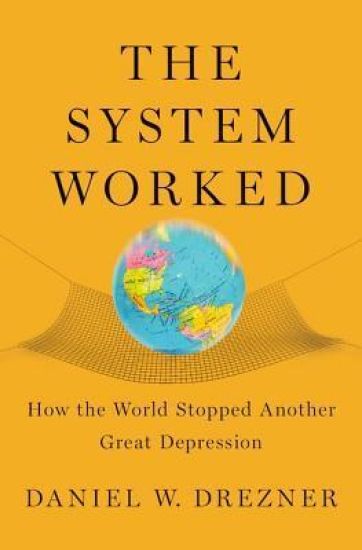
The System Worked

The System Worked

Daniel W. Drezner

Oxford University Press Inc
2014
sidottu
Global governance institutions, from the International Monetary Fund to the International Olympic Committee, are little loved. They are perceived as bastions of sclerotic mediocrity at best and outright corruption at worst, and this perception is generally not far off the mark. In the wake of the 2008 financial crash, Daniel W. Drezner, like so many others, looked at the smoking ruins of the global economy and wondered why global economic governance institutional had failed so spectacularly, and what could be done to reform them in the future. But then a funny thing happened. As he surveyed their actions in the wake of the crash, he realized that the evidence pointed to the exact opposite conclusion: global economic governance had succeeded. In The System Worked, Drezner, a renowned political scientist and international relations expert, contends that despite the massive scale and reverberations of this latest crisis (larger, arguably, than those that precipitated the Great Depression), the global economy has bounced back remarkably well. Examining the major resuscitation efforts by the G-20 IMF, WTO and other institutions, he shows that, thanks to the efforts of central bankers and other policymakers, the international response was sufficiently coordinated to prevent the crisis from becoming a full-fledged depression. Yet the narrative about the failure of multilateral economic institutions persist, largely because the Great Recession most affected powerful nations whose governments made poor decisions in the management of their own economies. Also, the most influential policy analysts who write the books and articles on the crisis hail from those nations. Nevertheless, Drezner argues, while it's true that the global economy is still fragile, these institutions survived the "stress test" of the financial crisis, and may have even become more resilient and valuable in the process. Bucking the conventional wisdom about the new "G-Zero World," Drezner rehabilitates the image of the much-maligned global economic governance institutions and demolishes some of the most dangerous myths about the financial crisis. The System Worked is a vital contribution to our understanding of an area where the stakes could not be higher.
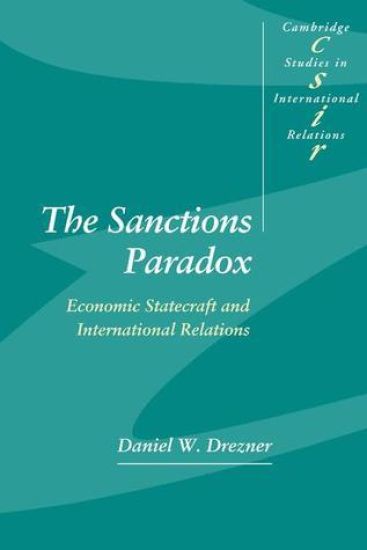
The Sanctions Paradox

The Sanctions Paradox

Daniel W. Drezner

Cambridge University Press
1999
sidottu
Despite their increasing importance, there is little theoretical understanding of why nation-states initiate economic sanctions, or what determines their success. This 1999 book argues that both imposers and targets of economic coercion incorporate expectations of future conflict as well as the short-run opportunity costs of coercion into their behaviour. Drezner argues that conflict expectations have a paradoxical effect. Adversaries will impose sanctions frequently, but rarely secure concessions. Allies will be reluctant to use coercion, but once sanctions are used, they can result in significant concessions. Ironically, the most favourable distribution of payoffs is likely to result when the imposer cares the least about its reputation or the distribution of gains. The book's argument is pursued using game theory and statistical analysis, and detailed case studies of Russia's relations with newly-independent states, and US efforts to halt nuclear proliferation on the Korean peninsula.
The Sanctions Paradox

The Sanctions Paradox

Daniel W. Drezner

Cambridge University Press
1999
pokkari
Despite their increasing importance, there is little theoretical understanding of why nation-states initiate economic sanctions, or what determines their success. This book argues that both imposers and targets of economic coercion incorporate expectations of future conflict as well as the short-run opportunity costs of coercion into their behaviour. Drezner argues that conflict expectations have a paradoxical effect. Adversaries will impose sanctions frequently, but rarely secure concessions. Allies will be reluctant to use coercion, but once sanctions are used, they can result in significant concessions. Ironically, the most favourable distribution of payoffs is likely to result when the imposer cares the least about its reputation or the distribution of gains. The book’s argument is pursued using game theory and statistical analysis, and detailed case studies of Russia’s relations with newly-independent states, and US efforts to halt nuclear proliferation on the Korean peninsula.
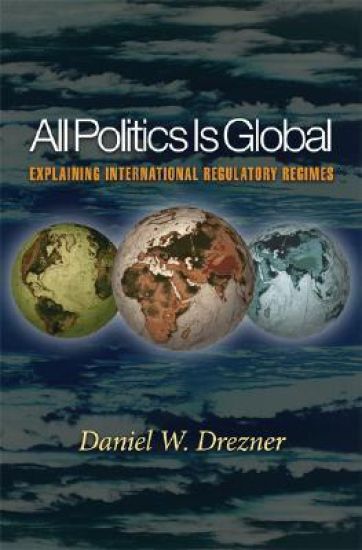
All Politics Is Global

All Politics Is Global

Daniel W. Drezner

Princeton University Press
2008
pokkari
Has globalization diluted the power of national governments to regulate their own economies? Are international governmental and nongovernmental organizations weakening the hold of nation-states on global regulatory agendas? Many observers think so. But in All Politics Is Global, Daniel Drezner argues that this view is wrong. Despite globalization, states--especially the great powers--still dominate international regulatory regimes, and the regulatory goals of states are driven by their domestic interests. As Drezner shows, state size still matters. The great powers--the United States and the European Union--remain the key players in writing global regulations, and their power is due to the size of their internal economic markets. If they agree, there will be effective global governance. If they don't agree, governance will be fragmented or ineffective. And, paradoxically, the most powerful sources of great-power preferences are the least globalized elements of their economies. Testing this revisionist model of global regulatory governance on an unusually wide variety of cases, including the Internet, finance, genetically modified organisms, and intellectual property rights, Drezner shows why there is such disparity in the strength of international regulations.
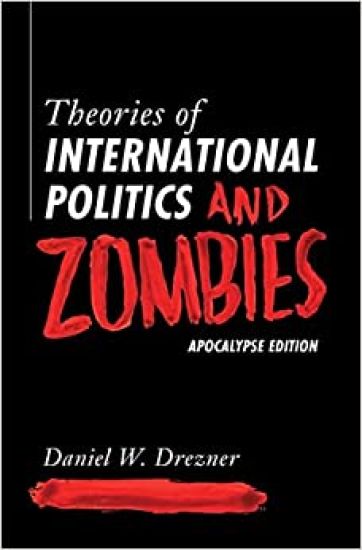
Theories of International Politics and Zombies

Theories of International Politics and Zombies

Daniel W. Drezner

PRINCETON UNIVERSITY PRESS
2022
pokkari
How international relations theory can be applied to a zombie invasionWhat would happen to international politics if the dead rose from the grave and started to eat the living? Daniel Drezner’s groundbreaking book answers the question that other international relations scholars have been too scared to ask. Addressing timely issues with analytical bite, Drezner looks at how well-known theories from international relations might be applied to a war with zombies. Exploring the plots of popular zombie films, songs, and books, Theories of International Politics and Zombies predicts realistic scenarios for the political stage in the face of a zombie threat and considers how valid—or how rotten—such scenarios might be.With worldwide calamity feeling ever closer, this new apocalyptic edition includes updates throughout as well as a new chapter on postcolonial perspectives.