Kirjojen hintavertailu. Mukana 11 518 949 kirjaa ja 12 kauppaa.

Kirjahaku

Etsi kirjoja tekijän nimen, kirjan nimen tai ISBN:n perusteella.

6 kirjaa tekijältä Daniela Koleva

Ageing, Ritual and Social Change

Ageing, Ritual and Social Change

Daniela Koleva

Ashgate Publishing Limited
2013
sidottu
Exploring European changes in religious and secular beliefs and practices related to life passages, this book provides a deeper understanding of the impacts of social change on personal identity and adjustment across the life course, According to latest research, Europeans who consider religious services appropriate to mark life passages significantly outnumber those who declare themselves as believers. Drawing on fascinating oral histories of older people's memories in both Eastern and Western Europe, this book presents illuminating views on peoples' quests for existential meaning in later life. Ageing, Ritual and Social Change presents an invaluable resource for all those exploring issues of ageing, including those looking from perspectives of sociology and psychology of religion, social and oral history and East-Central European studies.
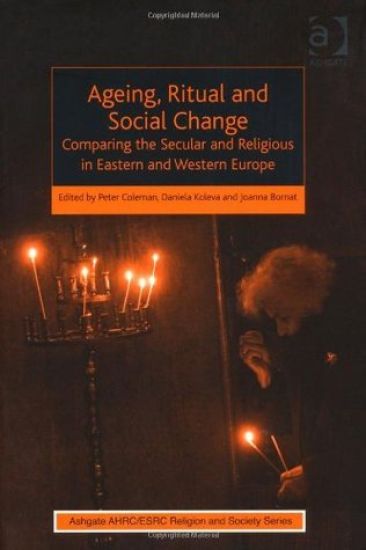
Ageing, Ritual and Social Change

Ageing, Ritual and Social Change

Daniela Koleva

Ashgate Publishing Limited
2013
nidottu
Exploring European changes in religious and secular beliefs and practices related to life passages, this book provides a deeper understanding of the impacts of social change on personal identity and adjustment across the life course, According to latest research, Europeans who consider religious services appropriate to mark life passages significantly outnumber those who declare themselves as believers. Drawing on fascinating oral histories of older people's memories in both Eastern and Western Europe, this book presents illuminating views on peoples' quests for existential meaning in later life. Ageing, Ritual and Social Change presents an invaluable resource for all those exploring issues of ageing, including those looking from perspectives of sociology and psychology of religion, social and oral history and East-Central European studies.
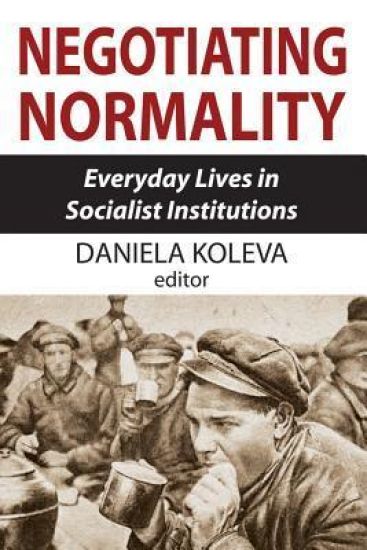
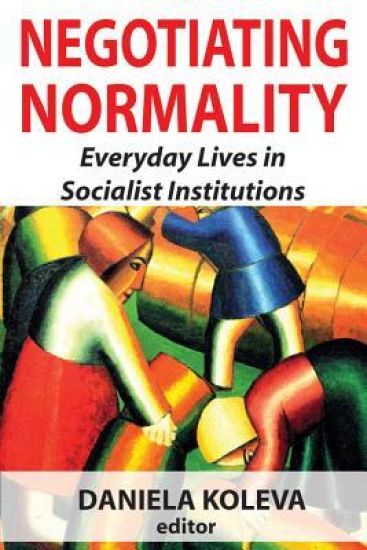
Negotiating Normality

Negotiating Normality

Daniela Koleva

AldineTransaction
2012
sidottu
This book is about state socialism, not as a political system, but as an "ecosystem" of interactions between the state and the citizens it sought to control. It includes case studies that demonstrate how the major ideological principles of socialism translated into motives guiding people's lives.This unique post-revisionist study focuses on people's lives and experiences rather than political systems. The studies are grouped around three common elements—socialist labor, the new socialist man, and the socialist way of life. Using first-hand accounts, the authors find minute deviations from the norms that eventually lead to renegotiation of the norms themselves. Focusing on routines, not extremes, they present socialism in its "normal" state.The volume demonstrates different national strategies for dealing with the past in the post-socialist world. Studies of the socialist past may strive to be objective, but their messages tend to be complex. Rather than arriving at one truth about the nature of socialism, this volume explores the many ways people have survived the system.
Negotiating Normality

Negotiating Normality

Daniela Koleva

AldineTransaction
2015
nidottu
This book is about state socialism, not as a political system, but as an "ecosystem" of interactions between the state and the citizens it sought to control. It includes case studies that demonstrate how the major ideological principles of socialism translated into motives guiding people's lives.This unique post-revisionist study focuses on people's lives and experiences rather than political systems. The studies are grouped around three common elements—socialist labor, the new socialist man, and the socialist way of life. Using first-hand accounts, the authors find minute deviations from the norms that eventually lead to renegotiation of the norms themselves. Focusing on routines, not extremes, they present socialism in its "normal" state.The volume demonstrates different national strategies for dealing with the past in the post-socialist world. Studies of the socialist past may strive to be objective, but their messages tend to be complex. Rather than arriving at one truth about the nature of socialism, this volume explores the many ways people have survived the system.
Memory Archipelago of the Communist Past

Memory Archipelago of the Communist Past

Daniela Koleva

Springer International Publishing AG
2022
sidottu
This book looks at the memory of the communist past in Central and Eastern Europe, with a particular focus on Bulgaria: its “official” memory, constructed by institutions, its public memory, molded by media, rituals, books and films and the urban environment, and the everyday or ‘vernacular’ memory. It investigates how the recent past is remembered and the circumstances upon which this memory is conditioned - how is communism/socialism construed as a public recollection? Do these processes differ in the distinct post-communist countries? The book’s first part traces the institutional and political dimensions of coping with the communist past and the second part concentrates on personal reminiscences and vernacular memory. The book will be of interest for researchers and students in the fields of memory studies, Central and East European studies, oral history and contemporary history, as well as for specialists at institutions of memory and memory activists and organisations.
Memory Archipelago of the Communist Past

Memory Archipelago of the Communist Past

Daniela Koleva

Springer International Publishing AG
2023
nidottu
This book looks at the memory of the communist past in Central and Eastern Europe, with a particular focus on Bulgaria: its “official” memory, constructed by institutions, its public memory, molded by media, rituals, books and films and the urban environment, and the everyday or ‘vernacular’ memory. It investigates how the recent past is remembered and the circumstances upon which this memory is conditioned - how is communism/socialism construed as a public recollection? Do these processes differ in the distinct post-communist countries? The book’s first part traces the institutional and political dimensions of coping with the communist past and the second part concentrates on personal reminiscences and vernacular memory. The book will be of interest for researchers and students in the fields of memory studies, Central and East European studies, oral history and contemporary history, as well as for specialists at institutions of memory and memory activists and organisations.