Kirjojen hintavertailu. Mukana 11 342 296 kirjaa ja 12 kauppaa.

Kirjahaku

Etsi kirjoja tekijän nimen, kirjan nimen tai ISBN:n perusteella.

7 kirjaa tekijältä Daniela Spenser

Stumbling Its Way Through Mexico

Stumbling Its Way Through Mexico

Daniela Spenser

The University of Alabama Press
2011
sidottu
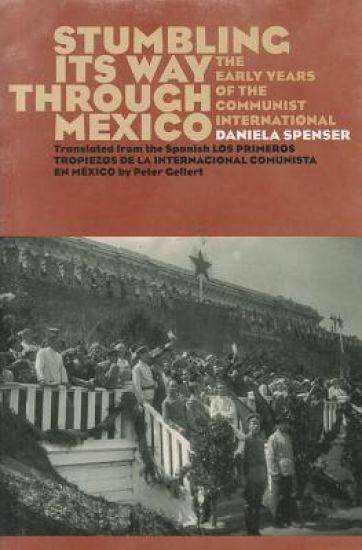
Stumbling Its Way through Mexico records the early attempts by the Moscow-based Communist International to organize and direct a revolutionary movement in Mexico. The period studied, from 1919 to 1929, was characterized at the beginning by a wave of revolutions in Europe that the Bolsheviks expected to grow into an international phenomenon. However, contrary to their expectations, the revolutionary tide ebbed, and the new age they had expected receded into an uncertain future. In response, Moscow sent agents and recruited local leaders worldwide to sustain and train local revolutionary movements and to foment what they saw as an inevitable seizure of power by Communist-led workers.Unlike the Soviet seizure of power in Russia, the Mexican Revolution of 1910–1920 had not changed the fundamental character of the nation-state. However, it did represent a sea change in the relationship between the state and society. When the Bolshevik Revolution broke out in Russia in 1917, Mexican workers already had generations of experience in the struggle against oppression, in forming class solidarity, in organizing strikes, and had tasted both success and failure. For decades in their workplaces, Mexicans had debated how to end the exploitation of labor and practice international solidarity. Mexico had an indigenous labor movement acting with some success to establish a place in a new Mexico. The agents that Moscow chose to lead the Communist movement in Mexico lacked an understanding of the local situation and presumed a lack of indigenous confidence and experience that doomed to failure their efforts to impose external control over the labor movement.Based on documents found principally in the Soviet archives recently opened to the public, Stumbling Its Way through Mexico is an invitation to rethink the history of Communism in Mexico and Latin America.
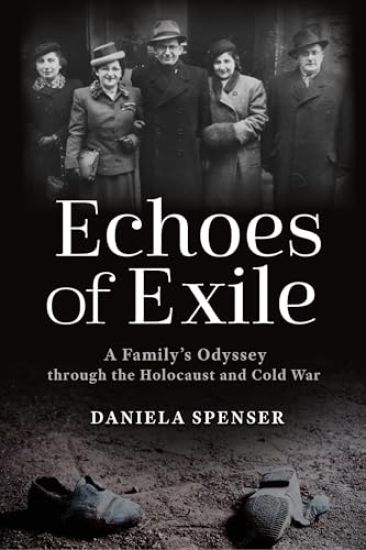
Echoes of Exile

Echoes of Exile

Daniela Spenser

THE UNIVERSITY OF ALABAMA PRESS
2025
sidottu
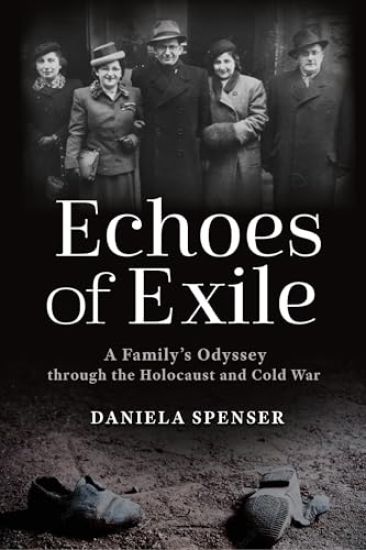
In Echoes of Exile, Daniela Spenser weaves together a history of Europe’s calamitous 20th century conflicts—the Holocaust, Communism, the Cold War—by tracing those events in the lives of her parents and grandparents of Czech, Polish, and German descent. Enhancing and humanizing extensive archival research with interviews and hundreds of personal letters, Echoes of Exile brings complex political history to vivid life in the story of one family's struggle to survive.
Echoes of Exile

Echoes of Exile

Daniela Spenser

THE UNIVERSITY OF ALABAMA PRESS
2025
nidottu
In Echoes of Exile, Daniela Spenser weaves together a history of Europe’s calamitous 20th century conflicts—the Holocaust, Communism, the Cold War—by tracing those events in the lives of her parents and grandparents of Czech, Polish, and German descent. Enhancing and humanizing extensive archival research with interviews and hundreds of personal letters, Echoes of Exile brings complex political history to vivid life in the story of one family's struggle to survive.
The Impossible Triangle

The Impossible Triangle

Daniela Spenser

Duke University Press
1999
sidottu
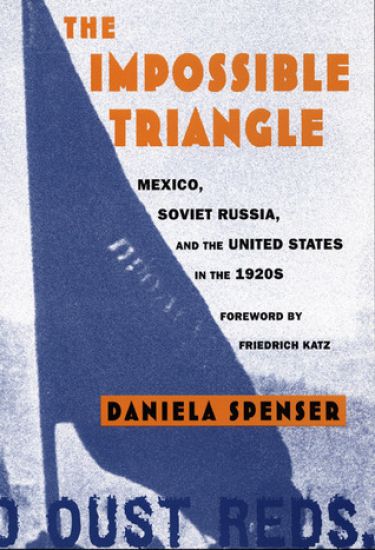
During the 1920s, Mexico was caught in a diplomatic struggle between the ideologies of two strong states. In The Impossible Triangle Daniela Spenser explores the tangled relationship between Russia and Mexico in the years following their own dramatic revolutions, as well as the role played by the United States during this turbulent period. Bringing together Mexican, Soviet, and North American (as well as British) perspectives, Spenser shows how the convergence of each country’s domestic and foreign policies precluded them from a harmonious triangular relationship.Based on documents from the archives of several nations-including reports by former Mexican diplomats in Moscow that have never before been studied-the book analyzes the Mexican government’s motivation for establishing relations with the Soviet Union in the face of continued imperialist pressure and harsh opposition from the United States. After explaining how Mexico established diplomatic ties with the Soviet Union in 1924 in an attempt to broaden the spectrum of its alliances after several years of uneven relations with the United States, Spenser reveals the troubled nature of the relationship that ensued. Soviet policy toward Mexico was characterized by a series of profound contradictions, varying from neglect to strong involvement in Mexican politics and the belief that Mexico could become a center of world revolution. Working to resolve and explain these contradictions, Spenser explores how, despite U.S. objections to Mexico’s relations with the Soviet Union, Mexico continued its association with the Soviets until the United States adopted the Good Neighbor Policy and softened its stance toward Mexico’s revolutionary program after 1927.With a foreword by Friedrich Katz and illustrated by illuminating photographs, The Impossible Triangle contributes to an understanding of the international dimension of the Mexican revolution. It will interest students and scholars of history, revolutionary theory, political science, diplomacy, and international relations.
The Impossible Triangle

The Impossible Triangle

Daniela Spenser

Duke University Press
1999
pokkari
During the 1920s, Mexico was caught in a diplomatic struggle between the ideologies of two strong states. In The Impossible Triangle Daniela Spenser explores the tangled relationship between Russia and Mexico in the years following their own dramatic revolutions, as well as the role played by the United States during this turbulent period. Bringing together Mexican, Soviet, and North American (as well as British) perspectives, Spenser shows how the convergence of each country’s domestic and foreign policies precluded them from a harmonious triangular relationship.Based on documents from the archives of several nations-including reports by former Mexican diplomats in Moscow that have never before been studied-the book analyzes the Mexican government’s motivation for establishing relations with the Soviet Union in the face of continued imperialist pressure and harsh opposition from the United States. After explaining how Mexico established diplomatic ties with the Soviet Union in 1924 in an attempt to broaden the spectrum of its alliances after several years of uneven relations with the United States, Spenser reveals the troubled nature of the relationship that ensued. Soviet policy toward Mexico was characterized by a series of profound contradictions, varying from neglect to strong involvement in Mexican politics and the belief that Mexico could become a center of world revolution. Working to resolve and explain these contradictions, Spenser explores how, despite U.S. objections to Mexico’s relations with the Soviet Union, Mexico continued its association with the Soviets until the United States adopted the Good Neighbor Policy and softened its stance toward Mexico’s revolutionary program after 1927.With a foreword by Friedrich Katz and illustrated by illuminating photographs, The Impossible Triangle contributes to an understanding of the international dimension of the Mexican revolution. It will interest students and scholars of history, revolutionary theory, political science, diplomacy, and international relations.
In Combat

In Combat

Daniela Spenser

Haymarket Books
2020
pokkari
Vicente Lombardo Toledano was the founder of numerous labour union organisations in Mexico and Latin America between the 1920s and the 1960s. He was not only an organiser but also a broker between the unions, the government, and business leaders—an almost singular figure able to disentangle difficult, seemingly irreconcilable conflicts. He cooperated closely with the governments of Mexico and other Latin American nations and worked with the representatives of the Soviet Union when he considered it useful. This willingness to work across ideological divides meant that he was alternately seen as a government stooge or a communist, even though he was never a member of the Communist Party nor of any Mexican government administration. Daniela Spenser's rousing new biography of Lombardo Toledano is the first to be based on his extensive private papers. In addition to this unprecedented access, Spenser also draws on primary sources from European, Mexican and American archives, and on extensive personal interviews. Her even-keeled portrayal of the man counters both previous hagiographies and vilifications that have come before it.
In Combat: The Life of Lombardo Toledano
Vicente Lombardo Toledano was the founder of numerous labour union organisations in Mexico and Latin America between the 1920s to the 1960s. He was not only an organiser but also a broker between the unions, the government, and business leaders, able to disentangle difficult conflicts. He cooperated closely with the governments of Mexico and other Latin American nations and worked with the representatives of the Soviet Union when he considered it useful. As a result he was alternately seen as a government stooge or a communist, even though he was never a member of the party or of the Mexican government administration. Daniela Spenser's is the first biography of Lombardo Toledano based on his extensive private papers, on primary sources from European, Mexican and American archives, and on personal interviews. Her even-keeled portrayal of the man counters previous hagiographies and/or vilifications.