Kirjojen hintavertailu. Mukana 11 704 560 kirjaa ja 12 kauppaa.

Kirjahaku

Etsi kirjoja tekijän nimen, kirjan nimen tai ISBN:n perusteella.

24 kirjaa tekijältä Danny Dorling

All That Is Solid

All That Is Solid

Danny Dorling

Penguin Books Ltd
2015
pokkari
In All That is Solid Danny Dorling offers an agenda-shaping look at the UK's dangerous relationship with housing - and how it's all going to come crashing downHousing was at the heart of the financial collapse, and our economy is now precariously reliant on the housing market. In this ground-breaking book, Danny Dorling argues that housing is the defining issue of our times. Tracing how we got to our current crisis and how housing has come to reflect class and wealth in Britain, All That Is Solid shows that the solution to our problems - rising homelessness, a generation priced out of home ownership - is not, as is widely assumed, building more homes. Inequality, he argues, is what we really need to overcome.'An urgent book about an urgent topic' - Lynsey Hanley, New Statesman 'A brilliantly original study of our national obsession' - Nick Cohen, Observer Danny Dorling is Halford Mackinder Professor in Geography at the University of Oxford. He has worked both with the British government and the World Health Organization and is frequently asked to comment on current issues on TV and the radio. He has published more than twenty-five books, including Injustice: Why Social Inequality Exists, So You Think You Know About Britain? and The 32 Stops for Penguin Underground Lines.
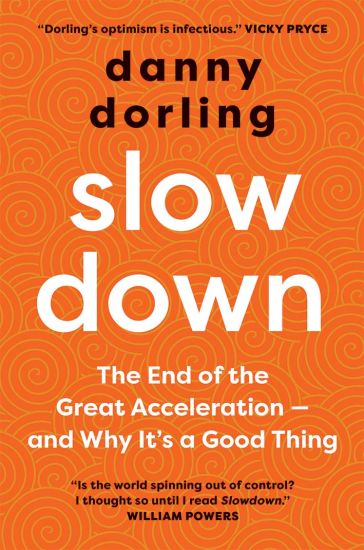
Slowdown

Slowdown

Danny Dorling

Yale University Press
2021
pokkari
A powerful and counterintuitive argument that we should welcome the current slowdown—of population growth, economies, and technological innovation? The end of our high-growth world was underway well before COVID-19 arrived. In this powerful and timely argument, Danny Dorling demonstrates the benefits of a larger, ongoing societal slowdown Drawing from an incredibly rich trove of global data, this groundbreaking book reveals that human progress has been slowing down since the early 1970s. Danny Dorling uses compelling visualizations to illustrate how fertility rates, growth in GDP per person, and even the frequency of new social movements have all steadily declined over the last few generations. Perhaps most surprising of all is the fact that even as new technologies frequently reshape our everyday lives and are widely believed to be propelling our civilization into new and uncharted waters, the rate of technological progress is also rapidly dropping. Rather than lament this turn of events, Dorling embraces it as a moment of promise and a move toward stability, and he notes that many of the older great strides in progress that have defined recent history also brought with them widespread warfare, divided societies, and massive inequality.
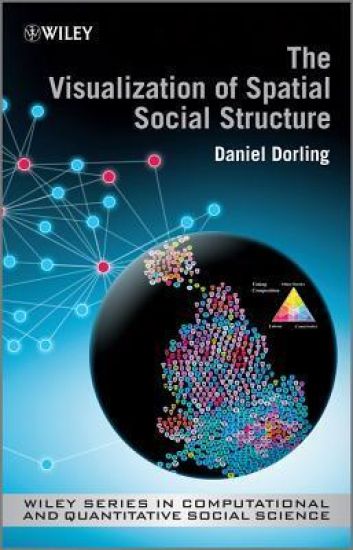
The Visualization of Spatial Social Structure
How do you draw a map of 100,000 places, of more than a million flows of people, of changes over time and space, of different kinds of spaces, surfaces and volumes, from human travel time to landscapes of hopes, fears, migration, manufacturing and mortality? How do you turn the millions of numbers concerning some of the most important moments of our lives into images that allow us to appreciate the aggregate while still remembering the detail? The visualization of spatial social structure means, literally, making visible the geographical patterns to the way our lives have come to be socially organised, seeing the geography in society. To a statistical readership visualization implies using data. More widely defined it implies freeing our imaginations. The Visualization of Spatial Social Structure introduces the reader to new ways of thinking about how to look at social statistics, particularly those about people in places. The author presents a unique combination of statistical focus and understanding of social structures and innovations in visualization, describing the rationale for, and development of, a new way of visualizing information in geographical research. These methods are illustrated through extensive full colour graphics; revealing mistakes, techniques and discoveries which present a picture of a changing political and social geography. More complex aspects on the surface of social landscapes are revealed with sculptured symbols allowing us to see the relationships between the wood and the trees of social structure. Today's software can be so flexible that these techniques can now be emulated without coding. This book centres on a particular place and time; 1980s Britain, and a particular set of records; routine social statistics. A great deal of information about the 80s' social geography of Britain is contained within databases such as the population censuses, surveys and administrative data. Following the release of the 2011 census, now is a good time to look back at the past to introduce many new visualization techniques that could be used by future researchers.
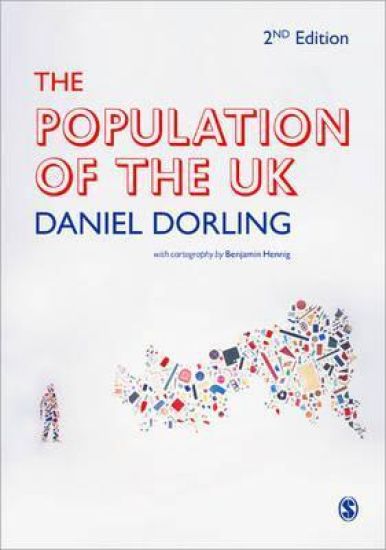
The Population of the UK

The Population of the UK

Danny Dorling

SAGE Publications Ltd
2012
sidottu
Did you know that where you were born may affect when you die? The Population of the UK explains how geography - in the widest sense - makes a difference to life outcomes. It explains the geographical differences in key socio-economic variables - like education, health, and work - that illustrate the UK's stark social inequalities and affect everyone's lives. Written for undergraduate students across social science disciplines, this unique text presents a social geography of the UK which: Contains over 100 maps. These are drawn in proportion to the numbers of people being depicted and so represent the human geography of the UK in a fair way.Visualises quantitative evidence. The very latest statistics from numerous sources - including the 2010 election - reveal the many aspects of the underlying geographical structure of society in the UK.Relates geographies of identity to geographies of inequality, mortality, work, and settlement, and in a final chapter shows how the UK's population fits in to the world picture of who has most of what, and where. Using the most advanced cartographic techniques of social mapping employed anywhere in the world, The Population of the UK explains the nuts and bolts of UK population in comparative context. A note on data: Much of the data comes from 2010 and 2011. However, because as yet only the age and sex data from the 2011 census has been released the book shows 2001 patterns where only census data can reveal it. As 2011 census data is released, Danny plans to update the maps on-line.
The Population of the UK

The Population of the UK

Danny Dorling

SAGE Publications Ltd
2012
nidottu
Did you know that where you were born may affect when you die? The Population of the UK explains how geography - in the widest sense - makes a difference to life outcomes. It explains the geographical differences in key socio-economic variables - like education, health, and work - that illustrate the UK's stark social inequalities and affect everyone's lives. Written for undergraduate students across social science disciplines, this unique text presents a social geography of the UK which: Contains over 100 maps. These are drawn in proportion to the numbers of people being depicted and so represent the human geography of the UK in a fair way.Visualises quantitative evidence. The very latest statistics from numerous sources - including the 2010 election - reveal the many aspects of the underlying geographical structure of society in the UK.Relates geographies of identity to geographies of inequality, mortality, work, and settlement, and in a final chapter shows how the UK's population fits in to the world picture of who has most of what, and where. Using the most advanced cartographic techniques of social mapping employed anywhere in the world, The Population of the UK explains the nuts and bolts of UK population in comparative context. A note on data: Much of the data comes from 2010 and 2011. However, because as yet only the age and sex data from the 2011 census has been released the book shows 2001 patterns where only census data can reveal it. As 2011 census data is released, Danny plans to update the maps on-line.
Unequal Health

Unequal Health

Danny Dorling

Policy Press
2013
nidottu
Health inequalities are the most important inequalities of all. In the US and the UK these inequalities have now reached an extent not seen for over a century. Most people's health is much better now than then, but the gaps in life expectancy between regions, between cities, and between neighbourhoods within cities now surpass the worst measures over the last hundred years. In almost all other affluent countries, inequalities in health are lower and people live longer. In his new book, academic and writer Danny Dorling describes the current extent of inequalities in health as the scandal of our times. He provides nine new chapters and updates a wide selection of his highly influential writings on health, including international-peer reviewed studies, annotated lectures, newspaper articles, and interview transcripts, to create an accessible collection that is both contemporary and authoritative. As a whole the book shows conclusively that inequalities in health are the scandal of our times in the most unequal of rich nations and calls for immediate action to reduce these inequalities in the near future.
Unequal Health

Unequal Health

Danny Dorling

Policy Press
2013
sidottu
Health inequalities are the most important inequalities of all. In the US and the UK these inequalities have now reached an extent not seen for over a century. Most people's health is much better now than then, but the gaps in life expectancy between regions, between cities, and between neighbourhoods within cities now surpass the worst measures over the last hundred years. In almost all other affluent countries, inequalities in health are lower and people live longer. In his new book, academic and writer Danny Dorling describes the current extent of inequalities in health as the scandal of our times. He provides nine new chapters and updates a wide selection of his highly influential writings on health, including international-peer reviewed studies, annotated lectures, newspaper articles, and interview transcripts, to create an accessible collection that is both contemporary and authoritative. As a whole the book shows conclusively that inequalities in health are the scandal of our times in the most unequal of rich nations and calls for immediate action to reduce these inequalities in the near future.
Injustice

Injustice

Danny Dorling

Policy Press
2015
nidottu
In the five years since the first edition of Injustice there have been devastating increases in poverty, hunger and destitution in the UK. Globally, the richest 1% have never held a greater share of world wealth, while the share of most of the other 99% has fallen in the last five years, with more and more people in debt, especially the young. Economic inequalities will persist and continue to grow for as long as we tolerate the injustices which underpin them. This fully rewritten and updated edition revisits Dorling’s claim that Beveridge’s five social evils are being replaced by five new tenets of injustice: elitism is efficient; exclusion is necessary; prejudice is natural; greed is good and despair is inevitable. By showing these beliefs are unfounded, Dorling offers hope of a more equal society. We are living in the most remarkable and dangerous times. With every year that passes it is more evident that Injustice is essential reading for anyone concerned with social justice and wants to do something about it.
Poverty in Education Across the UK

Poverty in Education Across the UK

Danny Dorling

Policy Press
2020
sidottu
Nuanced interconnections of poverty and educational attainment around the UK are surveyed in this unique analysis. Across the four jurisdictions of England, Scotland, Wales and Northern Ireland, experts consider the impact of curriculum reforms and devolved policy making on the lives of children and young people in poverty. They investigate differences in educational ideologies and structures, and question whether they help or hinder schools seeking to support disadvantaged and marginalised groups. For academics and students engaged in education and social justice, this is a vital exploration of poverty’s profound effects on inequalities in educational attainment and the opportunities to improve school responses.
Poverty in Education Across the UK

Poverty in Education Across the UK

Danny Dorling

Policy Press
2020
nidottu
Nuanced interconnections of poverty and educational attainment around the UK are surveyed in this unique analysis. Across the four jurisdictions of England, Scotland, Wales and Northern Ireland, experts consider the impact of curriculum reforms and devolved policy making on the lives of children and young people in poverty. They investigate differences in educational ideologies and structures, and question whether they help or hinder schools seeking to support disadvantaged and marginalised groups. For academics and students engaged in education and social justice, this is a vital exploration of poverty’s profound effects on inequalities in educational attainment and the opportunities to improve school responses.
Peak Inequality

Peak Inequality

Danny Dorling

Policy Press
2018
nidottu
Inequality is the key political issue of our time. Here Dorling brings together brand new material alongside a carefully curated selection of his most recent writing on inequality from publications as wide ranging as the Daily Telegraph, the Guardian, New Statesman, Financial Times and the China People’s Daily. Covering key inequality issues including politics, housing, education and health, he explores whether we have now reached ‘peak inequality’. He concludes, crucially, by predicting what the future holds for Britain, as attempts are made to defuse the ticking time bomb while we simultaneously try to negotiate Brexit and react to the wider international situation of a world of people demanding to become more equal.
Peak Injustice

Peak Injustice

Danny Dorling

Bristol University Press
2024
nidottu
By 2024 a majority of parents in the UK with three or more children were going hungry to feed their families. Children in the UK are becoming shorter and childhood mortality has been rising. What part does living with high inequality play in understanding how we have got to the point of peak injustice, when surely the situation cannot become worse? Although 2018 was a year of peak income and wealth inequality in the UK, absolute deprivation has continued to grow since then, especially after the pandemic. Peak Injustice follows up the best-selling Peak Inequality (2018), offering a carefully curated selection of Danny Dorling’s latest published writing with brand new content looking to the future, including challenges for a new government in 2024/25, the impact of Jeremy Corbyn’s legacy, and the implications of Keir Starmer’s many blind spots. An essential addition to readers’ Dorling collections.
Do We Need Economic Inequality?

Do We Need Economic Inequality?

Danny Dorling

Polity Press
2017
sidottu
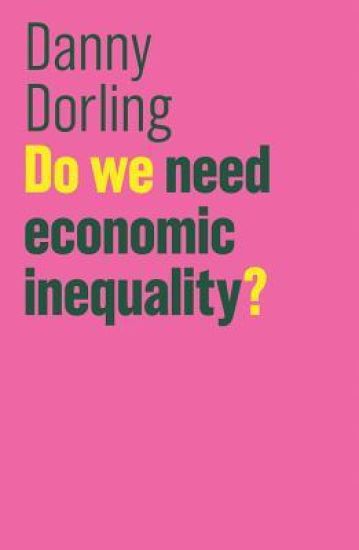
Although economic inequality provokes widespread disquiet, its supposed necessity is rarely questioned. At best, a basic level of inequality is seen as a necessary evil. At worst, it is seen as insufficient to encourage aspiration, hard work and investment – a refrain sometimes used to advocate ever greater inequality. In this original new book, Danny Dorling critically analyses historical trends and contemporary assumptions in order to question the idea that inequality is an inevitability. What if, he asks, widespread economic inequality is actually just a passing phase, a feature of the capitalist transition from a settled rural way of life to our next highly urban steady-state? Is it really likely that we face a Blade Runner-style dystopian future divided between a tiny elite and an impoverished mass? Dorling shows how, amongst much else, a stabilizing population, changing gender relations and rising access to education make a more egalitarian alternative to this nightmare vision not only preferable, but realistic. This bold contribution to one of the most significant debates of our time will be essential reading for anyone interested in our economic, social and political destiny.
Do We Need Economic Inequality?

Do We Need Economic Inequality?

Danny Dorling

Polity Press
2017
nidottu
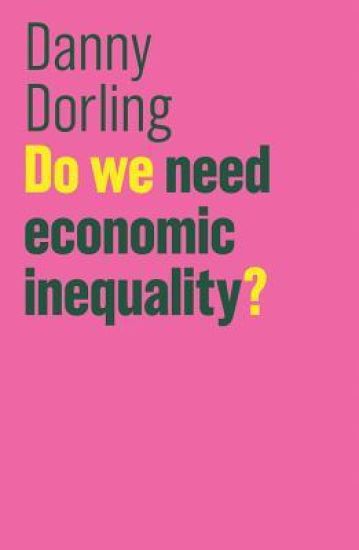
Although economic inequality provokes widespread disquiet, its supposed necessity is rarely questioned. At best, a basic level of inequality is seen as a necessary evil. At worst, it is seen as insufficient to encourage aspiration, hard work and investment – a refrain sometimes used to advocate ever greater inequality. In this original new book, Danny Dorling critically analyses historical trends and contemporary assumptions in order to question the idea that inequality is an inevitability. What if, he asks, widespread economic inequality is actually just a passing phase, a feature of the capitalist transition from a settled rural way of life to our next highly urban steady-state? Is it really likely that we face a Blade Runner-style dystopian future divided between a tiny elite and an impoverished mass? Dorling shows how, amongst much else, a stabilizing population, changing gender relations and rising access to education make a more egalitarian alternative to this nightmare vision not only preferable, but realistic. This bold contribution to one of the most significant debates of our time will be essential reading for anyone interested in our economic, social and political destiny.
The No-nonsense Guide To Equality

The No-nonsense Guide To Equality

Danny Dorling

New Internationalist Publications Ltd
2012
nidottu
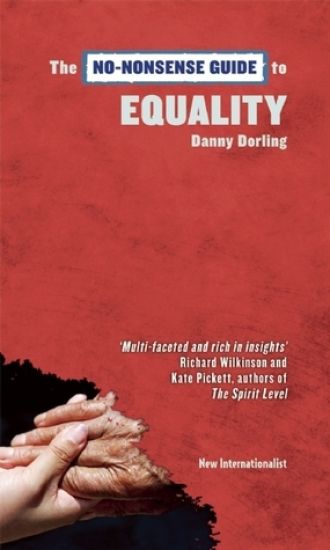
The No-Nonsense Guide to Equality discusses the positive effects that equality can have, using examples and case studies from across the globe, including many from the UK. It examines the lessons of history and covers race, gender and ethnicity, age, and wealth. Danny Dorling considers, realistically, just how equal it is possible to be, the challenges we face, and the factors that will lead to greater equality for all.
Rule Britannia

Rule Britannia

Danny Dorling

Biteback Publishing
2020
nidottu
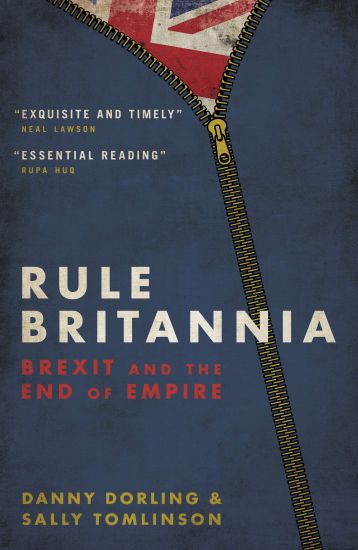
WHEN EMPIRES CRUMBLE, WHAT HAPPENS TO THOSE LEFT IN THE RUINS? In Rule Britannia, Danny Dorling and Sally Tomlinson argue that the vote to leave the EU was the last gasp of the old empire working its way out of the British psyche. Fuelled by a misplaced nostalgia, the result was driven by a lack of knowledge of our imperial history, by a profound anxiety about Britain's status today, and by a deeply unrealistic vision of our future. At a time when close relationships with our near neighbours are more crucial than ever before, Britain has opted to surrender its remaining influence and squander international goodwill. And yet, there is hope. In this wide-ranging and thoughtful analysis, now fully updated to cover the fallout from Brexit and the impact of coronavirus, Dorling and Tomlinson argue that if Britain can reconcile itself to its new place on the world stage, a new identity can be born from the ashes. Rule Britannia is a powerful call to leave behind the jingoistic ignorance of the past and build a fairer Britain, eradicating the inequality that blights our society and embracing our true strengths.
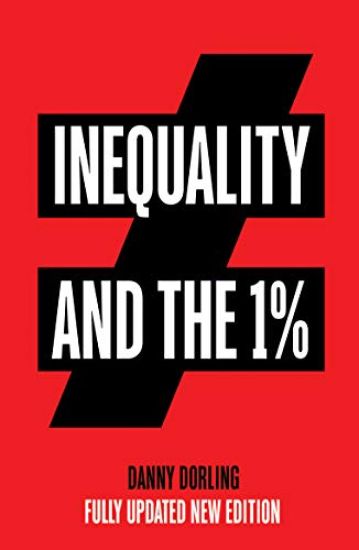
Inequality and the 1%

Inequality and the 1%

Danny Dorling

Verso Books
2019
nidottu
Since the Great Recession hit in 2008, the 1% has only grown richer while the rest find life increasingly tough. The gap between the haves and the have-nots has turned into a chasm. While the rich have found new ways of protecting their wealth, everyone else has suffered the penalties of austerity. But inequality is more than just economics. Being born outside the 1% has a dramatic impact on a person's potential: reducing life expectancy, limiting educational and work prospects, and even affecting mental health. What is to be done? In Inequality and the 1% leading social thinker Danny Dorling lays bare the extent and true cost of the division in our society and asks what have the super-rich ever done for us? He shows that it is the 1% that threatens us with the most harm and why we must urgently redress the balance
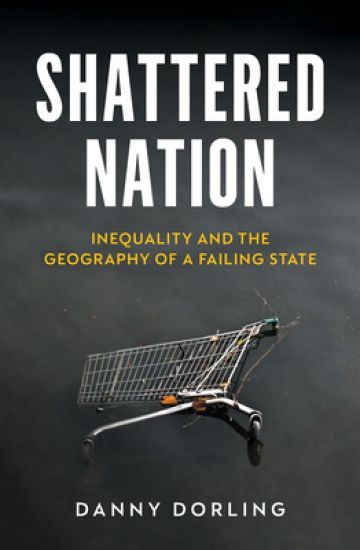
Shattered Nation

Shattered Nation

Danny Dorling

Verso Books
2023
nidottu
Britain was once the leading economy in Europe; it is now the most unequal. In Shattered Nation, leading geographer and author of Inequality and the 1% shows that we are growing further and further apart. Visiting sites across the British Isles and exploring the social fissures that have emerged, Danny Dorling exposes a new geography of inequality. Middle England has been hit hard by the cost-of-living crisis, and even people doing comparatively well are struggling to stay afloat. Once affluent suburbs are now unproductive places where opportunity has been replaced by food banks. Before COVID, life expectancy had dropped as a result of poverty for the first time since the 1930s.Fifty years ago the UK led the world in child health; today, twenty-two of the twenty-seven EU countries have better mortality rates for newborns. No other European country has such miserly unemployment benefits; university fees so high; housing so unaffordable; or a government economically so far to the right. In the spirit of the 1942 Beveridge Report, Dorling identifies the five giants of twenty-first-century poverty that need to be conquered: Hunger, Precarity, Waste, Exploitation, and Fear. He offers powerful insights into how we got here and what we must do in order to save Britain from becoming a failed state.
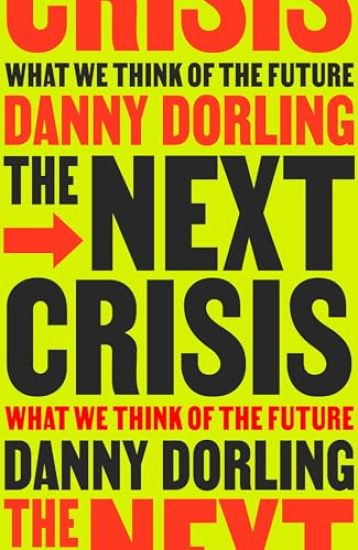
The Next Crisis

The Next Crisis

Danny Dorling

Verso Books
2025
sidottu
Every month, surveys around the world ask people to tell them what they are really thinking. The results are at times reassuring, some-times chilling and often unexpected. In The Next Crisis, leading UK geographer Danny Dorling unpacks polling data and shows that our global crises are often very different from what's in the headlines - and that we need to take these issues very seriously.Dorling explores our main concerns about the world in order of urgency. What the cost of living shows us about inequality. How the connection between employment and immigration is used to stir up insecurity. Why we are frightened by distant wars. How corruption corrodes care. What we should really be worried about when it comes to climate change - including what the scientists get wrong about people's fears. And finally, how the great 'unknown unknowns' dictate the way we think about the future and what we should be less afraid of: pandemics, asteroids, tsunamis, even each other.The Next Crisis uses the most up-to-date re-search to redraw our assumptions about where our greatest threats come from. Dorling offers a series of solutions for tackling, or at the very least coming to terms with, our uncertain future.
The Next Crisis

The Next Crisis

Danny Dorling

Verso Books
2026
nidottu
Every month, surveys around the world ask people to tell them what they are really thinking. The results are at times reassuring, some-times chilling and often unexpected. In The Next Crisis, leading UK geographer Danny Dorling unpacks polling data and shows that our global crises are often very different from what's in the headlines - and that we need to take these issues very seriously.Dorling explores our main concerns about the world in order of urgency. What the cost of living shows us about inequality. How the connection between employment and immigration is used to stir up insecurity. Why we are frightened by distant wars. How corruption corrodes care. What we should really be worried about when it comes to climate change - including what the scientists get wrong about people's fears. And finally, how the great 'unknown unknowns' dictate the way we think about the future and what we should be less afraid of: pandemics, asteroids, tsunamis, even each other.The Next Crisis uses the most up-to-date re-search to redraw our assumptions about where our greatest threats come from. Dorling offers a series of solutions for tackling, or at the very least coming to terms with, our uncertain future.