Kirjojen hintavertailu. Mukana 11 342 296 kirjaa ja 12 kauppaa.

Kirjahaku

Etsi kirjoja tekijän nimen, kirjan nimen tai ISBN:n perusteella.

6 kirjaa tekijältä Daphne Hampson

Kierkegaard

Kierkegaard

Daphne Hampson

Oxford University Press
2014
nidottu
Kierkegaard is a fascinating author. Living shortly after the dawn of modernity in the Enlightenment, he restates classical Christianity in novel and dynamic fashion. His Lutheran heritage is pivotal here as he places 'faith' over against 'reason'. But we should recognise that decidedly pre-modern epistemological presuppositions lie behind Kierkegaard's theological contentions, giving us pause for thought. A profound thinker with eclectic interests, philosophical, theological, ethical, social and pastoral, Kierkegaard never ceases to engage the reader. His insights into human life - the matter of coherence of the self, the crucial category of the individual, or the significance of choice - are memorable. A fine writer with observant eye, Kierkegaard enthrals the reader with his flair, perspicacity and ready wit. After an initial chapter on Kierkegaard's intellectual milieu, the book considers seven of his major texts. An 'Exposition', with extensive quotation, sets the text in philosophical, theological and historical context. Following which a 'Critique' raises issues, ranging from Kierkegaard's indifference to biblical scholarship, to his lack of recognition of the regularity of causation, and his a-political outlook. A final chapter considers Kierkegaard as a person and evaluates the authorship. Lucidly written, Hampson's book provides a general introduction to Kierkegaard, while greatly aiding novice readers of his texts. It should also command the attention of scholars, for its forthright debate with Kierkegaard and for illuminating, as has no previous work, his Lutheran thought forms. Provocative and original, it will leave its mark on Kierkegaard scholarship, while raising seminal questions for the wider theological enterprise.

Kierkegaard: Exposition & Critique

Kierkegaard: Exposition & Critique

Daphne Hampson

Oxford University Press
2013
sidottu
Kierkegaard is a fascinating author. Living shortly after the dawn of modernity in the Enlightenment, he restates classical Christianity in dynamic fashion. His Lutheran heritage is vital here as he places 'faith' over against 'reason'. Yet Kierkegaard also holds decidedly pre-modern epistemological presuppositions that are supportive of his endeavour. After an initial chapter on Kierkegaard's intellectual milieu, the book expounds with reference to their philosophical and historical context seven of his major texts, ranging over theological, ethical, social and political questions. A final chapter considers Kierkegaard as a person and concludes with an evaluation of the authorship. The book does not however simply depict Kierkegaard. In the 'Critique' with which each chapter concludes Hampson carries on a lively debate with Kierkegaard. Questions range from his indifference to biblical historical criticism, to his lack of recognition of causality and the regularity of nature, and his a-political outlook. Whatever one's theological judgement, Kierkegaard has insights that are abiding; into the nature of the self, the importance of the category of the individual, and the need to accord dignity to each. Quoted extensively in this book, Kierkegaard, a writer of distinction, enthrals the reader with his flair, wit and never failing perspicacity. A provocative and original book, while accessible to those approaching these texts for the first time, it should also be of interest to the seasoned Kierkegaard scholar, illuminating as has no previous work the importance of comprehending the structure of Lutheran faith for grasping Kierkegaard's thought.
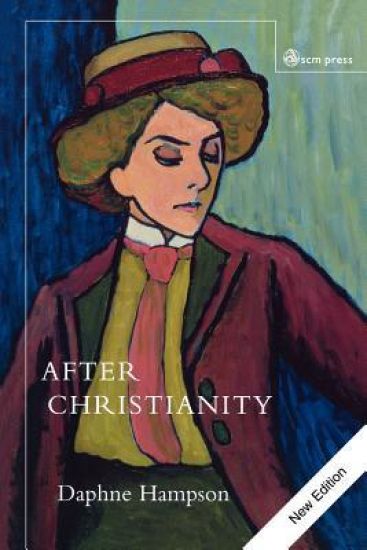
After Christianity

After Christianity

Daphne Hampson

SCM Press
2002
nidottu
Daphne Hampson argues that a distinction must be maintained between the Christian myth and human awareness of a dimension of reality which is God. The myth is evidently untenable: there can be no particular revelation or intervention in history. As in any other discipline, so also in theology the criterion as to what from the past remains valid and what must be discarded lies with us. The myth is moreover immoral, serving through its rootedness in the past to undergird a patriarchal order. Working from a feminist perspective Hampson analyses major paradigms of the Judaeo-Christian tradition: the conception of God; the creation thereby of a concept of woman as 'other', and the peculiarly masculinist understandings of sin, salvation, sacrifice and covenant. A chapter on 'woman' shows how devastating (and irrelevant today) the Christian construal has been. How then should we think of God, in a manner both true to the evidence and commensurate with the moral imperative of human equality? In dialogue with Schleiermacher and drawing on the evidence of religious experience Hampson undertakes an original piece of constructive systematic theology. Finally she asks after the manner of life in which such a spirituality can flourish.
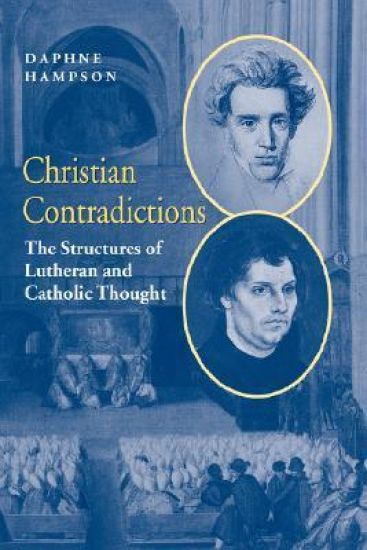
Christian Contradictions

Christian Contradictions

Daphne Hampson

Cambridge University Press
2001
sidottu
Catholic thought and Lutheran thought are differently structured, embodying divergent conceptions of self and God. Failing to grasp the Lutheran paradigm, Catholics have wrenched Luther into an inappropriate framework. Roman/Lutheran ecumenism, culminating in the ‘Joint Declaration’ of 1999, attempts to reconcile incompatible systems, based on different philosophical presuppositions. Drawing on a wealth of material, both Continental and Anglo-Saxon, the author thinks through these structural questions within a historical context. But how - within a religion of revelation - can God be conceptualised as both foundational to the self and yet also as an ‘other’ with whom the self inter-relates? Kierkegaard is shown in a complex model to hold together strengths which historically have been exemplified by the two traditions. This is an important work in systematic theology which considers questions quite fundamental to Western religion. It should be of interest to theologians of all backgrounds and also to church historians.
Christian Contradictions

Christian Contradictions

Daphne Hampson

Cambridge University Press
2004
pokkari
Catholic thought and Lutheran thought are differently structured, embodying divergent conceptions of self and God. Failing to grasp the Lutheran paradigm, Catholics have wrenched Luther into an inappropriate framework. Roman/Lutheran ecumenism, culminating in the ‘Joint Declaration’ of 1999, attempts to reconcile incompatible systems, based on different philosophical presuppositions. Drawing on a wealth of material, both Continental and Anglo-Saxon, the author thinks through these structural questions within a historical context. But how - within a religion of revelation - can God be conceptualised as both foundational to the self and yet also as an ‘other’ with whom the self inter-relates? Kierkegaard is shown in a complex model to hold together strengths which historically have been exemplified by the two traditions. This is an important work in systematic theology which considers questions quite fundamental to Western religion. It should be of interest to theologians of all backgrounds and also to church historians.
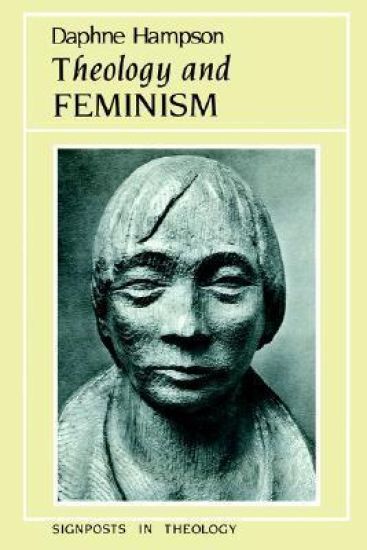
Theology and Feminism

Theology and Feminism

Daphne Hampson

Blackwell Publishers
1990
nidottu
Feminism represents a radical challenge to Christianity. Having developed its doctrine and its scriptures in a world in which women were considered subordinate, the Christian religion is now confronted with a deeply held ethical belief that women should be treated as equals. Dr Hampson argues that this ethical challenge confronts the church over the issues of priesthood and ordination, language and imagery, and hermeneutics and theology. In each of these areas, she claims, the Christian religion cannot by definition come to terms with the equality of women. Feminism however suggests new ways to conceive God and reformulate theological ideas for a world in which Christianity is no longer tenable. Theology and Feminism contains chapters on methodology, Christology, symbolism, anthropology and theology. It is the first book from a post-Christian perspective to grapple with all the major areas of theology. Covering the work of conservative Christian, Christian feminist and radical feminist thinkers in religion, it will be welcomed by those already familiar with the discussion, as well as providing a clear introduction for those who are new to the subject.