Kirjojen hintavertailu. Mukana 12 390 323 kirjaa ja 12 kauppaa.

Kirjahaku

Etsi kirjoja tekijän nimen, kirjan nimen tai ISBN:n perusteella.

5 kirjaa tekijältä Daphne Spain

Constructive Feminism

Constructive Feminism

Daphne Spain

Cornell University Press
2016
sidottu
In Constructive Feminism, Daphne Spain examines the deliberate and unintended spatial consequences of feminism's second wave, a social movement dedicated to reconfiguring power relations between women and men. Placing the women's movement of the 1970s in the context of other social movements that have changed the use of urban space, Spain argues that reform feminists used the legal system to end the mandatory segregation of women and men in public institutions, while radical activists created small-scale places that gave women the confidence to claim their rights to the public sphere. Women's centers, bookstores, health clinics, and domestic violence shelters established feminist places for women's liberation in Boston, Los Angeles, and many other cities. Unable to afford their own buildings, radicals adapted existing structures to serve as women's centers that fostered autonomy, health clinics that promoted reproductive rights, bookstores that connected women to feminist thought, and domestic violence shelters that protected their bodily integrity. Legal equal opportunity reforms and daily practices of liberation enhanced women's choices in education and occupations. Once the majority of wives and mothers had joined the labor force, by the mid-1980s, new buildings began to emerge that substituted for the unpaid domestic tasks once performed in the home. Fast food franchises, childcare facilities, adult day centers, and hospices were among the inadvertent spatial consequences of the second wave.
How Women Saved the City

How Women Saved the City

Daphne Spain

University of Minnesota Press
2001
nidottu
Reclaims the lost history of women’s contributions to the development of American citiesIn the days between the Civil War and World War I, women rarely worked outside the home, rarely went to college, and, if our histories are to be believed, rarely put their mark on the urban spaces unfolding around them. And yet, as this book clearly demonstrates, women did play a key role in shaping the American urban landscape. To uncover the contribution of women to urban development during this period, Daphne Spain looks at the places where women participated most actively in public life-voluntary organizations like the Young Women’s Christian Association, the Salvation Army, the College Settlements Association, and the National Association of Colored Women. In the extensive building projects of these associations-boarding houses, vocational schools, settlement houses, public baths, and playgrounds-she finds clear evidence of a built environment created by women. Exploring this environment, Spain reconstructs the story of the "redemptive places" that addressed the real needs of city dwellers-especially single women, African-Americans, immigrants, and the poor-and established an environment in which newcomers could learn to become urban Americans.
Constructive Feminism

Constructive Feminism

Daphne Spain

Cornell University Press
2016
pokkari
In Constructive Feminism, Daphne Spain examines the deliberate and unintended spatial consequences of feminism's second wave, a social movement dedicated to reconfiguring power relations between women and men. Placing the women's movement of the 1970s in the context of other social movements that have changed the use of urban space, Spain argues that reform feminists used the legal system to end the mandatory segregation of women and men in public institutions, while radical activists created small-scale places that gave women the confidence to claim their rights to the public sphere. Women's centers, bookstores, health clinics, and domestic violence shelters established feminist places for women's liberation in Boston, Los Angeles, and many other cities. Unable to afford their own buildings, radicals adapted existing structures to serve as women's centers that fostered autonomy, health clinics that promoted reproductive rights, bookstores that connected women to feminist thought, and domestic violence shelters that protected their bodily integrity. Legal equal opportunity reforms and daily practices of liberation enhanced women's choices in education and occupations. Once the majority of wives and mothers had joined the labor force, by the mid-1980s, new buildings began to emerge that substituted for the unpaid domestic tasks once performed in the home. Fast food franchises, childcare facilities, adult day centers, and hospices were among the inadvertent spatial consequences of the second wave.

Gender in Spanish Urban Spaces

Gender in Spanish Urban Spaces

Daphne Spain

Springer International Publishing AG
2018
sidottu
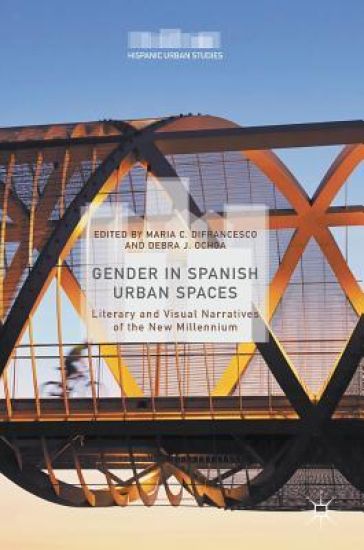
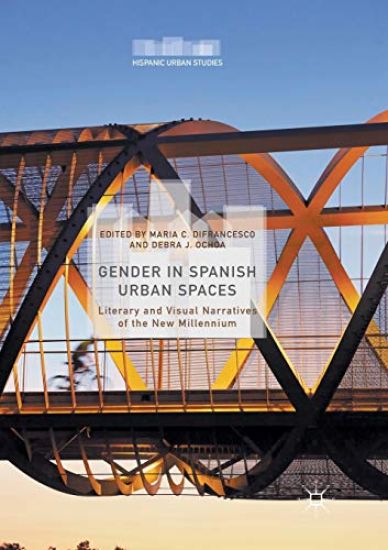
This edited collection examines the synergistic relationship between gender and urban space in post-millennium Spain. Despite the social progress Spain has made extending equal rights to all citizens, particularly in the wake of the Franco regime and radically liberating Transición, the fact remains that not all subjects—particularly, women, immigrants, and queers—possess equal autonomy. The book exposes visible shifts in power dynamics within the nation’s largest urban capitals—Madrid and Barcelona—and takes a hard look at more peripheral bedroom communities as all of these spaces reflect the discontent of a post-nationalistic, economically unstable Spain. As the contributors problematize notions of public and private space and disrupt gender binaries related with these, they aspire to engender discussion around civic status, the administration of space and the place of all citizens in a global world.
Gender in Spanish Urban Spaces

Gender in Spanish Urban Spaces

Daphne Spain

Springer International Publishing AG
2019
nidottu
This edited collection examines the synergistic relationship between gender and urban space in post-millennium Spain. Despite the social progress Spain has made extending equal rights to all citizens, particularly in the wake of the Franco regime and radically liberating Transición, the fact remains that not all subjects—particularly, women, immigrants, and queers—possess equal autonomy. The book exposes visible shifts in power dynamics within the nation’s largest urban capitals—Madrid and Barcelona—and takes a hard look at more peripheral bedroom communities as all of these spaces reflect the discontent of a post-nationalistic, economically unstable Spain. As the contributors problematize notions of public and private space and disrupt gender binaries related with these, they aspire to engender discussion around civic status, the administration of space and the place of all citizens in a global world.