Kirjojen hintavertailu. Mukana 12 363 930 kirjaa ja 12 kauppaa.

Kirjahaku

Etsi kirjoja tekijän nimen, kirjan nimen tai ISBN:n perusteella.

8 kirjaa tekijältä Darby English

1971

1971

Darby English

University of Chicago Press
2016
sidottu
Art historian Darby English is celebrated for working against the grain and plumbing gaps in historical narratives. In this book, he explores the year 1971, when two exhibitions opened that brought modernist painting and sculpture into the burning heart of black cultural politics: Contemporary Black Artists in America, shown at the Whitney Museum of American Art, and The DeLuxe Show, an integrated abstract art exhibition presented in a renovated movie theater in a Houston ghetto.1971 takes an insightful look at many black artists' desire to gain freedom from overt racial representation, as well as their and their advocates' efforts to further that aim through public exhibitions. Amid calls to define a "black aesthetic" or otherwise settle the race question, these experiments with modernist art favored cultural interaction and instability. Contemporary Black Artists in America highlighted abstraction as a stance against normative approaches, while The DeLuxe Show positioned abstraction in a center of urban blight. The power and social importance of these experiments, English argues, came partly from color's special status as a racial metaphor and partly from investigations of color that were underway in formalist American art and criticism. From Frank Bowling to Virginia Jaramillo, Sam Gilliam to Peter Bradley, black modernists and their supporters rose above the demand to represent or be represented, compromising nothing in their appeals for racial reconciliation. At a time when many debates about identity sought closure, these exhibitions offered openings; when icons and slogans touted simple solutions, they chose difficulty. But above all, as English demonstrates in this provocative book, these exhibitions and artists responded with optimism rather than cynicism to the surrounding culture's preoccupation with color.
How to See a Work of Art in Total Darkness
Going beyond the 'blackness' of black art to examine the integrative and interdisciplinary practices of Kara Walker, Fred Wilson, Isaac Julien, Glenn Ligon, and William Pope.L-five contemporary black artists in whose work race plays anything but a defining role.Work by black artists today is almost uniformly understood in terms of its "blackness," with audiences often expecting or requiring it to "represent" the race. In How to See a Work of Art in Total Darkness, Darby English shows how severely such expectations limit the scope of our knowledge about this work and how different it looks when approached on its own terms. Refusing to grant racial blackness-his metaphorical "total darkness"-primacy over his subjects' other concerns and contexts, he brings to light problems and possibilities that arise when questions of artistic priority and freedom come into contact, or even conflict, with those of cultural obligation. English examines the integrative and interdisciplinary strategies of five contemporary artists-Kara Walker, Fred Wilson, Isaac Julien, Glenn Ligon, and William Pope.L-stressing the ways in which this work at once reflects and alters our view of its informing context: the advent of postmodernity in late twentieth-century American art and culture.The necessity for "black art" comes both from antiblack racism and resistances to it, from both segregation and efforts to imagine an autonomous domain of black culture. Yet to judge by the work of many contemporary practitioners, English writes, black art is increasingly less able-and black artists less willing-to maintain its standing as a realm apart. Through close examinations of Walker's controversial silhouettes' insubordinate reply to pictorial tradition, Wilson's and Julien's distinct approaches to institutional critique, Ligon's text paintings' struggle with modernisms, and Pope.L's vexing performance interventions, English grounds his contention that to understand this work is to displace race from its central location in our interpretation and to grant right of way to the work's historical, cultural, and aesthetic specificity.
To Describe a Life

To Describe a Life

Darby English

Yale University Press
2019
sidottu
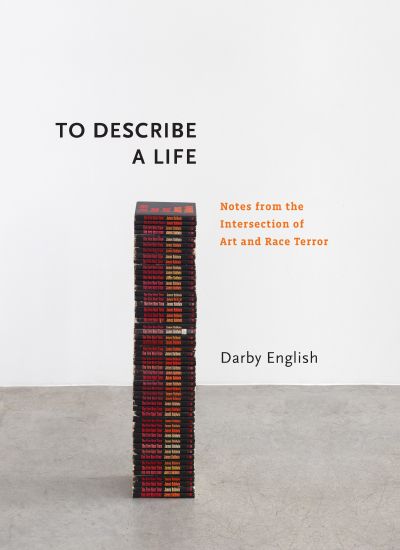
A passionate, rigorous, and persuasive look at the helpful complexity of art during a time of profound cultural turmoil By turns historical, critical, and personal, this book examines the use of art—and love—as a resource amid the recent wave of shootings by American police of innocent black women and men. Darby English attends to a cluster of artworks created in or for our tumultuous present that address themes of racial violence and representation idiosyncratically, neither offering solutions nor accommodating shallow narratives about difference. In Zoe Leonard’s Tipping Point, English sees an embodiment of love in the face of brutality; in Kerry James Marshall’s untitled 2015 portrait of a black male police officer, a greatly fraught subject treated without apparent judgment; in Pope.L’s Skin Set Drawings, a life project undertaken to challenge codified uses of difference, color, and language; and in a replica of the Lorraine Motel—the site of Martin Luther King, Jr.’s assassination in 1968—a monument to the unfinished business of the integrated nonviolent movement for civil rights. For English, the consideration of art is a paradigm of social life, because art is something we must share. Powerful, challenging, and timely, To Describe a Life is an invitation to rethink what life in ongoing crisis is and can be—and, indeed, to discover how art can help.Published in association with the Hutchins Center for African & African American Research
Charles Ray: Adam and Eve

Charles Ray: Adam and Eve

Darby English

Gregory R Miller Company
2024
sidottu
Larger-than-life biblical figures from a renowned American sculptor American artist Charles Ray (born 1953) has devoted most of the past decade to creating sculptures of figures, animals and inanimate objects, often carved from blocks of metal in a state-of-the-art process that combines skilled handwork with industrial technology. This monograph reflects on the fabrication and installation of Adam and Eve (2023), a major sculpture by Ray that is currently on view at Manhattan West, Brookfield Properties’ development adjacent to Moynihan Train Hall and Madison Square Garden. The sculpture, which depicts the biblical figures Adam and Eve in their old age, consists of two large-scale humans rendered in solid stainless steel at nearly 10 feet tall. A significant and highly personal text by art historian Darby English, exploring this work and Ray’s illustrious career, is accompanied by extensive photography illustrating the installed sculptures and their creation.
Black is, Black Ain`t

Black is, Black Ain`t

Huey Copeland; Darby English; Greg Foster–rice; Amy M. Mooney; Kimberly N. Pinder; Kimberly Pinder; Krista Thompson; Hamza Walker; Kenneth Warren

Renaissance Society at the University of Chicago
2013
sidottu
Taking its title from Ralph Ellison's Invisible Man, exhibition Black Is, Black Ain't (April 20 – June 8, 2008) explored a shift in the rhetoric of race from an earlier emphasis on inclusion to a present moment where racial identity is being simultaneously rejected and retained. Curated by the Renaissance Society's Associate Curator and Education Director Hamza Walker, the exhibition brought together works by twenty-seven black and non-black artists whose work collectively examines a moment where the cultural production of so-called "blackness" is concurrent with efforts to make race socially and politically irrelevant. The publication features essays by Huey Copeland, Darby English, Greg Foster-Rice, Amy M. Mooney, Kymberly N. Pinder, Krista Thompson, Hamza Walker, and Kenneth Warrren.
Kerry James Marshall

Kerry James Marshall

Benjamin Buchloh; Aria Dean; Darby English; Mark Godfrey; Madeleine Grynsztejn; Cathérine Hug; Kerry James Marshall; Rebecca Zorach; Nikita Sena Quarshie

Royal Academy of Arts
2025
sidottu
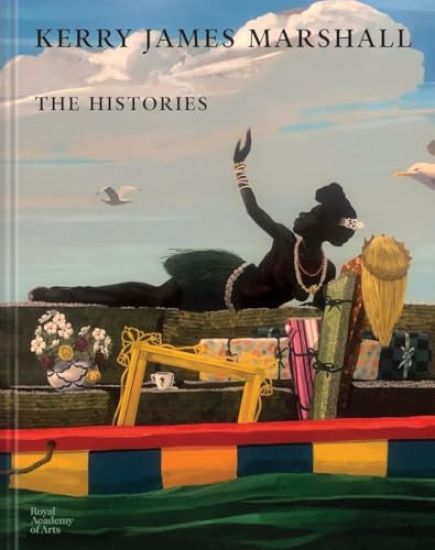
Kerry James Marshall: The Histories is the most extensive publication on the artist to date, celebrating half a century of his work. It reveals the complex ways in which he has transformed histories of Western painting, centering Black bodies in ambitious compositions set in barber shops, public housing projects, parks, and beauty salons. It charts his use of portraiture to memorialise individuals such as Nat Turner, Harriet Tubman, and Olaudah Equiano. A new series, illustrated here for the first time, looks at under-acknowledged aspects of the history of Africa. With lavish illustrations of all the works in the accompanying exhibition, it also includes chapters on Marshall’s Rythm Mastr project and his various public commissions including his stained glass windows for the cathedral in Washington D.C.. A survey by Mark Godfrey is accompanied by shorter essays by Aria Dean, Darby English, Madeleine Grynsztejn, Cathérine Hug, Nikita Sena Quarshie, Rebecca Zorach, and an interview between Kerry James Marshall and Benjamin H.D. Buchloh.
Silke Otto–Knapp – In the Waiting Room

Silke Otto–Knapp – In the Waiting Room

Silke Otto–knapp; Solveig Øvstebø; Carol Armstrong; Darby English; Rachel Hann

Renaissance Society at the University of Chicago
2021
nidottu
Los Angeles-based artist Silke Otto-Knapp has developed a painting practice characterized by its rigorous process and attentiveness to the medium’s possibilities. Using layers of black watercolor pigment, she builds up delicate surfaces, producing subtle variations in density and a powerful sense of atmosphere. Otto-Knapp’s exhibition at the Renaissance Society, In the waiting room, presented a new group of large-scale free-standing paintings in that evokes a multidimensional stage set. Some depict silhouetted bodies while others introduce scenic elements reminiscent of painted backdrops. Offering a close look at the exhibition, this volume includes an array of illustrations, a conversation between curator Solveig Øvstebø and the artist, and four newly commissioned essays by Carol Armstrong, Darby English, Rachel Hann, and Catriona MacLeod, grounded in art history and performance studies.