Kirjojen hintavertailu. Mukana 11 468 051 kirjaa ja 12 kauppaa.

Kirjahaku

Etsi kirjoja tekijän nimen, kirjan nimen tai ISBN:n perusteella.

6 kirjaa tekijältä Darin Barney

Prometheus Wired

Prometheus Wired

Darin Barney

University of Chicago Press
2001
pokkari
From all sides, we hear that computer technology, with its undeniable power to disseminate information and connect individuals, holds enormous potential for a reinvigoration of political life. But will the Internet really spark a democratic revolution? And will the changes it brings be so profound that past political thought will be of little use in helping us to understand them? In this text, Darin Barney debunks claims that a networked society will provide the infrastructure for a political revolution and shows that the resources we need for understanding and making sound judgments about this new technology are surprisingly close at hand. By looking to thinkers who grappled with the relationship of society and technology, such as Plato, Aristotle, Marx, and Heidegger, Barney critically examines such assertions about the character of digital networks. Along the way, Barney offers an eye-opening history of digital networks and then explores a wide range of contemporary issues, such as electronic commerce, telecommuting, privacy, virtual community, digital surveillance, and the possibility of sovereign governance in an age of global networks.Ultimately, Barney argues that instead of placing power back in the hands of the public, a networked economy seems to exacerbate the worst features of industrial capitalism, and, in terms of the surveillance and control it exerts, reduces our political freedom.
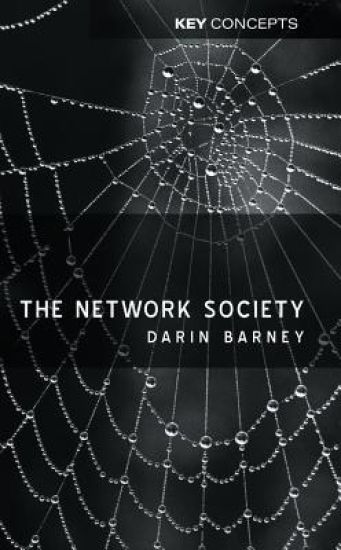
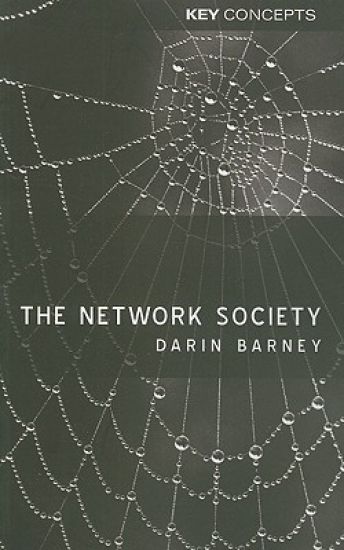
The Network Society

The Network Society

Darin Barney

Polity Press
2004
sidottu
In The Network Society, Darin Barney provides a compelling examination of the social, political and economic implications of network technologies and their application across a wide range of practices and institutions. Are we in the midst of a digital revolution? Have new information and communication technologies given birth to a new form of society, or do they reinforce and extend existing patterns and relationships? This book provides a clear and engaging discussion of these and other questions. Using a sophisticated model of the relationship between technology and society, Barney investigates both what has changed, and what has remained the same, in the age of the Internet. Among the issues discussed are debates concerning the emergence of a 'knowledge economy'; digital restructuring of employment and work; globalization and the status of the nation-state; the prospects of digital democracy; the digital divide; new social movements; and culture, community and identity in the age of new media. This book provides an accessible resource for a thoughtful engagement with life in the network society. It will be essential reading for students in sociology and media and communication studies. This will be a valuable textbook for undergraduate students of sociology and media and communication studies.
The Network Society

The Network Society

Darin Barney

Polity Press
2004
nidottu
In The Network Society, Darin Barney provides a compelling examination of the social, political and economic implications of network technologies and their application across a wide range of practices and institutions. Are we in the midst of a digital revolution? Have new information and communication technologies given birth to a new form of society, or do they reinforce and extend existing patterns and relationships? This book provides a clear and engaging discussion of these and other questions. Using a sophisticated model of the relationship between technology and society, Barney investigates both what has changed, and what has remained the same, in the age of the Internet. Among the issues discussed are debates concerning the emergence of a 'knowledge economy'; digital restructuring of employment and work; globalization and the status of the nation-state; the prospects of digital democracy; the digital divide; new social movements; and culture, community and identity in the age of new media. This book provides an accessible resource for a thoughtful engagement with life in the network society. It will be essential reading for students in sociology and media and communication studies. This will be a valuable textbook for undergraduate students of sociology and media and communication studies.
Prometheus Wired

Prometheus Wired

Darin Barney

University of British Columbia Press
2000
sidottu
From all sides, we hear that computer technology, with its undeniable power to disseminate information and connect individuals, holds enormous potential for a reinvigoration of political life. But will the Internet really spark a democratic revolution? And will the changes it brings be so profound that past political thought will be of little use in helping us to understand them?In Prometheus Wired, Darin Barney debunks claims that a networked society will provide the infrastructure for a political revolution and shows that the resources we need for understanding and making sound judgments about this new technology are surprisingly close at hand. By looking to thinkers who grappled with the relationship of society and technology, such as Plato, Aristotle, Marx, and Heidegger, Barney critically examines such assertions about the character of digital networks.Along the way, Barney offers an eye-opening history of digital networks and then explores a wide range of contemporary issues, such as electronic commerce, telecommuting, privacy, virtual community, digital surveillance, and the possibility of sovereign governance in an age of global networks. Ultimately, Barney argues that instead of placing power back in the hands of the public, a networked economy seems to exacerbate the worst features of industrial capitalism, and, in terms of the surveillance and control it exerts, reduces our political freedom.Of vital interest to politicians, communicators, and anyone concerned about the future of democracy in the digital age, Prometheus Wired adds a provocative new voice to the debate swirling around "the Net" and the ways in which it will, or will not, change our political lives.
Communication Technology

Communication Technology

Darin Barney

University of British Columbia Press
2005
sidottu
When the Internet began to emerge as a popular new mode ofcommunication, many political scientists and social commentatorsbelieved that it would revolutionize our democratic institutions.Today, voter turnout is at an historic low and Internet usage is at anall-time high. Can we still make the claim that new information andcommunication technologies (ICTs) enhance democratic life in Canada?What effect does the technological mediation of political communicationhave on the practice of Canadian politics? How have such technologiesaffected the distribution of power in society? Darin Barney investigates the links between ICTs and democraticprocesses, arguing that the potential of digital technologies tocontribute to a more democratic political system will remain largelyuntapped unless the more conventional dimensions of Canadian politics,the economy, and modes of governance are reoriented.
Communication Technology

Communication Technology

Darin Barney

University of British Columbia Press
2006
pokkari
When the Internet began to emerge as a popular new mode ofcommunication, many political scientists and social commentatorsbelieved that it would revolutionize our democratic institutions.Today, voter turnout is at an historic low and Internet usage is at anall-time high. Can we still make the claim that new information andcommunication technologies (ICTs) enhance democratic life in Canada?What effect does the technological mediation of political communicationhave on the practice of Canadian politics? How have such technologiesaffected the distribution of power in society? Darin Barney investigates the links between ICTs and democraticprocesses, arguing that the potential of digital technologies tocontribute to a more democratic political system will remain largelyuntapped unless the more conventional dimensions of Canadian politics,the economy, and modes of governance are reoriented.