Kirjojen hintavertailu. Mukana 12 016 292 kirjaa ja 12 kauppaa.

Kirjahaku

Etsi kirjoja tekijän nimen, kirjan nimen tai ISBN:n perusteella.

4 kirjaa tekijältä Darin Wipperman

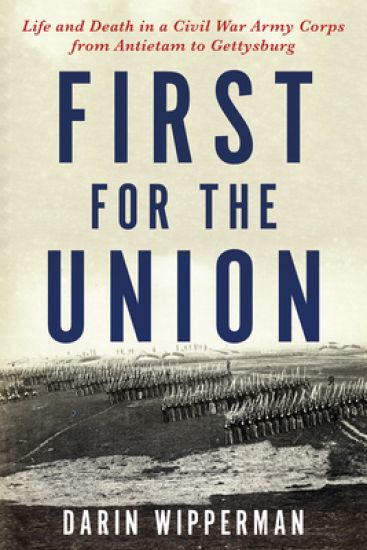
First for the Union

First for the Union

Darin Wipperman

Stackpole Books
2020
sidottu
The Army of the Potomac’s First Corps was one of the best corps in the entire Union army. In September 1862, it was chosen to spearhead the Union attack at Antietam, fighting Stonewall Jackson’s men in the Cornfield and at the Dunker Church. In July 1863 at Gettysburg, its men were the first Union infantry to reach the battle, where they relieved the cavalry and fought off the Confederate onslaught all day before retreating to Cemetery Hill. Their valiant stand west of Gettysburg saved the Union from disaster that day but came at great cost (60 percent casualties). The corps was disbanded the following spring, having bled itself out of existence. The First Corps’ leadership included two generals who would rise to command the Army of the Potomac—Joseph Hooker and George Meade—and a third who refused that command, John Reynolds, often considered the best commander in the East until his death at Gettysburg. The corps was made up heavily of men from New York and Pennsylvania (including the famous Bucktails), with a handful of New England regiments and the Midwesterners of the Iron Brigade, perhaps the Civil War’s most famous Union brigade. Corps histories remain one of the last gaps in Civil War military history. Hundreds of regimental histories have been written since war’s end, many brigades have been covered, the armies have been explored . . . but corps remain relatively overlooked—not because they are an unimportant or unappealing subject, but because mastering the subject is so difficult, requiring knowledge of many commanders’ careers, dozens of constituent units, and many battles. Few are willing to tackle the subject. Lucky for us, Darin Wipperman has taken on the task and produced a monumental history of the Army of the Potomac’s First Corps, well written and deftly told, an exciting story in itself and, like all great unit histories, one that is representative of the many other corps in the Union army.
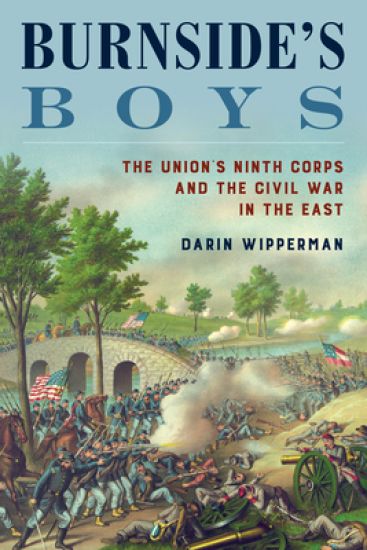
Burnside's Boys

Burnside's Boys

Darin Wipperman

STACKPOLE BOOKS
2023
sidottu
Unique among Union army corps, the Ninth fought in both the Eastern and Western theaters of the Civil War. The corps’ veterans called their service a “geography class,” and others have called the Ninth “a wandering corps” because it covered more ground than any corps in the Union armies. With the same attention to detail that he gave to the First Corps in First for the Union, Darin Wipperman vividly reconstructs life—and death—in the Ninth Corps. The roots of the Ninth Corps lay in the early 1862 coastal expeditions in the Carolinas under Ambrose Burnside. After this successful campaign—a master class in Civil War amphibious warfare that turned Burnside into a star—Burnside’s units coalesced into a corps, part of which reinforced Pope’s Army of Virginia at Second Bull Run during the summer of 1862. The Ninth fought with the Army of the Potomac in the Maryland campaign in September 1862, first at the Battle of South Mountain and then, in its most famous action, at Antietam, where it suffered 25 percent casualties attempting to seize what became known as Burnside’s Bridge. Three months later, the corps was lightly engaged at the Battle of Fredericksburg, during which Burnside commanded the entire Army of the Potomac.After the disaster of Fredericksburg, the Ninth—again under Burnside—spent much of 1863 in the West with the Army of the Ohio, performing occupation duty in Kentucky and then in Grant’s campaign to take Vicksburg, Mississippi. It fought in Tennessee and helped take Knoxville before returning East, a shell of itself thanks largely to disease. Reorganized, the Ninth joined Grant’s Overland Campaign in Virginia, fighting—with horrifying losses—at the Wilderness and Spotsylvania. It joined the siege of Petersburg, including the infamous Battle of the Crater in July 1864, and remained at Petersburg through the end of the war, where it participated in the assault that broke the siege in April 1865, forcing Lee’s army into retreat, and final defeat, at Appomattox.From the Carolinas to Maryland, from Kentucky, Mississippi, and Tennessee to Virginia, the Ninth Corps sacrificed for the Union—and burnished its place in the annals of the American Civil War.
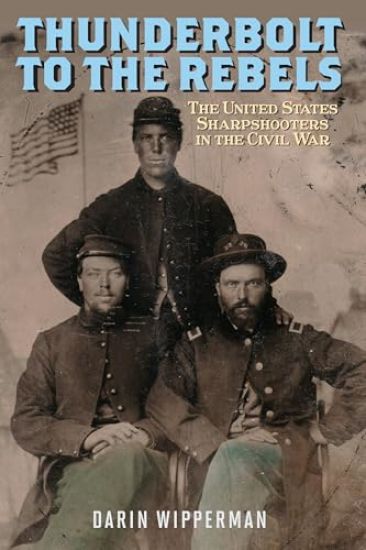
Thunderbolt to the Rebels

Thunderbolt to the Rebels

Darin Wipperman

STACKPOLE BOOKS
2025
sidottu
Sharpshooters were the elite of the Union army. Clad in green uniforms and equipped with the era’s latest rifles and scopes, they took up positions out in front of the infantry, where they targeted Confederate officers or skirmished with enemy soldiers. However they were used, sharpshooters formed an important presence on battlefields throughout the Civil War, and yet most accounts have tended to focus on their distinctive uniforms and cutting-edge equipment rather than on their combat performance. Without slighting the role played by their gear, especially their rifles, Thunderbolt to the Rebels tells the story of these Civil War deadeyes on battlefields from Antietam to Gettysburg and beyond.During the first year of the Civil War, engineer and inventor Hiram Berdan proposed the creation of a unit of marksmen armed with Sharps rifles, and thus were born the 1st and 2nd U.S. Sharpshooters. Drawn heavily from the Upper Midwest and New England, as well as Pennsylvania, the soldiers had to pass a marksmanship test to join: 10 shots in a 10-inch-diameter circle from 200 yards. They were issued green uniforms for better camouflage, which also helped Confederate riflemen target them. The job of a sharpshooter was dangerous and demanding – much of it out in front of the army, much of it alone – but the 1st and 2nd U.S.S.S. accomplished their missions and made a difference on the battlefield.Thunderbolt to the Rebels uses primary sources, especially eyewitness accounts from veterans, to reveal how these elite marksmen lived, fought, and died during the Civil War.