Kirjojen hintavertailu. Mukana 11 244 527 kirjaa ja 12 kauppaa.

Kirjahaku

Etsi kirjoja tekijän nimen, kirjan nimen tai ISBN:n perusteella.

3 kirjaa tekijältä Dariusz Tolczyk

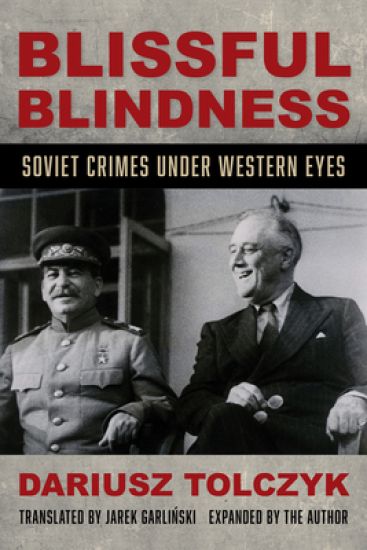
Blissful Blindness

Blissful Blindness

Dariusz Tolczyk

INDIANA UNIVERSITY PRESS
2023
sidottu
The most heinous Soviet crimes – the Red Terror, brutal collectivization, the Great Famine, the Gulag, Stalin's Great Terror, mass deportations, and other atrocities – were treated in the West as a controversial topic. With the Cold War dichotomy of Western democracy versus Soviet communism deeply imprinted in our minds, we are not always aware that these crimes were very often questioned, dismissed, denied, sometimes rationalized, and even outright glorified in the Western world. Facing a choice of whom to believe –the survivors or Soviet propaganda– many Western opinion leaders chose in favor of Soviet propaganda. Even those who did not believe it behaved sometimes as if they did. Blissful Blindness explores Western reactions (and lack thereof) to Soviet crimes from the Bolshevik revolution to the collapse of Soviet communism in order to understand ideological, political, economic, cultural, personal, and other motivations behind this puzzling phenomenon of willful ignorance. But the significance of Dariusz Tolczyk's book reaches beyond its direct historical focus. Written for audiences not limited to scholars and specialists, this book not only opens one's eyes to rarely examined aspects of the twentieth century but also helps one see how astonishingly relevant this topic is in our contemporary world.
Blissful Blindness

Blissful Blindness

Dariusz Tolczyk

INDIANA UNIVERSITY PRESS
2023
pokkari
The most heinous Soviet crimes – the Red Terror, brutal collectivization, the Great Famine, the Gulag, Stalin's Great Terror, mass deportations, and other atrocities – were treated in the West as a controversial topic. With the Cold War dichotomy of Western democracy versus Soviet communism deeply imprinted in our minds, we are not always aware that these crimes were very often questioned, dismissed, denied, sometimes rationalized, and even outright glorified in the Western world. Facing a choice of whom to believe –the survivors or Soviet propaganda– many Western opinion leaders chose in favor of Soviet propaganda. Even those who did not believe it behaved sometimes as if they did. Blissful Blindness explores Western reactions (and lack thereof) to Soviet crimes from the Bolshevik revolution to the collapse of Soviet communism in order to understand ideological, political, economic, cultural, personal, and other motivations behind this puzzling phenomenon of willful ignorance. But the significance of Dariusz Tolczyk's book reaches beyond its direct historical focus. Written for audiences not limited to scholars and specialists, this book not only opens one's eyes to rarely examined aspects of the twentieth century but also helps one see how astonishingly relevant this topic is in our contemporary world.
See No Evil

See No Evil

Dariusz Tolczyk

Yale University Press
1999
sidottu
Believing that human actions could be controlled by a totalitarian government, Stalin and his followers subjected millions of Soviet citizens to acts of state terrorism and imprisonment in labor camps. But this was not enough. Seeking to control human thought as well, Soviet authorities provided official words and images to legitimize the gulag, distort its moral nature, and even glorify its "necessary" violence. This fascinating book is the first in English to examine official Soviet concentration camp literature from the early 1920s through the mid-1960s. Dariusz Tolczyk probes the evolution of this literature, the totalitarian thinking that inspired it, and the scandalous role played by Russian literary intellectuals who collaborated in its creation.The author considers how Soviet novelists and poets in the 1920s dealt with the Leninist notion that ethics is entirely utilitarian and relative; analyzes the official glorification of the gulag in the early 1930s in such works as White Sea Canal, a composite volume by 36 famous authors praising the use of slave labor; and examines why the subject of the camps became taboo from 1937 to the Khrushchevian thaw of the early 1960s. Tolczyk also provides a masterful account of the problem posed for Soviet censors by Aleksandr Solzhenitsyn’s One Day in the Life of Ivan Denisovich and shows how the failure of the Soviet regime to come to terms with the ethical legacy of the gulag signaled the decline of the totalitarian project.