Kirjojen hintavertailu. Mukana 12 282 580 kirjaa ja 12 kauppaa.

Kirjahaku

Etsi kirjoja tekijän nimen, kirjan nimen tai ISBN:n perusteella.

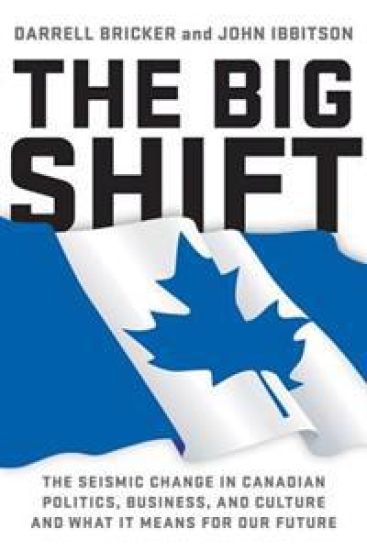
5 kirjaa tekijältä Darrell Bricker, John Ibbitson

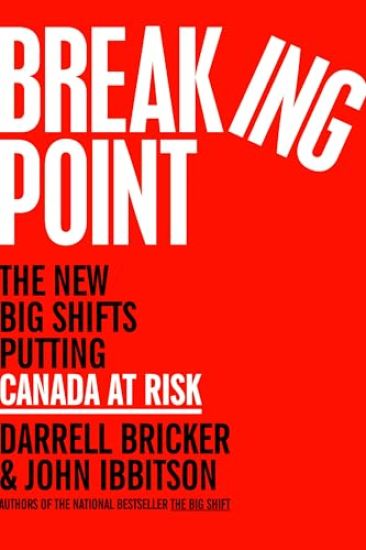
Breaking Point: The New Big Shifts Putting Canada at Risk

Breaking Point: The New Big Shifts Putting Canada at Risk

Darrell Bricker; John Ibbitson

Signal Books
2025
sidottu
From the authors of The Big Shift and Empty Planet, a timely and provocative exploration of the seismic forces reshaping Canada's political, cultural, and economic landscape. Darrell Bricker and John Ibbitson's explosive new polemic, arrives in the midst of the greatest political crisis Canada has ever faced. The country stands at risk. Even before Donald Trump returned to the U.S. presidency, brandishing tariffs and threats of annexation, Canada had started to crack. Year after year of decisions deferred, problems ignored, and cans kicked carelessly down the road have created dangerous fissures. Stifling regulations drag down the economy. Younger people feel angry and alienated by dizzying housing prices and gig jobs. Regional tensions threaten unity in both Quebec and the Prairies. The immigration system is broken. And Canada stands alone, having failed to pay the cost of defending itself. Canadians elected a former bank governor to fix all this. But can the Liberals get us out of the mess they helped get us into? What future awaits the progressive and conservative coalitions? Will the Laurentian elites continue to misgovern, or are there alternatives? The country is at a breaking point. Canadians must act to save it before they lose it. Provocative, urgent, and unapologetically candid, Breaking Point will ignite debate, dominate political discourse, and become the definitive guide to understanding what is shaping up to be one of the most turbulent eras in Canadian history.
Empty Planet

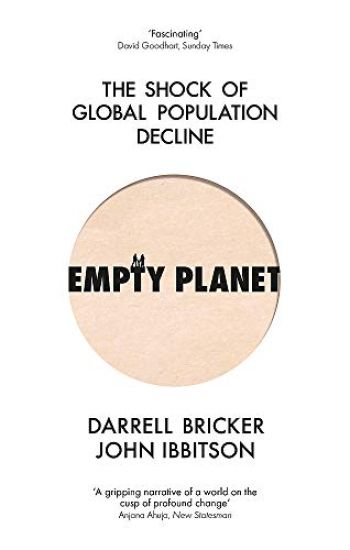
Empty Planet

Darrell Bricker; John Ibbitson

Robinson
2020
pokkari
**A SUNDAY TIMES MUST-READ**'Riveting and vitally important' - Steven Pinker'A gripping narrative of a world on the cusp of profound change' - Anjana Ahuja, New StatesmanEmpty Planet offers a radical, provocative argument that the global population will soon begin to decline, dramatically reshaping the social, political and economic landscape.For half a century, statisticians, pundits and politicians have warned that a burgeoning planetary population will soon overwhelm the earth's resources. But a growing number of experts are sounding a different kind of alarm. Rather than growing exponentially, they argue, the global population is headed for a steep decline. Throughout history, depopulation was the product of catastrophe: ice ages, plagues, the collapse of civilizations. This time, however, we're thinning ourselves deliberately, by choosing to have fewer babies than we need to replace ourselves. In much of the developed and developing world, that decline is already underway, as urbanisation, women's empowerment, and waning religiosity lead to smaller and smaller families. In Empty Planet, Ibbitson and Bricker travel from South Florida to Sao Paulo, Seoul to Nairobi, Brussels to Delhi to Beijing, drawing on a wealth of research and firsthand reporting to illustrate the dramatic consequences of this population decline - and to show us why the rest of the developing world will soon join in. They find that a smaller global population will bring with it a number of benefits: fewer workers will command higher wages; good jobs will prompt innovation; the environment will improve; the risk of famine will wane; and falling birthrates in the developing world will bring greater affluence and autonomy for women. But enormous disruption lies ahead, too. We can already see the effects in Europe and parts of Asia, as aging populations and worker shortages weaken the economy and impose crippling demands on healthcare and vital social services. There may be earth-shaking implications on a geopolitical scale as well. Empty Planet is a hugely important book for our times. Captivating and persuasive, it is a story about urbanisation, access to education and the empowerment of women to choose their own destinies. It is about the secularisation of societies and the vital role that immigration has to play in our futures.Rigorously researched and deeply compelling, Empty Planet offers a vision of a future that we can no longer prevent - but that we can shape, if we choose to.
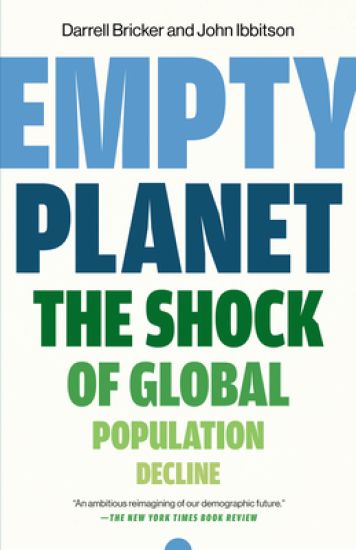
Empty Planet: The Shock of Global Population Decline

Empty Planet: The Shock of Global Population Decline

Darrell Bricker; John Ibbitson

Crown Publishing Group (NY)
2020
nidottu
NATIONAL BESTSELLER - In this "gripping narrative of a world on the cusp of profound change" (New Statesman), an award-winning journalist and leading international social researcher argue that the global population's inevitable decline will dramatically reshape our social, political, and economic landscape. "An ambitious reimagining of our demographic future."--The New York Times Book Review For half a century, statisticians, pundits, and politicians have warned that a burgeoning population will soon overwhelm the earth's resources. But a growing number of experts are sounding a different alarm. Rather than continuing to increase exponentially, they argue, the global population is headed for a steep decline--and in many countries, that decline has already begun. In Empty Planet, international social researcher Darrell Bricker and award-winning journalist John Ibbitson find that a smaller global population will bring with it many benefits: Fewer workers will command higher wages, the environment will improve, the risk of famine will wane, and falling birthrates in the developing world will bring greater affluence and autonomy for women. But enormous disruption lies ahead, too. The United States and Canada are well positioned to successfully navigate these coming demographic shifts--unless growing isolationism leads us to close ourselves off just as openness becomes more critical to our survival than ever. Rigorously researched and deeply compelling, Empty Planet offers a vision of the future that we can no longer prevent--but one that we can shape, if we choose.