Kirjojen hintavertailu. Mukana 11 342 296 kirjaa ja 12 kauppaa.

Kirjahaku

Etsi kirjoja tekijän nimen, kirjan nimen tai ISBN:n perusteella.

5 kirjaa tekijältä Darrell P. Rowbottom

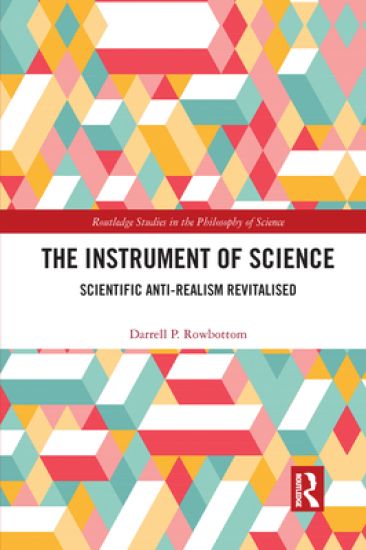
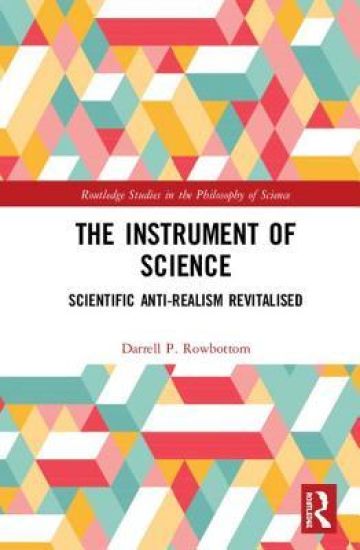
The Instrument of Science

The Instrument of Science

Darrell P. Rowbottom

Routledge
2019
sidottu
Roughly, instrumentalism is the view that science is primarily, and should primarily be, an instrument for furthering our practical ends. It has fallen out of favour because historically influential variants of the view, such as logical positivism, suffered from serious defects.In this book, however, Darrell P. Rowbottom develops a new form of instrumentalism, which is more sophisticated and resilient than its predecessors. This position—‘cognitive instrumentalism’—involves three core theses. First, science makes theoretical progress primarily when it furnishes us with more predictive power or understanding concerning observable things. Second, scientific discourse concerning unobservable things should only be taken literally in so far as it involves observable properties or analogies with observable things. Third, scientific claims about unobservable things are probably neither approximately true nor liable to change in such a way as to increase in truthlikeness.There are examples from science throughout the book, and Rowbottom demonstrates at length how cognitive instrumentalism fits with the development of late nineteenth- and early twentieth-century chemistry and physics, and especially atomic theory. Drawing upon this history, Rowbottom also argues that there is a kind of understanding, empirical understanding, which we can achieve without having true, or even approximately true, representations of unobservable things. In closing the book, he sets forth his view on how the distinction between the observable and unobservable may be drawn, and compares cognitive instrumentalism with key contemporary alternatives such as structural realism, constructive empiricism, and semirealism.Overall, this book offers a strong defence of instrumentalism that will be of interest to scholars and students working on the debate about realism in philosophy of science.

Probability

Probability

Darrell P. Rowbottom

Polity Press
2015
sidottu
When a doctor tells you there?s a one percent chance that an operation will result in your death, or a scientist claims that his theory is probably true, what exactly does that mean? Understanding probability is clearly very important, if we are to make good theoretical and practical choices. In this engaging and highly accessible introduction to the philosophy of probability, Darrell Rowbottom takes the reader on a journey through all the major interpretations of probability, with reference to real-world situations. In lucid prose, he explores the many fallacies of probabilistic reasoning, such as the ?gambler?s fallacy? and the ?inverse fallacy?, and shows how we can avoid falling into these traps by using the interpretations presented. He also illustrates the relevance of the interpretation of probability across disciplinary boundaries, by examining which interpretations of probability are appropriate in diverse areas such as quantum mechanics, game theory, and genetics. Using entertaining dialogues to draw out the key issues at stake, this unique book will appeal to students and scholars across philosophy, the social sciences, and the natural sciences.
Probability

Probability

Darrell P. Rowbottom

Polity Press
2015
nidottu
When a doctor tells you there?s a one percent chance that an operation will result in your death, or a scientist claims that his theory is probably true, what exactly does that mean? Understanding probability is clearly very important, if we are to make good theoretical and practical choices. In this engaging and highly accessible introduction to the philosophy of probability, Darrell Rowbottom takes the reader on a journey through all the major interpretations of probability, with reference to real-world situations. In lucid prose, he explores the many fallacies of probabilistic reasoning, such as the ?gambler?s fallacy? and the ?inverse fallacy?, and shows how we can avoid falling into these traps by using the interpretations presented. He also illustrates the relevance of the interpretation of probability across disciplinary boundaries, by examining which interpretations of probability are appropriate in diverse areas such as quantum mechanics, game theory, and genetics. Using entertaining dialogues to draw out the key issues at stake, this unique book will appeal to students and scholars across philosophy, the social sciences, and the natural sciences.
The Instrument of Science

The Instrument of Science

Darrell P. Rowbottom

Taylor Francis Ltd
2021
nidottu
Roughly, instrumentalism is the view that science is primarily, and should primarily be, an instrument for furthering our practical ends. It has fallen out of favour because historically influential variants of the view, such as logical positivism, suffered from serious defects.In this book, however, Darrell P. Rowbottom develops a new form of instrumentalism, which is more sophisticated and resilient than its predecessors. This position—‘cognitive instrumentalism’—involves three core theses. First, science makes theoretical progress primarily when it furnishes us with more predictive power or understanding concerning observable things. Second, scientific discourse concerning unobservable things should only be taken literally in so far as it involves observable properties or analogies with observable things. Third, scientific claims about unobservable things are probably neither approximately true nor liable to change in such a way as to increase in truthlikeness.There are examples from science throughout the book, and Rowbottom demonstrates at length how cognitive instrumentalism fits with the development of late nineteenth- and early twentieth-century chemistry and physics, and especially atomic theory. Drawing upon this history, Rowbottom also argues that there is a kind of understanding, empirical understanding, which we can achieve without having true, or even approximately true, representations of unobservable things. In closing the book, he sets forth his view on how the distinction between the observable and unobservable may be drawn, and compares cognitive instrumentalism with key contemporary alternatives such as structural realism, constructive empiricism, and semirealism.Overall, this book offers a strong defence of instrumentalism that will be of interest to scholars and students working on the debate about realism in philosophy of science.

Scientific Progress

Scientific Progress

Darrell P. Rowbottom

Cambridge University Press
2023
pokkari
What constitutes cognitive scientific progress? This Element begins with an extensive survey of the contemporary debate on how to answer this question. It provides a blow-by-blow critical summary of the key literature on the issue over the past fifteen years, covering the central positions and arguments therein. It also draws upon older literature, where appropriate, to inform the treatment. The Element then enters novel territory by considering meta-normative issues concerning scientific progress. It focuses on how the standards involved in assessing progress arise. Does science have aims, which determine what counts as progress, as many authors assume? If so, what is it to be an aim of science? And how does one identify such things? If not, how do normative standards arise? After arguing that science does not have overarching aims, the Element proposes that the standards are ultimately subjective.