Kirjojen hintavertailu. Mukana 11 699 587 kirjaa ja 12 kauppaa.

Kirjahaku

Etsi kirjoja tekijän nimen, kirjan nimen tai ISBN:n perusteella.

3 kirjaa tekijältä David A Dyker

Yugoslavia (Routledge Revivals)

Yugoslavia (Routledge Revivals)

David A Dyker

Routledge
2011
sidottu
This book, first published in 1990, analyses contemporary Yugoslavian development strategy in its historical and political context, assessing how corruption, negligence, and an emphasis on industry to the detriment of agriculture and trade, have all played a part in bringing Yugoslavia close to financial and political chaos. The book concludes by considering the contemporary prospects for a more integrated policy approach in the midst of the country's political crisis.
Yugoslavia (Routledge Revivals)

Yugoslavia (Routledge Revivals)

David A Dyker

Routledge
2012
nidottu
This book, first published in 1990, analyses contemporary Yugoslavian development strategy in its historical and political context, assessing how corruption, negligence, and an emphasis on industry to the detriment of agriculture and trade, have all played a part in bringing Yugoslavia close to financial and political chaos. The book concludes by considering the contemporary prospects for a more integrated policy approach in the midst of the country's political crisis.
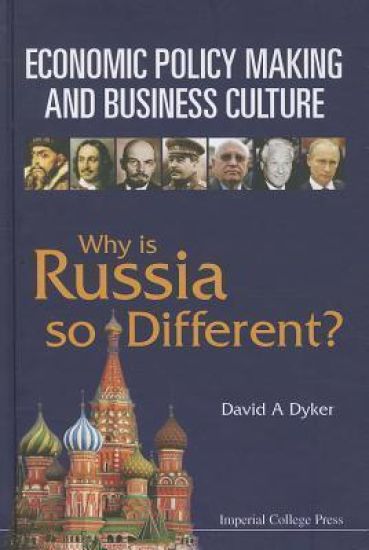
Economic Policy Making And Business Culture: Why Is Russia So Different?
This book addresses one of the fundamental problems in Russian society, and in Russia's relations with the rest of the world. Why do Russians tend to react differently from ‘us’ in given diplomatic or business situations? Why do they find the notion of a contract difficult to grasp? Why do they seem hostile to the principle of the level playing field? How do they see Russia's position within the globalised economy? In order to probe these issues, the author begins with a historical analysis, looking at the pattern of political and economic development since Tsarist times, always asking the questions: What is unique to Russia in all this, and which unique features tend to recur in different periods? In seeking to illuminate the interface between Russia and the world, the author also examines Russia's attitude to itself, and to its own resources — natural and human — to land as an agricultural resource, and later oil and gas; and to people — as cheap labour and as highly trained scientific personnel. This book is firmly based on scholarly sources, in English, French and Russian, but aims to go beyond the academic audience to address the concerns of people encountering Russians and Russian organizations in their everyday lives.