Kirjojen hintavertailu. Mukana 11 342 296 kirjaa ja 12 kauppaa.

Kirjahaku

Etsi kirjoja tekijän nimen, kirjan nimen tai ISBN:n perusteella.

4 kirjaa tekijältä David A. Freedman

Statistical Models

Statistical Models

David A. Freedman

Cambridge University Press
2009
sidottu
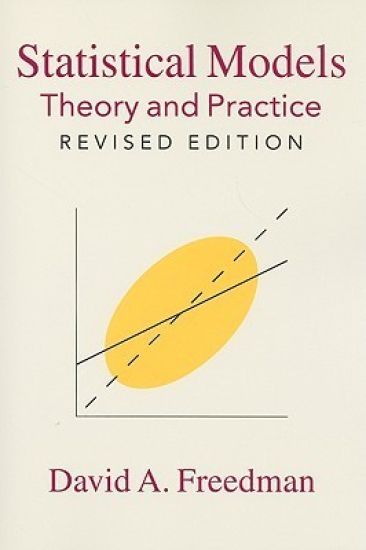
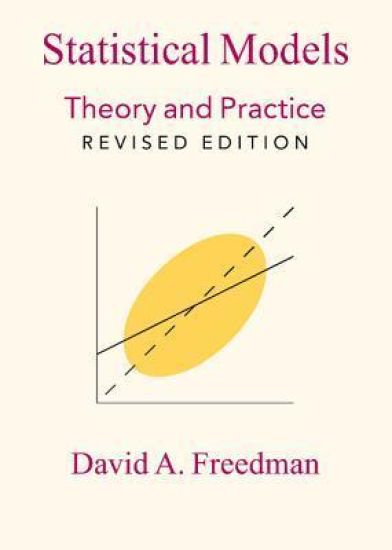
This lively and engaging book explains the things you have to know in order to read empirical papers in the social and health sciences, as well as the techniques you need to build statistical models of your own. The discussion in the book is organized around published studies, as are many of the exercises. Relevant journal articles are reprinted at the back of the book. Freedman makes a thorough appraisal of the statistical methods in these papers and in a variety of other examples. He illustrates the principles of modelling, and the pitfalls. The discussion shows you how to think about the critical issues - including the connection (or lack of it) between the statistical models and the real phenomena. The book is written for advanced undergraduates and beginning graduate students in statistics, as well as students and professionals in the social and health sciences.
Statistical Models and Causal Inference

Statistical Models and Causal Inference

David A. Freedman

Cambridge University Press
2009
pokkari
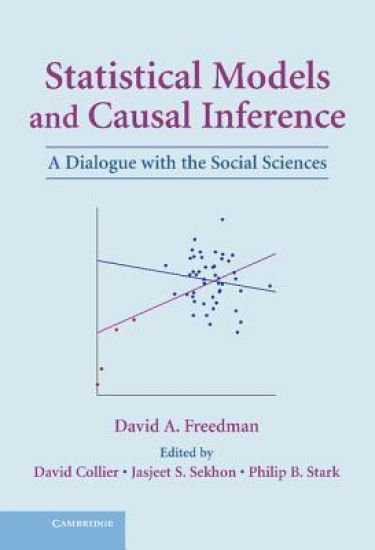
David A. Freedman presents here a definitive synthesis of his approach to causal inference in the social sciences. He explores the foundations and limitations of statistical modeling, illustrating basic arguments with examples from political science, public policy, law, and epidemiology. Freedman maintains that many new technical approaches to statistical modeling constitute not progress, but regress. Instead, he advocates a 'shoe leather' methodology, which exploits natural variation to mitigate confounding and relies on intimate knowledge of the subject matter to develop meticulous research designs and eliminate rival explanations. When Freedman first enunciated this position, he was met with scepticism, in part because it was hard to believe that a mathematical statistician of his stature would favor 'low-tech' approaches. But the tide is turning. Many social scientists now agree that statistical technique cannot substitute for good research design and subject matter knowledge. This book offers an integrated presentation of Freedman's views.
Statistical Models and Causal Inference

Statistical Models and Causal Inference

David A. Freedman

Cambridge University Press
2009
sidottu
David A. Freedman presents here a definitive synthesis of his approach to causal inference in the social sciences. He explores the foundations and limitations of statistical modeling, illustrating basic arguments with examples from political science, public policy, law, and epidemiology. Freedman maintains that many new technical approaches to statistical modeling constitute not progress, but regress. Instead, he advocates a 'shoe leather' methodology, which exploits natural variation to mitigate confounding and relies on intimate knowledge of the subject matter to develop meticulous research designs and eliminate rival explanations. When Freedman first enunciated this position, he was met with scepticism, in part because it was hard to believe that a mathematical statistician of his stature would favor 'low-tech' approaches. But the tide is turning. Many social scientists now agree that statistical technique cannot substitute for good research design and subject matter knowledge. This book offers an integrated presentation of Freedman's views.
Statistical Models

Statistical Models

David A. Freedman

Cambridge University Press
2009
pokkari
This lively and engaging book explains the things you have to know in order to read empirical papers in the social and health sciences, as well as the techniques you need to build statistical models of your own. The discussion in the book is organized around published studies, as are many of the exercises. Relevant journal articles are reprinted at the back of the book. Freedman makes a thorough appraisal of the statistical methods in these papers and in a variety of other examples. He illustrates the principles of modelling, and the pitfalls. The discussion shows you how to think about the critical issues - including the connection (or lack of it) between the statistical models and the real phenomena. The book is written for advanced undergraduates and beginning graduate students in statistics, as well as students and professionals in the social and health sciences.