Kirjojen hintavertailu. Mukana 11 487 659 kirjaa ja 12 kauppaa.

Kirjahaku

Etsi kirjoja tekijän nimen, kirjan nimen tai ISBN:n perusteella.

9 kirjaa tekijältä David A. Hollinger

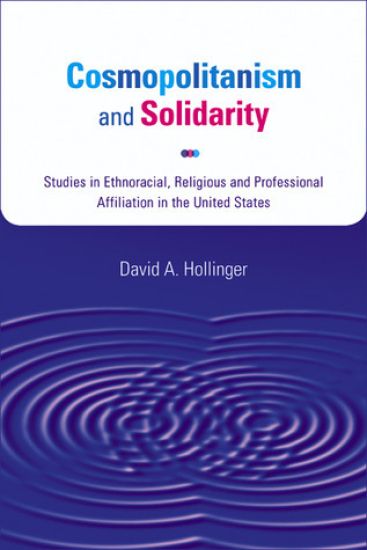
Cosmopolitanism and Solidarity

Cosmopolitanism and Solidarity

David A. Hollinger

University of Wisconsin Press
2006
sidottu
Who are we? is the question at the core of these fascinating essays from one of the nation's leading intellectual historians. With old identities increasingly destabilized throughout the world - the result of demographic migration, declining empires, and the quickening integration of the global capitalist economy and its attendant communications systems - David A. Hollinger argues that the problem of group solidarity is emerging as one of the central challenges of the twenty-first century. Building on many of the topics in his highly acclaimed earlier work, these essays treat a number of contentious issues, many of them deeply embedded in America's past and present political polarization. Essays include ""Amalgamation and Hypodescent,"" ""Enough Already: Universities Do Not Need More Christianity,"" ""Cultural Relativism,"" ""Why Are Jews Preeminent in Science and Scholarship: The Veblen Thesis Reconsidered,"" and ""The One Drop Rule and the One Hate Rule."" Hollinger is at his best in his judicious approach to America's controversial history of race, ethnicity, and religion, and he offers his own thoughtful prescriptions as Americans and others throughout the world struggle with the pressing questions of identity and solidarity.
Science, Jews, and Secular Culture

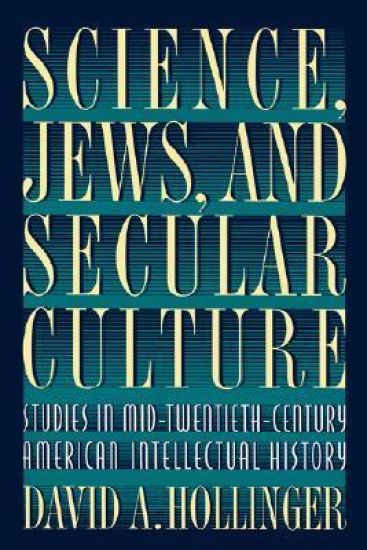
Science, Jews, and Secular Culture

David A. Hollinger

Princeton University Press
1998
pokkari
This remarkable group of essays describes the "culture wars" that consolidated a new, secular ethos in mid-twentieth-century American academia and generated the fresh energies needed for a wide range of scientific and cultural enterprises. Focusing on the decades from the 1930s through the 1960s, David Hollinger discusses the scientists, social scientists, philosophers, and historians who fought the Christian biases that had kept Jews from fully participating in American intellectual life. Today social critics take for granted the comparatively open outlook developed by these men (and men they were, mostly), and charge that their cosmopolitanism was not sufficiently multicultural. Yet Hollinger shows that the liberal cosmopolitans of the mid-century generation defined themselves against the realities of their own time: McCarthyism, Nazi and Communist doctrines, a legacy of anti-Semitic quotas, and both Protestant and Catholic versions of the notion of a "Christian America." The victory of liberal cosmopolitans was so sweeping by the 1960s that it has become easy to forget the strength of the enemies they fought. Most books addressing the emergence of Jewish intellectuals celebrate an illustrious cohort of literary figures based in New York City. But the pieces collected here explore the long-postponed acceptance of Jewish immigrants in a variety of settings, especially the social science and humanities faculties of major universities scattered across the country. Hollinger acknowledges the limited, rather parochial sense of "mankind" that informed some mid-century thinking, but he also inspires in the reader an appreciation for the integrationist aspirations of a society truly striving toward equality. His cast of characters includes Vannevar Bush, James B. Conant, Richard Hofstadter, Robert K. Merton, Lionel Trilling, and J. Robert Oppenheimer.
After Cloven Tongues of Fire

After Cloven Tongues of Fire

David A. Hollinger

Princeton University Press
2013
sidottu
The role of liberalized, ecumenical Protestantism in American history has too often been obscured by the more flamboyant and orthodox versions of the faith that oppose evolution, embrace narrow conceptions of family values, and continue to insist that the United States should be understood as a Christian nation. In this book, one of our preeminent scholars of American intellectual history examines how liberal Protestant thinkers struggled to embrace modernity, even at the cost of yielding much of the symbolic capital of Christianity to more conservative, evangelical communities of faith. If religion is not simply a private concern, but a potential basis for public policy and a national culture, does this mean that religious ideas can be subject to the same kind of robust public debate normally given to ideas about race, gender, and the economy? Or is there something special about religious ideas that invites a suspension of critical discussion? These essays, collected here for the first time, demonstrate that the critical discussion of religious ideas has been central to the process by which Protestantism has been liberalized throughout the history of the United States, and shed light on the complex relationship between religion and politics in contemporary American life. After Cloven Tongues of Fire brings together in one volume David Hollinger's most influential writings on ecumenical Protestantism. The book features an informative general introduction as well as concise introductions to each essay.
Protestants Abroad

Protestants Abroad

David A. Hollinger

Princeton University Press
2017
sidottu
They sought to transform the world, and ended up transforming twentieth-century America Between the 1890s and the Vietnam era, tens of thousands of American Protestant missionaries were stationed throughout the non-European world. They expected to change the peoples they encountered abroad, but those foreign peoples ended up changing the missionaries. Missionary experience made many of these Americans critical of racism, imperialism, and religious orthodoxy. When they returned home, the missionaries and their children liberalized their own society. Protestants Abroad reveals the untold story of how these missionary-connected individuals left their enduring mark on American public life as writers, diplomats, academics, church officials, publishers, foundation executives, and social activists. David Hollinger provides riveting portraits of such figures as Pearl Buck, John Hersey, and Life and Time publisher Henry Luce, former "mish kids" who strove through literature and journalism to convince white Americans of the humanity of other peoples. Hollinger describes how the U.S. government's need for people with language skills and direct experience in Asian societies catapulted dozens of missionary-connected individuals into prominent roles in intelligence and diplomacy. He also shows how Edwin Reischauer and other scholars with missionary backgrounds led the growth of Foreign Area Studies in universities during the Cold War. Hollinger shows how the missionary contingent advocated multiculturalism at home and anticolonialism abroad, pushed their churches in ecumenical and social-activist directions, and joined with cosmopolitan Jewish intellectuals to challenge traditional Protestant cultural hegemony and promote a pluralist vision of American life. Missionary cosmopolitans were the Anglo-Protestant counterparts of the New York Jewish intelligentsia of the same era. Protestants Abroad sheds new light on how missionary-connected American Protestants played a crucial role in the development of modern American liberalism, and helped Americans reimagine their nation as a global citizen.
After Cloven Tongues of Fire

After Cloven Tongues of Fire

David A. Hollinger

Princeton University Press
2015
pokkari
The role of liberalized, ecumenical Protestantism in American history has too often been obscured by the more flamboyant and orthodox versions of the faith that oppose evolution, embrace narrow conceptions of family values, and continue to insist that the United States should be understood as a Christian nation. In this book, one of our preeminent scholars of American intellectual history examines how liberal Protestant thinkers struggled to embrace modernity, even at the cost of yielding much of the symbolic capital of Christianity to more conservative, evangelical communities of faith. If religion is not simply a private concern, but a potential basis for public policy and a national culture, does this mean that religious ideas can be subject to the same kind of robust public debate normally given to ideas about race, gender, and the economy? Or is there something special about religious ideas that invites a suspension of critical discussion? These essays, collected here for the first time, demonstrate that the critical discussion of religious ideas has been central to the process by which Protestantism has been liberalized throughout the history of the United States, and shed light on the complex relationship between religion and politics in contemporary American life. After Cloven Tongues of Fire brings together in one volume David Hollinger's most influential writings on ecumenical Protestantism. The book features an informative general introduction as well as concise introductions to each essay.
Protestants Abroad

Protestants Abroad

David A. Hollinger

Princeton University Press
2019
pokkari
They sought to transform the globe and ended up transforming modern AmericaBetween the 1890s and the Vietnam era, many thousands of American Protestant missionaries were sent to live throughout the non-European world. Their experience abroad made many of these missionaries and their children critical of racism, imperialism, and religious orthodoxy. When they returned home, they brought new liberal values back to their own society. David Hollinger reveals the untold story of how these missionary-connected individuals left an enduring mark on American public life as writers, diplomats, academics, church officials, publishers, foundation executives, and social activists. Protestants Abroad reveals the crucial role they played in the development of modern American liberalism, and shows how they helped other Americans reimagine their nation’s place in the world.
Christianity's American Fate

Christianity's American Fate

David A. Hollinger

PRINCETON UNIVERSITY PRESS
2022
sidottu
Tracing the rise of evangelicalism and the decline of mainline Protestantism in American religious and cultural lifeHow did American Christianity become synonymous with conservative white evangelicalism? This sweeping work by a leading historian of modern America traces the rise of the evangelical movement and the decline of mainline Protestantism’s influence on American life. In Christianity’s American Fate, David Hollinger shows how the Protestant establishment, adopting progressive ideas about race, gender, sexuality, empire, and divinity, liberalized too quickly for some and not quickly enough for others. After 1960, mainline Protestantism lost members from both camps—conservatives to evangelicalism and progressives to secular activism. A Protestant evangelicalism that was comfortable with patriarchy and white supremacy soon became the country’s dominant Christian cultural force.Hollinger explains the origins of what he calls Protestantism’s “two-party system” in the United States, finding its roots in America’s religious culture of dissent, as established by seventeenth-century colonists who broke away from Europe’s religious traditions; the constitutional separation of church and state, which enabled religious diversity; and the constant influx of immigrants, who found solidarity in churches. Hollinger argues that the United States became not only overwhelmingly Protestant but Protestant on steroids. By the 1960s, Jews and other non-Christians had diversified the nation ethnoreligiously, inspiring more inclusive notions of community. But by embracing a socially diverse and scientifically engaged modernity, Hollinger tells us, ecumenical Protestants also set the terms by which evangelicals became reactionary.
Christianity's American Fate

Christianity's American Fate

David A. Hollinger

PRINCETON UNIVERSITY PRESS
2024
pokkari
Tracing the rise of evangelicalism and the decline of mainline Protestantism in American religious and cultural lifeHow did American Christianity become synonymous with conservative white evangelicalism? This sweeping work by a leading historian of modern America traces the rise of the evangelical movement and the decline of mainline Protestantism’s influence on American life. In Christianity’s American Fate, David Hollinger shows how the Protestant establishment, adopting progressive ideas about race, gender, sexuality, empire, and divinity, liberalized too quickly for some and not quickly enough for others. After 1960, mainline Protestantism lost members from both camps—conservatives to evangelicalism and progressives to secular activism. A Protestant evangelicalism that was comfortable with patriarchy and white supremacy soon became the country’s dominant Christian cultural force.Hollinger explains the origins of what he calls Protestantism’s “two-party system” in the United States, finding its roots in America’s religious culture of dissent, as established by seventeenth-century colonists who broke away from Europe’s religious traditions; the constitutional separation of church and state, which enabled religious diversity; and the constant influx of immigrants, who found solidarity in churches. Hollinger argues that the United States became not only overwhelmingly Protestant but Protestant on steroids. By the 1960s, Jews and other non-Christians had diversified the nation ethnoreligiously, inspiring more inclusive notions of community. But by embracing a socially diverse and scientifically engaged modernity, Hollinger tells us, ecumenical Protestants also set the terms by which evangelicals became reactionary.
In the American Province

In the American Province

David A. Hollinger

Johns Hopkins University Press
1989
pokkari
American intellectual historians need to pay more attention to how elites relate to broader audiences. Hollinger's work is in the vanguard of recent intellectual history and it is a joy to observe a true intellectual in discourse with his peers. -- History: Reviews of Books.