Kirjojen hintavertailu. Mukana 12 377 233 kirjaa ja 12 kauppaa.

Kirjahaku

Etsi kirjoja tekijän nimen, kirjan nimen tai ISBN:n perusteella.

9 kirjaa tekijältä David A. Kessler

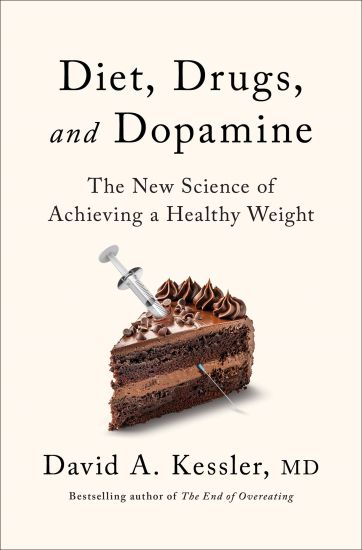
Diet, Drugs, and Dopamine: The New Science of Achieving a Healthy Weight
INSTANT NEW YORK TIMES BESTSELLER From the New York Times bestselling author of The End of Overeating comes an illuminating understanding of body weight, including the promise--and peril --of the latest weight loss drugs. The struggle is universal: we work hard to lose weight, only to find that it slowly creeps back. In America, body weight has become a pain point shrouded in self-recrimination and shame, not to mention bias from the medical community. For many, this battle not only takes a mental toll but also becomes a physical threat: three-quarters of American adults struggle with weight-related health conditions, including high blood pressure, heart disease, and diabetes. We know that diets don't work, and yet we also know that excess weight starves us of years and quality of life. Where do we go from here? In Diet, Drugs, and Dopamine, former FDA Commissioner Dr. David A. Kessler unpacks the mystery of weight in the most comprehensive work to date on this topic, giving readers the power to dramatically improve their health. Kessler, who has himself struggled with weight, suggests the new class of GLP-1 weight loss drugs have provided a breakthrough: they have radically altered our understanding of weight loss. They make lasting change possible, but they also have real disadvantages and must be considered as part of a comprehensive approach together with nutrition, behavior, and physical activity. Critical to this new perspective is the insight that weight-loss drugs act on the part of the brain that is responsible for cravings. In essence, the drugs tamp down the addictive circuits that overwhelm rational decision-making and quiet the "food noise" that distracts us. Identifying these mechanisms allows us to develop a strategy for effective long-term weight loss, and that begins with naming the elephant in the room: ultraformulated foods are addictive. Losing weight is a process of treating addiction. In this landmark book, one of the nation's leading public health officials breaks taboos around this fraught conversation, giving readers the tools to unplug the brain's addictive wiring and change their relationship with food. Dr. Kessler cautions that drugs, on their own, pose serious risks and are not a universal solution. But with this new understanding of the brain-body feedback loop comes new possibilities for our health and freedom from a lifelong struggle. Eye-opening, provocative, and rigorous, this book is a must-read for anyone who has ever struggled to maintain their weight--which is to say, everyone.
Diet, Drugs, and Dopamine: The New Science of Achieving a Healthy Weight
INSTANT NEW YORK TIMES BESTSELLER From the New York Times bestselling author of The End of Overeating comes an illuminating understanding of body weight, including the promise--and peril --of the latest weight loss drugs. The struggle is universal: we work hard to lose weight, only to find that it slowly creeps back. In America, body weight has become a pain point shrouded in self-recrimination and shame, not to mention bias from the medical community. For many, this battle not only takes a mental toll but also becomes a physical threat: three-quarters of American adults struggle with weight-related health conditions, including high blood pressure, heart disease, and diabetes. We know that diets don't work, and yet we also know that excess weight starves us of years and quality of life. Where do we go from here? In Diet, Drugs, and Dopamine, former FDA Commissioner Dr. David A. Kessler unpacks the mystery of weight in the most comprehensive work to date on this topic, giving readers the power to dramatically improve their health. Kessler, who has himself struggled with weight, suggests the new class of GLP-1 weight loss drugs have provided a breakthrough: they have radically altered our understanding of weight loss. They make lasting change possible, but they also have real disadvantages and must be considered as part of a comprehensive approach together with nutrition, behavior, and physical activity. Critical to this new perspective is the insight that weight-loss drugs act on the part of the brain that is responsible for cravings. In essence, the drugs tamp down the addictive circuits that overwhelm rational decision-making and quiet the "food noise" that distracts us. Identifying these mechanisms allows us to develop a strategy for effective long-term weight loss, and that begins with naming the elephant in the room: ultraformulated foods are addictive. Losing weight is a process of treating addiction. In this landmark book, one of the nation's leading public health officials breaks taboos around this fraught conversation, giving readers the tools to unplug the brain's addictive wiring and change their relationship with food. Dr. Kessler cautions that drugs, on their own, pose serious risks and are not a universal solution. But with this new understanding of the brain-body feedback loop comes new possibilities for our health and freedom from a lifelong struggle. Eye-opening, provocative, and rigorous, this book is a must-read for anyone who has ever struggled to maintain their weight--which is to say, everyone.
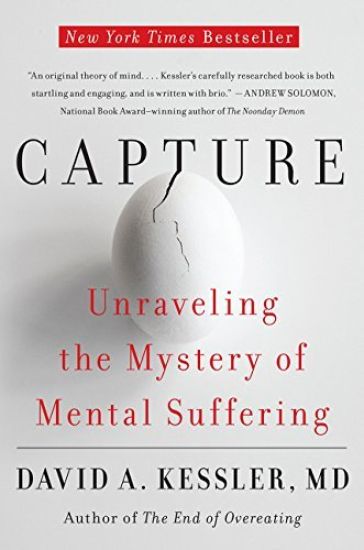
Capture: Unraveling the Mystery of Mental Suffering
New York Times Bestseller Why do we think, feel, and act in ways we wished we did not? For decades, New York Times bestselling author Dr. David A Kessler has studied this question with regard to tobacco, food, and drugs. Over the course of these investigations, he identified one underlying mechanism common to a broad range of human suffering. This phenomenon--capture--is the process by which our attention is hijacked and our brains commandeered by forces outside our control.In Capture, Dr. Kessler considers some of the most profound questions we face as human beings: What are the origins of mental afflictions, from everyday unhappiness to addiction and depression--and how are they connected? Where does healing and transcendence fit into this realm of emotional experience?Analyzing an array of insights from psychology, medicine, neuroscience, literature, philosophy, and theology, Dr. Kessler deconstructs centuries of thinking, examining the central role of capture in mental illness and questioning traditional labels that have obscured our understanding of it. With a new basis for understanding the phenomenon of capture, he explores the concept through the emotionally resonant stories of both well-known and un-known people caught in its throes.The closer we can come to fully comprehending the nature of capture, Dr. Kessler argues, the better the chance to alleviate its deleterious effects and successfully change our thoughts and behavior Ultimately, Capture offers insight into how we form thoughts and emotions, manage trauma, and heal. For the first time, we can begin to understand the underpinnings of not only mental illness, but also our everyday worries and anxieties. Capture is an intimate and critical exploration of the most enduring human mystery of all: the mind.
Capture: Unraveling the Mystery of Mental Suffering
"A breakthrough book. In a world of increasingly specialized knowledge, it takes a particular gift and some stubbornness to cut across the fields of neuroscience, psychiatry, philosophy and psychology and to ask the fundamental question: Why it is that we can allow our best selves to be captured by and torpedoed by thoughts and actions that sink us?. . . . Kessler's] ultimate answer is profound and one that could be life-changing and life-saving. I know I will be handing this book out for just that reason." -- Abraham Verghese, MD, author of Cutting for StoneIn Capture, New York Times bestselling author Dr. David A. Kessler considers some of the most profound questions we face as human beings: What are the origins of mental afflictions, from everyday unhappiness to addiction and depression--and how are they connected? Where does healing and transcendence fit into this realm of emotional experience?Analyzing an array of insights from psychology, medicine, neuroscience, literature, philosophy, and theology, Dr. Kessler deconstructs centuries of thinking, examining the central role of capture in mental illness and questioning traditional labels that have obscured our understanding of it. Looking to the emotionally resonant lives of figures such as David Foster Wallace, Virginia Woolf, William James, Tennessee Williams, John Belushi, Sylvia Plath, and Robert Lowell, among others, he explains how this concept is at play in their lives and--by extension--our own.Ultimately, Capture offers insight into how we form thoughts and emotions, manage trauma, and heal. For the first time, we can begin to understand the underpinnings not only of mental illness but also of our everyday worries and anxieties. Capture is an intimate and critical exploration of the most enduring human mystery of all: the mind.
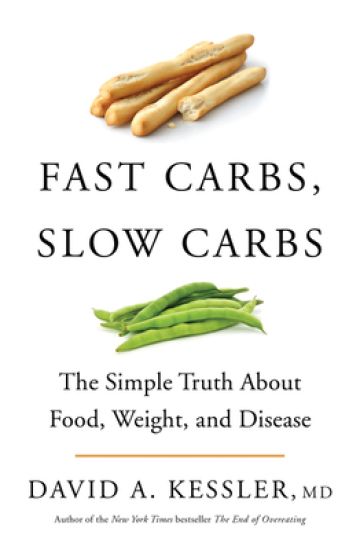
Fast Carbs, Slow Carbs

Fast Carbs, Slow Carbs

David A. Kessler

Harper Wave
2020
sidottu
The American body is in trouble. Unprecedented numbers of us suffer from obesity, heart disease, diabetes, and other debilitating illnesses. The root cause is a once-revolutionary idea that seemed to offer so much promise, but instead has become the cause of a global health crisis: processed foods. Over the past seventy-five years, a number of factors aligned to create a reality in which processed carbohydrates became our main food source. In Fast Carbs, Slow Carbs, bestselling author and former FDA Commissioner David A. Kessler explains how the quest to feed a nation resulted in a population that is increasingly suffering from obesity and chronic disease and offers a solution for changing course.For decades, no one questioned the effects of these processed carbohydrates. The focus was on fertile grassland, ideal for growing vast amounts of wheat and corn; an industrial infrastructure perfect for refining those grains into starch; a food production behemoth that turns refined grains into affordable, appealing, and ever-present food items, from pizza to burritos to bagels; and an efficient distribution network that ensures consumption by Americans nationwide.But during those same decades, our bodies quietly contended with the metabolic chaos caused by consuming rapidly absorbable starch. Slowly but surely, these effects accumulated and became disastrous, leading to the public health crisis in which we find ourselves today.In Fast Carbs, Slow Carbs, Kessler explains how eating refined grains such as wheat, corn, and rice leads to a cascade of hormonal and metabolic issues that make it very easy to gain weight and nearly impossible to lose it. Worse still is how excess weight creates a very real link to diabetes, heart disease, cognitive decline, and a host of cancers. We can no longer afford to dismiss the consequences of eating food that is designed to be rapidly absorbed as sugar in our bodies. Informed by cutting-edge research as well as Dr. Kessler’s own personal quest to manage his weight, Fast Carbs, Slow Carbs reveals in illuminating detail how we got to this critical turning point in our health as a nation—and outlines a plan for eliminating heart disease, allowing us to, finally, regain control of our health.
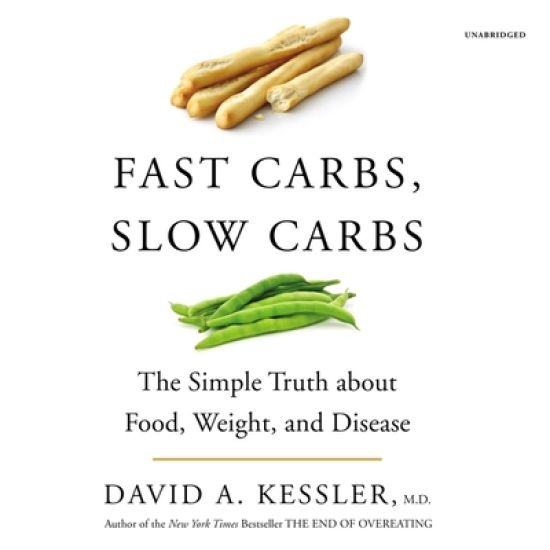
Fast Carbs, Slow Carbs: The Simple Truth about Food, Weight, and Disease
The American body is in trouble. Unprecedented numbers of us suffer from obesity, heart disease, diabetes, and other debilitating illnesses. The root cause is a once-revolutionary idea that seemed to offer so much promise, but instead has become the cause of a global health crisis: processed foods. Over the past seventy-five years, a number of factors aligned to create a reality in which processed carbohydrates became our main food source. In Fast Carbs, Slow Carbs, bestselling author and former FDA Commissioner David A. Kessler explains how the quest to feed a nation resulted in a population that is increasingly suffering from obesity and chronic disease and offers a solution for changing course.For decades, no one questioned the effects of these processed carbohydrates. The focus was on fertile grassland, ideal for growing vast amounts of wheat and corn; an industrial infrastructure perfect for refining those grains into starch; a food production behemoth that turns refined grains into affordable, appealing, and ever-present food items, from pizza to burritos to bagels; and an efficient distribution network that ensures consumption by Americans nationwide.But during those same decades, our bodies quietly contended with the metabolic chaos caused by consuming rapidly absorbable starch. Slowly but surely, these effects accumulated and became disastrous, leading to the public health crisis in which we find ourselves today.In Fast Carbs, Slow Carbs, Kessler explains how eating refined grains such as wheat, corn, and rice leads to a cascade of hormonal and metabolic issues that make it very easy to gain weight and nearly impossible to lose it. Worse still is how excess weight creates a very real link to diabetes, heart disease, cognitive decline, and a host of cancers.We can no longer afford to dismiss the consequences of eating food that is designed to be rapidly absorbed as sugar in our bodies. Informed by cutting-edge research as well as Dr. Kessler's own personal quest to manage his weight, Fast Carbs, Slow Carbs reveals in illuminating detail how we got to this critical turning point in our health as a nation--and outlines a plan for eliminating heart disease, allowing us to, finally, regain control of our health.Supplemental enhancement PDF accompanies the audiobook.
Your Food Is Fooling You: How Your Brain Is Hijacked by Sugar, Fat, and Salt
Teen edition of the New York Times bestseller, The End of Overeating Former commissioner of the US Food and Drug Administration David A. Kessler, M.D., argues forcefully that our brain chemistry is being hijacked by the food we eat: that by consuming stimulating combinations of sugar, fat, and salt, we're conditioning our bodies to crave more sugar, fat, and salt--and consigning ourselves to a vicious cycle of overeating. Adapted from the adult trade bestseller The End of Overeating, Your Food Is Fooling You is concise and direct and delivers the same message, many of the fascinating case studies, and the same advice for breaking bad eating habits in a voice and format that's accessible, positive, and affirming for teenagers. Young people are at most risk of forming bad eating habits--but they're also highly aware of body image and highly responsive to positive messages about health and diet. Your Food Is Fooling You is a readable, authoritative, and entertaining call to action by one of our nation's leading public health figures.
The End of Overeating: Taking Control of the Insatiable American Appetite
NEW YORK TIMES BESTSELLER - The former commissioner of the FDA exposes how the food industry manufactured a nationwide health crisis and offers research-based solutions for taking back control of our diets. "Fascinating."--The New York Times"Groundbreaking."--USA Today"Disturbing, thought-provoking, and important."--Anthony Bourdain Most of us know what it feels like to fall under the spell of food, but it's harder to understand why we can't seem to stop eating--even when we want to. So why do we continue to reach for food? Dr. David A. Kessler, the dynamic and controversial former FDA commissioner known for his crusade against the tobacco industry, is taking on another business that's making America sick: the food industry. Nearly 75 percent of American adults are clinically overweight or obese, triple the amount from only sixty years ago. But why? In The End of Overeating, Dr. Kessler shows us how our brain chemistry has been hijacked by the foods we most love to eat: those containing stimulating combinations of fat, sugar, and salt. Food manufacturers create products by manipulating these ingredients to stimulate our appetites, setting in motion a cycle of desire and consumption that ends with a nation of overeaters. Drawing from the latest brain science as well as interviews with top physicians and food industry insiders, The End of Overeating exposes the food industry's aggressive marketing tactics and reveals shocking facts about how we lost control over food--and what we can do to get it back.