Kirjojen hintavertailu. Mukana 12 459 402 kirjaa ja 12 kauppaa.

Kirjahaku

Etsi kirjoja tekijän nimen, kirjan nimen tai ISBN:n perusteella.

4 kirjaa tekijältä David A. Kronick

A Soldier without Arms

A Soldier without Arms

David A. Kronick

Hamilton Books
2005
nidottu
In A Soldier Without Arms, author David A. Kronick describes his experiences as a World War II Medical Supply Officer at station hospitals in the United States, England, France, and Germany. The author's personal accounts provide a unique and fascinating firsthand view of the dominant historical event of the 20th century.
Scientific and Technical Periodicals of the Seventeenth and Eighteenth Centuries
The scientific and technical periodicals of the 17th and 18th centuries are a primary source for the study of one of the most interesting periods in our intellectual history. The author has collected and collated titles and information regarding them from a large number of sources to construct an alphabetical list of 1,851 periodicals, including those issued by the scientific and learned societies of this period in all the countries of Europe and America, from 1665, when Philosophical Transactions made its first appearance, to the end of the eighteenth century.
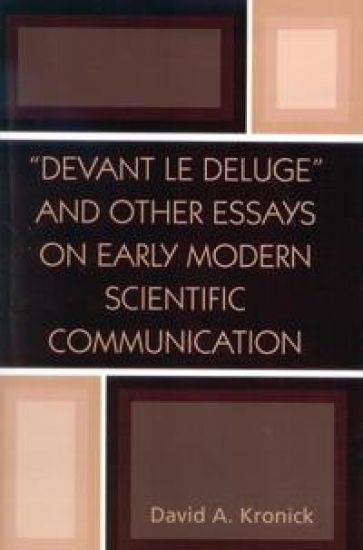
'Devant le Deluge' and Other Essays on Early Modern Scientific Communication
For more than forty years, librarians and others have come to rely upon David Kronick's knowledge and expertise of the history and development of scientific journals. His writings have blazed a trail through the uncharted territory of scientific serial publishing. This volume brings together for the first time a collection of fifteen articles that discuss particular aspects of scientific communication from the early days of its ascendancy, 'before the information explosion.' The essays examine topics such as editorial policy in the early journals, the economic side of scientific publishing in the seventeenth and eighteenth centuries, aspects of journal indexing, early modern scientific networks, and the issues of authorship and authority. The whole constitutes a body of work that reveals both the richness and scope for further inquiry that has motivated Kronick for decades. All are topics that librarians as well as students and scholars in the philosophy of science, the sociology of science, the history of science, and the rhetoric of science will be certain to find enlightening and inspiring.