Kirjojen hintavertailu. Mukana 12 390 323 kirjaa ja 12 kauppaa.

Kirjahaku

Etsi kirjoja tekijän nimen, kirjan nimen tai ISBN:n perusteella.

10 kirjaa tekijältä David A. Rosenbaum

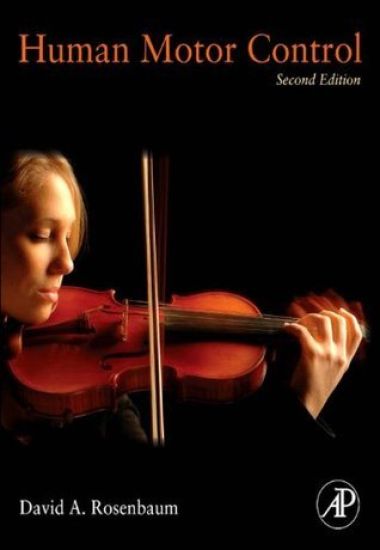
Human Motor Control

Human Motor Control

David A. Rosenbaum

Academic Press Inc
2009
sidottu
Motor Control is a complex process that involves the brain, muscles, limbs, and often external objects. It underlies motion, balance, stability, coordination, and our interaction with others and technology. This book is a comprehensive introduction to motor control, covering a complex topic in an approachable way encompassing the psychological, physiological, and computational approaches to motor control. Human Motor Control, 2e cuts across all movement related disciplines: physical education, dance, physical therapy, robotics, etc. This second edition incorporates advances to the field, and integrates throughout the book how research harkens back to four critical questions: how do we select our actions of the many actions possible? How are these behaviors sequenced for appropriate order and timing between them? How does perception integrate with motor control? And how are perceptual–motor skills acquired? As before, the book retains its signature organization around activity systems. These activity systems include walking, looking, reaching, drawing and writing, keyboarding, speaking and singing, and smiling. Chapters here exemplify rather than encompass all the behaviors related to them. Hence smiling discusses physical and neural control of the face used in other expressions besides smiling, as well as the origins of emotional expression, and the importance of emotion expression in social interaction. These chapters on activity systems are preceded by chapters on basics, with an introduction and information on the physiological and psychological foundations of movement. The last section discusses integration of movements, individual differences, theories of motor control, and the contributions of both genetics and technology to motor control. Special features of the second edition:Organization by major activity systems New: brain imaging, social action, embodied cognition, advances in genetics and technology Detailed treatment of motor neuroscience Further Readings section added to each chapter
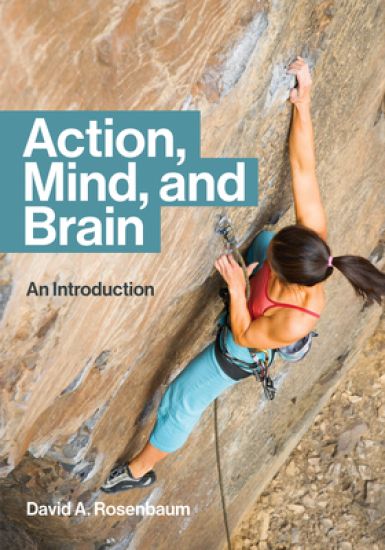
Action, Mind, and Brain

Action, Mind, and Brain

David A. Rosenbaum

MIT PRESS LTD
2022
nidottu
An engaging and accessible introduction to the psychology and neuroscience of physical action. This engaging and accessible book offers the first introductory text on the psychology and neuroscience of physical action. Written by a leading researcher in the field, it covers the interplay of action, mind, and brain, showing that many core concepts in philosophy, psychology, neuroscience, and technology grew out of questions about the control of everyday physical actions. It explains action not as a "one-way street from stimuli to response" but as a continual action-perception cycle. The informal writing style invites students to think through the evidence step by step, helping them develop general thinking stills as well as learn specific facts. Special emphasis is placed on the role of underrepresented groups. The book discusses the intellectual background of the field, from Plato to Kant, Dewey, and others; applications and methods; and the physical substrates of action--bones, tendons, ligaments, muscles, and nerves. It considers the control of actions in space; learning, and the roles of nature and nurture; feedback; feedforward, or anticipated feedback; and degrees of freedom--the multiple ways of getting things done and three methods or narrowing the alternatives. The book is generously illustrated, including many images of thinkers who contributed to the field.
Cognitive Control of Action

Cognitive Control of Action

David A. Rosenbaum

TAYLOR FRANCIS LTD
2024
sidottu
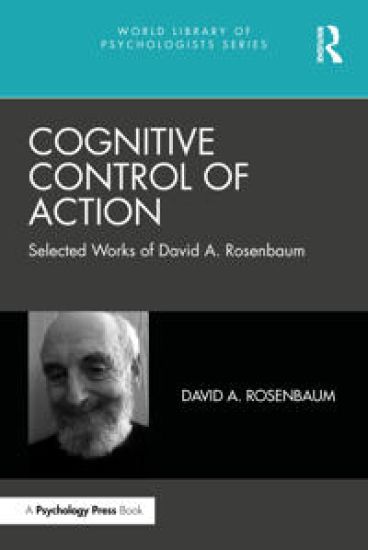
In the World Library of Psychologists series, international experts present career-long collections of what they judge to be their finest pieces—extracts from books, key articles, salient research findings, and their major practical theoretical contributions.In this volume, David A. Rosenbaum reflects on his distinguished career as an eminent scholar in the field of human perception and performance. Offering a unique perspective on the cognitive psychology of physical action control, the book charts Rosenbaum's development as one of the pioneers of the field.Featuring a newly written introduction in which the author offers a unique insight into his initial work on the movement precuing technique, along with coverage of other phenomena and models related to the translation of mental life into physical behavior, the book is essential reading for students and researchers interested in human perception, motor control, and embodiment.
Cognitive Control of Action

Cognitive Control of Action

David A. Rosenbaum

TAYLOR FRANCIS LTD
2025
nidottu
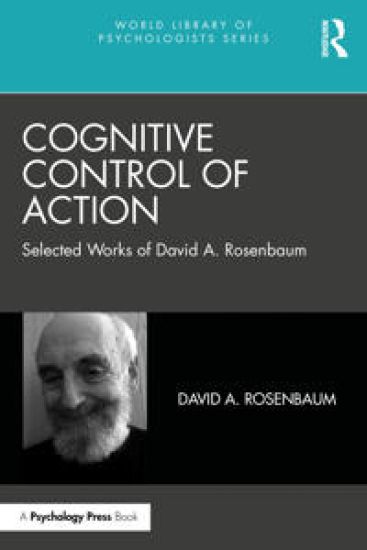
In the World Library of Psychologists series, international experts present career-long collections of what they judge to be their finest pieces—extracts from books, key articles, salient research findings, and their major practical theoretical contributions.In this volume, David A. Rosenbaum reflects on his distinguished career as an eminent scholar in the field of human perception and performance. Offering a unique perspective on the cognitive psychology of physical action control, the book charts Rosenbaum's development as one of the pioneers of the field.Featuring a newly written introduction in which the author offers a unique insight into his initial work on the movement precuing technique, along with coverage of other phenomena and models related to the translation of mental life into physical behavior, the book is essential reading for students and researchers interested in human perception, motor control, and embodiment.
Knowing Hands

Knowing Hands

David A. Rosenbaum

Cambridge University Press
2017
sidottu
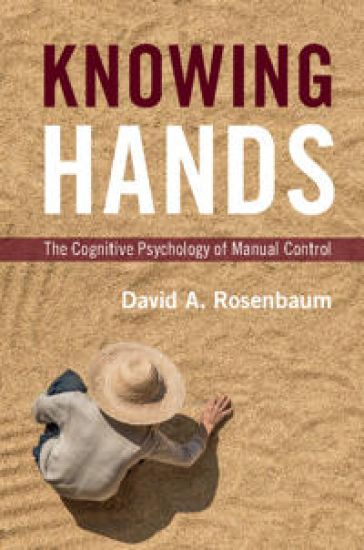
Whenever you get dressed, carry objects, write, draw, or gesture, you express knowledge about how to get things done with your hands. Ironically, that knowledge is often difficult to express. Typically you can't say what you know. Still, it would be enormously useful to identify the knowledge underlying manual control. The design of equipment and transportation systems might better anticipate the abilities and limitations of users, and methods of teaching and rehabilitating skills might improve. This book, the first on the cognitive psychology of manual control, uncovers the hidden knowledge that hands express. Organized around key topics in this emerging area, including the role of the will in manual control, illusions concerning hand position sense, and the coordination of manual actions with others, Knowing Hands explains the planning and control of manual actions in everyday life.
Knowing Hands

Knowing Hands

David A. Rosenbaum

Cambridge University Press
2017
pokkari
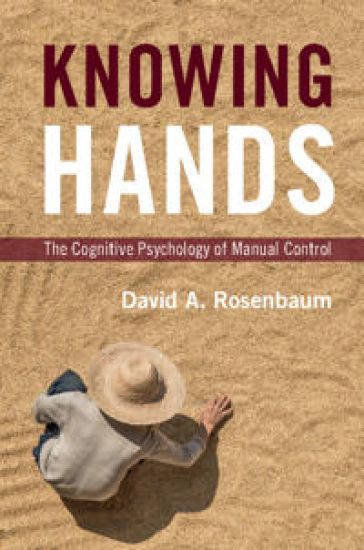
Whenever you get dressed, carry objects, write, draw, or gesture, you express knowledge about how to get things done with your hands. Ironically, that knowledge is often difficult to express. Typically you can't say what you know. Still, it would be enormously useful to identify the knowledge underlying manual control. The design of equipment and transportation systems might better anticipate the abilities and limitations of users, and methods of teaching and rehabilitating skills might improve. This book, the first on the cognitive psychology of manual control, uncovers the hidden knowledge that hands express. Organized around key topics in this emerging area, including the role of the will in manual control, illusions concerning hand position sense, and the coordination of manual actions with others, Knowing Hands explains the planning and control of manual actions in everyday life.
MATLAB Blues

MATLAB Blues

David A. Rosenbaum

Routledge
2019
sidottu
MATLAB Blues is an accessible, comprehensive introduction to the MATLAB computer programming language—a powerful and increasingly popular tool for students and researchers. Rosenbaum identifies many of the common mistakes and pitfalls associated with using MATLAB, and shows users how they can learn from these mistakes to be better, happier programmers. Each chapter systematically addresses one of the basic principles of the programming language, like matrices, calculations, contingencies, plotting, input-output, and graphics, and then identifies areas that are problematic, as well as potential errors that can occur. This not only provides the reader with the fundamental "scales and chords" that a MATLAB programmer needs to know, but also with a series of examples and explanations of how to avoid and remedy common mistakes. Accompanied by an array of sample code that can be used and manipulated in conjunction with the textbook, this book is a practical, insightful introduction to MATLAB which provides motivation and encouragement to those with little or no background in programming as well as to those with more advanced concerns. It is an invaluable resource for researchers and students undertaking courses in research methods, statistics, and programming.
MATLAB Blues

MATLAB Blues

David A. Rosenbaum

Routledge
2019
nidottu
MATLAB Blues is an accessible, comprehensive introduction to the MATLAB computer programming language—a powerful and increasingly popular tool for students and researchers. Rosenbaum identifies many of the common mistakes and pitfalls associated with using MATLAB, and shows users how they can learn from these mistakes to be better, happier programmers. Each chapter systematically addresses one of the basic principles of the programming language, like matrices, calculations, contingencies, plotting, input-output, and graphics, and then identifies areas that are problematic, as well as potential errors that can occur. This not only provides the reader with the fundamental "scales and chords" that a MATLAB programmer needs to know, but also with a series of examples and explanations of how to avoid and remedy common mistakes. Accompanied by an array of sample code that can be used and manipulated in conjunction with the textbook, this book is a practical, insightful introduction to MATLAB which provides motivation and encouragement to those with little or no background in programming as well as to those with more advanced concerns. It is an invaluable resource for researchers and students undertaking courses in research methods, statistics, and programming.
MATLAB for Behavioral Scientists

MATLAB for Behavioral Scientists

David A. Rosenbaum; Jonathan Vaughan; Brad Wyble

Routledge
2014
sidottu
Written specifically for those with no prior programming experience and minimal quantitative training, this accessible text walks behavioral science students and researchers through the process of programming using MATLAB. The book explores examples, terms, and programming needs relevant to those in the behavioral sciences and helps readers perform virtually any computational function in solving their research problems. Principles are illustrated with usable code. Each chapter opens with a list of objectives followed by new commands required to accomplish those goals. These objectives also serve as a reference to help readers easily relocate a section of interest. Sample code and output and chapter problems demonstrate how to write a program and explore a model so readers can see the results obtained using different equations and values. A web site provides solutions to selected problems and the book’s program code output and examples so readers can manipulate them as needed. The outputs on the website have color, motion, and sound. Highlights of the new edition include:•Updated to reflect changes in the most recent version of MATLAB, including special tricks and new functions.•More information on debugging and common errors and more basic problems in the rudiments of MATLAB to help novice users get up and running more quickly. •A new chapter on Psychtoolbox, a suite of programs specifically geared to behavioral science research.•A new chapter on Graphical User Interfaces (GUIs) for user-friendly communication.•Increased emphasis on pre-allocation of memory, recursion, handles, and matrix algebra operators. The book opens with an overview of what is to come and tips on how to write clear programs followed by pointers for interacting with MATLAB, including its commands and how to read error messages. The matrices chapter reviews how to store and access data. Chapter 4 examines how to carry out calculations followed by a review of how to perform various actions depending on the conditions. The chapter on input and output demonstrates how to design programs to create dialogs with users (e.g., participants in studies) and read and write data to and from external files. Chapter 7 reviews the data types available in MATLAB. Readers learn how to write a program as a stand-alone module in Chapter 8. In Chapters 9 and 10 readers learn how to create line and bar graphs or reshape images. Readers learn how to create animations and sounds in Chapter 11. The book concludes with tips on how to use MATLAB with applications such as GUIs and Psychtoolbox.Intended as a primary text for Matlab courses for advanced undergraduate and/or graduate students in experimental and cognitive psychology and/or neuroscience as well as a supplementary text for labs in data (statistical) analysis, research methods, and computational modeling (programming), the book also appeals to individual researchers in these disciplines who wish to get up and running in MATLAB.
MATLAB for Behavioral Scientists

MATLAB for Behavioral Scientists

David A. Rosenbaum; Jonathan Vaughan; Brad Wyble

Routledge
2014
nidottu
Written specifically for those with no prior programming experience and minimal quantitative training, this accessible text walks behavioral science students and researchers through the process of programming using MATLAB. The book explores examples, terms, and programming needs relevant to those in the behavioral sciences and helps readers perform virtually any computational function in solving their research problems. Principles are illustrated with usable code. Each chapter opens with a list of objectives followed by new commands required to accomplish those goals. These objectives also serve as a reference to help readers easily relocate a section of interest. Sample code and output and chapter problems demonstrate how to write a program and explore a model so readers can see the results obtained using different equations and values. A web site provides solutions to selected problems and the book’s program code output and examples so readers can manipulate them as needed. The outputs on the website have color, motion, and sound. Highlights of the new edition include:•Updated to reflect changes in the most recent version of MATLAB, including special tricks and new functions.•More information on debugging and common errors and more basic problems in the rudiments of MATLAB to help novice users get up and running more quickly. •A new chapter on Psychtoolbox, a suite of programs specifically geared to behavioral science research.•A new chapter on Graphical User Interfaces (GUIs) for user-friendly communication.•Increased emphasis on pre-allocation of memory, recursion, handles, and matrix algebra operators. The book opens with an overview of what is to come and tips on how to write clear programs followed by pointers for interacting with MATLAB, including its commands and how to read error messages. The matrices chapter reviews how to store and access data. Chapter 4 examines how to carry out calculations followed by a review of how to perform various actions depending on the conditions. The chapter on input and output demonstrates how to design programs to create dialogs with users (e.g., participants in studies) and read and write data to and from external files. Chapter 7 reviews the data types available in MATLAB. Readers learn how to write a program as a stand-alone module in Chapter 8. In Chapters 9 and 10 readers learn how to create line and bar graphs or reshape images. Readers learn how to create animations and sounds in Chapter 11. The book concludes with tips on how to use MATLAB with applications such as GUIs and Psychtoolbox.Intended as a primary text for Matlab courses for advanced undergraduate and/or graduate students in experimental and cognitive psychology and/or neuroscience as well as a supplementary text for labs in data (statistical) analysis, research methods, and computational modeling (programming), the book also appeals to individual researchers in these disciplines who wish to get up and running in MATLAB.