Kirjojen hintavertailu. Mukana 12 016 292 kirjaa ja 12 kauppaa.

Kirjahaku

Etsi kirjoja tekijän nimen, kirjan nimen tai ISBN:n perusteella.

6 kirjaa tekijältä David A. Turner

Comparative Education: A Field in Discussion
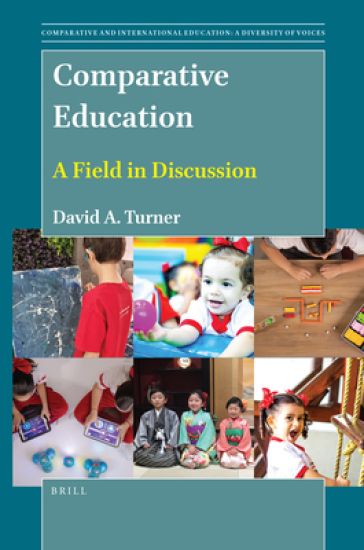
Comparative Education: A Field in Discussion is a personal reflection on the field of comparative education from the perspective of one scholar who has been active in the field since the 1980s. In the 1960s and 1970s many scholars attempted to develop a science of comparative education, and those diverse efforts formed the backdrop to the study of comparative education in the 1980s. In this volume, the author, who was originally educated as a physical scientist, draws upon those earlier attempts, at the same time introducing new insights from the complexity of science and systems theory. David Turner argues that these new insights should lead us away from a positivist vision of science, largely based on nineteenth century ideas of scientific method, and challenge us to accept that concepts are fluid, change over time, and are frequently contested. Nonetheless, those same concepts are essential to the way that we think of ourselves, our environment and the institutions that we inhabit. Caught between the generalisations that our concepts force on us, and our wish to capture the specificity of each personal history, the activity that we engage in is comparative education.

Theory and Practice of Education

Theory and Practice of Education

David A. Turner

Continuum International Publishing Group Ltd.
2009
nidottu
"To fellow academics may I say this: Don't put it unread on your students' reading list. Tackle it for yourself, for this is seminal." - Professor Michael Bassey (Praise for "Theory of Education"). The eagerly-awaited sequel to the award-winning "Theory of Education" considers issues of perennial interest to educators. In his compelling and controversial book, Professor David Turner shows how game theory and mathematical models can be used to develop an understanding of educational theory in useful ways. Professor Turner uses his findings to inform the debate on a wide variety of issues, including classroom management, teaching and learning in groups, quality assurance mechanisms and equality of opportunity in accessing educational institutions.
Theory of Education

Theory of Education

David A. Turner

Continuum International Publishing Group Ltd.
2005
nidottu
To date, theory in Education Studies has been dominated by a particular view of what should count as 'scientific' theory. David Turner argues that this approach does not necessarily provide a firm foundation for policy planning and professional activity. Using examples from linear programming, game theory, decision theory and chaos theory, he demonstrates how certain insights from modern developments in the social sciences, for example, can be used to stimulate more rewarding debate amongst educational researchers.
Theory and Practice of Education

Theory and Practice of Education

David A. Turner

BLOOMSBURY PUBLISHING PLC
2007
sidottu
"To fellow academics may I say this: Don't put it unread on your students' reading list. Tackle it for yourself, for this is seminal." - Professor Michael Bassey (Praise for "Theory of Education"). The eagerly-awaited sequel to the award-winning "Theory of Education" considers issues of perennial interest to educators. In his compelling and controversial book, Professor David Turner shows how game theory and mathematical models can be used to develop an understanding of educational theory in useful ways. Professor Turner uses his findings to inform the debate on a wide variety of issues, including classroom management, teaching and learning in groups, quality assurance mechanisms and equality of opportunity in accessing educational institutions.
Using the Medical Model in Education

Using the Medical Model in Education

David A. Turner

Continuum Publishing Corporation
2012
nidottu
Medicine, and particularly neuroscience, appears to offer the kind of educational quick fixes that politicians and the public would love to have. Following media reports of drugs that seemingly improve learning and memory, David Turner examines commonly held beliefs about learning, knowledge and intelligence, and critically assesses such claims. Using the Medical Model in Education then moves beyond the immediate, fashionable or any specific substance, to a deeper examination of what society does or should expect in terms of results, from the educational system. Many of the underlying problems facing science and education have persisted, with slight modifications, over decades and even centuries. By pointing to parallels between current debates and those presented in works by Aldous Huxley, Ludwig Wittgenstein or Noam Chomsky, the book shows that the important question is not whether or not we should administer modafinil in our schools, but whether we should think about education in medical terms at all.
Using the Medical Model in Education

Using the Medical Model in Education

David A. Turner

Continuum International Publishing Group Ltd.
2009
sidottu
Medicine, and particularly neuroscience, appears to offer the kind of educational quick fixes that politicians and the public would love to have. Following media reports of drugs that seemingly improve learning and memory, David Turner examines commonly held beliefs about learning, knowledge and intelligence, and critically assesses such claims. Using the Medical Model in Education then moves beyond the immediate, fashionable or any specific substance, to a deeper examination of what society does or should expect in terms of results, from the educational system. Many of the underlying problems facing science and education have persisted, with slight modifications, over decades and even centuries. By pointing to parallels between current debates and those presented in works by Aldous Huxley, Ludwig Wittgenstein or Noam Chomsky, the book shows that the important question is not whether or not we should administer modafinil in our schools, but whether we should think about education in medical terms at all.