Kirjojen hintavertailu. Mukana 11 699 587 kirjaa ja 12 kauppaa.

Kirjahaku

Etsi kirjoja tekijän nimen, kirjan nimen tai ISBN:n perusteella.

5 kirjaa tekijältä David A.J. Richards

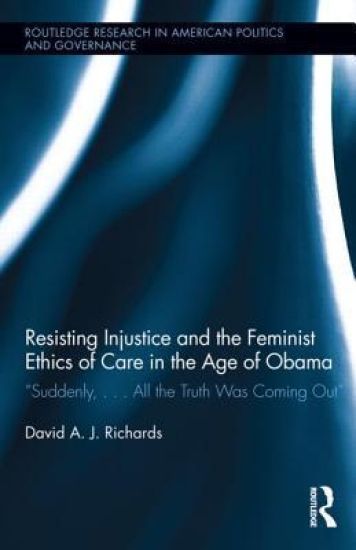
Resisting Injustice and the Feminist Ethics of Care in the Age of Obama
David A. J. Richards’s Resisting Injustice and The Feminist Ethics of Care in The Age of Obama: "Suddenly,…All The Truth Was Coming Out" builds on his and Carol Gilligan’s The Deepening Darkness to examine the roots of the resistance movements of the 1960s, the political psychology behind contemporary conservatism, and President Obama’s present-day appeal as well as the reasons for the reactionary politics against him.Richards begins by laying out the basics of the ethics of care and proposing an alternative basis for ethics: relationality, which is based in convergent findings in infant research, neuroscience, and evolutionary psychology. He critically analyzes patriarchal politics and states that they are rooted in a reactionary psychology that attacks human relationality and ethics. From there, the book examines the 1960s resistance movements and argues that they were fundamentally oriented around challenging patriarchy. Richards asserts that the reactionary politics in America from the 1960s to the present are in service of an American patriarchy threatened by the resistance movements ranging from the 1960s civil rights movements to the present gay rights movement. Reactionary politics intend to marginalize and even reverse the ethical achievements accomplished by resistance movements—creating, in effect, a system of patriarchy hiding in democracy. Richards consequently argues that Obama’s appeal is connected to his challenge to this system of patriarchy and will examine both Obama’s appeal and the reactions against him in light of the 2012 presidential election.This book positions recent American political development in a broad analysis of the role of patriarchy in human oppression throughout history, and argues that a feminist-based ethics of care is necessary to form a more humane and inclusive democratic politics.
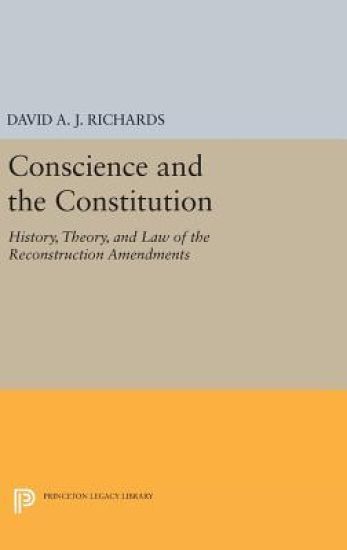
Conscience and the Constitution

Conscience and the Constitution

David A.J. Richards

Princeton University Press
2014
pokkari
At stage center of the American drama, maintains David A. J. Richards, is the attempt to understand the implications of the Reconstruction Amendments--Amendments Thirteen, Fourteen, and Fifteen to the United States Constitution. Richards evaluates previous efforts to interpret the amendments and then proposes his own view: together the amendments embodied a self-conscious rebirth of America's revolutionary, rights-based constitutionalism. Building on an approach to constitutional law developed in his Toleration and the Constitution and Foundations of American Constitutionalism, Richards links history, law, and political theory. In Conscience and the Constitution, this method leads from an analysis of the Reconstruction Amendments to a broad discussion of the American constitutional system as a whole. Richards's interpretation focuses on the abolitionists and their radical commitment to the "dissenting conscience." In his view, the Reconstruction Amendments expressed not only the constitutional arguments of a particular historical period but also a general political theory developed by the abolitionists, who restructured the American political community in terms of respect for universal human rights. He argues further that the amendments make a claim on our generation to keep faith with the vision of the "founders of 1865." In specific terms he points out what such allegiance would mean in the context of present-day constitutional issues. Originally published in 1993. The Princeton Legacy Library uses the latest print-on-demand technology to again make available previously out-of-print books from the distinguished backlist of Princeton University Press. These editions preserve the original texts of these important books while presenting them in durable paperback and hardcover editions. The goal of the Princeton Legacy Library is to vastly increase access to the rich scholarly heritage found in the thousands of books published by Princeton University Press since its founding in 1905.
Conscience and the Constitution

Conscience and the Constitution

David A.J. Richards

PRINCETON UNIVERSITY PRESS
2016
sidottu
At stage center of the American drama, maintains David A. J. Richards, is the attempt to understand the implications of the Reconstruction Amendments--Amendments Thirteen, Fourteen, and Fifteen to the United States Constitution. Richards evaluates previous efforts to interpret the amendments and then proposes his own view: together the amendments embodied a self-conscious rebirth of America's revolutionary, rights-based constitutionalism. Building on an approach to constitutional law developed in his Toleration and the Constitution and Foundations of American Constitutionalism, Richards links history, law, and political theory. In Conscience and the Constitution, this method leads from an analysis of the Reconstruction Amendments to a broad discussion of the American constitutional system as a whole. Richards's interpretation focuses on the abolitionists and their radical commitment to the "dissenting conscience." In his view, the Reconstruction Amendments expressed not only the constitutional arguments of a particular historical period but also a general political theory developed by the abolitionists, who restructured the American political community in terms of respect for universal human rights. He argues further that the amendments make a claim on our generation to keep faith with the vision of the "founders of 1865." In specific terms he points out what such allegiance would mean in the context of present-day constitutional issues. Originally published in 1993. The Princeton Legacy Library uses the latest print-on-demand technology to again make available previously out-of-print books from the distinguished backlist of Princeton University Press. These editions preserve the original texts of these important books while presenting them in durable paperback and hardcover editions. The goal of the Princeton Legacy Library is to vastly increase access to the rich scholarly heritage found in the thousands of books published by Princeton University Press since its founding in 1905.
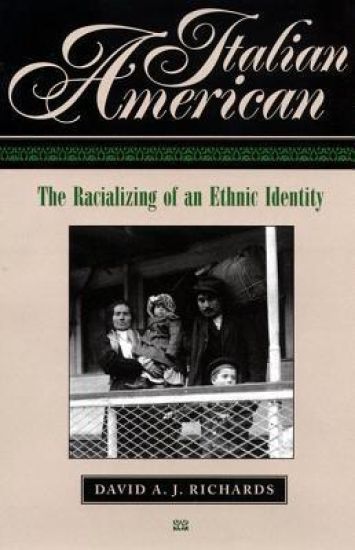
Italian American

Italian American

David A.J. Richards

New York University Press
1999
sidottu
When southern Italians began emigrating to the U.S. in large numbers in the 1870s-part of the "new immigration" from southern and eastern rather than northern Europe-they were seen as racially inferior, what David A. J. Richards terms "nonvisibly" black. The first study of its kind, Italian American explores the acculturation process of Italian immigrants in terms of then-current patterns of European and American racism. Delving into the political and legal context of flawed liberal nationalism both in Italy (the Risorgimento) and the United States (Reconstruction Amendments), Richards examines why Italian Americans were so reluctant to influence depictions of themselves and their own collective identity. He argues that American racism could not have had the durability or political power it has had either in the popular understanding or in the corruption of constitutional ideals unless many new immigrants, themselves often regarded as racially inferior, had been drawn into accepting and supporting many of the terms of American racism. With its unprecedented focus on Italian American identity and an interdisciplinary approach to comparative culture and law, this timely study sheds important light on the history and contemporary importance of identity and multicultural politics in American political and constitutional debate.
Resisting Injustice and the Feminist Ethics of Care in the Age of Obama
David A. J. Richards’s Resisting Injustice and The Feminist Ethics of Care in The Age of Obama: "Suddenly,…All The Truth Was Coming Out" builds on his and Carol Gilligan’s The Deepening Darkness to examine the roots of the resistance movements of the 1960s, the political psychology behind contemporary conservatism, and President Obama’s present-day appeal as well as the reasons for the reactionary politics against him.Richards begins by laying out the basics of the ethics of care and proposing an alternative basis for ethics: relationality, which is based in convergent findings in infant research, neuroscience, and evolutionary psychology. He critically analyzes patriarchal politics and states that they are rooted in a reactionary psychology that attacks human relationality and ethics. From there, the book examines the 1960s resistance movements and argues that they were fundamentally oriented around challenging patriarchy. Richards asserts that the reactionary politics in America from the 1960s to the present are in service of an American patriarchy threatened by the resistance movements ranging from the 1960s civil rights movements to the present gay rights movement. Reactionary politics intend to marginalize and even reverse the ethical achievements accomplished by resistance movements—creating, in effect, a system of patriarchy hiding in democracy. Richards consequently argues that Obama’s appeal is connected to his challenge to this system of patriarchy and will examine both Obama’s appeal and the reactions against him in light of the 2012 presidential election.This book positions recent American political development in a broad analysis of the role of patriarchy in human oppression throughout history, and argues that a feminist-based ethics of care is necessary to form a more humane and inclusive democratic politics.