

Kirjahaku
Etsi kirjoja tekijän nimen, kirjan nimen tai ISBN:n perusteella.
4 kirjaa tekijältä David Andrew Smith
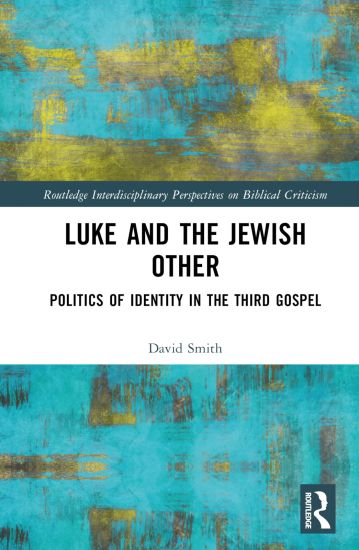
Luke and the Jewish Other takes up the debated question of the orientation of Luke toward the Jewish people. Building on recent studies in the social history of early Jewish-Christian relations, it offers an analysis of Luke’s portrayal of Jewish and Christian identities that challenges the common assumption that the construction of religious identity in antiquity necessarily depended upon antagonistic relations with others. Taking account of the deep and often divisive difference that belief in Jesus made in Luke’s community, the author argues that Luke hoped to bring about both a rapprochement with and the conversion of contemporary Jews. Through this account of identity and alterity in the Gospel of Luke, the book cuts across boundaries of biblical studies, history, theology, and social theory, proposing a way forward for the study of Luke’s relation to Judaism and of the "parting of the ways" between Jews and Christians in the early Common Era.
Luke and the Jewish Other takes up the debated question of the orientation of Luke toward the Jewish people. Building on recent studies in the social history of early Jewish-Christian relations, it offers an analysis of Luke’s portrayal of Jewish and Christian identities that challenges the common assumption that the construction of religious identity in antiquity necessarily depended upon antagonistic relations with others. Taking account of the deep and often divisive difference that belief in Jesus made in Luke’s community, the author argues that Luke hoped to bring about both a rapprochement with and the conversion of contemporary Jews. Through this account of identity and alterity in the Gospel of Luke, the book cuts across boundaries of biblical studies, history, theology, and social theory, proposing a way forward for the study of Luke’s relation to Judaism and of the "parting of the ways" between Jews and Christians in the early Common Era.
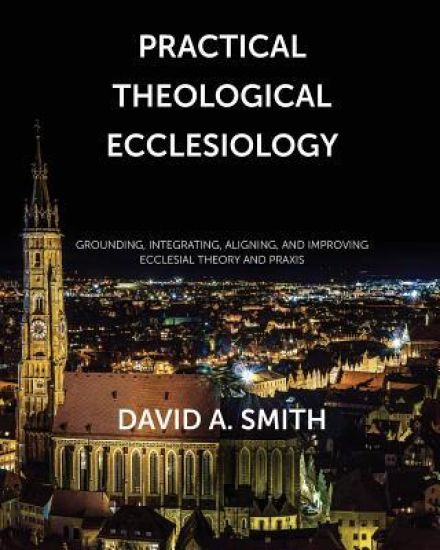
Practical Theological Ecclesiology: Grounding, integrating, aligning, and improving ecclesial theory and praxis
David Andrew Smith
Createspace Independent Publishing Platform
2018
nidottu
PRACTICAL THEOLOGICAL ECCLESIOLOGY addresses the division that exists between theory and praxis. Theology in general and practical theology as a specific discipline has allowed this division to arise and indeed grow. The problem facing us is that faith communities now operate out of blind theory and/or blind praxis. To address this situation a reintegration of the theory and practice of the entire ecclesial praxis is needed. This thesis proposes "Practical Theological Ecclesiology" as the way forward. Practical theological ecclesiology addresses both the abstractness of pure ecclesiology and the pragmatics of the praxis through the development of an operational ecclesiology model that integrates the essence, expression and goal dimensions of the ecclesial praxis. By applying the operational ecclesiology model to praxis, practical theological ecclesiology, through the tasks of grounding, integrating, aligning and improving, uncover the gaps that exist in and between the theory and praxis of a faith community. The resulting analysis provides ecclesial pictures of what is, compared to what should be, according to the operational ecclesiology model. The areas of ecclesial life which need to be grounded, integrated, aligned and improved are therefore exposed for ongoing work. Historical and contemporary research of the Christian Community Churches of Australia, provide the data for a case study which illustrates the potential and the analysis process of practical theological ecclesiology. The research underlines the importance of having an integrated operational ecclesiology, of grounding and integrating the theory, of aligning of theory and praxis, and of providing improvement direction for the praxis, thus removing theory and praxis division, avoiding both blind theory and blind praxis, and giving a clear pathway for the future.