Kirjojen hintavertailu. Mukana 12 183 590 kirjaa ja 12 kauppaa.

Kirjahaku

Etsi kirjoja tekijän nimen, kirjan nimen tai ISBN:n perusteella.

13 kirjaa tekijältä David B. Burrell

Freedom and Creation in Three Traditions

Freedom and Creation in Three Traditions

David B. Burrell

University of Notre Dame Press
1993
nidottu
With creation of the universe as its focus and a deeper understanding of human freedom as its goal, Freedom and Creation in Three Traditions is a work of philosophical theology that brings together Jewish, Christian, and Muslim perspectives on the complex questions surrounding divine and human freedom. Burrell shows how the three traditions (each avowing the free creation of the universe by God) have developed a view of free human actors in relation to their initial affirmations that the universe is freely created by God. The concept of a free creation of the universe forms a motif for all three traditions, and their respective encounters with divine relation—in the Torah, Jesus Christ, and the Qur'an—offer distinctive ways of articulating and assimilating the original faith in a free creator. Burrell emphasizes the common ground among the traditions, but does not limit his discourse to a search for a common denominator among them. Instead, he traces the interactions among the traditions, employing an explicitly interfaith perspective that offers new ways to probe the vexing question of the relations between a free creator and free creatures. The results of this comparative method of reflection produce fresh insights into perennial human questions about creation and freedom—questions that have constituted a major body of theological reflection over the centuries. Aimed at graduates and advanced undergraduates as well as laypersons interested in interfaith dialogue and reflection, Freedom and Creation in Three Traditions illustrates the value of tradition-directed inquiry and clearly demonstrates the fruitfulness of comparative inquiries in philosophical theology.
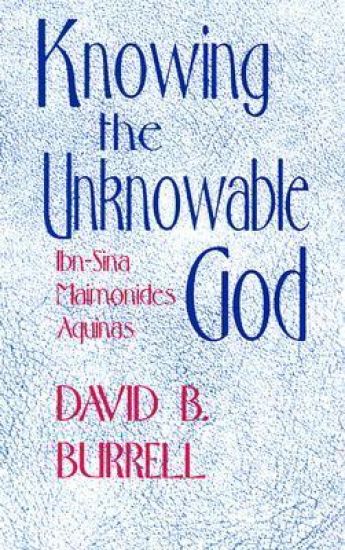
Knowing the Unknowable God

Knowing the Unknowable God

David B. Burrell

University of Notre Dame Press
1986
sidottu
In Knowing the Unknowable God, David Burrell traces the intellectual intermingling of Muslim, Jewish, and Christian traditions that made possible the medieval synthesis that served as the basis for Western theology. He shows how Aquinas's study of the Muslim philosopher Ibn-Sina and the Jewish thinker Moses Maimonides affected the disciplined use of language when speaking of divinity and influenced his doctrine of God.
Knowing the Unknowable God

Knowing the Unknowable God

David B. Burrell

University of Notre Dame Press
1992
nidottu
In Knowing the Unknowable God, David Burrell traces the intellectual intermingling of Muslim, Jewish, and Christian traditions that made possible the medieval synthesis that served as the basis for Western theology. He shows how Aquinas's study of the Muslim philosopher Ibn-Sina and the Jewish thinker Moses Maimonides affected the disciplined use of language when speaking of divinity and influenced his doctrine of God.
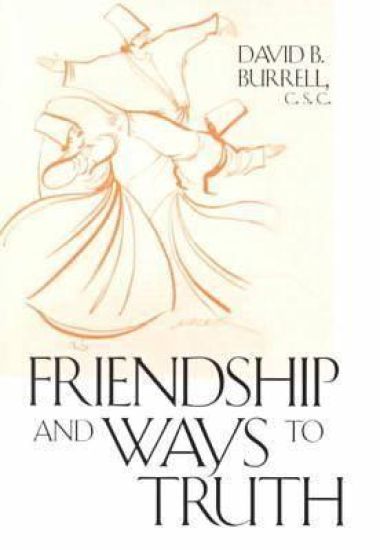
Friendship and Ways to Truth

Friendship and Ways to Truth

David B. Burrell

University of Notre Dame Press
2000
sidottu
The death of a friend is a source of pain and grief for anyone. For David B. Burrell, it is also a source of reflection on the role of friendship in our ongoing pursuit of truth. In this small but penetrating book, Burrell offers five essays that explore friendship as the bond that links us to the religious traditions we embrace in our search for truth. Known for his many and lasting contributions to philosophical theology, Burrell here makes a definitive statement for that field while also continuing the cross-cultural discussion among Christians, Muslims, and Jews. Burrell considers how friendship can be constitutive of the spiritual exercises one employs to seek truth, and he examines the influences on his thinking of Bernard Lonergan, Stanley Hauerwas, and Augustine to show how friends can open our minds and hearts to interfaith dialogue and the mutual illumination it offers. He also explores cross-cultural understanding through a comparison of the teaching of Aquinas with that of Islam's al-Ghazali, suggesting that their complementary perspectives can fruitfully expand our view of friendship to include our relationship with God. In the end, he offers a model of friendship as a relationship which gives us the courage to maintain our philosophical pursuits and which helps us to persevere in the face of the radical unknowing which characterizes philosophical theology. Just as Burrell learns from death that friendship cannot end, he celebrates how each of us can present to another the face of the good as we journey together through life. And just as our journey toward the truth continues forever, he enables us to see that the gift of friendship is not limited to our earthly existence.
Friendship and Ways to Truth

Friendship and Ways to Truth

David B. Burrell

University of Notre Dame Press
2000
nidottu
The death of a friend is a source of pain and grief for anyone. For David B. Burrell, it is also a source of reflection on the role of friendship in our ongoing pursuit of truth. In this small but penetrating book, Burrell offers five essays that explore friendship as the bond that links us to the religious traditions we embrace in our search for truth. Known for his many and lasting contributions to philosophical theology, Burrell here makes a definitive statement for that field while also continuing the cross-cultural discussion among Christians, Muslims, and Jews. Burrell considers how friendship can be constitutive of the spiritual exercises one employs to seek truth, and he examines the influences on his thinking of Bernard Lonergan, Stanley Hauerwas, and Augustine to show how friends can open our minds and hearts to interfaith dialogue and the mutual illumination it offers. He also explores cross-cultural understanding through a comparison of the teaching of Aquinas with that of Islam's al-Ghazali, suggesting that their complementary perspectives can fruitfully expand our view of friendship to include our relationship with God. In the end, he offers a model of friendship as a relationship which gives us the courage to maintain our philosophical pursuits and which helps us to persevere in the face of the radical unknowing which characterizes philosophical theology. Just as Burrell learns from death that friendship cannot end, he celebrates how each of us can present to another the face of the good as we journey together through life. And just as our journey toward the truth continues forever, he enables us to see that the gift of friendship is not limited to our earthly existence.
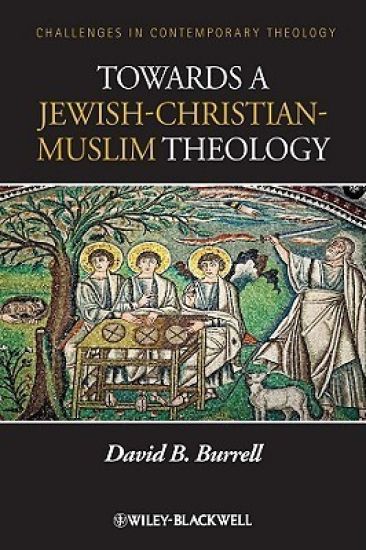
Towards a Jewish-Christian-Muslim Theology

Towards a Jewish-Christian-Muslim Theology

David B. Burrell

John Wiley Sons Inc
2011
sidottu
Towards a Jewish-Christian-Muslim Theology delineates the ways that Christianity, Islam, and the Jewish tradition have moved towards each another over the centuries and points to new pathways for contemporary theological work. Explores the development of the three Abrahamic traditions, brilliantly showing the way in which they have struggled with similar issues over the centuriesShows how the approach of each tradition can be used comparatively by the other traditions to illuminate and develop their own thinkingWritten by a renowned writer in philosophical theology, widely acclaimed for his comparative thinking on Jewish and Islamic theologyA very timely book which moves forward the discussion at a period of intense inter-religious dialogue
Towards a Jewish-Christian-Muslim Theology

Towards a Jewish-Christian-Muslim Theology

David B. Burrell

John Wiley Sons Inc
2013
nidottu
Towards a Jewish-Christian-Muslim Theology delineates the ways that Christianity, Islam, and the Jewish tradition have moved towards each another over the centuries and points to new pathways for contemporary theological work. Explores the development of the three Abrahamic traditions, brilliantly showing the way in which they have struggled with similar issues over the centuriesShows how the approach of each tradition can be used comparatively by the other traditions to illuminate and develop their own thinkingWritten by a renowned writer in philosophical theology, widely acclaimed for his comparative thinking on Jewish and Islamic theologyA very timely book which moves forward the discussion at a period of intense inter-religious dialogue
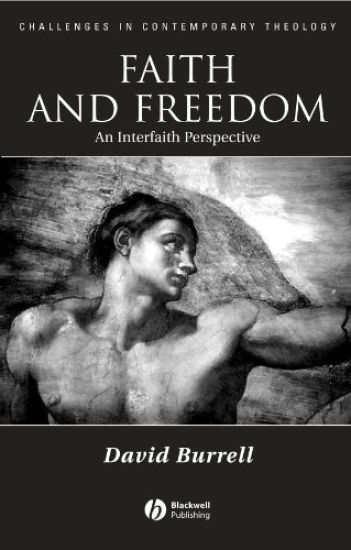
Faith and Freedom

Faith and Freedom

David B. Burrell

Wiley-Blackwell (an imprint of John Wiley Sons Ltd)
2004
sidottu
FAITH AND FREEDOM In this book, David Burrell, one of the foremost philosophical theologians in the English-speaking world, presents the culmination of his work on creation and human freedom. Drawing on his philosophical and theological insights from the last twenty years, he develops an integrated argument with far-reaching consequences for capitalist cultures. Engaging with the Islamic, Judaic and Christian traditions, and with modern and pre-modern systems of thought, Burrell dismantles the ‘libertarian’ approach to freedom that dominates Western politics and economics, proposing that alongside freedom of choice we need freedom of consent. The author’s rigorous approach, wry humor and generous spirit are evident throughout.
Faith and Freedom

Faith and Freedom

David B. Burrell

Wiley-Blackwell (an imprint of John Wiley Sons Ltd)
2004
nidottu
FAITH AND FREEDOM In this book, David Burrell, one of the foremost philosophical theologians in the English-speaking world, presents the culmination of his work on creation and human freedom. Drawing on his philosophical and theological insights from the last twenty years, he develops an integrated argument with far-reaching consequences for capitalist cultures. Engaging with the Islamic, Judaic and Christian traditions, and with modern and pre-modern systems of thought, Burrell dismantles the ‘libertarian’ approach to freedom that dominates Western politics and economics, proposing that alongside freedom of choice we need freedom of consent. The author’s rigorous approach, wry humor and generous spirit are evident throughout.
Learning to Trust in Freedom

Learning to Trust in Freedom

David B. Burrell

University of Scranton Press,U.S.
2010
nidottu
True religious faith cannot be confirmed by any external proofs. Rather, it is founded on a basic act of trust - and the common root of that trust, for Jewish, Christian, and Islamic traditions, is a belief in the divine creation of the universe. But with "Learning to Trust in Freedom", David B. Burrell asks the provocative question: How do we reach that belief, and what is it about the universe that could possibly testify to its divine origins? Even St. Augustine, he points out, could only find faith after a harrowing journey through the lures of desire - and it is that very desire that Burrell seizes on as a tool with which to explore the origin and purpose of the world. Delving deep into the intertwinings of desire and faith, and drawing on Saint John of the Cross, Edith Stein, and Charles Taylor, Burrell offers a new understanding of free will, trust, and perception.