Kirjojen hintavertailu. Mukana 11 605 272 kirjaa ja 12 kauppaa.

Kirjahaku

Etsi kirjoja tekijän nimen, kirjan nimen tai ISBN:n perusteella.

6 kirjaa tekijältä David B. MacDonald

Identity Politics in the Age of Genocide

Identity Politics in the Age of Genocide

David B. MacDonald

Routledge
2007
sidottu
In an era of globalization and identity politics, this book explores how Holocaust imagery and vocabulary have been appropriated and applied to other genocides. The author examines how the Holocaust has impacted on other ethnic and social groups, asking whether the Holocaust as a symbol is a useful or destructive means of reading non-Jewish history. This volume: explains the rise of the Holocaust as a gradual process, charting how its importance as a symbol has evolved, providing a theoretical framework to understand how and why non-Jewish groups choose to invoke ‘holocausts’ to apply to other events explores the Holocaust in relation to colonialism and indigenous genocide, with case studies on America, Australia and New Zealand analyzes the Holocaust in relation to war and genocide, with case studies on the Armenian genocide, the Rape of Nanking, Serbia and the Rwandan genocide examines how the Holocaust has been used to promote animal rights.Demonstrating both the opportunities and pitfalls the Holocaust provides to non-Jewish groups who seek to represent their collective histories, this book fills a much needed gap on the use of the Holocaust in contemporary identity politics and will be of interest to students and researchers of politics, the Holocaust and genocide.
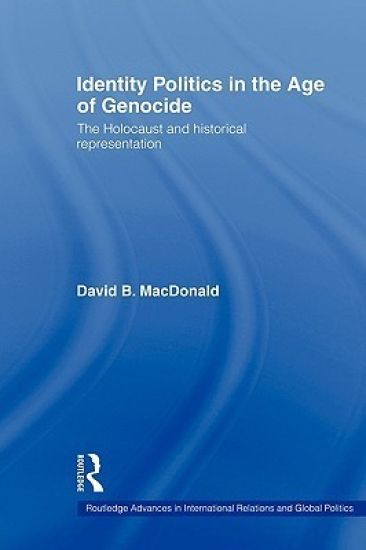
Identity Politics in the Age of Genocide

Identity Politics in the Age of Genocide

David B. MacDonald

Routledge
2009
nidottu
In an era of globalization and identity politics, this book explores how Holocaust imagery and vocabulary have been appropriated and applied to other genocides. The author examines how the Holocaust has impacted on other ethnic and social groups, asking whether the Holocaust as a symbol is a useful or destructive means of reading non-Jewish history. This volume: explains the rise of the Holocaust as a gradual process, charting how its importance as a symbol has evolved, providing a theoretical framework to understand how and why non-Jewish groups choose to invoke ‘holocausts’ to apply to other events explores the Holocaust in relation to colonialism and indigenous genocide, with case studies on America, Australia and New Zealand analyzes the Holocaust in relation to war and genocide, with case studies on the Armenian genocide, the Rape of Nanking, Serbia and the Rwandan genocide examines how the Holocaust has been used to promote animal rights.Demonstrating both the opportunities and pitfalls the Holocaust provides to non-Jewish groups who seek to represent their collective histories, this book fills a much needed gap on the use of the Holocaust in contemporary identity politics and will be of interest to students and researchers of politics, the Holocaust and genocide.

Thinking History, Fighting Evil

Thinking History, Fighting Evil

David B. MacDonald

Lexington Books
2009
sidottu
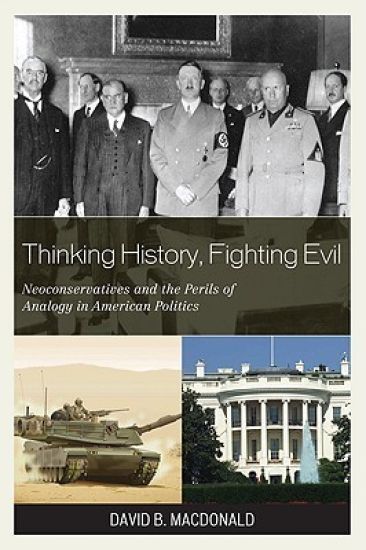
Thinking History, Fighting Evil presents the most thorough exploration to date of how World War II analogies, particularly those focused on the Holocaust, have colored American foreign policy-making after 9/11. In particular, this book highlights how influential neoconservatives inside and outside the Bush administration used analogies of the "Good War" to reinterpret domestic and international events, often with disastrous consequences. On the surface, World War II promotes a simple but compelling range of images and symbols: valiant Roosevelts and Churchills, appeasing Chamberlains, evil Hitlers, Jewish victims, European bystanders, and American liberators. However, the simplistic use of analogies was precisely what doomed the neoconservative project to failure. This book explores the misuse of ten key analogies arising from World War II and charts their problematic deployment after the 9/11 attacks. Divided into eight chapters, Thinking History, Fighting Evil engages with timely issues such as the moral legacies of the civil rights era, identity politics movements, the representation of the Holocaust in American life, the rise of victim politics on the neoconservative right, the instrumentalization of anti-American and anti-Semitic discourses, the trans-Atlantic rift between Europe and the United States, and the war on terror. While the book focuses on the post-9/11 security environment, it also explores the history of negative exceptionalism in U.S. history and politics, tracing back Manichean conceptions of good and evil to the foundation of the early colonies.
Thinking History, Fighting Evil

Thinking History, Fighting Evil

David B. MacDonald

Lexington Books
2009
nidottu
Thinking History, Fighting Evil presents the most thorough exploration to date of how World War II analogies, particularly those focused on the Holocaust, have colored American foreign policy-making after 9/11. In particular, this book highlights how influential neoconservatives inside and outside the Bush administration used analogies of the 'Good War' to reinterpret domestic and international events, often with disastrous consequences. On the surface, World War II promotes a simple but compelling range of images and symbols: valiant Roosevelts and Churchills, appeasing Chamberlains, evil Hitlers, Jewish victims, European bystanders, and American liberators. However, the simplistic use of analogies was precisely what doomed the neoconservative project to failure. This book explores the misuse of ten key analogies arising from World War II and charts their problematic deployment after the 9/11 attacks. Divided into eight chapters, Thinking History, Fighting Evil engages with timely issues such as the moral legacies of the civil rights era, identity politics movements, the representation of the Holocaust in American life, the rise of victim politics on the neoconservative right, the instrumentalization of anti-American and anti-Semitic discourses, the trans-Atlantic rift between Europe and the United States, and the war on terror. While the book focuses on the post-9/11 security environment, it also explores the history of negative exceptionalism in U.S. history and politics, tracing back Manichean conceptions of good and evil to the foundation of the early colonies.
The Sleeping Giant Awakens

The Sleeping Giant Awakens

David B. MacDonald

University of Toronto Press
2019
sidottu
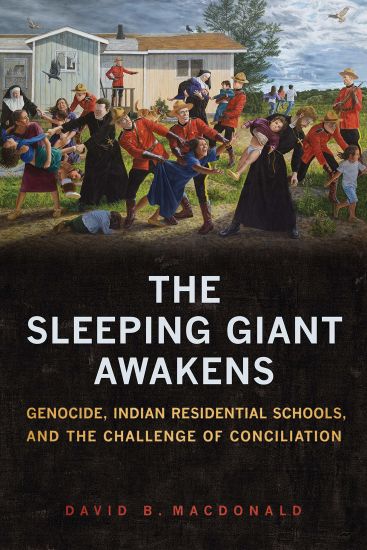
Confronting the truths of Canada’s Indian residential school system has been likened to waking a sleeping giant. In The Sleeping Giant Awakens, David B. MacDonald uses genocide as an analytical tool to better understand Canada’s past and present relationships between settlers and Indigenous peoples. Starting with a discussion of how genocide is defined in domestic and international law, the book applies the concept to the forced transfer of Indigenous children to residential schools and the "Sixties Scoop," in which Indigenous children were taken from their communities and placed in foster homes or adopted. Based on archival research, extensive interviews with residential school Survivors, and officials at the Truth and Reconciliation Commission of Canada, among others, The Sleeping Giant Awakens offers a unique and timely perspective on the prospects for conciliation after genocide, exploring the difficulties in moving forward in a context where many settlers know little of the residential schools and ongoing legacies of colonization and need to have a better conception of Indigenous rights. It provides a detailed analysis of how the TRC approached genocide in its deliberations and in its Final Report. Crucially, MacDonald engages critics who argue that the term genocide impedes understanding of the IRS system and imperils prospects for conciliation. By contrast, this book sees genocide recognition as an important basis for meaningful discussions of how to engage Indigenous-settler relations in respectful and proactive ways.
The Sleeping Giant Awakens

The Sleeping Giant Awakens

David B. MacDonald

University of Toronto Press
2019
pokkari
Confronting the truths of Canada’s Indian residential school system has been likened to waking a sleeping giant. In The Sleeping Giant Awakens, David B. MacDonald uses genocide as an analytical tool to better understand Canada’s past and present relationships between settlers and Indigenous peoples. Starting with a discussion of how genocide is defined in domestic and international law, the book applies the concept to the forced transfer of Indigenous children to residential schools and the "Sixties Scoop," in which Indigenous children were taken from their communities and placed in foster homes or adopted. Based on archival research, extensive interviews with residential school Survivors, and officials at the Truth and Reconciliation Commission of Canada, among others, The Sleeping Giant Awakens offers a unique and timely perspective on the prospects for conciliation after genocide, exploring the difficulties in moving forward in a context where many settlers know little of the residential schools and ongoing legacies of colonization and need to have a better conception of Indigenous rights. It provides a detailed analysis of how the TRC approached genocide in its deliberations and in its Final Report. Crucially, MacDonald engages critics who argue that the term genocide impedes understanding of the IRS system and imperils prospects for conciliation. By contrast, this book sees genocide recognition as an important basis for meaningful discussions of how to engage Indigenous-settler relations in respectful and proactive ways.