Kirjojen hintavertailu. Mukana 12 083 983 kirjaa ja 12 kauppaa.

Kirjahaku

Etsi kirjoja tekijän nimen, kirjan nimen tai ISBN:n perusteella.

5 kirjaa tekijältä David B. Sachsman

The Press and the Suburbs

The Press and the Suburbs

David B. Sachsman

Routledge
2017
sidottu
The changing economic and demographic patterns of the United States have many measurements; few of them, however, are more comprehensive than the new circulation realities of the press. This volume tells the story of the twenty-six daily newspapers of New Jersey from the 1960s to the 1980s and in so doing tells the story of the rise of suburbia and the golden age of suburban journalism. In an intense effort to keep pace with the changing location of their readers and most particularly with the upscale consumers the shift to the suburbs was marked by changes in news coverage, advertising, and promotion.Though people have predicted the decline of newspaper business for more than fifty years, they were proven wrong by the rise of the suburban press and by the survival of most newspapers, urban and suburban alike, through the 1980s and 1990s. But in the twenty-first century, the news and information industry has changed, and the national and international economy has faltered.In his new preface, David Sachsman takes the reader on a tour of what happened to each of the New Jersey daily newspapers since the publication of the original. The twenty-six newspapers studied have dwindled to sixteen, and huge losses in circulation have caused drastic cutbacks and mergers. The decline in New Jersey newspaper readership is part of a national trend. This is an essential book for all American historians, journalists, and communication specialists.

The Press and the Suburbs

The Press and the Suburbs

David B. Sachsman

AldineTransaction
2013
nidottu
The changing economic and demographic patterns of the United States have many measurements; few of them, however, are more comprehensive than the new circulation realities of the press. This volume tells the story of the twenty-six daily newspapers of New Jersey from the 1960s to the 1980s and in so doing tells the story of the rise of suburbia and the golden age of suburban journalism. In an intense effort to keep pace with the changing location of their readers—and most particularly with the upscale consumers—the shift to the suburbs was marked by changes in news coverage, advertising, and promotion.Though people have predicted the decline of newspaper business for more than fifty years, they were proven wrong by the rise of the suburban press and by the survival of most newspapers, urban and suburban alike, through the 1980s and 1990s. But in the twenty-first century, the news and information industry has changed, and the national and international economy has faltered.In his new preface, David Sachsman takes the reader on a tour of what happened to each of the New Jersey daily newspapers since the publication of the original. The twenty-six newspapers studied have dwindled to sixteen, and huge losses in circulation have caused drastic cutbacks and mergers. The decline in New Jersey newspaper readership is part of a national trend. This is an essential book for all American historians, journalists, and communication specialists.
A Press Divided

A Press Divided

David B. Sachsman

AldineTransaction
2014
sidottu
A Press Divided provides new insights regarding the sharp political divisions that existed among the newspapers of the Civil War era. These newspapers were divided between North and South, and also divided within the North and South. These divisions reflected and exacerbated the conflicts in political thought that caused the Civil War and the political and ideological battles within the Union and the Confederacy about how to pursue the war. In the North, dissenting voices alarmed the Lincoln administration to such a degree that draconian measures were taken to suppress dissenting newspapers and editors, while in the South, the Confederate government held to its fundamental belief in freedom of speech and was more tolerant of political attacks in the press. This volume consists of eighteen chapters on subjects including newspaper coverage of the rise of Lincoln, press reports on George Armstrong Custer, Confederate women war correspondents, Civil War photojournalists, newspaper coverage of the Emancipation Proclamation, and the suppression of the dissident press. This book tells the story of a divided press before and during the Civil War, discussing the roles played by newspapers in splitting the nation, newspaper coverage of the war, and the responses by the Union and Confederate administrations to press criticism.
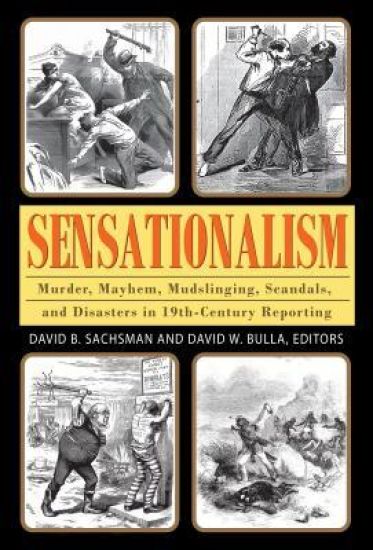
Sensationalism

Sensationalism

David B. Sachsman

AldineTransaction
2015
nidottu
David B. Sachsman and David W. Bulla have gathered a colourful collection of essays exploring sensationalism in nineteenth-century newspaper reporting. The contributors analyse the role of sensationalism and tell the story of both the rise of the penny press in the 1830s and the careers of specific editors and reporters dedicated to this particular journalistic style.Divided into four sections, the first, titled "The Many Faces of Sensationalism," provides an eloquent Defense of yellow journalism, analyses the place of sensational pictures, and provides a detailed examination of the changes in reporting over a twenty-year span. The second part, "Mudslinging, Muckraking, Scandals, and Yellow Journalism," focuses on sensationalism and the American presidency as well as why journalistic muckraking came to fruition in the Progressive Era.The third section, "Murder, Mayhem, Stunts, Hoaxes, and Disasters," features a ground-breaking discussion of the place of religion and death in nineteenth-century newspapers. The final section explains the connection between sensationalism and hatred. This is a must-read book for any historian, journalist, or person interested in American culture.
A Press Divided

A Press Divided

David B. Sachsman

AldineTransaction
2018
nidottu
Now in paperback, A Press Divided provides new insights regarding the sharp political divisions that existed among the newspapers of the Civil War era. These newspapers were divided between North and South - and also divided within the North and South. These divisions reflected and exacerbated the conflicts in political thought that caused the Civil War and the political and ideological battles within the Union and the Confederacy about how to pursue the war.In the North, dissenting voices alarmed the Lincoln administration to such a degree that draconian measures were taken to suppress dissenting newspapers and editors, while in the South, the Confederate government held to its fundamental belief in freedom of speech and was more tolerant of political attacks in the press. This volume consists of eighteen chapters on subjects including newspaper coverage of the rise of Lincoln, press reports on George Armstrong Custer, Confederate women war correspondents, Civil War photojournalists, newspaper coverage of the Emancipation Proclamation, and the suppression of the dissident press.This book tells the story of a divided press before and during the Civil War, discussing the roles played by newspapers in splitting the nation, newspaper coverage of the war, and the responses by the Union and Confederate administrations to press criticism.