Kirjojen hintavertailu. Mukana 11 627 362 kirjaa ja 12 kauppaa.

Kirjahaku

Etsi kirjoja tekijän nimen, kirjan nimen tai ISBN:n perusteella.

11 kirjaa tekijältä David B. Wexler

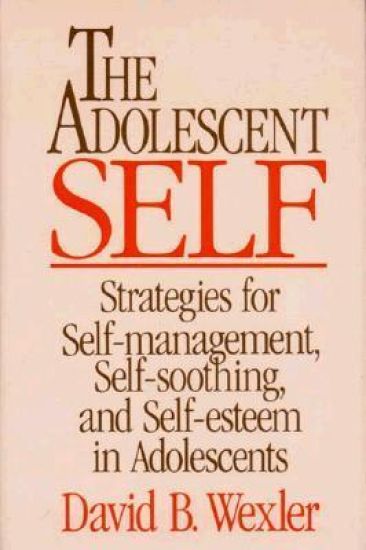
The Adolescent Self

The Adolescent Self

David B. Wexler

WW Norton Co
1991
sidottu
The problems of substance abuse, anxiety, aggression, self-destructive behavior, eating disorders, and mood swings can usually be traced to fundamental deficits, particularly in the ability to self-soothe. This book models a range of carefully designed strategies to address these central problems of the adolescent self.
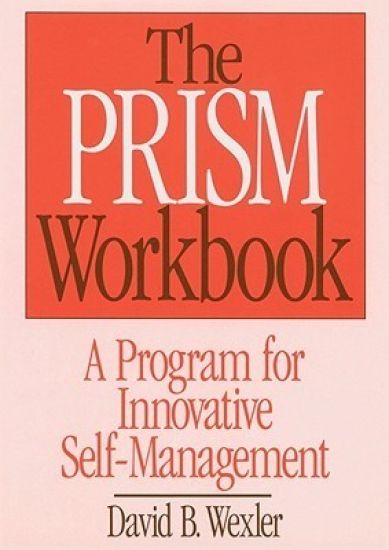
The PRISM Workbook

The PRISM Workbook

David B. Wexler

WW Norton Co
1991
nidottu
Welcome to PRISM! Do you ever do things you later regret, such as use drugs, get into fights, run away, steal things, or say things you do not mean? If so, doing the exercises in the PRISM workbook can help you develop better control over your behavior. If you get easily depressed, angry or anxious, PRISM will help you develop better control over your thoughts and feelings. The basic building blocks for self-management are: Self-TalkSelf-SoothingSelf-Expression Putting these together will give you the power to take charge of your life, to stop doing things automatically, and to increase your options.
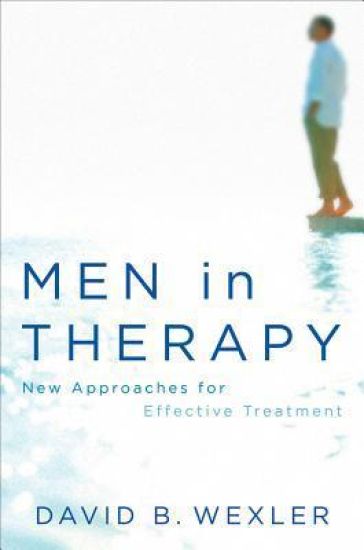
Men in Therapy

Men in Therapy

David B. Wexler

WW Norton Co
2009
sidottu
Cultural norms and assumptions color the male experience of psychotherapy, and the traditional notions of masculinity to which many men still cling are, in many ways, antithetical to the tenets and goals of therapy. As a result, even the experienced therapist may find him- or herself struggling when working with male clients. In Men in Therapy, therapists are offered a number of methods for countering men’s general reluctance to open up emotionally or fully engage in therapy. Of course, men cannot be reduced to a single, monolithic group; rather, they start therapy due to a wide range of needs, and come from a wide variety of backgrounds. Therefore, individual chapters are devoted to the treatment of men in relationships, men suffering from depression, fathers, men who abuse women, and men of color. In each case, Wexler provides an informative overview of the issues unique to each group, sound advice, and commonsense methods for treating each of these groups effectively, nonjudgmentally, and professionally.
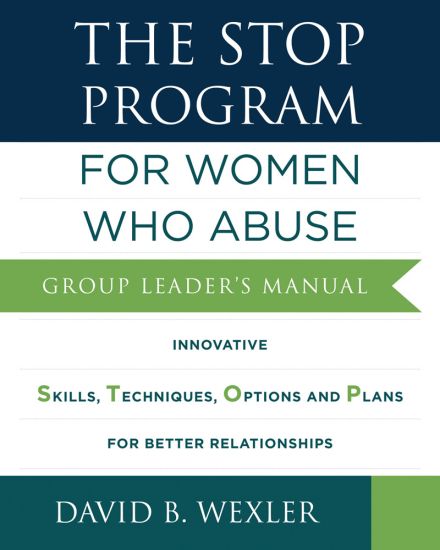
The STOP Program: For Women Who Abuse

The STOP Program: For Women Who Abuse

David B. Wexler

WW Norton Co
2016
nidottu
Long disregarded and downplayed, female domestic violence is today rapidly gaining awareness as research proves not only that it exists, but that—according to multiple incidence studies—the frequency of women actually initiating abusive behaviour is about equal to men. While certain core elements of intimate partner violence are shared among all domestic violence offenders, female offenders face unique triggers, personal backgrounds and relationship dynamics. The STOP Program: For Women Who Abuse is the most innovative and comprehensive manual to address domestic violence treatment specifically to female offenders, with a programme targeted to engage women in their own healing process. This programme will radically change the landscape for treatment of women who abuse. This comprehensive instruction manual for group treatment offers therapists, social workers and other counsellors sound, psychologically-based interventions to reach the very women who often seem unapproachable in a treatment setting. Developed and field-tested for over twenty-five years among military and civilian populations, the programme provides a skill-building approach to address the core elements of all intimate partner violence as well as the aspects that are unique to female offenders. Participants are held responsible for their actions—and pushed to examine the complex roles of trauma, emotional dysregulation, self-esteem deficits and histories of personal victimisation in their relationship struggles. Presented in a 26-week or 52-week psychoeducational format, the group leader’s manual is packed with teaching methods, skills-training exercises, articles, video clips and other resources, as well as guidelines for addressing the substance abuse issues which frequently exacerbate female domestic violence. Accompanying handouts and homework for participants (sold separately) provide structure for recovery both within the sessions and at home.
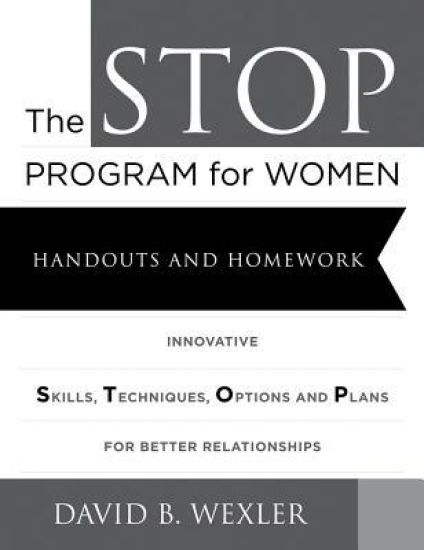
The STOP Program for Women

The STOP Program for Women

David B. Wexler

WW Norton Co
2016
irtolehti
This programme addresses the rapidly increasing awareness of female domestic violence and need for quality treatment services. Developed and field-tested for over twenty-five years among military and civilian populations, this programme integrates contemporary interventions and client-centered guidelines to treat domestic violence offenders—who happen to be female. Based on the acclaimed domestic violence treatment programme STOP Domestic Violence, which focused on male domestic violence offenders, this book recognises what is now being widely accepted, abuse is abuse regardless of gender and must be treated. These worksheets and exercises, fully integrated with the main book, keep group members actively engaged in overcoming their abusive behaviours. Packaged as loose-leaf sheets, they can be added, removed or rearranged to suit the needs of any leader administering the programme. Worksheets are arranged by sessions which help abusers understand why what they are doing is abuse and how to overcome what drives them to do so. The abusers are held accountable for their actions rather than blame the victims or various substances. Each session comes with clearly labelled questions for the abusers to answer in the session and as homework, providing structure for recovery both within the sessions and at home.
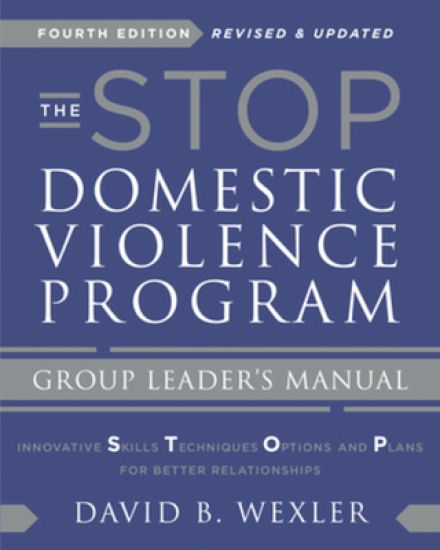
The STOP Domestic Violence Program

The STOP Domestic Violence Program

David B. Wexler

WW Norton Co
2020
nidottu
The bold interventions from STOP have now been field-tested for more than thirty years among military and civilian populations—and STOP has now treated more than 50,000 domestic violence offenders. David Wexler’s programme offers therapists, social workers and other counsellors a new level of sound, psychologically based interventions that reach the very men who often seem so unapproachable in a treatment setting. Treatment providers will find new sessions—based on the latest evidence-supported strategies—on insecure attachment issues, stages of change, groundbreaking results from the Adverse Childhood Experiences (ACE) study, normative male alexithymia, stake in conformity issues, substance abuse issues and more. This new edition integrates twenty- four field- tested video clips to dramatically illustrate key issues for the group. Presented in a 26-or 52-week psychoeducational format, STOP is packed with updated skills, exercises, videos, handouts and homework assignments that challenge men to examine themselves and develop new tools to manage their relationship issues.
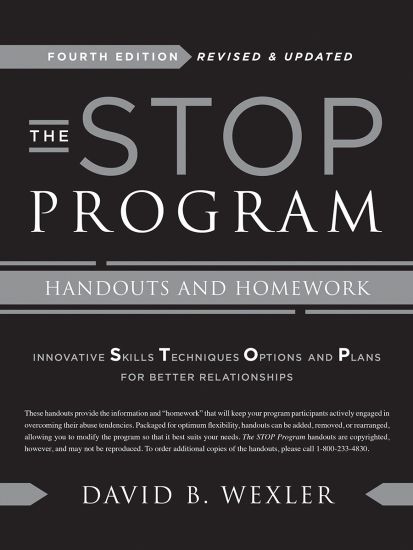
The STOP Program

The STOP Program

David B. Wexler

WW Norton Co
2020
nidottu
Fully revised and updated to accompany the fourth edition of the STOP Domestic Violence program, these handouts are critical to keeping participants actively engaged in overcoming their abusive tendencies. Packaged as functional loose-leaf sheets, they can be added, removed, or rearranged to suit the needs of any group leader administering the program.
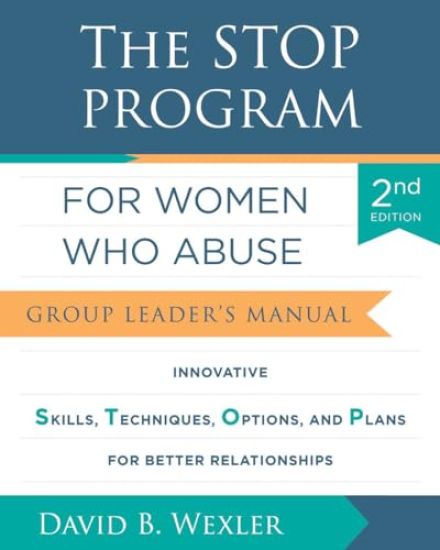
The STOP Program for Women Who Abuse

The STOP Program for Women Who Abuse

David B. Wexler

WW NORTON CO
2024
nidottu
Long disregarded, female domestic violence is rapidly gaining awareness as research proves not only that it exists, but that the frequency of women abusing men is much higher than previously assumed. While certain core elements of intimate partner violence are shared among all offenders, female offenders face unique triggers, personal backgrounds and relationship dynamics. Now fully updated and revised, The STOP Program for Women Who Abuse is the most innovative and comprehensive manual to address domestic violence treatment specifically for female offenders, with a programme targeted to engage women in their own healing process. This second edition includes new sessions on the Five Love Languages, the Stages of Change and Stake in Conformity, and updates throughout the text reflect an increased emphasis on trauma theory, attachment theory, mindfulness techniques and gratitudes. Handouts and homework for participants (sold separately) provide structure for recovery in group sessions and at home.
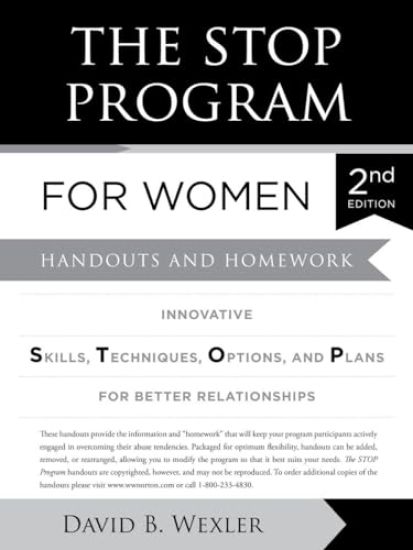
The STOP Program for Women

The STOP Program for Women

David B. Wexler

WW NORTON CO
2024
irtolehti
The STOP Program for Women addresses the rapidly increasing awareness of domestic violence perpetrated by women and the need for quality treatment services. These updated worksheets and exercises, fully integrated with the group leader’s manual, keep participants actively engaged in overcoming their abusive behaviours. This second edition includes new sessions on the Five Love Languages, the Stages of Change and Stake in Conformity. Updates throughout the text reflect an increased emphasis on trauma theory, attachment theory, mindfulness techniques and gratitudes. Each session includes questions for reflection which can be used both during a group meeting and as homework, providing structure for recovery within and between sessions. Packaged as loose-leaf sheets, these handouts can be added, removed or rearranged to suit the needs of any leader administering the STOP program.
Mental Health Law

Mental Health Law

David B. Wexler

Springer-Verlag New York Inc.
2012
nidottu
THE CORE OF MENTAL HEALTH LAW A musty file in Arizona's Greenlee County Courthouse reveals that on January 22, 1912, shortly before Arizona became a state, a 19-year-old Mexican-American woman residing in Morenci was taken into custody and placed in the county jail by a deputy sheriff who, that same day, filed with the Greenlee County Probate Court the following commit­ ment petition: Have known girl about one year. Last summer-July or Aug. 19- commenced to act irrational. Has been under treatment of physicians past 4 months. They called me this A.M. and told me they were unable to treat her successfully-that she is crazy and I must arrest her. The proposed patient was apparently examined the next day by two physicians, who duly completed the required medical questionnaire. In addition to mentioning that the patient's physical health was good, that she was "cleanly" in her personal habits, that she did not use liquor, tobacco, or drugs, and that neither she nor any of her relatives had ever been mentally ill or hospitalized in the past, the doctors listed the follow­ ing information on those portions of the form devoted to mental illness and dangerousness: Dangerousness: No threats or attempts to commit suicide or murder. Is of a very happy temperament. Has a tendency to laugh and sing. Facts indicating insanity: She wanted to dance. Most of conversation was fairly rational.