Kirjojen hintavertailu. Mukana 11 342 296 kirjaa ja 12 kauppaa.

Kirjahaku

Etsi kirjoja tekijän nimen, kirjan nimen tai ISBN:n perusteella.

4 kirjaa tekijältä David Batchelor

David Batchelor

David Batchelor

David Batchelor

Ridinghouse
2015
nidottu
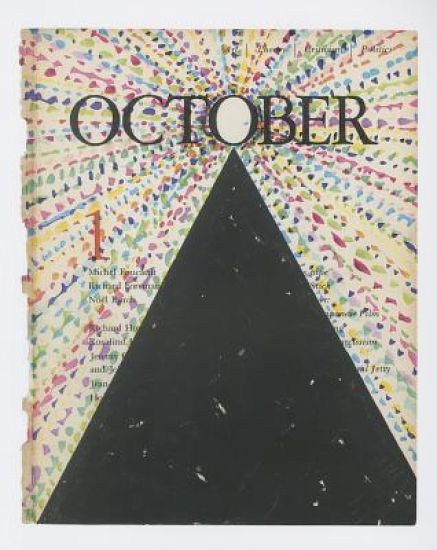
David Batchelor’s latest series of drawings (2012–13) disrupts October’s orderly monochromatic universe with circles, triangles and rectangles of brilliant transparent colour and planes of opaque black. Drawn over every page of October No. 1 (summer 1976), his varied abstract compositions interrupt the intended ‘textual clarity’ of the journal with a carnivalesque play of form and colour. Drawing upon Batchelor’s unique visual language and the colours found in the modern city, the works in this artist project are reprinted to actual size and collected in full for the first time in this volume. This series of works formed a major part of the exhibition Adventures of the Black Square: Abstract Art and Society 1915–2015 at Whitechapel Gallery, London (15 January–6 April 2015).
Colour

Colour

David Batchelor

Whitechapel Gallery
2008
nidottu
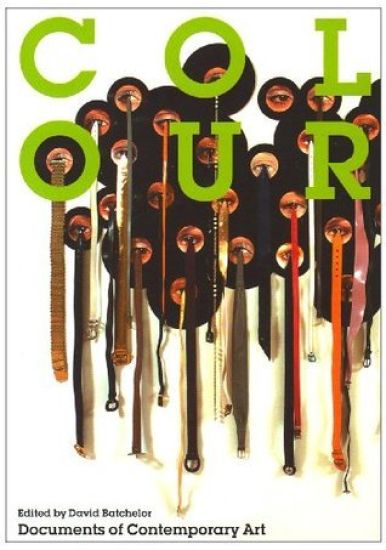
Part of the acclaimed 'Documents of Contemporary Art' series of anthologies . This chronological anthology reflects on the aesthetic, cultural and philosophical meaning of colour to artists within the broader context of anthropology, film, philosophy and science. Those who loathe colour have had as much to say as those who love it. Establishing colour as a central theme in the story of modern art, this is an indispensable handbook to the definitions and debates around its history, meaning and use. Artists surveyed include: Joseph Albers, Mel Bochner, Daniel Buren, Carlos Cruz-Diez, Robert Delaunay, Sonia Delaunay, Jimmie Durham, Helen Frankenthaler, Paul Gauguin, Donald Judd, Wassily Kandinsky, Paul Klee, Yves Klein, Kazimir Malevich, Piero Manzoni, Henri Matisse, Henri Michaux, Beatriz Milhazes, Piet Mondrian, Barnett Newman, Kenneth Noland, Helio Oiticica, Paul Signac, Ad Reinhardt, Gerhard Richter, Aleksandr Rodchenko, Bridget Riley, Mark Rothko, Yinka Shonibare, Jessica Stockholder, Theo van Doesburg, Vincent van Gogh, Victor Vasarely and Rachel Whiteread. Writers include: Theodor Adorno, Roland Barthes, Charles Baudelaire, Jean Baudrillard, Walter Benjamin, Charles Blanc, Jacques Derrida, Thierry de Duve, Umberto Eco, Victoria Finlay, Joris-Karl Huysmans, Johannes Itten, Julia Kristeva, Claude Levi-Strauss, Jacqueline Lichtenstein, Maurice Merleau-Ponty, John Ruskin, Adrian Stokes and Ludwig Wittgenstein.
The Luminous and the Grey

The Luminous and the Grey

David Batchelor

Reaktion Books
2014
nidottu
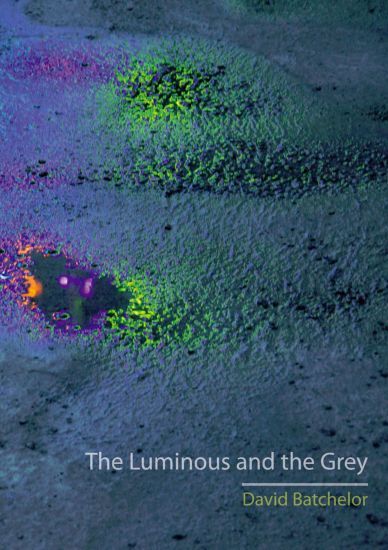
Colour is a given of most people’s everyday lives, but at the same time it lies at the limits of language and understanding. David Batchelor’s previous book for Reaktion, Chromophobia, addressed the extremes of love and loathing that colour has provoked since antiquity. This book charts more ambiguous terrain.The Luminous and the Grey is a study of the places where colour comes into being and where it fades away, an inquiry into when colour begins and when it ends, both in the material world and in the imagination. Batchelor draws on a wide range of material, including neuroscience, philosophy, literature, film and the writings of artists; and makes use of his own experience as an artist who has worked with colour for more than twenty years.After considering the place of colour in some creation myths, in industrial chemistry, in recent thinking on optics and in the specific forms of luminosity that saturate the modern city, the book culminates in a meditation on the unique colour that is also a non-colour, a mood, a feeling, an existential condition and even an insult: grey.
Chromophobia

Chromophobia

David Batchelor

Reaktion Books
2001
nidottu
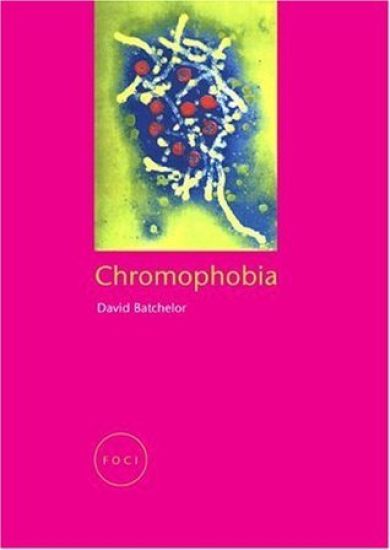
The central argument of Chromophobia is that a chromophobic impulse – a fear of corruption or contamination through colour – lurks within much Western cultural and intellectual thought. This is apparent in the many and varied attempts to purge colour, either by making it the property of some ‘foreign body’ – the oriental, the feminine, the infantile, the vulgar, or the pathological – or by relegating it to the realm of the superficial, the supplementary, the inessential, or the cosmetic.Chromophobia has been a cultural phenomenon since ancient Greek times; this book is concerned with forms of resistance to it. Writers have tended to look no further than the end of the nineteenth century. David Batchelor seeks to go beyond the limits of earlier studies, analysing the motivations behind chromophobia and considering the work of writers and artists who have been prepared to look at colour as a positive value. Exploring a wide range of imagery including Melville’s ‘great white whale’, Huxley’s reflections on mescaline, and Le Corbusier’s ‘Journey to the East’, Batchelor also discusses the use of colour in Pop, Minimal, and more recent art.