Kirjojen hintavertailu. Mukana 11 390 719 kirjaa ja 12 kauppaa.

Kirjahaku

Etsi kirjoja tekijän nimen, kirjan nimen tai ISBN:n perusteella.

6 kirjaa tekijältä David Benatar

The Human Predicament

The Human Predicament

David Benatar

Oxford University Press Inc
2017
sidottu
Are human lives ultimately meaningless? Is our inevitable death bad? Would immortality be better? Should we hasten our deaths by taking our own lives in acts of suicide? Many people ask these big questions and many are plagued by them. Surprisingly few analytic philosophers have spoken to these important questions. When they have engaged the big existential questions they have tended, like more popular writers, to offer comforting, optimistic answers. The Human Predicament offers a less sanguine assessment. David Benatar invites readers to take a clear-eyed view of our situation, defending a substantial, but not unmitigated, pessimism about human life. Benatar argues that while our lives can have some meaning, cosmically speaking we are ultimately the insignificant beings that we often fear we are. A candid appraisal reveals that the quality of life, although less bad for some people than for others, leaves much to be desired in even the best cases. But death, David Benatar argues, is hardly the solution. Our mortality exacerbates rather than mitigates our cosmic meaninglessness. It can release us from suffering but even when it does it imposes another cost - annihilation. This unfortunate state of affairs has nuanced implications for how we should think about immortality, about suicide, and about the aspects of life in which we can and do find deeper meaning. Engaging profound existential questions with analytic rigor and clarity, The Human Predicament is clear eyed, unsentimental, and deeply provocative to some of our most cherished beliefs.
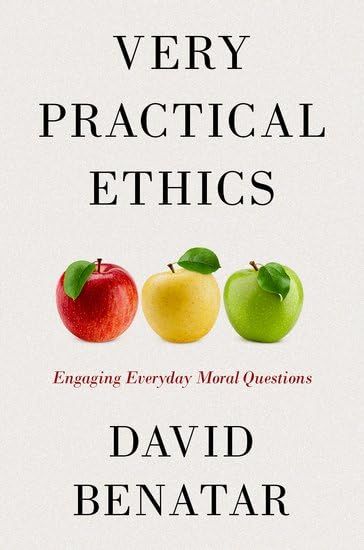
Very Practical Ethics

Very Practical Ethics

David Benatar

OXFORD UNIVERSITY PRESS INC
2024
sidottu
In Very Practical Ethics David Benatar discusses some of the moral problems that ordinary people face in their everyday lives. These are not moral problems that arise only in extraordinary circumstances, nor those which are confronted only by select people in their professional or public roles; rather, they are problems that most people face on a daily basis. They are “very practical” issues, both because of their ubiquity, and because individuals are usually able to act on their decisions. Among these very practical questions: When is sex morally permissible? What duties does an individual have regarding the environment? When may we engage in practices such as smoking that might cause discomfort or increase the risk of harm to others? How extensive are our duties to assist the world's poor and others in dire need of help? Is it morally permissible to consume animals and their products? When is language prejudicial? Is it wrong to swear? How should we address and refer to others? When, if ever, is controversial humour morally permissible? Is it always wrong to bullshit, or to fail to call out the bullshit of others? When should we forgive--or not forgive? Written accessibly and covering topics not often discussed by moral philosophers, Very Practical Ethics will be of interest to students and other readers who care about how we might resolve the kinds of ethical issues we all face every day.
Very Practical Ethics

Very Practical Ethics

David Benatar

OXFORD UNIVERSITY PRESS INC
2024
nidottu
In Very Practical Ethics David Benatar discusses some of the moral problems that ordinary people face in their everyday lives. These are not moral problems that arise only in extraordinary circumstances, nor those which are confronted only by select people in their professional or public roles; rather, they are problems that most people face on a daily basis. They are “very practical” issues, both because of their ubiquity, and because individuals are usually able to act on their decisions. Among these very practical questions: When is sex morally permissible? What duties does an individual have regarding the environment? When may we engage in practices such as smoking that might cause discomfort or increase the risk of harm to others? How extensive are our duties to assist the world's poor and others in dire need of help? Is it morally permissible to consume animals and their products? When is language prejudicial? Is it wrong to swear? How should we address and refer to others? When, if ever, is controversial humour morally permissible? Is it always wrong to bullshit, or to fail to call out the bullshit of others? When should we forgive--or not forgive? Written accessibly and covering topics not often discussed by moral philosophers, Very Practical Ethics will be of interest to students and other readers who care about how we might resolve the kinds of ethical issues we all face every day.
Better Never to Have Been

Better Never to Have Been

David Benatar

Oxford University Press
2008
nidottu
Most people believe that they were either benefited or at least not harmed by being brought into existence. Thus, if they ever do reflect on whether they should bring others into existence---rather than having children without even thinking about whether they should---they presume that they do them no harm. Better Never to Have Been challenges these assumptions. David Benatar argues that coming into existence is always a serious harm. Although the good things in one's life make one's life go better than it otherwise would have gone, one could not have been deprived by their absence if one had not existed. Those who never exist cannot be deprived. However, by coming into existence one does suffer quite serious harms that could not have befallen one had one not come into existence. Drawing on the relevant psychological literature, the author shows that there are a number of well-documented features of human psychology that explain why people systematically overestimate the quality of their lives and why they are thus resistant to the suggestion that they were seriously harmed by being brought into existence. The author then argues for the 'anti-natal' view---that it is always wrong to have children---and he shows that combining the anti-natal view with common pro-choice views about foetal moral status yield a 'pro-death' view about abortion (at the earlier stages of gestation). Anti-natalism also implies that it would be better if humanity became extinct. Although counter-intuitive for many, that implication is defended, not least by showing that it solves many conundrums of moral theory about population.
The Second Sexism

The Second Sexism

David Benatar

John Wiley Sons Inc
2012
nidottu
Does sexism against men exist? What it looks like and why we need to take it seriously This book draws attention to the "second sexism," where it exists, how it works and what it looks like, and responds to those who would deny that it exists. Challenging conventional ways of thinking, it examines controversial issues such as sex-based affirmative action, gender roles, and charges of anti-feminism. The book offers an academically rigorous argument in an accessible style, including the careful use of empirical data, and includes examples and engages in a discussion of how sex discrimination against men and boys also undermines the cause for female equality.