Kirjojen hintavertailu. Mukana 11 244 527 kirjaa ja 12 kauppaa.

Kirjahaku

Etsi kirjoja tekijän nimen, kirjan nimen tai ISBN:n perusteella.

9 kirjaa tekijältä David Biale

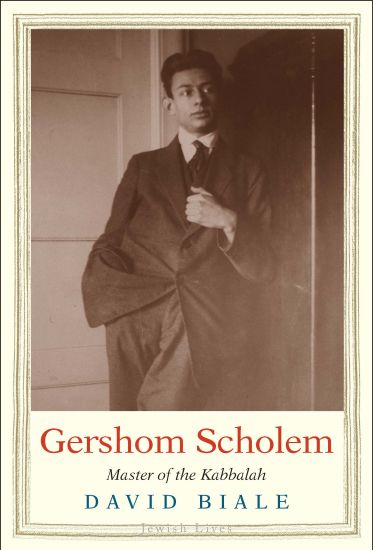
Gershom Scholem

Gershom Scholem

David Biale

Yale University Press
2018
sidottu
From the prizewinning Jewish Lives series, a new biography of the seminal twentieth-century historian and thinker who pioneered the study of Jewish mysticism and profoundly influenced the Zionist movement"Biale . . . not only captures Scholem’s scholarship, but also his personal involvement in the major issues, conflicts, tragedies, and triumphs of Jewish life during the last century. . . . [An] excellent new book."—Reform Judaism Gershom Scholem (1897–1982) was perhaps the foremost Jewish intellectual of the twentieth century. Pioneering the study of Jewish mysticism as a legitimate academic discipline, he overturned the rationalist bias of his predecessors and revealed an extraordinary world of myth and messianism. In his youth, he rebelled against the assimilationist culture of his parents and embraced Zionism as the vehicle for the renewal of Judaism in a secular age. He moved to Palestine in 1923 and participated in the creation of the Hebrew University, where he was a towering figure for nearly seventy years. David Biale traces Scholem’s tumultuous life of political activism and cultural criticism, including his falling-out with Hannah Arendt over the Eichmann trial. Mining a rich trove of diaries, letters, and other writings, Biale shows that his subject’s inner life illuminates his most important writings. Scholem emerges as a passionately engaged man of his times—a period that encompassed two world wars, the rise of Nazism, and the Holocaust. About Jewish Lives: Jewish Lives is a prizewinning series of interpretative biography designed to explore the many facets of Jewish identity. Individual volumes illuminate the imprint of Jewish figures upon literature, religion, philosophy, politics, cultural and economic life, and the arts and sciences. Subjects are paired with authors to elicit lively, deeply informed books that explore the range and depth of the Jewish experience from antiquity to the present. In 2014, the Jewish Book Council named Jewish Lives the winner of its Jewish Book of the Year Award, the first series ever to receive this award. More praise for Jewish Lives: "Excellent" –New York Times "Exemplary" –Wall Street Journal "Distinguished" –New Yorker "Superb" –The Guardian
Eros and the Jews

Eros and the Jews

David Biale

University of California Press
1997
pokkari
Contradictory stereotypes about Jewish sexuality pervade modern culture, from Lenny Bruce's hip eroticism to Woody Allen's little man with the big libido (and even bigger sexual neurosis). Does Judaism in fact liberate or repress sexual desire? David Biale does much more than answers that question as he traces Judaism's evolving position on sexuality, from the Bible and Talmud to Zionism up through American attitudes today. What he finds is a persistent conflict between asceticism and gratification, between procreation and pleasure. From the period of the Talmud onward, Biale says, Jewish culture continually struggled with sexual abstinence, attempting to incorporate the virtues of celibacy, as it absorbed them from Greco-Roman and Christian cultures, within a theology of procreation. He explores both the canonical writings of male authorities and the alternative voices of women, drawing from a fascinating range of sources that includes the "Book of Ruth", "Yiddish literature", the memoirs of the founders of Zionism, and the films of Woody Allen. Biale's historical reconstruction of Jewish sexuality sees the present through the past and the past through the present. He discovers an erotic tradition that is not dogmatic, but a record of real people struggling with questions that have challenged every human culture, and that have relevance for the dilemmas of both Jews and non-Jews today.
Blood and Belief

Blood and Belief

David Biale

University of California Press
2007
pokkari
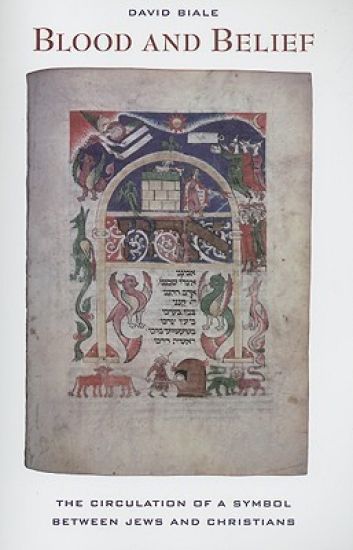
Blood contains extraordinary symbolic power in both Judaism and Christianity - as the blood of sacrifice, of Jesus, of the Jewish martyrs, of menstruation, and more. Yet, though they share the same literary, cultural, and religious origins, on the question of blood the two religions have followed quite different trajectories. For instance, while Judaism rejects the eating or drinking of blood, Christianity mandates its symbolic consumption as a central sacrament. How did these two traditions, both originating in the Hebrew Bible's cult of blood sacrifices, veer off in such different directions? With his characteristic wit and erudition, David Biale traces the continuing, changing, and often clashing roles of blood as both symbol and substance through the entire sweep of Jewish and Christian history from Biblical times to the present.
Gershom Scholem

Gershom Scholem

David Biale

Harvard University Press
1982
nidottu
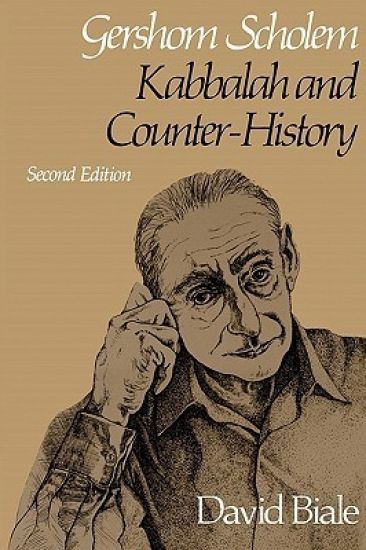
Through a lifetime of passionate scholarship, Gershom Scholem (1897–1982) uncovered the “domains of tradition hidden under the debris of centuries” and made the history of Jewish mysticism and messianism comprehensible and relevant to current Jewish thought.In this paperback edition of his definitive book on Scholem’s work, David Biale has shortened and rearranged his study for the benefit of the general reader and the student. A new introduction and new passages in the main text highlight the pluralistic character of Jewish theology as seen by Scholem, the place of the Kabbalah in debates over Zionism versus assimilation, and the interpretation of Kafka as a Jewish writer.
Not in the Heavens

Not in the Heavens

David Biale

Princeton University Press
2010
sidottu
Not in the Heavens traces the rise of Jewish secularism through the visionary writers and thinkers who led its development. Spanning the rich history of Judaism from the Bible to today, David Biale shows how the secular tradition these visionaries created is a uniquely Jewish one, and how the emergence of Jewish secularism was not merely a response to modernity but arose from forces long at play within Judaism itself. Biale explores how ancient Hebrew books like Job, Song of Songs, and Esther downplay or even exclude God altogether, and how Spinoza, inspired by medieval Jewish philosophy, recast the biblical God in the role of nature and stripped the Torah of its revelatory status to instead read scripture as a historical and cultural text. Biale examines the influential Jewish thinkers who followed in Spinoza's secularizing footsteps, such as Salomon Maimon, Heinrich Heine, Sigmund Freud, and Albert Einstein. He tells the stories of those who also took their cues from medieval Jewish mysticism in their revolts against tradition, including Hayim Nahman Bialik, Gershom Scholem, and Franz Kafka. And he looks at Zionists like David Ben-Gurion and other secular political thinkers who recast Israel and the Bible in modern terms of race, nationalism, and the state. Not in the Heavens demonstrates how these many Jewish paths to secularism were dependent, in complex and paradoxical ways, on the very religious traditions they were rejecting, and examines the legacy and meaning of Jewish secularism today.
Not in the Heavens

Not in the Heavens

David Biale

Princeton University Press
2015
pokkari
Not in the Heavens traces the rise of Jewish secularism through the visionary writers and thinkers who led its development. Spanning the rich history of Judaism from the Bible to today, David Biale shows how the secular tradition these visionaries created is a uniquely Jewish one, and how the emergence of Jewish secularism was not merely a response to modernity but arose from forces long at play within Judaism itself. Biale explores how ancient Hebrew books like Job, Song of Songs, and Esther downplay or even exclude God altogether, and how Spinoza, inspired by medieval Jewish philosophy, recast the biblical God in the role of nature and stripped the Torah of its revelatory status to instead read scripture as a historical and cultural text. Biale examines the influential Jewish thinkers who followed in Spinoza's secularizing footsteps, such as Salomon Maimon, Heinrich Heine, Sigmund Freud, and Albert Einstein. He tells the stories of those who also took their cues from medieval Jewish mysticism in their revolts against tradition, including Hayim Nahman Bialik, Gershom Scholem, and Franz Kafka. And he looks at Zionists like David Ben-Gurion and other secular political thinkers who recast Israel and the Bible in modern terms of race, nationalism, and the state. Not in the Heavens demonstrates how these many Jewish paths to secularism were dependent, in complex and paradoxical ways, on the very religious traditions they were rejecting, and examines the legacy and meaning of Jewish secularism today.
Jewish Culture Between Canon and Heresy

Jewish Culture Between Canon and Heresy

David Biale

STANFORD UNIVERSITY PRESS
2023
sidottu
This career-spanning anthology from prominent Jewish historian David Biale brings over a dozen of his key essays together for the first time. These pieces, written between 1974 and 2016, are all representative of a method Biale calls "counter-history": "the discovery of vital forces precisely in what others considered marginal, disreputable and irrational." The themes that have preoccupied Biale throughout the course of his distinguished career—in particular power, sexuality, blood, and secular Jewish thought—span the periods of the Bible, late antiquity, and the Middle Ages to the twentieth century. Exemplary essays in this volume argue for the dialectical relationship between modernity and its precursors in the older tradition, working together to "brush history against the grain" in order to provide a sweeping look at the history of the Jewish people. This volume of work by one of the boldest and most intellectually omnivorous Jewish thinkers of our time will be essential reading for scholars and students of Jewish studies.
Jewish Culture Between Canon and Heresy

Jewish Culture Between Canon and Heresy

David Biale

STANFORD UNIVERSITY PRESS
2023
pokkari
This career-spanning anthology from prominent Jewish historian David Biale brings over a dozen of his key essays together for the first time. These pieces, written between 1974 and 2016, are all representative of a method Biale calls "counter-history": "the discovery of vital forces precisely in what others considered marginal, disreputable and irrational." The themes that have preoccupied Biale throughout the course of his distinguished career—in particular power, sexuality, blood, and secular Jewish thought—span the periods of the Bible, late antiquity, and the Middle Ages to the twentieth century. Exemplary essays in this volume argue for the dialectical relationship between modernity and its precursors in the older tradition, working together to "brush history against the grain" in order to provide a sweeping look at the history of the Jewish people. This volume of work by one of the boldest and most intellectually omnivorous Jewish thinkers of our time will be essential reading for scholars and students of Jewish studies.
Traditionen Der Sakularisierung: Judisches Denken Von Den Anfangen Bis in Die Moderne
David Biale zeichnet den Aufstieg des judischen Sakularismus anhand jener visionaren Schriftsteller und Denker nach, die fur seine Entfaltung wegweisend waren. Auf die facettenreiche Geschichte des Judentums blickend, spannt er einen Bogen von der Bibel bis in die Gegenwart; er belegt, inwiefern die von diesen Visionaren hervorgebrachte sakulare Tradition spezifisch judisch ist und wie die Entstehung des judischen Sakularismus nicht nur eine Reaktion auf die Moderne war, sondern Kraften entsprang, die lange Zeit hindurch innerhalb des Judentums selbst am Werk waren.Biale untersucht, wie antike hebraische Schriften - etwa das Buch Hiob, das Hohelied und das Buch Esther - die Bedeutung Gottes herunterspielen, ja ihn vollig ausklammern; wie Spinoza, inspiriert von der judischen Philosophie des Mittelalters, den biblischen Gott mit der Natur gleichsetzte und die Tora statt als Offenbarung als historisch-kulturellen Text las. Wirkmachtige judische Denker wie Salomon Maimon, Heinrich Heine, Sigmund Freud und Albert Einstein, die Spinoza auf dem Pfad der Sakularisierung folgten, werden in den Blick genommen. Es entsteht die Geschichte derer, die aus der mittelalterlichen judischen Mystik die Impulse fur ihre Auflehnung gegen die Tradition schopften; zu ihnen zahlten Chajim Nachman Bialik, Gershom Scholem und Franz Kafka. Schliesslich widmet er sich Zionisten wie David Ben-Gurion und anderen sakularen politischen Denkern, die Israel und die Bibel in den modernen Begriffen von Rasse, Nationalismus und Staat neu definierten.