Kirjojen hintavertailu. Mukana 12 083 983 kirjaa ja 12 kauppaa.

Kirjahaku

Etsi kirjoja tekijän nimen, kirjan nimen tai ISBN:n perusteella.

15 kirjaa tekijältä David Birmingham

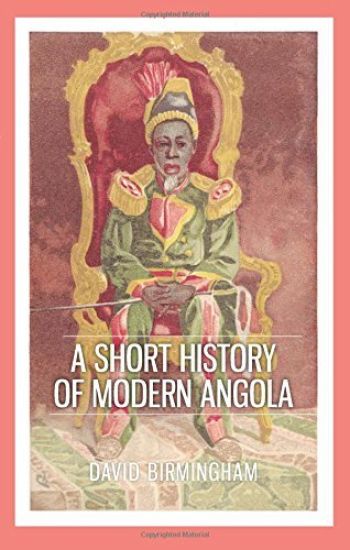
A Short History of Modern Angola

A Short History of Modern Angola

David Birmingham

Oxford University Press, USA
2016
sidottu
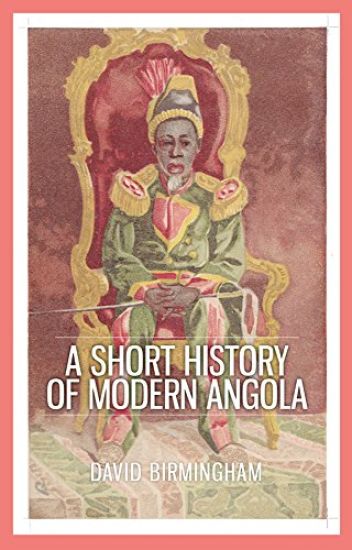
This history by celebrated Africanist David Birmingham begins in 1820 with the Portuguese attempt to create a third, African, empire after the virtual loss of Asia and America. In the nineteenth century the most valuable resource extracted from Angola was agricultural labor, first as privately owned slaves and later as conscript workers. The colony was managed by a few marine officers, by several hundred white political convicts, and by a couple of thousand black Angolans who had adopted Portuguese language and culture. The hub was the harbor city of Luanda which grew in the twentieth century to be a dynamic metropolis of several million people. The export of labor was gradually replaced when an agrarian revolution enabled white Portuguese immigrants to drive black Angolan laborers to produce sugar cane, cotton, maize and above all coffee.During the twentieth century Congo copper supplemented this wealth, by gem-quality diamonds, and by offshore oil. Although much of the countryside retained its dollar-a-day peasant economy, new wealth generated conflict which pitted white against black, north against south, coast against highland, American allies against Russian allies. The generation of warfare finally ended in 2002 when national reconstruction could begin on Portuguese colonial foundations.
Trade and Empire in the Atlantic 1400-1600
Trade and Empire in the Atlantic 1400-1600 provides an accessible and concise introduction to European expansion overseas during the early modern period. It explains why and how seafarers visited the Caribbean, South America and Africa, and looks at the history of the communities that lived around the ocean as they responded to the challenges and opportunities which sea trade opened for them. Historical thinking on the subject of Empire is naturally controversial as is shown by this survey of the first four stages of early Atlantic colonisation from the conquest of the Canary Islands to the creation of slave plantations in Brazil. This history of the Atlantic Empires is an authoritative introduction to an essential topic in world history.
Trade and Empire in the Atlantic 1400-1600
Trade and Empire in the Atlantic 1400-1600 provides an accessible and concise introduction to European expansion overseas during the early modern period. It explains why and how seafarers visited the Caribbean, South America and Africa, and looks at the history of the communities that lived around the ocean as they responded to the challenges and opportunities which sea trade opened for them. Historical thinking on the subject of Empire is naturally controversial as is shown by this survey of the first four stages of early Atlantic colonisation from the conquest of the Canary Islands to the creation of slave plantations in Brazil. This history of the Atlantic Empires is an authoritative introduction to an essential topic in world history.
Central Africa to 1870

Central Africa to 1870

David Birmingham

Cambridge University Press
1982
pokkari
The complete Cambridge History of Africa was intended to present the most comprehensive and up-to-date synthesis of historical development on the African continent. Central Africa to 1870: Zambezia, Zaïre and the South Atlantic consists of chapters written for the History by David Birmingham. They were originally published in three separate volumes, and are reprinted here to provide a continuous survey of the political, social, and economic changes that took place in Central Africa during the eight centuries before the colonial era. The first chapter covers the transition from the early Iron Age culture to more mature cultures, characterized by long-distance trade, by more varied technologies and by the emergence of complex political systems. The expansion of European influence, from the late fifteenth century onwards, is considered in the second chapter, together with the modification of economic and political structures in areas affected by the development of the slave trade. The final chapter deals with the last phase of Central Africa's pre-colonial history during which a series of new dynamic forces intruded into the region. A new bibliographical essay of suggestions for further reading has been compiled for this edition. It will be valuable to both students and teachers of African history.
Switzerland

Switzerland

David Birmingham

Swallow Press
2004
pokkari
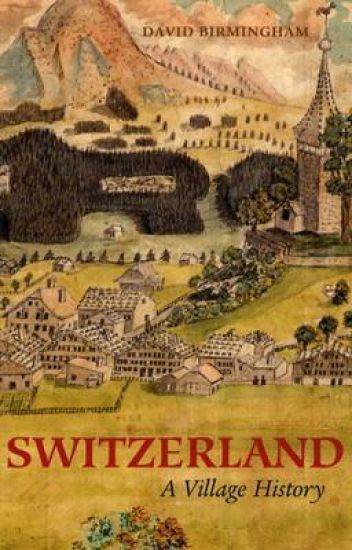
Switzerland: A Village History is an account of an Alpine village that illuminates the broader history of Switzerland and its rural, local underpinnings. It begins with the colonization of the Alps by Romanized Celtic peoples who came from the plain to clear the wilderness, establish a tiny monastic house, and create a dairy economy that became famous for its cheeses. Over ten centuries the village, like the rest of Switzerland, went through the traumas of religious reformation and political revolution. A single currency, a unified postal service, and eventually an integrated army brought improved stability and prosperity to the union of two dozen small republics. Yet Switzerland's enduring foundation remains the three thousand boroughs to which the Swiss people feel they truly belong. In Switzerland: A Village History, distinguished scholar David Birmingham tells the story of his childhood village-Château-d'Oex-where records of cheesemaking date to 1328. The evolution of this ancient grazing and forest economy included the rise of the legal profession to keep track of complex deeds, grazing allotments, and animal rights-of-way. Switzerland's eventual privatization of communal grazing land drove many highlanders to emigrate to the European plains and overseas to the Americas. The twentieth century brought wealth from foreign tourism to Switzerland, punctuated by austerities imposed by Europe's wars. Alpine peasants were integrated into Swiss union society and began at last to share in some of the prosperity flowing from urban industry. Switzerland: A Village History replaces the mythology and patriotic propaganda that too often have passed for Swiss history with a rigorous, insightful, and charming account of the daily life, small-scale rivalries, and local loyalties that actually make up Swiss history.
The Decolonization of Africa

The Decolonization of Africa

David Birmingham

Ohio University Press
1996
pokkari
This bold, popularizing synthesis presents a readily accessible introduction to one of the major themes of twentieth-century world history. Between 1922, when self-government was restored to Egypt, and 1994, when nonracial democracy was achieved in South Africa, 54 new nations were established in Africa. Written within the parameters of African history, as opposed to imperial history, this study charts the processes of nationalism, liberation and independence that recast the political map of Africa in these years. Ranging from Algeria in the North, where a French colonial government used armed force to combat Algerian aspirations to home-rule, to the final overthrow of apartheid in the South, this is an authoritative survey that will be welcomed by all students tackling this complex and challenging topic.
Kwame Nkrumah

Kwame Nkrumah

David Birmingham

Ohio University Press
1998
pokkari
The first African statesman to achieve world recognition was Kwame Nkrumah (1909-1972), who became president of the new Republic of Ghana in 1960. He campaigned ceaselessly for African solidarity and for the liberation of southern Africa from white settler rule. His greatest achievement was to win the right of black peoples in Africa to have a vote and to determine their own destiny. He turned a dream of liberation into a political reality. He was the leader of Ghana who urged Africa to shed the colonial yoke and who inspired black people everywhere to seek their freedom. This revised edition of Birmingham’s fine and accessible biography chronicles the public accomplishments of this extraordinary leader, who faced some of the century’s most challenging political struggles over colonial transition. African nationalism, and pan-Africanism. It also relates some of the personal trials of a complex individual. As a student in America in the late 1930s, Nkrumah, shy, disorganized, but ambitious and persistent, earned four degrees in ten years. For political training he then went to England. Nkrumah found writing difficult throughout his lifetime, but once back in his African homeland, with its oral heritage, Nkrumah blossomed as a charming conversationalist, a speechmaker, and eventually a visionary and inspiring leader. Nkrumah’s crusades were controversial, however, and in the 1960s he gradually lost his heroic stature both among his own people and among his fellow leaders. He lived his last years in exile. This remarkable life story, which touches on many of the issues facing modern Africa, will open a window of understanding for the general leader as well as for graduate and undergraduate classes. In this new edition, Birmingham also examines Nkrumah’s exile and provides insight into the image of Nkrumah that has emerged in the light of research recently published.
Portugal and Africa

Portugal and Africa

David Birmingham

Ohio University Press
2004
pokkari
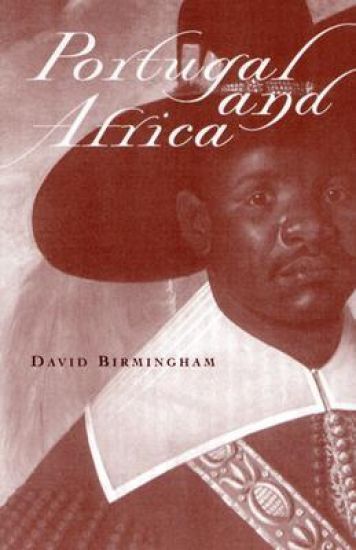
Portugal was the first European nation to assert itself aggressively in African affairs. David Birmingham's Portugal and Africa, a collection of uniquely accessible historical essays, surveys this colonial encounter from its earliest roots. The Portuguese established sugar plantations on Africa's offshore islands and built factories on the beaches in the fifteenth century, but Professor Birmingham explains that their focus shifted to regions where medieval African miners had discovered deep seams of gold ore. Later, when even richer mines and more fertile lands were captured from the native peoples of the Americas, Portuguese ships became the great "slave bridge" that spanned the Atlantic and ferried captive black workers to the colonies of the New World. Portugal lost its major mining claims in Africa to the British, but it left a legacy of a new pattern of white settler colonization based on American-style plantations. The blending of European and African cultures and races led to the emergence of elite communities, from the Kongo princes of the seventeenth century to the creolized generals of today. Portugal and Africa focuses extensively on Angola to cast new light on the final years of the colonial experience and its traumatic legacies. After 1950, Portuguese Angola became one of the most dynamic of Africa's colonies and the largest white colony outside of Algeria or South Africa. Angola's eventual collapse in a series of wars had devastating results. Birmingham brings the terror and devastation to life in a series of powerful chapters that are a model of disciplined scholarship and informed passion.
Empire in Africa

Empire in Africa

David Birmingham

Ohio University Press
2006
pokkari
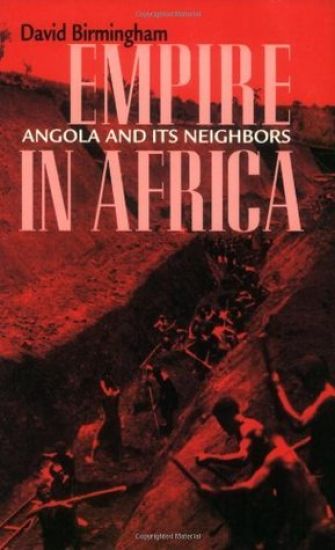
The dark years of European fascism left their indelible mark on Africa. As late as the 1970s, Angola was still ruled by white autocrats, whose dictatorship was eventually overthrown by black nationalists who had never experienced either the rule of law or participatory democracy. Empire in Africa takes the long view of history and asks whether the colonizing ventures of the Portuguese can bear comparison with those of the Mediterranean Ottomans or those experienced by Angola's neighbors in the Belgian Congo, French Equatorial Africa, or the Dutch colonies at the Cape of Good Hope and in the Transvaal. David Birmingham takes the reader through Angola's troubled past, which included endemic warfare for the first twenty-five years of independence, and examines the fact that in the absence of a viable neocolonial referee such as Britain or France, the warring parties turned to Cold War superpowers for a supply of guns. For a decade Angola replaced Vietnam as a field in which an international war by proxy was conducted. Empire in Africa explains how this African nation went from colony to independence, how in the 1990s the Cold War legacy turned to civil war, and how peace finally dawned in 2002.
A Concise History of Portugal

A Concise History of Portugal

David Birmingham

Cambridge University Press
2018
sidottu
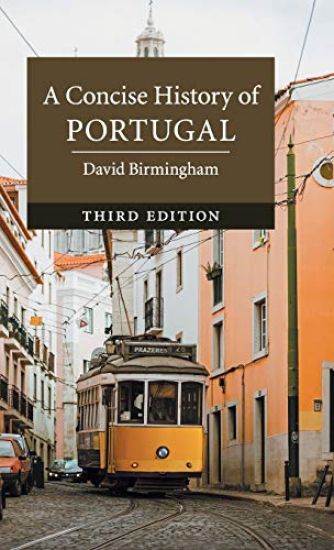
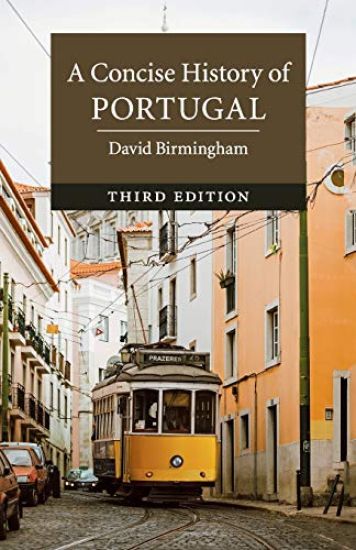
This concise, illustrated history of Portugal offers an introduction to the people and culture of the country, its empire, and its search for economic modernisation, political stability and international partnership. It remains the standard single-volume work on Portugal, studying the effects of the vast wealth mined from Portuguese Brazil, the growth of the wine trade, and the evolution of international ties. The Portuguese Revolution of 1820 to 1851 created a liberal monarchy, but in 1910 the king was overthrown and, by 1926, had been replaced by a dictatorship. In 1975, Portugal withdrew from its African colonies and looked north to become a democratic member of the European Community in 1986. This third edition brings the story up to date, with a new afterword to reflect recent changes in Portugal, Europe, and the wider world.
A Concise History of Portugal

A Concise History of Portugal

David Birmingham

Cambridge University Press
2018
pokkari
This concise, illustrated history of Portugal offers an introduction to the people and culture of the country, its empire, and its search for economic modernisation, political stability and international partnership. It remains the standard single-volume work on Portugal, studying the effects of the vast wealth mined from Portuguese Brazil, the growth of the wine trade, and the evolution of international ties. The Portuguese Revolution of 1820 to 1851 created a liberal monarchy, but in 1910 the king was overthrown and, by 1926, had been replaced by a dictatorship. In 1975, Portugal withdrew from its African colonies and looked north to become a democratic member of the European Community in 1986. This third edition brings the story up to date, with a new afterword to reflect recent changes in Portugal, Europe, and the wider world.
The Decolonization Of Africa

The Decolonization Of Africa

David Birmingham

Routledge
2020
sidottu
This bold, popularizing synthesis presents a readily accessible introduction to one of the major themes of the twentieth-century world history. Between 1922, when self-government was restored to Egypt, and 1994, when non-racial democracy was achieved in South Africa, no less than 54 new nations were established in Africa. Written within the parameters of African history, as opposed to imperial history, this study charts the process of nationalism, liberation and independence that recast the political map of Africa in these years. Ranging from Algeria in the North, where a French colonial government used armed force to combat the Algerian aspirations of home rule, to the final overthrow of apartheid in the South, this is an authoritative survey that will be welcomed by all students tackling this complex and challenging topic.
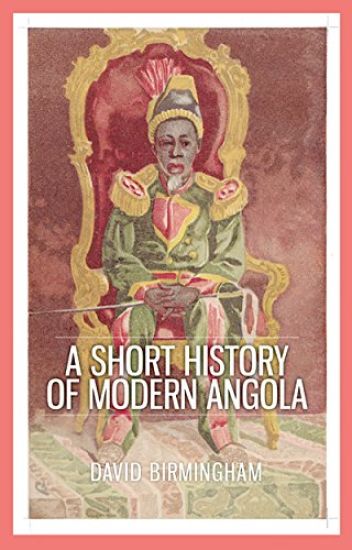
A Short History of Modern Angola

A Short History of Modern Angola

David Birmingham

C Hurst Co Publishers Ltd
2015
sidottu
This book begins in 1820 with the Portuguese attempt to create a third, African, empire after the virtual loss of Asia and America. In the nineteenth century the most valuable resource extracted from Angola was agricultural labour, first as privately owned slaves and later as conscript workers. The colony was managed by a few marine officers, by several hundred white political convicts, and by a couple of thousand black Angolans who had adopted Portuguese language and culture. The hub was the harbour city of Luanda which grew in the twentieth century to be a dynamic metropolis of several million people. The export of labour was gradually replaced when an agrarian revolution enabled white Portuguese immigrants to drive black Angolan labourers to produce sugar-cane, cotton, maize and above all coffee. During the twentieth century this wealth was supplemented by Congo copper, by gem-quality diamonds, and by off-shore oil. Although much of the countryside retained its dollar-a-day peasant economy, new wealth generated conflict which pitted white against black, north against south, coast against highland, American allies against Russian allies.The generation of warfare finally ended in 2002 when national reconstruction could begin on Portuguese colonial foundations.
A Short History of Modern Angola

A Short History of Modern Angola

David Birmingham

C Hurst Co Publishers Ltd
2015
nidottu
This book begins in 1820 with the Portuguese attempt to create a third, African, empire after the virtual loss of Asia and America. In the nineteenth century the most valuable resource extracted from Angola was agricultural labour, first as privately owned slaves and later as conscript workers. The colony was managed by a few marine officers, by several hundred white political convicts, and by a couple of thousand black Angolans who had adopted Portuguese language and culture. The hub was the harbour city of Luanda which grew in the twentieth century to be a dynamic metropolis of several million people. The export of labour was gradually replaced when an agrarian revolution enabled white Portuguese immigrants to drive black Angolan labourers to produce sugar-cane, cotton, maize and above all coffee. During the twentieth century this wealth was supplemented by Congo copper, by gem-quality diamonds, and by off-shore oil. Although much of the countryside retained its dollar-a-day peasant economy, new wealth generated conflict which pitted white against black, north against south, coast against highland, American allies against Russian allies.The generation of warfare finally ended in 2002 when national reconstruction could begin on Portuguese colonial foundations.
The Decolonization Of Africa

The Decolonization Of Africa

David Birmingham

Routledge
1995
nidottu
This bold, popularizing synthesis presents a readily accessible introduction to one of the major themes of the twentieth-century world history. Between 1922, when self-government was restored to Egypt, and 1994, when non-racial democracy was achieved in South Africa, no less than 54 new nations were established in Africa. Written within the parameters of African history, as opposed to imperial history, this study charts the process of nationalism, liberation and independence that recast the political map of Africa in these years. Ranging from Algeria in the North, where a French colonial government used armed force to combat the Algerian aspirations of home rule, to the final overthrow of apartheid in the South, this is an authoritative survey that will be welcomed by all students tackling this complex and challenging topic.