Kirjojen hintavertailu. Mukana 11 439 635 kirjaa ja 12 kauppaa.

Kirjahaku

Etsi kirjoja tekijän nimen, kirjan nimen tai ISBN:n perusteella.

7 kirjaa tekijältä David Brody

Visualizing American Empire

Visualizing American Empire

David Brody

University of Chicago Press
2010
sidottu
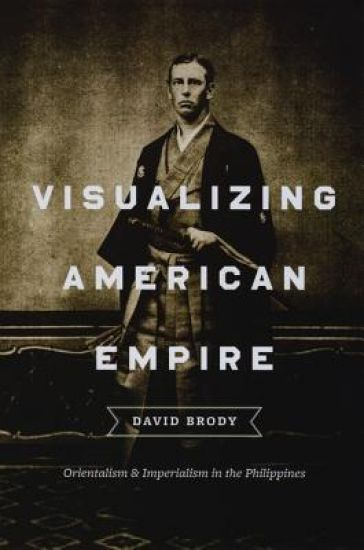
In 1899 an American could open a newspaper and find outrageous images, such as an American soldier being injected with leprosy by Filipino insurgents. These kinds of hyperbolic accounts, David Brody argues in this illuminating book, were just one element of the visual and material culture that played an integral role in debates about empire in late nineteenth- and early twentieth-century America. "Visualizing American Empire" explores the ways visual imagery and design shaped the political and cultural landscape. Drawing on a myriad of sources - including photographs, tattoos, the decorative arts, the popular press, maps, parades, and material from world's fairs and urban planners - Brody offers a distinctive perspective on American imperialism. Exploring the period leading up to the Spanish-American War, as well as beyond it, Brody argues that the way Americans visualized the Orient greatly influenced the fantasies of colonial domestication that would play out in the Philippines. Throughout, Brody insightfully examines visual culture's integral role in the machinery that runs the colonial engine. The result is essential reading for anyone interested in the history of the United States, art, design, or empire.
Visualizing American Empire

Visualizing American Empire

David Brody

University of Chicago Press
2010
nidottu
In 1899 an American could open a newspaper and find outrageous images, such as an American soldier being injected with leprosy by Filipino insurgents. These kinds of hyperbolic accounts, David Brody argues in this illuminating book, were just one element of the visual and material culture that played an integral role in debates about empire in late nineteenth- and early twentieth-century America. "Visualizing American Empire" explores the ways visual imagery and design shaped the political and cultural landscape. Drawing on a myriad of sources - including photographs, tattoos, the decorative arts, the popular press, maps, parades, and material from world's fairs and urban planners - Brody offers a distinctive perspective on American imperialism. Exploring the period leading up to the Spanish-American War, as well as beyond it, Brody argues that the way Americans visualized the Orient greatly influenced the fantasies of colonial domestication that would play out in the Philippines. Throughout, Brody insightfully examines visual culture's integral role in the machinery that runs the colonial engine. The result is essential reading for anyone interested in the history of the United States, art, design, or empire.

Housekeeping by Design

Housekeeping by Design

David Brody

University of Chicago Press
2016
sidottu
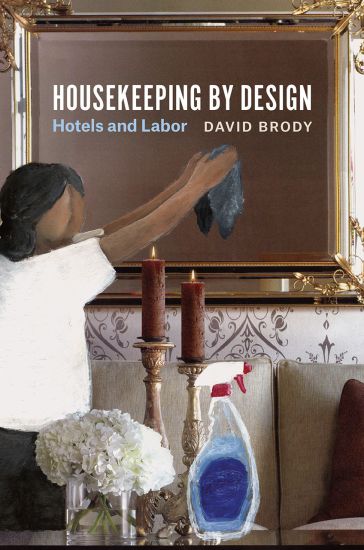
One of the great pleasures of staying in a hotel is spending time in a spotless, neat, and organized space that you don't have to clean. That doesn't, however, mean the work disappears when we're not looking, someone else is doing it. With Housekeeping by Design, David Brody introduces us to those people the housekeepers whose labor keeps the rooms clean and the guests happy. Through unprecedented access to staff at several hotels, Brody shows us just how much work goes on behind the scenes and how much management goes out of its way to make sure that labor stays hidden. We see the incredible amount of hard physical work that is involved in cleaning and preparing a room, how spaces, furniture, and other objects are designed to facilitate a smooth flow of hidden labor, and, crucially, how that design could be improved for workers and management alike if front-line staff were involved in the design process. After reading this fascinating expose of the ways hotels work or don't for housekeepers one thing is certain: checking in will never be the same again.
Housekeeping by Design

Housekeeping by Design

David Brody

University of Chicago Press
2016
nidottu
One of the great pleasures of staying in a hotel is spending time in a spotless, neat, and organized space that you don't have to clean. That doesn't, however, mean the work disappears when we're not looking, someone else is doing it. With Housekeeping by Design, David Brody introduces us to those people the housekeepers whose labor keeps the rooms clean and the guests happy. Through unprecedented access to staff at several hotels, Brody shows us just how much work goes on behind the scenes and how much management goes out of its way to make sure that labor stays hidden. We see the incredible amount of hard physical work that is involved in cleaning and preparing a room, how spaces, furniture, and other objects are designed to facilitate a smooth flow of hidden labor, and, crucially, how that design could be improved for workers and management alike if front-line staff were involved in the design process. After reading this fascinating expose of the ways hotels work or don't for housekeepers one thing is certain: checking in will never be the same again.
STEELWORKERS IN AMERIA

STEELWORKERS IN AMERIA

David Brody

University of Illinois Press
1998
nidottu
This edition of one of the seminal books in labor includes a new preface as well as a symposium on the book in which seven prominent historians discuss its significance and its place in the historiography of labor. "Steelworkers in America has emerged and remained one of the few genuinely classic works of U.S. labor history--one of the axiomatic starting points for any understanding of the new labor history." -- Roy Rosenzweig "The vision of Steelworkers has survived these thirty years and continues to inspire new work in labor history." -- Lizabeth Cohen
Labor Embattled

Labor Embattled

David Brody

University of Illinois Press
2005
nidottu
American unions are weaker now than at any time in the past hundred years, with fewer than one in ten private-sector workers currently organized. In Labor Embattled, David Brody says this is a problem not only for the unions but also a disaster for American democracy and social justice. In a series of historically informed chapters, Brody explores recent developments affecting American workers in light of labor's past. Of special concern to him is the erosion of the rights of workers under the modern labor law, which he argues is rooted in the original formulation of the Wagner Act. Brody explains how the ideals of free labor, free speech, freedom of association, and freedom of contract have been interpreted and canonized in ways that unfailingly reduce the capacity for workers' collective action while silently removing impediments to employers coercion of workers. His lucid and passionate essays combine legal and labor history to reveal how laws designed to undergird workers' rights now essentially hamstring them.