Kirjojen hintavertailu. Mukana 12 380 910 kirjaa ja 12 kauppaa.

Kirjahaku

Etsi kirjoja tekijän nimen, kirjan nimen tai ISBN:n perusteella.

21 kirjaa tekijältä David Bruhn

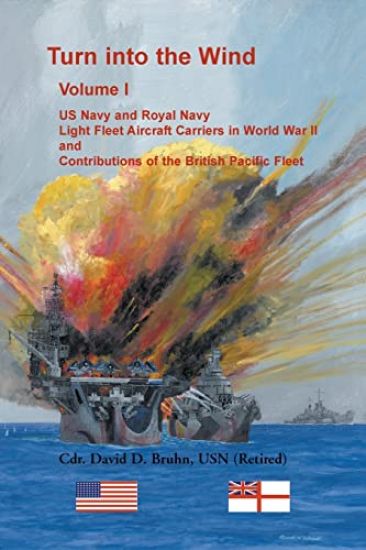
Turn into the Wind, Volume I. US Navy and Royal Navy Light Fleet Aircraft Carriers in World War II, and Contributions of the British Pacific Fleet
In the Pacific in World War II, the dearth of US Navy fleet aviation capabilities became acute following the loss, in 1942, of four aircraft carriers to combat action. New Essex-class fleet aircraft carriers were being built, but would not be ready soon enough. Time was of the essence. President Franklin D. Roosevelt intervened to solve the problem - directing reluctant Navy "top brass" to turn cruiser hulls, already laid down, into light aircraft carriers. This created nine Independence-class ships, which would earn more battle stars, on average, than their bigger, better-known sisters (the twelve finally-completed Essex carriers that saw combat action). Aboard two of the light carriers were future presidents, George H. W. Bush, and Gerald R. Ford. Pilots and aircrews flying from the 622-foot "flat-tops" earned scores of decorations for heroism. These included two Medals of Honor, Navy Crosses, Silver and Bronze Stars, and dozens of Distinguished Flying Crosses. Some of the recipients, such as Edward "Butch" O'Hare, are familiar to aviation buffs. Others, including Hollis H. Hills, who flew in the two greatest air battles of the war: Dieppe in 1942 and the "Great Marianas] Turkey Shoot" in the Pacific in 1944, less so. Britain similarly began construction on ten 698-foot Colossus-class light fleet carriers. Four entered service before the end of the war, and were allocated to the British Pacific Fleet, but arrived too late for frontline action. Aboard the BPF's larger carriers, which fought in the Battle of Okinawa and other actions, were members of many Commonwealth countries. Among them was Robert Hampton Gray, who (posthumously) was Canada's last Victoria Cross winner of the war. One hundred sixty-five photographs, maps, and diagrams; appendices; and an index to full-names, places, and subjects add value to this work.2021, 6x9, paper, index, 454 pp
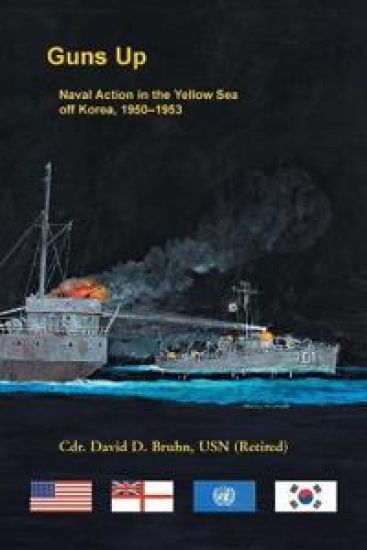
Guns Up, Naval Action in the Yellow Sea off Korea, 1950-1953
As the Korean Conflict wore on, frigates, destroyer escorts, cruisers, and battleships of the U.S. Navy, and combatant ships from eight other navies of the United Nations, plus the Republic of Korea Navy, fought a bitter war along the coastlines. Off the west coast of the peninsula, warships operated in treacherous waters of the Yellow Sea, navigating channels between tightly clustered islands close to the mainland. Fluctuating thirty-foot tides, sequentially hid and revealed mud banks, shoals, uncharted rocks, and mines laid in these dangerous coastal waters, covered by enemy shore batteries. The ships toiled to protect both the vital left flank of Allied combat forces ashore, and anti-Communist guerillas operating from nearshore islands to carry out raids behind enemy lines. During bitter armistice talks, these islands became bargaining chips and it was necessary to defend them from enemy shore bombardment and invasion by Chinese and North Korean forces. Through three years of ceaseless warfare, in bone-chilling winters that coated ships with tons of ice, and the sweltering heat of summer that made below-deck areas stifling, Allied sailors stayed the course. One hundred sixty photographs, maps, and diagrams; appendices; a bibliography; and an index to full names, places, and subjects add value to this work.2021, 6x9, paper, index, 350 pp
Guns Up, Depth Charges Readied

Guns Up, Depth Charges Readied

David Bruhn

Heritage Books
2021
pokkari
During the deadly Battle of the Mediterranean fought from 10 June 1940 to 2 May 1945, sailors aboard Allied ships faced daily threat of attack by Italian or German aircraft at daybreak and dusk; by enemy submarines at any time; and by coastal forces when operating near shore. The Royal Navy, facing the powerful Italian Navy supported by German naval and air forces, called on Commonwealth and other Allied navies for assistance. Australia sent ships, as did South Africa, and Canada. The United States joined with naval and air units in 1942. Small forces from exiled navies also fought bravely, including those from Poland. While capital warships sought fleet actions with the Italian Navy, smaller vessels assigned to convoy escort duties engaged waves of attacking enemy aircraft with naval gunfire, and countered submarine attacks with depth charges. One hundred seventy-eight photographs, maps, and diagrams; appendices; and an index to full names, places, and subjects add value to this work. 2021, 6x9, paper, index, 432 pp
Toe the Mark

Toe the Mark

David Bruhn

Heritage Books
2022
pokkari
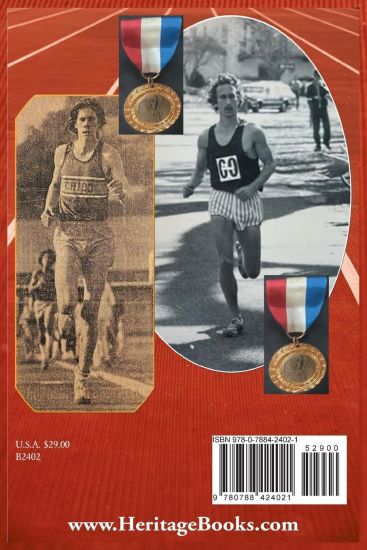
Running programs in Chico in the 1970s were similar to those elsewhere. Famed University of Oregon coach Bill Bowerman had introduced the sport of jogging; American Frank Shorter was the winner of the marathon at the 1972 Olympics; and Steve Prefontaine, running for Oregon, drew thousands of fans to see him race. A distant 384 miles south of Eugene, Oregon, lay Chico, a small rural town in northern California. In these exciting times, a high school coach there put together the top Cross Country teams and developed the best collection of distance runners the town had seen, then or since. Included among the male and female athletes were the "Charlie's Angels"-seven high school girls which, in 1977, Harrier magazine ranked second in the nation. Five years earlier, an elite miler at the local college had the community abuzz with his quest to break the magic four-minute barrier. Meanwhile, two feisty marathoners (former college boxers) were leading the road-racing contingent in town. While doing so, they met the existing Olympic Trials qualifying standard for the 26.2-mile race. This book transports readers back to an age of innocence and excellence to run in the footsteps of the athletes of that era. One hundred and fourteen photographs add value to this work.
Stride Out

Stride Out

David Bruhn

Heritage Books
2023
pokkari
Chico State, long known as a party school-Playboy magazine ranked it number one in the nation from 1987 through 2002-offered students an inviting environment in which to enjoy social life on and off campus while pursuing their studies. The non-athletic scholarship school drew runners to Chico like San Juan Capistrano beckons swallows homeward. One reason was Bidwell Park, which stretches miles and miles from downtown to the upper reaches of Chico Creek Canyon. In recognition of its beauty, a Warner Brothers Studio crew ventured 500 miles north from Hollywood in 1938 to film "The Adventures of Robin Hood" (a motion picture starring Errol Flynn) in Chico's "Sherwood Forest." An attraction for some was the surname of the men's cross country and track coach. He was a college All-American in football, who had played for the Green Bay Packers professional football team for a short time under Vince Lombardi, whose well-known mantra was, "Winning isn't everything, it's the only thing." The coach's brother was a world-class miler and two-time Olympian. The women runners came under the tutelage of three successive women coaches. A solid Chico State PE teacher preceded two remarkable women athletes-both former hurdlers. The second coach was an international-level competitor, and decades later a head Olympic coach. Her successor was an even better athlete, having competed in the 1964 Olympics Games. This is the story of Wildcat and Lady 'Cat runners who came under very different coaching philosophies in the 1969-1979 era. One hundred eleven photographs; appendices; and an index to full names add value to this work.
Sandscrapers

Sandscrapers

David Bruhn

Heritage Books
2025
pokkari
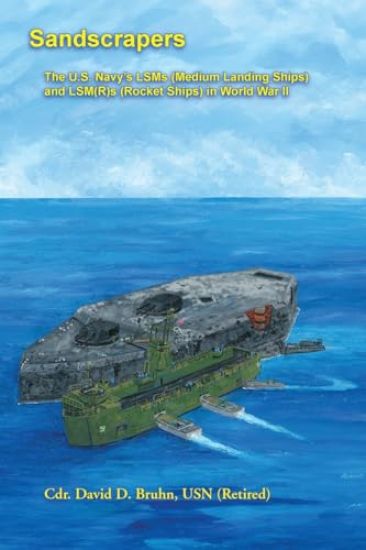
A total of 558 Medium Landing Ships were built in WWII. The modest 203-foot ships had bow ramps like those of much larger LSTs, and a deck house resembling the turret of a medieval castle. So unique were their looks, that it was not uncommon when an LSM entered port, for someone to yell out, "What type of ship is that?" Despite their large numbers, the ships were relatively unknown to the public. Perhaps because they entered service late in the war-after the Navy decided it required a vessel larger than a tank landing craft, but smaller than a tank landing ship-or because they first saw combat at Leyte in autumn 1944. During the launch of the Philippine Islands Campaign, much attention was focused on the Allied invasion of Europe.Nicknamed "Sandscrapers," the shallow-draft, small LSMs were able to land on beach areas denied LSTs, and did so at Leyte, Ormoc Bay, Mindoro, Lingayen, Zambales, and other island assaults in the Philippines. LSMs were also at Iwo Jima and Okinawa, and supported Australian troop landings on Borneo. Of the dozen LSMs reconfigured as rocket ships, LSM(R)s, for use in naval bombardment, one-quarter were lost to kamikaze attacks at Okinawa while employed with destroyers on isolated radar picket stations. With their decks bristling with explosive rockets, LSM(R)s were particularly vulnerable targets. One hundred seventy-seven photographs, maps, and diagrams; appendices; and an index to full names, places, and subjects add value to this work.
Gators Offshore and Upriver. The U.S. Navy's Amphibious Ships and Underwater Demolition Teams, and Royal Australian Navy Clearance Divers in Vietnam
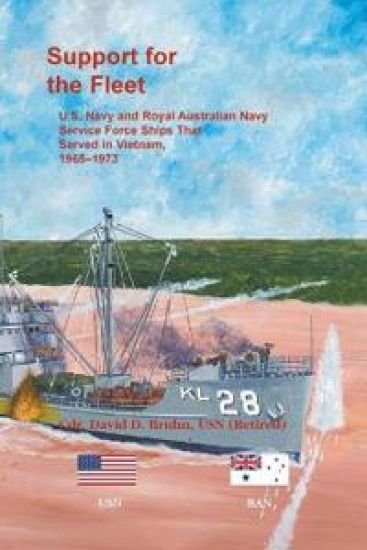
During the Vietnam War, 142 "gators" (amphibious ships) served in the combat zone. As deeper-draft ships landed Marines on assault beaches by boat or helicopter, World War II-era tank landing ships operated on shallow, winding rivers. Scores of minimal-draft vessels were required to support inland combat action beyond the reach of the cruisers and destroyers serving on the gunline offshore. Therefore, dozens of "mothballed" landing ships were returned to service. These "Ts" served as mobile support bases for river patrol boats and assault helicopters, and ran the rivers to deliver vital cargos to Allied troops, and other units of the "Brown Water Navy." Each day brought the possibility of ambush by the enemy concealed in dense jungle along the banks. Most insidious were swimmer-sappers who used the chocolate-colored waters to hide their movements while placing explosives on vessels lying at anchor or alongside a pier. One such attack against the Westchester County killed or injured many sailors and embarked soldiers. This activity spurred Royal Australian Navy clearance divers being called into service. Their inspections of thousands of ship hulls, rudders, and anchor chains, and heroic removal and rendering harmless of deadly ordnance they found, saved many ships and lives. For those interested in learning about Sailors who fought "in country," this companion to On the Gunline is the book you're looking for. One hundred and ninety photographs, maps, and diagrams; appendices; and an index to full-names, places, and subjects add value to this work.
Salvation from the Sky

Salvation from the Sky

David Bruhn

Heritage Books
2021
pokkari
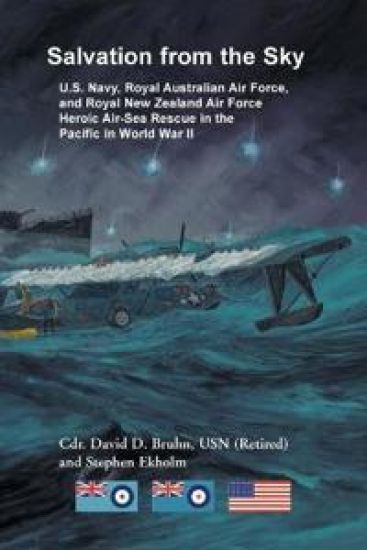
Imagine being a fighter or bomber pilot. You and your crew have been in the heat of battle when, suddenly, your plane catches fire or your engine conks out. You have to bail out or ditch in the water below. Who will save you? In World War II, survivors of Allied aircraft who found themselves in such straits, looked skyward in desperate hope, particularly those within range of Japanese shore guns, or adrift in enemy waters. Their prayers were answered when large, ungainly PBY Catalina or PBM Mariner seaplanes, whose engines thundered in noisy disproportion to the speed they generated, alighted on the water nearby. In the face of gunfire from enemy shore batteries, every second spent as a helpless, fixed target invited disaster for the pilots and aircrews of these plucky planes. Nevertheless, they willingly risked their lives to bring the survivors of downed aircraft, and sunken vessels, back from the shadow of death on slow, sure wings. Air-sea rescue operations were often hazardous, even in the absence of enemy threat. Seemingly calm whitecaps viewed from the air, might well be rolling swells twenty feet high, forcing pilots to put down on moving slopes of water. Gigantic bounces in heavy seas often resulted in damage that prevented their taking flight again. In this companion book to Eyes of the Fleet and Ingram's Fourth Fleet, readers take flight with the heroic aircrews of rescue aircraft scouring ocean waters for their fellow Allied servicemen. Salvation from the Sky also visits four future American presidents-John F. Kennedy, Richard Nixon, Gerald Ford, and George H. W. Bush-who were then serving in the Pacific Theater.One hundred seventy-nine photographs; maps and diagrams; appendices; a bibliography; and an index to full-names, places, and subjects add value to this work.2020, 6x9, paper, index, 398 pp
Ready to Haul, Ready to Fight. U.S. Navy, Royal Australian Navy, and British Merchant Navy Cargo Ships in the Pacific in World War II
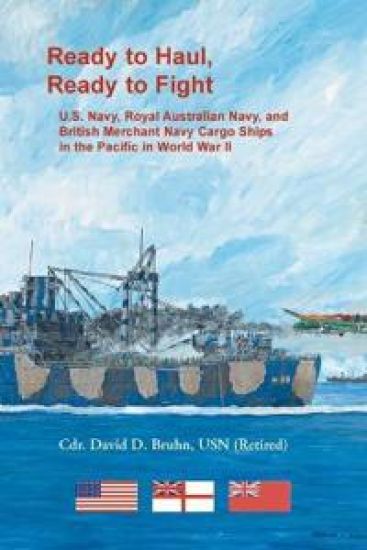
U.S. Navy cargo ships, among the most unglamorous military vessels, kept the supply lines running through the incredible expanses of the Pacific battle zones in World War II. This involved shuttling cargos of gasoline, explosives, and supplies between forward bases on an erratic, unpredictable war-time schedule. The tedious days of slow cruising were broken by an occasional enemy air raid in some atoll harbor, and the rugged work of loading and unloading cargo. Although some cargo ships exhibited the informality of tramp steamers, they got results. Cargo ships able to carry amphibious landing craft routinely steamed with other assault forces into enemy-held beachheads, and disembarked supplies and personnel under fire. A dozen or so Royal Australian Navy stores-issuing ships lived a perilous existence plying dangerous Japanese-patrolled northern Australian waters, and the coast off Papua New Guinea. In 1945, when the British Pacific Fleet joined Allied combat operations against Japan, they brought their own "fleet train." This Logistics Service Force was the most extraordinary, motley collection of shipping ever assembled in British maritime history-one that included, presumably for fleet morale, a floating brewery. One hundred sixty-eight photographs, maps and diagrams; appendices; a bibliography; and an index to full names, places, and subjects add value to this work.2021, 6x9, paper, index, 394 pp
Send Some King's Ships

Send Some King's Ships

David Bruhn; Rob Hoole

Heritage Books
2022
pokkari
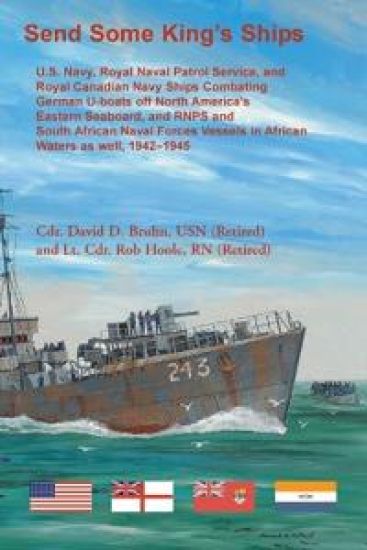
In January 1942, following the United States' entry into WWII, German U-boats began a reign of terror off America's Eastern Seaboard; over the next several months, sinking hundreds of ships almost at will. With the combatant ships of the then-small U.S. Navy, spread thin in distant theaters, Vice Admiral Andrews desperately sought vessels to protect the coast. Those available consisted of Navy remnants of World War I, private yachts and fishing vessels hastily obtained and armed, and a few small Coast Guard cutters. This force was insufficient to protect major ports, let alone escort merchantmen. Andrews needed help, and got it when Great Britain sent twenty-four King's ships to America to operate under his command. Eventually, with a gradual increase in the numbers of aircraft and ships available to search for and find U-boats, the enemy moved on to South African waters where the hunting was easier. The eighteen remaining King's ships followed, and began anew, to assist a small, unprepared Navy to combat the deadly menace. One hundred, thirty-two photographs, maps and diagrams; appendices; a bibliography; and an index to full names, places, and subjects add value to this work.2022, 6x9, paper, index, 398 pp
Nightraiders

Nightraiders

David Bruhn; Rob Hoole

Heritage Books
2018
pokkari
As war with Japan was imminent, the British laid minefields off Hong Kong and Singapore; the Dutch in the Netherlands East Indies; and the Australians off New Zealand and Australia, in an attempt to prevent enemy invasion. Ships hastily converted to this task were referred to as "night raiders." Duty aboard a "floating ammunition dump" was hazardous enough; missions carried out under the cloak of darkness increased the odds of survival in enemy waters. As MacArthur, Halsey, and Spruance's forces advanced toward Japan, minesweepers worked with "night raiders"--clearing waters off landing beaches, while minelayers strove to deny the enemy freedom of the sea. Australian seaplanes ("Black Cats") flew long, perilous night-missions to mine Japanese harbors, and British submarines and planes joined in the attack on shipping. Late in the war, USAAF bombers ringed the Japanese home islands with thousands of mines. When hostilities ended, war-weary "sweep sailors" remained in Asian waters--ridding the sea of "shipkillers." The little-known efforts of these valiant men are illuminated in this rare look into history. One hundred and forty-four photographs, maps, and diagrams; appendices; and an index to full-names, places and subjects add value to this work.