Kirjojen hintavertailu. Mukana 11 342 296 kirjaa ja 12 kauppaa.

Kirjahaku

Etsi kirjoja tekijän nimen, kirjan nimen tai ISBN:n perusteella.

4 kirjaa tekijältä David C. Engerman

Know Your Enemy

Know Your Enemy

David C. Engerman

Oxford University Press Inc
2010
sidottu
As World War II ended, few Americans in government or universities knew much about the Soviet Union. As David Engerman shows in this book, a network of scholars, soldiers, spies, and philanthropists created an enterprise known as Soviet Studies to fill in this dangerous gap in American knowledge. This group brought together some of the nation's best minds from the left, right, and center, colorful and controversial individuals ranging from George Kennan to Margaret Mead to Zbigniew Brzezinski, not to mention historians Sheila Fitzpatrick and Richard Pipes. Together they created the knowledge that helped fight the Cold War and define Cold War thought. Soviet Studies became a vibrant intellectual enterprise, studying not just the Soviet threat, but Soviet society and culture at a time when many said that these were contradictions in terms, as well as Russian history and literature. And this broad network, Engerman argues, forever changed the relationship between the government and academe, connecting the Pentagon with the ivory tower in ways that still matter today.
Know Your Enemy

Know Your Enemy

David C. Engerman

Oxford University Press Inc
2012
nidottu
As World War II ended, few Americans in government or universities knew much about the Soviet Union. As David Engerman shows in this book, a network of scholars, soldiers, spies, and philanthropists created an enterprise known as Soviet Studies to fill in this dangerous gap in American knowledge. This group brought together some of the nation's best minds from the left, right, and center, colorful and controversial individuals ranging from George Kennan to Margaret Mead to Zbigniew Brzezinski, not to mention historians Sheila Fitzpatrick and Richard Pipes. Together they created the knowledge that helped fight the Cold War and define Cold War thought. Soviet Studies became a vibrant intellectual enterprise, studying not just the Soviet threat, but Soviet society and culture at a time when many said that these were contradictions in terms, as well as Russian history and literature. And this broad network, Engerman argues, forever changed the relationship between the government and academe, connecting the Pentagon with the ivory tower in ways that still matter today.
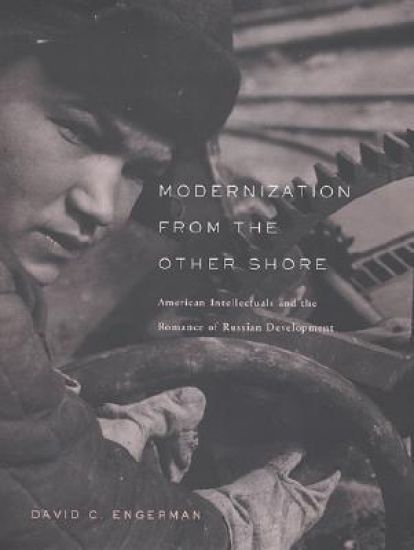
Modernization from the Other Shore

Modernization from the Other Shore

David C. Engerman

Harvard University Press
2004
sidottu
From the late nineteenth century to the eve of World War II, America's experts on Russia watched as Russia and the Soviet Union embarked on a course of rapid industrialization. Captivated by the idea of modernization, diplomats, journalists, and scholars across the political spectrum rationalized the enormous human cost of this path to progress. In a fascinating examination of this crucial era, David Engerman underscores the key role economic development played in America's understanding of Russia and explores its profound effects on U.S. policy.American intellectuals from George Kennan to Samuel Harper to Calvin Hoover understood Russian events in terms of national character. Many of them used stereotypes of Russian passivity, backwardness, and fatalism to explain the need for--and the costs of--Soviet economic development. These costs included devastating famines that left millions starving while the government still exported grain.This book is a stellar example of the new international history that seamlessly blends cultural and intellectual currents with policymaking and foreign relations. It offers valuable insights into the role of cultural differences and the shaping of economic policy for developing nations even today.
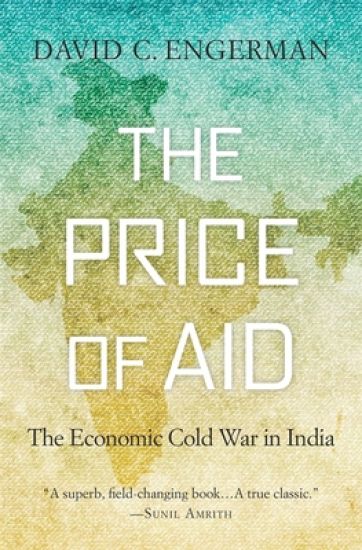
The Price of Aid

The Price of Aid

David C. Engerman

Harvard University Press
2020
nidottu
“A superb, field-changing book…A true classic.”—Sunil Amrith“Makes a major contribution towards a necessary discussion of the politics of aid.”—Times Higher EducationDebates over foreign aid are often strangely ahistorical. Economists argue about effectiveness—how to make aid work—while critics bemoan money wasted on corruption, ignoring the fundamentally political character of aid. The Price of Aid exposes the geopolitical calculus underpinning development assistance, and its costs.India stood at the center of American and Soviet aid competition throughout the Cold War, as both superpowers saw developmental aid as a way of pursuing their geopolitical goals by economic means. Drawing on recently declassified files from seven countries, David Engerman shows how Indian leaders used Cold War competition to win battles at home, eroding the Indian state in the process. As China spends freely in Africa, the political stakes of foreign aid are rising once again.“A magnificent book. Anyone who seeks to understand contemporary India and its development struggles will have to start here. Engerman’s work is not only enlightening, it turns much of what we thought we knew about India, foreign aid, and the Cold War in South Asia upside down.”—O. A. Westad, author of The Cold War“An outstanding history…Drawing on an unprecedented array of official and private archives in India, Russia, the United States, and Britain, Engerman offers a superb account—one that integrates the ideologies and policies of the superpowers with a sharp analysis of the push-and-pull of policymaking in India. This is a landmark study of independent India as well as the Cold War.”—Srinath Raghavan, author of India’s War