Kirjojen hintavertailu. Mukana 12 016 292 kirjaa ja 12 kauppaa.

Kirjahaku

Etsi kirjoja tekijän nimen, kirjan nimen tai ISBN:n perusteella.

5 kirjaa tekijältä David C. Kang

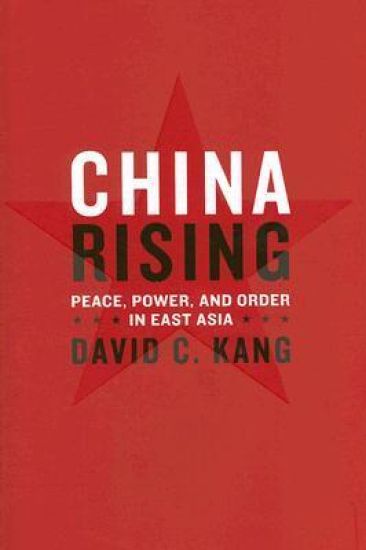
China Rising

China Rising

David C. Kang

Columbia University Press
2007
sidottu
Throughout the past three decades East Asia has seen more peace and stability than at any time since the Opium Wars of 1839-1841. During this period China has rapidly emerged as a major regional power, averaging over nine percent economic growth per year since the introduction of its market reforms in 1978. Foreign businesses have flocked to invest in China, and Chinese exports have begun to flood the world. China is modernizing its military, has joined numerous regional and international institutions, and plays an increasingly visible role in international politics. In response to this growth, other states in East Asia have moved to strengthen their military, economic, and diplomatic relations with China. But why have these countries accommodated rather than balanced China's rise? David C. Kang believes certain preferences and beliefs are responsible for maintaining stability in East Asia. Kang's research shows how East Asian states have grown closer to China, with little evidence that the region is rupturing. Rising powers present opportunities as well as threats, and the economic benefits and military threat China poses for its regional neighbors are both potentially huge; however, East Asian states see substantially more advantage than danger in China's rise, making the region more stable, not less. Furthermore, although East Asian states do not unequivocally welcome China in all areas, they are willing to defer judgment regarding what China wants and what its role in East Asia will become. They believe that a strong China stabilizes East Asia, while a weak China tempts other states to try to control the region. Many scholars downplay the role of ideas and suggest that a rising China will be a destabilizing force in the region, but Kang's provocative argument reveals the flaws in contemporary views of China and the international relations of East Asia and offers a new understanding of the importance of sound U.S. policy in the region.
China Rising

China Rising

David C. Kang

Columbia University Press
2009
pokkari
Throughout the past three decades East Asia has seen more peace and stability than at any time since the Opium Wars of 1839-1841. During this period China has rapidly emerged as a major regional power, averaging over nine percent economic growth per year since the introduction of its market reforms in 1978. Foreign businesses have flocked to invest in China, and Chinese exports have begun to flood the world. China is modernizing its military, has joined numerous regional and international institutions, and plays an increasingly visible role in international politics. In response to this growth, other states in East Asia have moved to strengthen their military, economic, and diplomatic relations with China. But why have these countries accommodated rather than balanced China's rise? David C. Kang believes certain preferences and beliefs are responsible for maintaining stability in East Asia. Kang's research shows how East Asian states have grown closer to China, with little evidence that the region is rupturing. Rising powers present opportunities as well as threats, and the economic benefits and military threat China poses for its regional neighbors are both potentially huge; however, East Asian states see substantially more advantage than danger in China's rise, making the region more stable, not less. Furthermore, although East Asian states do not unequivocally welcome China in all areas, they are willing to defer judgment regarding what China wants and what its role in East Asia will become. They believe that a strong China stabilizes East Asia, while a weak China tempts other states to try to control the region. Many scholars downplay the role of ideas and suggest that a rising China will be a destabilizing force in the region, but Kang's provocative argument reveals the flaws in contemporary views of China and the international relations of East Asia and offers a new understanding of the importance of sound U.S. policy in the region.
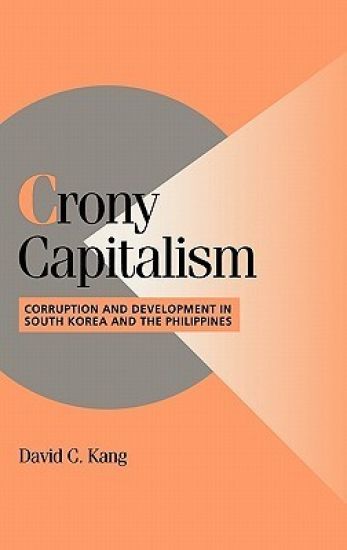
Crony Capitalism

Crony Capitalism

David C. Kang

Cambridge University Press
2002
pokkari
Why has the literature on Asian development not addressed the issue of money politics in Korea? How can we reconcile the view of an efficient developmental state in Korea before 1997 with reports of massive corruption and inefficiency in that same country in 1998 and 1999? Politics is central to the answer. In this book the author makes two arguments. First, both Korea and the Philippines experienced significant corruption throughout the post-independence era. Second, political - not economic - considerations dominated policy making in both countries. Focusing on the exchange of favors for bribes between state and business, the author argues that politics drove policy choices, that bureaucrats were not autonomous from political interference in setting policy, and that business and political elites wrestled with each other over who would reap the rents to be had. Even in Korea, corruption was far greater than the conventional wisdom allows.
Crony Capitalism

Crony Capitalism

David C. Kang

Cambridge University Press
2002
sidottu
Why has the literature on Asian development not addressed the issue of money politics in Korea? How can we reconcile the view of an efficient developmental state in Korea before 1997 with reports of massive corruption and inefficiency in that same country in 1998 and 1999? Politics is central to the answer. In this book the author makes two arguments. First, both Korea and the Philippines experienced significant corruption throughout the post-independence era. Second, political - not economic - considerations dominated policy making in both countries. Focusing on the exchange of favors for bribes between state and business, the author argues that politics drove policy choices, that bureaucrats were not autonomous from political interference in setting policy, and that business and political elites wrestled with each other over who would reap the rents to be had. Even in Korea, corruption was far greater than the conventional wisdom allows.
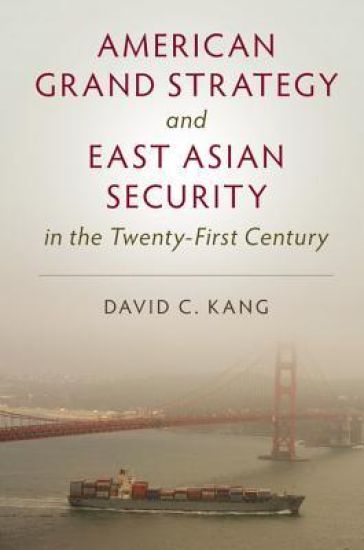
American Grand Strategy and East Asian Security in the Twenty-First  Century
East Asia is richer, more integrated and more stable than ever before, whilst East Asian defense spending is now roughly half of what it was in 1990 and shows no sign of increasing. There is no evidence of any Asian arms race. All countries in the region are seeking diplomatic, not military solutions with each other. Yet this East Asia reality still runs counter to a largely Western narrative that views China's rise as a threat and the region as increasingly unstable. In this important book, David C. Kang argues that American grand strategy should emphasize diplomatic and economic relations with the region, rather than military-first policies. Using longitudinal and comparative data, statistical analysis, and intensive research in selected East Asian countries, he suggests that East Asia is in sync with the American desire to share burdens and that the region may in fact be more stable than popularly believed.