
Kirjahaku
Etsi kirjoja tekijän nimen, kirjan nimen tai ISBN:n perusteella.
63 kirjaa tekijältä David Campbell
The workbook's self-scored assessment allows you to produce your own profile on the spot ... and shows how your self-profile compares with other leaders you have known. It also includes questions to help you evaluate the implications of your scores and how to use that information to develop your own action plan for improvement. When you complete the processes of filling out and scoring the Descriptor and disucssiong the results, you will be able to: - Describe the major components of leadership - Identify the characteristics of a successful leader - Evaluate your leadership by comparing yourself to others - Develop a personal action plan for improving your leadership skills and abilities
Written by one of the leading contributors to the relational theory of contract, Contractual Relations authoritatively explains the form of the existing law of contract by relating it to its economic, legal, and sociological foundations. This volume demonstrates that economic exchange and legal contract rest on a moral relationship by which each party legitimately pursues its self-interest through recognition of the self-interest of the other. This essential relationship of mutual recognition is in stark contrast to the pursuit of solipsistic self-interest that is central to the classical law of contract. Self-interest of this sort is not morally defensible, nor does it enhance economic welfare. It is for these reasons that the classical law is legally incoherent. The fundamental inadequacies of the classical law's treatment of agreement, consideration, and remedy have emerged as the doctrines of the positive law of contract have been progressively developed to give effect to the relationship of mutual recognition. The welfarist criticism of the classical law has, however, failed to develop a workable concept of self-interest, and so is at odds with what must be retained from the classical law's facilitation of economic exchange and the market economy. The relational law of contract restates self-interest in a morally, economically, and legally attractive manner as the foundation of the social market economy of liberal socialism. Contractual Relations is a fundamental critique of the classical law of contract and the welfarist response to the classical law, and a major statement of the relational theory of contract. This is an essential work for academics, advanced students, and others wishing to understand the fundamental law, economics and sociology of contract and exchange.
A book which will illuminate the learning process from the perspective of the teacher as well as the learner. The experiences of the various contributors will empower the reader to take more personal risks in their own learning.

This book presents the dynamics of organisations from a social constructionist viewpoint, taking the organisation as something that is constructed continuously through individual interactions with others, both within and without the organisation.

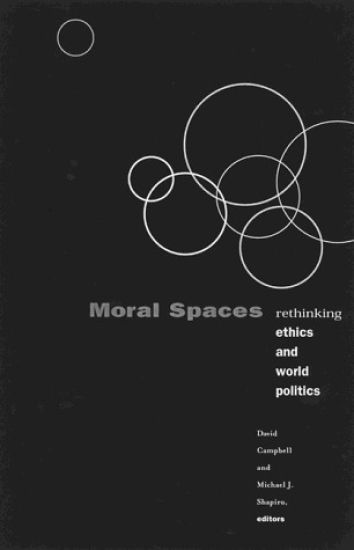
A seminal text in the growing area of critical approaches to security.. The first edition, published in 1991, was well-received and widely reviewed. The book is a key text on many course reading lists.

See how wood has shaped traditional architecture around the world from log building to frame construction. A panorama of more than 400 color images shows the different construction styles used in 14 European countries. View the Church of the Transfiguration in Russia, the Village Museum in Romania, and the Sanok Ethnographic Park in Poland. Learn the format of wood construction used. A bonus ‘DIY’ chapter demonstrates carpentry techniques of the Old World and step-by-step directions for hewing, cutting the notches, and creating overlapping joints. A good resource for wood lovers, contractors, landscapers, architects, and designers.

A sweeping overview of traditional stone architecture that graces the landscapes of many nations. Over 350 vivid color photos show buildings ranging from simple stone homes and practical farm buildings to imposing town halls and vaulting cathedrals. The extensive text explains the history, styles, and techniques of the stone cutters' and masons' arts. Also included is a practical, instructional handbook; it teaches the crafts of masonry and stone cutting as they have been practiced across the centuries. This book will be a treasure for the builder, art historian, and everyone with a passion for stone structures.

What our response to the Bosnian crisis can tell us about multiculturalism in the United States and beyond.How did Bosnia, once a polity of intersecting and overlapping identities, come to be understood as an intractable ethnic problem? David Campbell pursues this question-and its implications for the politics of community, democracy, justice, and multiculturalism-through readings of media and academic representations of the conflict in Bosnia. National Deconstruction is a rethinking of the meaning of “ethnic/nationalist” violence and a critique of the impoverished discourse of identity politics that crippled the international response to the Bosnian crisis.Rather than assuming the preexistence of an entity called Bosnia, Campbell considers the complex array of historical, statistical, cartographic, and other practices through which the definitions of Bosnia have come to be. These practices traverse a continuum of political spaces, from the bodies of individuals and the corporate body of the former Yugoslavia to the international bodies of the world community. Among the book’s many original disclosures, arrived at through a critical reading of international diplomacy, is the shared identity politics of the peacemakers and paramilitaries. Equally significant is Campbell’s conclusion that the international response to the Bosnian war was hamstrung by the poverty of Western thought on the politics of heterogeneous communities. Indeed, he contends that Europe and the United States intervened in Bosnia not to save the ideal of multiculturalism abroad but rather to shore up the nationalist imaginary so as to contain the ideal of multiculturalism at home.By bringing to the fore the concern with ethics, politics, and responsibility contained in more traditional accounts of the Bosnian war, this book is a major statement on the inherently ethical and political assumptions of deconstructive thought-and the reworkings of the politics of community it enables.Awarded “Book of the Year 1999” by the International Forum Bosnia (Sarajevo) and the Human Rights Review (USA).ISBN 0-8166-2936-6 Cloth $62.95xxISBN 0-8166-2937-4 Paper $24.95x382 pages 5 7/8 x 9 SeptemberTranslation inquiries: University of Minnesota Press

A newly revised edition of this bold and important work.Since the collapse of the Soviet Union, the United States has faced the challenge of reorienting its foreign policy to address post-Cold War conditions. In this new edition of a groundbreaking work-one of the first to bring critical theory into dialogue with more traditional approaches to international relations-David Campbell provides a fundamental reappraisal of American foreign policy, with a new epilogue to address current world affairs and the burgeoning focus on culture and identity in the study of international relations.Extending recent debates in international relations, Campbell shows how perceptions of danger and difference work to establish the identity of the United States. He demonstrates how foreign policy, far from being an expression of a given society, constitutes state identity through the interpretation of danger posed by others.“This is an intriguing book. . . . It not only goes behind foreign policy as such, to look at its domestic roots, but also digs deeply into the very nature of those roots themselves. . . . By moving us beyond, or behind, the usual starting point of foreign policy, this study performs the signal service of inviting us to reflect more deeply on how what we think we are affects how we act in the world.” International JournalISBN 0-8166-3144-1 Paper $19.95x COBE/EU312 pages 5 7/8 x 9 SeptemberTranslation inquiries: University of Minnesota Press



Does God still have a plan for the Jewish people? Does this plan include the restoration of the modern state of Israel? David Campbell seeks to answer these two critical questions in Israel and the Land Promise in Biblical Prophecy. Readers will find an insightful and well-researched perspective as Campbell explores the Biblical theme of the loss and restoration of God's kingdom, which is in fact the storyline of the Bible from Genesis to Revelation.

5 Motivational Biographies: Jocko Willink, Tony Robbins, Gary Vaynerchuk, Richard Branson, and Mark Cuban
David Campbell
Independently Published
2019
nidottu

If we are to save the planet, if we are to save democracy we must create a new way. That new way is Fluidity. Put universal income with a new currency and a monetary flow siphon and you have a stable base to build anew. In two parts and 300+ pages David J Campbell tells us why our economic and social systems are flawed and how to fix them. This is not a flippant "we should do this" or "we could implement that" but rather a simple but profound change that harmonises the revolutions that are already radically changing our lives. Embracing technological change and innovation, from AI to cryptocurrencies, Fluidity says a lack of work is a good thing. More leisure makes us happier, healthier, smarter and thus more inventive. We do not need our leaders to make these changes but rather we can create a new socioeconomic system in parallel with the old. It will make you question your beliefs. It will inspire you. It will give you answers. Fluidity is the future.

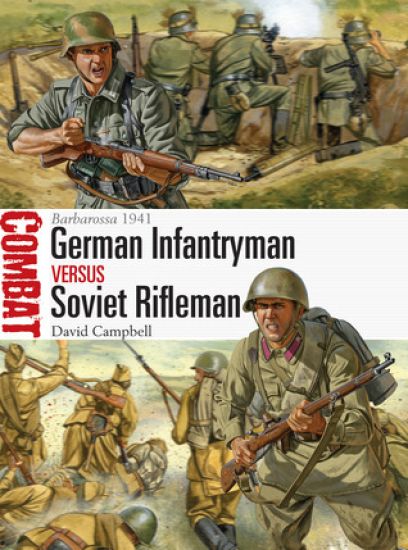
The Axis invasion of the Soviet Union on 22 June 1941 pitted Nazi Germany and her allies against Stalin’s forces in a mighty struggle for survival.Fighting alongside the spearhead Panzer divisions were Germany’s highly skilled and veteran motorized infantrymen – including the German Army’s premier unit, Infanterie-Regiment (mot.) Großdeutschland. Opposing these German mobile forces, the Soviets deployed the often ill-trained and poorly equipped men of the rifle regiments, who fought tenaciously and with the threat of savage reprisals from their own side.In this book three bruising clashes during the first seven weeks of the campaign are assessed – a bloody encounter battle at Zhlobin, the struggle for the destroyed city of Smolensk and then a prolonged clash along a dangerously stretched German defensive perimeter at Vas’kovo–Voroshilovo.
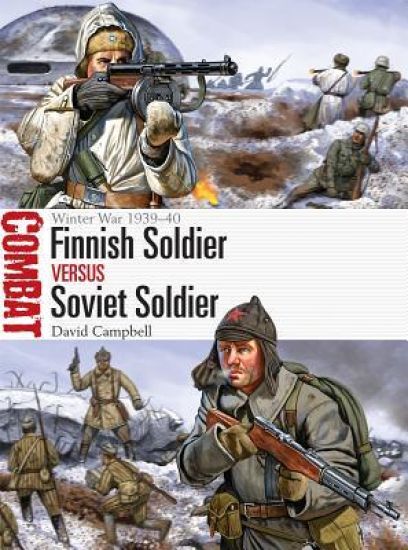
The Winter War was supposed to be a quick and easy conflict; instead it proved to be a bitter war that destroyed the international reputation of the Soviet Red Army.The diminutive Finnish force was desperately outnumbered by almost half a million Russian troops, but rather than sweeping across their neighbours the Soviet troops stumbled blindly, constantly wrong-footed and then bloodied by their seemingly insignificant foe. Drawing on a wide range of sources this study looks at three key battles, drawing a stark contrast between the poorly prepared Russian troops and the Finns, who made excellent use of terrain and innovative guerrilla tactics as they defended their homeland.Detailed maps and specially commissioned artwork highlight key moments that saw the Soviet Union suffer horrendous losses as they tried to recover from each disastrous defeat.