Kirjojen hintavertailu. Mukana 11 717 486 kirjaa ja 12 kauppaa.

Kirjahaku

Etsi kirjoja tekijän nimen, kirjan nimen tai ISBN:n perusteella.

11 kirjaa tekijältä David Cannadine

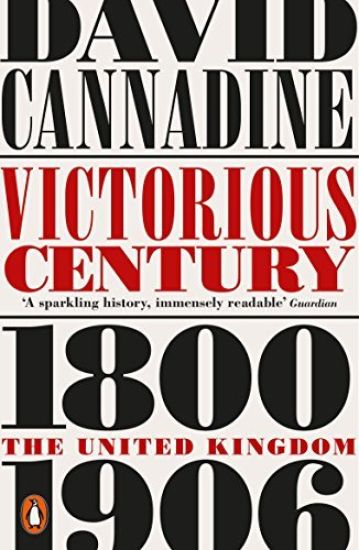
Victorious Century

Victorious Century

David Cannadine

Penguin Books Ltd
2018
pokkari
SHORTLISTED FOR THE DUFF COOPER PRIZE 2018 'This is stupendous. The British nineteenth century, in all its complexity, all its horror, all its energy, all its hopes is laid bare. This is the definitive history, and will remain so for generations' A.N. WilsonTo live in nineteenth-century Britain was to experience an astonishing series of changes, of a kind for which there was simply no precedent in the human experience. There were revolutions in transport, communication, work; cities grew vast; scientific ideas made the intellectual landscape unrecognizable. This was an exhilarating time, but also a horrifying one.In his dazzling new book David Cannadine has created a bold, fascinating new interpretation of the British nineteenth century in all its energy and dynamism, darkness and vice. This was a country which saw itself at the summit of the world. And yet it was a society also convulsed by doubt, fear and introspection. Victorious Century reframes a time at once strangely familiar and yet wholly unlike our own.
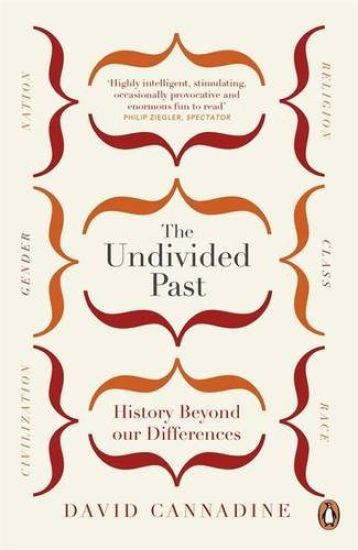
The Undivided Past

The Undivided Past

David Cannadine

Penguin Books Ltd
2014
pokkari
David Cannadine's impassioned, controversial plea for us to recognise the importance of both equality and historyGreat works of history have so often had at their heart a wish to sift people in ways that have been profoundly damaging and provided intellectual justification for terrible political decisions. Again and again, categories have been found--religion, nation, class, gender, race, 'civilization'--that have sought to explain world events by fabricating some malevolent or helpless 'other'. The Undivided Past is an agonised attempt to understand how so much of the writing of history has been driven by a fatal desire to dramatize differences - to create an 'us versus them'. Is is above all an appeal to common humanity.
George V (Penguin Monarchs)

George V (Penguin Monarchs)

David Cannadine

Penguin Books Ltd
2018
nidottu
The acclaimed Penguin Monarchs series: short, fresh, expert accounts of England's rulers - now in paperbackFor a man with such conventional tastes and views, George V had a revolutionary impact. Almost despite himself he marked a decisive break with his flamboyant predecessor Edward VII, inventing the modern monarchy, with its emphasis on frequent public appearances, family values and duty. George V was an effective war-leader and inventor of 'the House of Windsor'. In an era of ever greater media coverage - frequently filmed and initiating the British Empire Christmas broadcast - George became for 25 years a universally recognised figure. He was also the only British monarch to take his role as Emperor of India seriously. While his great rivals (Tsar Nicolas and Kaiser Wilhelm) ended their reigns in catastrophe, he plodded on.David Cannadine's sparkling account of his reign could not be more enjoyable, a masterclass in how to write about Monarchy, that central - if peculiar - pillar of British life.
Margaret Thatcher

Margaret Thatcher

David Cannadine

Oxford University Press
2022
nidottu
Few modern women have had as great a political impact as Margaret Hilda Roberts, the grocer's daughter from Grantham who, as Margaret Thatcher, became Britain's first woman prime minister. The longest serving British premier of the twentieth century, Mrs Thatcher has been the subject of both adulation and vilification. In Margaret Thatcher: A Life and Legacy, the leading historian Sir David Cannadine sets Margaret Thatcher in the context of recent British history. With elegance, wit, and historical insight, Cannadine charts Mrs Thatcher's upbringing and influences, her political career and life after politics, the impact of her policies, and her personal reputation and political legacy. The book also features a glossary of key terms, a chronology, a 'dramatis personae' of significant figures of the period, and a guide to further reading. Written by one of our foremost international historians, it is an essential work for anyone interested in the life and work of a towering—and often controversial—figure in modern British history, as well as students, academics, and researchers in the fields of modern history and politics.
Ornamentalism

Ornamentalism

David Cannadine

Oxford University Press
2002
nidottu
With the return of Hong Kong to the Chinese government in 1997, the empire that had lasted three hundred years and "upon which the sun never set" finally lost its hold on the world and slipped into history. But the question of how we understand the British Empire--its origins, nature, purpose, and effect on the world it ruled--is far from settled. In this incisive work, David Cannadine looks at the British Empire from a new perspective--through the eyes of those who created and ruled it--and offers fresh insight into the driving forces behind the Empire. Arguing against the views of Edward Said and others, Cannadine suggests that the British were motivated not only by race, but also by class. The British wanted to domesticate the exotic world of their colonies and to reorder the societies they ruled according to an idealized image of their own class hierarchies.
In Churchill's Shadow: Confronting the Past in Modern Britain
With In Churchill's Shadow, David Cannadine offers an intriguing look at ways in which perceptions of a glorious past have continued to haunt the British present, often crushing efforts to shake them off. The book centers on Churchill, a titanic figure whose influence spanned the century. Though he was the savior of modern Britain, Churchill was a creature of the Victorian age. Though he proclaimed he had not become Prime Minister to "preside over the liquidation of the British Empire," in effect he was doomed to do just that. And though he has gone down in history for his defiant orations during the crisis of World War II, Cannadine shows that for most of his career Churchill's love of rhetoric was his own worst enemy. Cannadine turns an equally insightful gaze on the institutions and individuals that embodied the image of Britain in this period: Gilbert & Sullivan, Ian Fleming, Noel Coward, the National Trust, and the Palace of Westminster itself, the home and symbol of Britain's parliamentary government. This superb volume offers a wry, sympathetic, yet penetrating look at how national identity evolved in the era of the waning of an empire.
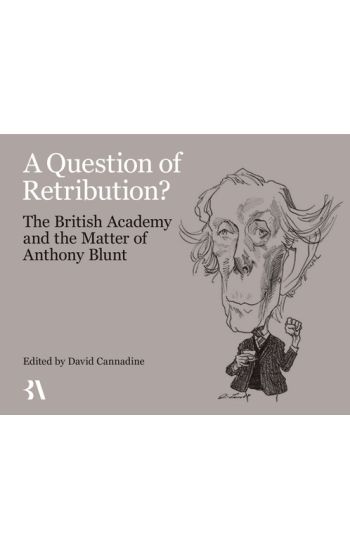
A Question of Retribution?

A Question of Retribution?

David Cannadine

Oxford University Press
2020
sidottu
Through a unique set of documents never before published, this volume revisits the public furore when, at its Annual General Meeting forty years ago, the British Academy chose not to expel from its Fellowship the eminent art historian, Professor Anthony Blunt, who had recently been exposed as a former Soviet spy. The facsimile documents illustrate the intensely held views of leading academics as they wrestled with the question of whether considerations of pure scholarship could remain aloof from a revelation of political treachery. Also revealed is one faction's plot to stir up a public row through the national press - a tactic that was ultimately successful in achieving Blunt's resignation from the Academy. Historian and current President of the British Academy, David Cannadine, provides the background to the Blunt story, and portrays some of the main characters: Kenneth Dover, the President at the time who struggled to steer the Academy through the crisis; the historian J.H. Plumb, who led the vicious campaign to see Blunt expelled; and A.J.P. Taylor, who was equally determined that the Academy should be willing to 'tolerate the intolerable'.
The Rise and Fall of Class in Britain

The Rise and Fall of Class in Britain

David Cannadine

Columbia University Press
2000
pokkari
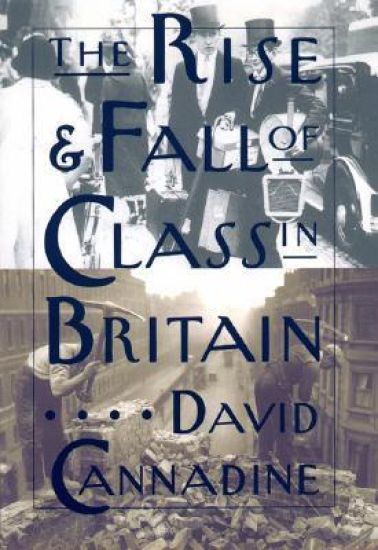
Although it is widely believed that the British are obsessed with class to a degree unrivaled by any other nation, politicians in Britain are now calling for a "classless society," and scholars are concluding that class does not matter any more. But has class-once considered the master narrative of British history-fallen, failed, and been dismissed? In this wholly original and brilliantly argued book, David Cannadine shows that Britons have indeed been preoccupied with class, but in ways that are invariably ignorant and confused. Cannadine sets out to expose this ignorance and banish this confusion by imaginatively examining class itself, not so much as the history of society but as the history of the different ways in which Britons have thought about their society. Cannadine proposes that "class" may best be understood as a shorthand term for three distinct but abiding ways in which the British have visualized their social worlds and identities: class as "us" versus "them;" class as "upper," "middle," and "lower"; and class as a seamless hierarchy of individual social relations. From the eighteenth through the twentieth century, he traces the ebb and flow of these three ways of viewing British society, unveiling the different purposes each model has served. Encompassing social, intellectual, and political history, Cannadine uncovers the meanings of class from Adam Smith to Karl Marx to Margaret Thatcher, showing the key moments in which thinking about class shifted, such as the aftermath of the French Revolution and the rise the Labor Party in the early twentieth century. He cogently argues that Marxist attempts to view history in terms of class struggle are often as oversimplified as conservative approaches that deny the central place of class in British life. In conclusion, Cannadine considers whether it is possible or desirable to create a "classless society," a pledge made by John Major that has continued to resonate even after the conservative defeat. Until we know what class really means-and has meant-to the British, we cannot seriously address these questions. Creative, erudite, and accessible, The Rise and Fall of Class in Britain offers a fresh and engaging perspective on both British history and the crucial topic of class.
The Pleasures of the Past

The Pleasures of the Past

David Cannadine

W. W. Norton Company
1991
nidottu
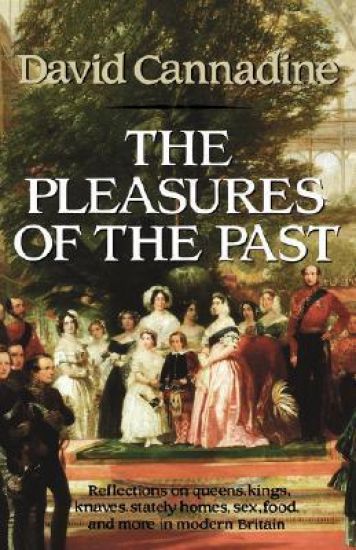
Each of the thirty essays here penetrates to the root of a character, a problem, a style, an idea, drawn from the recent British past. Clear-eyed, acerbic, witty, David Cannadine makes the ideal guide for a tour of the past and companion as one considers the present. Mr. Cannadine is professor of history at Columbia University and author of The Decline and Fall of the British Aristocracy and Lords and Landlords: The Aristocracy and the Towns, 1774-1967.
The Country House: Past, Present, Future

The Country House: Past, Present, Future

David Cannadine

Rizzoli International Publications
2018
sidottu
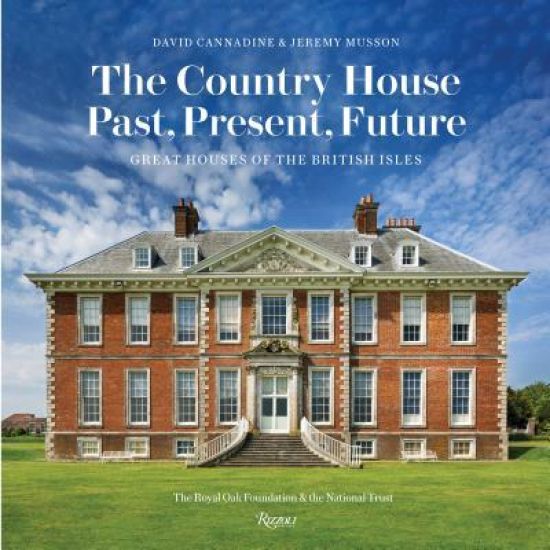
From The Crown to Downton Abbey, the country house speaks to our fantasies of rustic splendour, style, and escape. Featuring three hundred photos from the National Trust, this lavish book draws back the curtain on the finest and most important historic homes in England, Wales, Scotland, and Ireland, revealing these great houses' intriguing pasts, grand interiors, and vi-brant reinventions for the enjoyment of modern-day visitors, residents, and armchair travellers. Locations include Knole, Cragside, Castle Howard, Chatsworth, Polesden Lacey, Petworth, Castle Bodiam, Blenheim, Longleat, and dozens more. Illuminating essays by country house expert Jeremy Musson, legendary British author and historian David Cannadine, and contributing writers and scholars provide unique insight into centuries of life in a historic home. This is a rich visual resource for lovers of sumptuous interiors on a human scale, as well as grand exterior architecture and gorgeous landscapes. For Anglophiles, royals watchers, and lovers of the country house lifestyle, architecture, and interior design, this is a magnificent new look at landmark British country houses, the treasures they contain, and how they speak to our fantasies of rustic splendour and escape today.