Kirjojen hintavertailu. Mukana 12 063 766 kirjaa ja 12 kauppaa.

Kirjahaku

Etsi kirjoja tekijän nimen, kirjan nimen tai ISBN:n perusteella.

6 kirjaa tekijältä David Caron

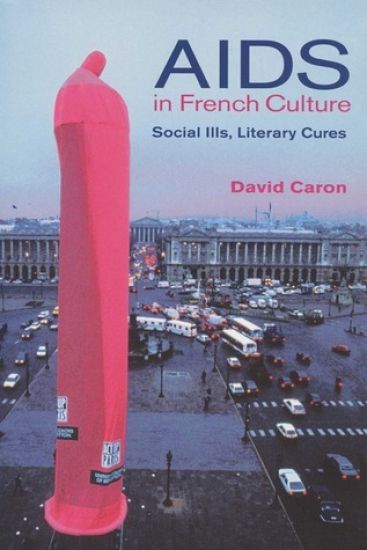
AIDS in French Culture

AIDS in French Culture

David Caron

University of Wisconsin Press
2001
nidottu
The deluge of metaphors triggered in 1981 in France by the first public reports of what would turn out to be the AIDS epidemic spread with far greater speed and efficiency than the virus itself. To understand why it took France so long to react to the AIDS crisis, this work analyzes the intersections of three discourses - the literary, the medical and the political - and traces the origin of French attitudes about AIDS to 19th century anxieties about nationhood, masculinity and sexuality.
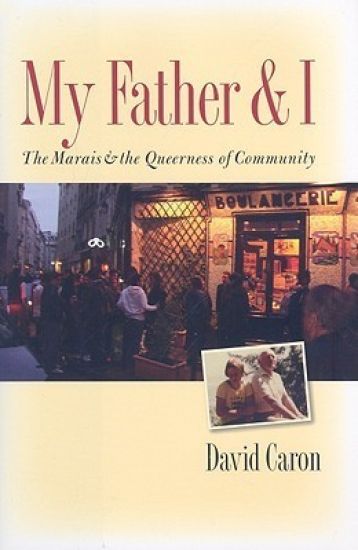
My Father and I

My Father and I

David Caron

Cornell University Press
2009
sidottu
"It is a living museum of a long-gone Jewish life and, supposedly, a testimony to the success of the French model of social integration. It is a communal home where gay men and women are said to stand in defiance of the French model of social integration. It is a place of freedom and tolerance where people of color and lesbians nevertheless feel unwanted and where young Zionists from the suburbs gather every Sunday and sometimes harass Arabs. It is a hot topic in the press and on television. It is open to the world and open for business. It is a place to be seen and a place of invisibility. It is like a home to me, a place where I feel both safe and out of place and where my father felt comfortable and alienated at the same time. It is a place of nostalgia, innovation, shame, pride, and anxiety, where the local and the global intersect for better and for worse. And for better and for worse, it is a French neighborhood."—from My Father and I Mixing personal memoir, urban studies, cultural history, and literary criticism, as well as a generous selection of photographs, My Father and I focuses on the Marais, the oldest surviving neighborhood of Paris. It also beautifully reveals the intricacies of the relationship between a Jewish father and a gay son, each claiming the same neighborhood as his own. Beginning with the history of the Marais and its significance in the construction of a French national identity, David Caron proposes a rethinking of community and looks at how Jews, Chinese immigrants, and gays have made the Marais theirs. These communities embody, in their engagement of urban space, a daily challenge to the French concept of universal citizenship that denies them all political legitimacy. Caron moves from the strictly French context to more theoretical issues such as social and political archaism, immigration and diaspora, survival and haunting, the public/private divide, and group friendship as metaphor for unruly and dynamic forms of community, and founding disasters such as AIDS and the Holocaust. Caron also tells the story of his father, a Hungarian Jew and Holocaust survivor who immigrated to France and once called the Marais home.
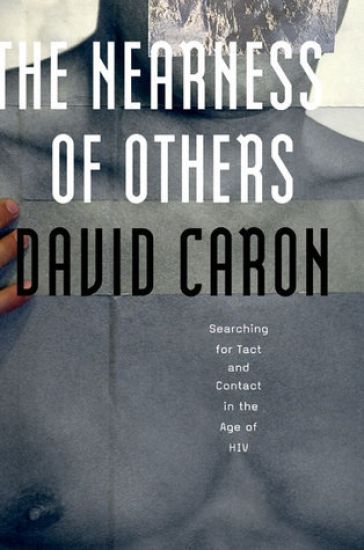
The Nearness of Others

The Nearness of Others

David Caron

University of Minnesota Press
2014
nidottu
“Funny how a gay man’s hand resting heavily on your shoulder used to say let’s fuck but now means let’s not. Funny how ostensible nearness really betrays distance sometimes.” -from The Nearness of OthersIn this radical, genre-bending narrative, David Caron tells the story of his 2006 HIV diagnosis and its aftermath. On one level, The Nearness of Others is a personal account of his struggle as a gay, HIV-positive man with the constant issue of if, how, and when to disclose his status. But searching for various forms of contact eventually leads to a profound reassessment of tact as a way to live and a way to think, with our bodies and with the bodies of others. In a series of brief, compulsively readable sections that are by turns moving and witty, Caron recounts his wary yet curious exploration of an unfamiliar medical universe at once hostile and protective as he embarks on a new life of treatment without end. He describes what it is like to live with a disease that is no longer a death sentence but continues to terrify many people as if it were. In particular, living with HIV provides an unexpected opportunity to reflect on an age of terror and war, when fear and suspicion have become the order of the day. Most of all, Caron reminds us that disclosing HIV-positive status is still far from easy, least of all in one of the many states-such as his own-that have criminalized nondisclosure and/or exposure. Going well beyond Caron’s personal experience, The Nearness of Others examines popular culture and politics as well as literary memoirs and film to ask deeper philosophical questions about our relationships with others. Ultimately, Caron eloquently demonstrates a form of disclosure, sharing, and contact that stands against the forces working to separate us.
My Father and I

My Father and I

David Caron

Cornell University Press
2016
pokkari
"It is a living museum of a long-gone Jewish life and, supposedly, a testimony to the success of the French model of social integration. It is a communal home where gay men and women are said to stand in defiance of the French model of social integration. It is a place of freedom and tolerance where people of color and lesbians nevertheless feel unwanted and where young Zionists from the suburbs gather every Sunday and sometimes harass Arabs. It is a hot topic in the press and on television. It is open to the world and open for business. It is a place to be seen and a place of invisibility. It is like a home to me, a place where I feel both safe and out of place and where my father felt comfortable and alienated at the same time. It is a place of nostalgia, innovation, shame, pride, and anxiety, where the local and the global intersect for better and for worse. And for better and for worse, it is a French neighborhood."—from My Father and I Mixing personal memoir, urban studies, cultural history, and literary criticism, as well as a generous selection of photographs, My Father and I focuses on the Marais, the oldest surviving neighborhood of Paris. It also beautifully reveals the intricacies of the relationship between a Jewish father and a gay son, each claiming the same neighborhood as his own. Beginning with the history of the Marais and its significance in the construction of a French national identity, David Caron proposes a rethinking of community and looks at how Jews, Chinese immigrants, and gays have made the Marais theirs. These communities embody, in their engagement of urban space, a daily challenge to the French concept of universal citizenship that denies them all political legitimacy. Caron moves from the strictly French context to more theoretical issues such as social and political archaism, immigration and diaspora, survival and haunting, the public/private divide, and group friendship as metaphor for unruly and dynamic forms of community, and founding disasters such as AIDS and the Holocaust. Caron also tells the story of his father, a Hungarian Jew and Holocaust survivor who immigrated to France and once called the Marais home.