Kirjojen hintavertailu. Mukana 11 581 813 kirjaa ja 12 kauppaa.

Kirjahaku

Etsi kirjoja tekijän nimen, kirjan nimen tai ISBN:n perusteella.

14 kirjaa tekijältä David Carrier

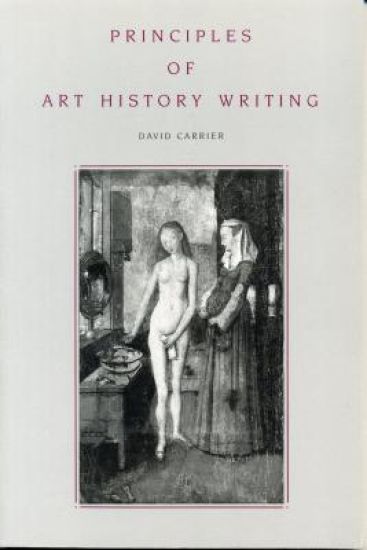
Principles of Art History Writing

Principles of Art History Writing

David Carrier

Pennsylvania State University Press
1991
sidottu
Traces the different ways in which those writing about art history represent the same artistic works. The author uses four case studies to identify and explain changing styles of restoration and the history of interpretation, through the works of Piero, Caravaggio and Van Eyck.
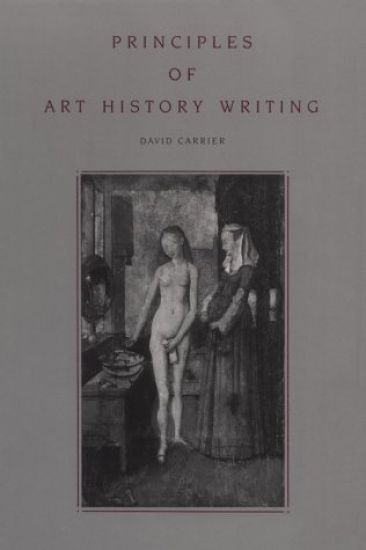
Principles of Art History Writing

Principles of Art History Writing

David Carrier

Pennsylvania State University Press
1993
pokkari
Principles of Art History Writing traces the changes in the way in which writers about art represent the same works. These differ in such deep ways as to raise the question of whether those at the beginning of the process even saw the same things as those at the end did. Carrier uses four case studies to identify and explain changing styles of restorations and the history of interpretations of selected works by Piero, Caravaggio, and van Eyck.
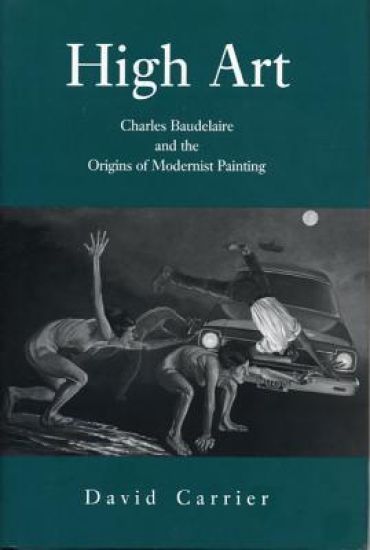
High Art

High Art

David Carrier

Pennsylvania State University Press
1996
sidottu
The great poet Charles Baudelaire (1821–1867) was also an extremely influential art critic. High Art relates the philosophical issues posed by Baudelaire's art writing to the theory and practice of modernist and postmodernist painting. Baudelaire wrote in an age of transition, David Carrier argues, an era divided by the Revolution of 1848, the historical break that played for him a role now taken within modernism by the political revolts of 1968. Moving from the grand tradition of Delacroix to the images of modern life made by Constantin Guys, this movement from "high" to "low," from the unified world of correspondences to the fragmented images of contemporary city life, motivates Baudelaire's equivalent to the post-1968 turn away from formalist art criticism. Viewed from the perspective of the 1990s, Carrier argues, the issues raised by Baudelaire's criticism and creative writing provide a way of understanding the situation of art writing in our own time.
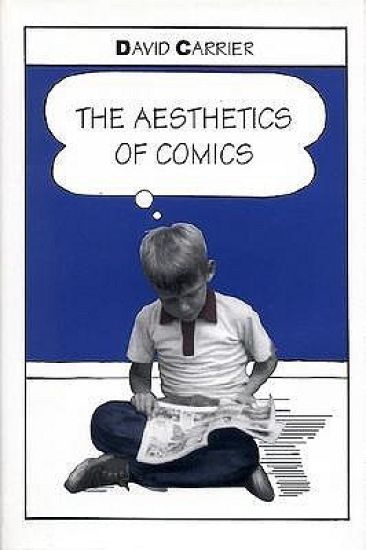
The Aesthetics of Comics

The Aesthetics of Comics

David Carrier

Pennsylvania State University Press
2002
pokkari
From Gary Larson’s The Far Side to George Herriman’s Krazy Kat, comic strips have two obvious defining features. They are visual narratives, using both words and pictures to tell stories, and they use word balloons to represent the speech and thought of depicted characters. Art historians have studied visual artifacts from every culture; cultural historians have recently paid close attention to movies. Yet the comic strip, an art form known to everyone, has not yet been much studied by aestheticians or art historians. This is the first full-length philosophical account of the comic strip.Distinguished philosopher David Carrier looks at popular American and Japanese comic strips to identify and solve the aesthetic problems posed by comic strips and to explain the relationship of this artistic genre to other forms of visual art. He traces the use of speech and thought balloons to early Renaissance art and claims that the speech balloon defines comics as neither a purely visual nor a strictly verbal art form, but as something radically new. Comics, he claims, are essentially a composite art that, when successful, seamlessly combine verbal and visual elements.Carrier looks at the way an audience interprets comics and contrasts the interpretation of comics and other mass-culture images to that of Old Master visual art. The meaning behind the comic can be immediately grasped by the average reader, whereas a piece of museum art can only be fully interpreted by scholars familiar with the history and the background behind the painting. Finally, Carrier relates comics to art history. Ultimately, Carrier’s analysis of comics shows why this popular art is worthy of philosophical study and proves that a better understanding of comics will help us better understand the history of art.
A World Art History and Its Objects

A World Art History and Its Objects

David Carrier

Pennsylvania State University Press
2008
sidottu
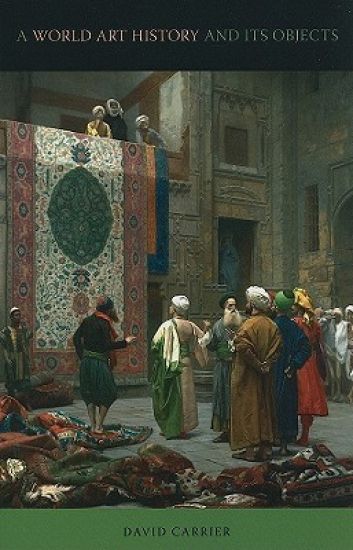
Is writing a world art history possible? Does the history of art as such even exist outside the Western tradition? Is it possible to consider the history of art in a way that is not fundamentally Eurocentric? In this highly readable and provocative book, David Carrier, a philosopher and art historian, does not attempt to write a world art history himself. Rather, he asks the question of how an art history of all cultures could be written-or whether it is even possible to do so. He also engages the political and moral issues raised by the idea of a multicultural art history. Focusing on a consideration of intersecting artistic traditions, Carrier negotiates the way meaning and understanding shift or are altered when a visual object from one culture, for example, is inserted into the visual tradition of another culture. A World Art History and Its Objects proposes the use of temporal narrative as a way to begin to understand a multicultural art history.
A World Art History and Its Objects

A World Art History and Its Objects

David Carrier

Pennsylvania State University Press
2010
pokkari
Is writing a world art history possible? Does the history of art as such even exist outside the Western tradition? Is it possible to consider the history of art in a way that is not fundamentally Eurocentric? In this highly readable and provocative book, David Carrier, a philosopher and art historian, does not attempt to write a world art history himself. Rather, he asks the question of how an art history of all cultures could be written—or whether it is even possible to do so. He also engages the political and moral issues raised by the idea of a multicultural art history. Focusing on a consideration of intersecting artistic traditions, Carrier negotiates the way meaning and understanding shift or are altered when a visual object from one culture, for example, is inserted into the visual tradition of another culture. A World Art History and Its Objects proposes the use of temporal narrative as a way to begin to understand a multicultural art history.
Rosalind Krauss and American Philosophical Art Criticism
Rosalind Krauss is, without visible rival, the most influential American art writer since Clement Greenberg. Together with her colleagues at ^IOctober^R, the journal she co-founded, she has played a key role in the introduction of French theory into the American art world. In the 1960s, though first a follower of Greenberg, she was inspired by her readings of French structuralist and post-structuralist materials, revolted against her mentor's formalism, and developed a succession of radically original styles of art history writing. Offering a complete survey of her career and work, ^IRosalind Krauss and American Philosophical Art Criticism: From Formalism to Beyond Postmodernism^R comprises the first book-length study of its subject.Written in the lucid style of analytic philosophy, this accessible commentary offers a consideration of her arguments as well as discussions of alternative positions. Tracing Krauss's development in this way provides the best method of understanding the changing styles of American art criticism from the 1960s through the present, and thus provides an invaluable source of historical and aesthetic knowledge for artists and art scholars alike.
Museum Skepticism

Museum Skepticism

David Carrier

Duke University Press
2006
pokkari
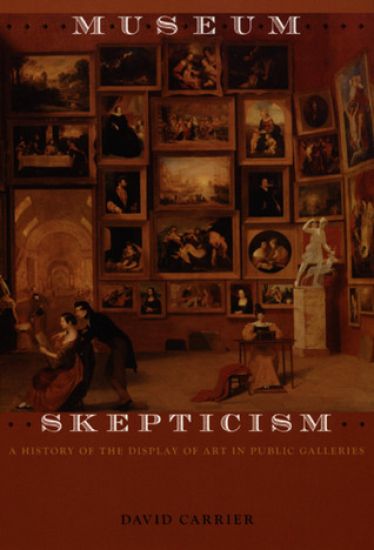
In Museum Skepticism, art historian David Carrier traces the birth, evolution, and decline of the public art museum as an institution meant to spark democratic debate and discussion. Carrier contends that since the inception of the public art museum during the French Revolution, its development has depended on growth: on the expansion of collections, particularly to include works representing non-European cultures, and on the proliferation of art museums around the globe. Arguing that this expansionist project has peaked, he asserts that art museums must now find new ways of making high art relevant to contemporary lives. Ideas and inspiration may be found, he suggests, in mass entertainment such as popular music and movies.Carrier illuminates the public role of art museums by describing the ways they influence how art is seen: through their architecture, their collections, the narratives they offer museum visitors. He insists that an understanding of the art museum must take into account the roles of collectors, curators, and museum architects. Toward that end, he offers a series of case studies, showing how particular museums and their collections evolved. Among those who figure prominently are Baron Dominique Vivant Denon, the first director of the Louvre; Bernard Berenson, whose connoisseurship helped Isabella Stewart Gardner found her museum in Boston; Ernest Fenollosa, who assembled much of the Asian art collection now in the Museum of Fine Arts, Boston; Albert Barnes, the distinguished collector of modernist painting; and Richard Meier, architect of the J. Paul Getty Center in Los Angeles. Carrier’s learned consideration of what the art museum is and has been provides the basis for understanding the radical transformation of its public role now under way.
Aesthetic Theory, Abstract Art, and Lawrence Carroll
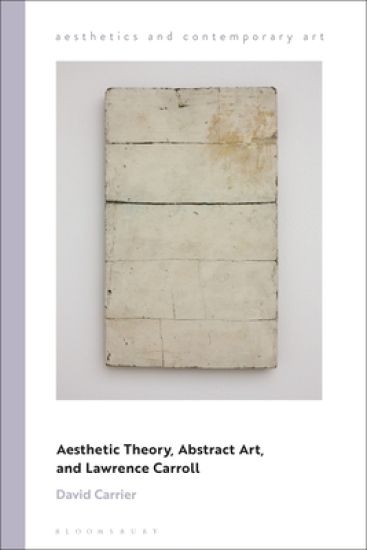
Boldly developing the central traditions of American modernist abstraction, Lawrence Carroll’s paintings engage with a fundamental issue of aesthetic theory, the nature of the medium of painting, in highly original, frequently extraordinarily successful ways. Aesthetic Theory, Abstract Art, and Lawrence Carroll explains how he understands the medium of painting; shows what his art says about the identity of painting as an art; discusses the place of his paintings in the development of abstraction; and, finally, offers an interpretation of his art. The first monograph devoted to him, this philosophical commentary employs the resources of analytic aesthetics. Art historians trace the development of art, explaining how what came earlier yields to what comes later. Taking for granted that the artifacts they describe are artworks, art historians place them within the history of art. Philosophical art writers define art, explain why it has a history and identify its meaning. Pursuing that goal, Aesthetic Theory, Abstract Art, and Lawrence Carroll roams freely across art history, focused at some points on the story of old master painting and sometimes on the history of modernism, but looking also to contemporary art, in order to provide the fullest possible philosophical perspective on Carroll’s work.
Aesthetic Theory, Abstract Art, and Lawrence Carroll
Boldly developing the central traditions of American modernist abstraction, Lawrence Carroll’s paintings engage with a fundamental issue of aesthetic theory, the nature of the medium of painting, in highly original, frequently extraordinarily successful ways. Aesthetic Theory, Abstract Art, and Lawrence Carroll explains how he understands the medium of painting; shows what his art says about the identity of painting as an art; discusses the place of his paintings in the development of abstraction; and, finally, offers an interpretation of his art. The first monograph devoted to him, this philosophical commentary employs the resources of analytic aesthetics. Art historians trace the development of art, explaining how what came earlier yields to what comes later. Taking for granted that the artifacts they describe are artworks, art historians place them within the history of art. Philosophical art writers define art, explain why it has a history and identify its meaning. Pursuing that goal, Aesthetic Theory, Abstract Art, and Lawrence Carroll roams freely across art history, focused at some points on the story of old master painting and sometimes on the history of modernism, but looking also to contemporary art, in order to provide the fullest possible philosophical perspective on Carroll’s work.
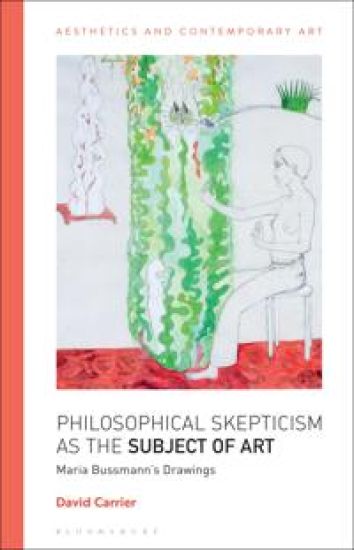
Philosophical Skepticism as the Subject of Art

Philosophical Skepticism as the Subject of Art

David Carrier

BLOOMSBURY PUBLISHING PLC
2022
sidottu
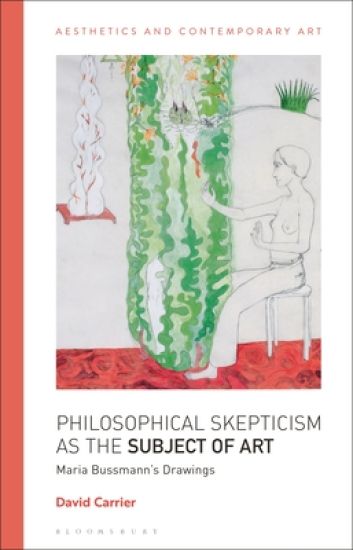
The artwork of Maria Bussmann, a trained academic German philosopher and a significant visual artist, provides an ideal test case for a philosophical study of visual art. Bussmann has internalized the relationship between art and philosophy. In this exploration of the history of German aesthetics through Bussmann's work, David Carrier places the philosophical tradition in the context of contemporary visual culture.Each chapter focuses on the arguments of a major philosopher whose concerns Bussmann has dealt with as an artist: Kant, Hegel, Merleau-Ponty, Wittgenstein and Arendt. Offering comparative accounts of artists and philosophers whose work is of especial relevance, Carrier shows how Bussmann responds visually to writings of philosophers in art that has an elusive but essential relationship to theorizing. Tackling the question of whether philosophical subjects can be presented visually, Carrier offers a fresh perspective on the German idealist position through the visual art of 21st-century artist steeped in the tradition and continually challenging it through her work.
Philosophical Skepticism as the Subject of Art

Philosophical Skepticism as the Subject of Art

David Carrier

BLOOMSBURY PUBLISHING PLC
2024
nidottu
The artwork of Maria Bussmann, a trained academic German philosopher and a significant visual artist, provides an ideal test case for a philosophical study of visual art. Bussmann has internalized the relationship between art and philosophy. In this exploration of the history of German aesthetics through Bussmann's work, David Carrier places the philosophical tradition in the context of contemporary visual culture.Each chapter focuses on the arguments of a major philosopher whose concerns Bussmann has dealt with as an artist: Kant, Hegel, Merleau-Ponty, Wittgenstein and Arendt. Offering comparative accounts of artists and philosophers whose work is of especial relevance, Carrier shows how Bussmann responds visually to writings of philosophers in art that has an elusive but essential relationship to theorizing. Tackling the question of whether philosophical subjects can be presented visually, Carrier offers a fresh perspective on the German idealist position through the visual art of 21st-century artist steeped in the tradition and continually challenging it through her work.
Proust/Warhol

Proust/Warhol

David Carrier

Peter Lang Publishing Inc
2008
sidottu
Two of the most important modernist artists, Marcel Proust and Andy Warhol, also developed aesthetic theories. Proust presents imaginary artists – a composer, a painter, and a novelist. Warhol made paintings and sculptures; created art history writing, fiction, and films; and sponsored a rock group. Warhol most likely never read Proust, but because their ways of thinking contrast dramatically, much can be learned about both men’s art by comparing: the imaginary painting described by Proust to Warhol’s Marilyn Diptych; the ways that Proust and Warhol understand art-making; how Proust and Warhol define art; and the ways that Elstir’s studio differs from Warhol’s factory. Also discussed is the relationship of their homosexuality to their art. Proust/Warhol: Analytical Philosophy of Art employs three key intellectual tools: the aesthetic theory of Arthur Danto, the account of Proust by Joshua Landy, and the analysis of the art of living by Alexander Nehamas. Proust/Warhol concludes with a discussion of an issue of particular importance for Warhol, the relationship between art and fashion.
England and its Aesthetes

England and its Aesthetes

David Carrier

Routledge
1997
nidottu
First Published in 1999. John Ruskin (1819-1900), Walter Pater (1839-1894), and Adrian Stokes (1902-1972) represent three generations of English aesthetes whose writings have transformed art history and the formations of museums as we know them. They are three great writers in a distinctively English tradition. Concerned with the nature of aesthetic experience, and with the interpretation of visual art, they offer approaches that are dramatically different, in challenging ways, from those of professional art historians. They published autobiographies, explaining the relationship of their conceptions of aesthetic experience to their critical thinking about social questions. With England and Its Aesthetes , David Carrier has assembled the autobiographical sketches of these influential aesthetes. His reading reveals them to be less concerned with art appreciation or an aesthetic approach to everyday life than with issues of identity, politics, and desire.