Kirjojen hintavertailu. Mukana 11 627 220 kirjaa ja 12 kauppaa.

Kirjahaku

Etsi kirjoja tekijän nimen, kirjan nimen tai ISBN:n perusteella.

29 kirjaa tekijältä David Carroll

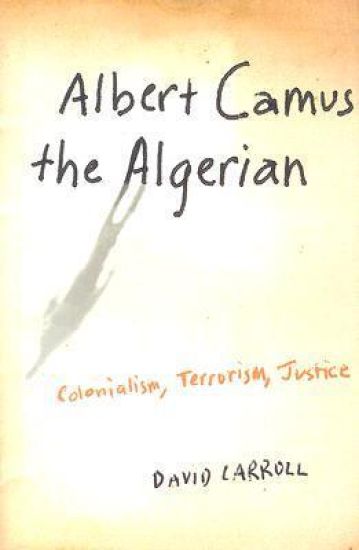
Albert Camus the Algerian

Albert Camus the Algerian

David Carroll

Columbia University Press
2007
sidottu
In these original readings of Albert Camus' novels, short stories, and political essays, David Carroll concentrates on Camus' conflicted relationship with his Algerian background and finds important critical insights into questions of justice, the effects of colonial oppression, and the deadly cycle of terrorism and counterterrorism that characterized the Algerian War and continues to surface in the devastation of postcolonial wars today. During France's "dirty war" in Algeria, Camus called for an end to the violence perpetrated against civilians by both France and the Algerian National Liberation Front (FLN) and supported the creation of a postcolonial, multicultural, and democratic Algeria. His position was rejected by most of his contemporaries on the Left and has, ironically, earned him the title of colonialist sympathizer as well as the scorn of important postcolonial critics. Carroll rescues Camus' work from such criticism by emphasizing the Algerian dimensions of his literary and philosophical texts and by highlighting in his novels and short stories his understanding of both the injustice of colonialism and the tragic nature of Algeria's struggle for independence. By refusing to accept that the sacrifice of innocent human lives can ever be justified, even in the pursuit of noble political goals, and by rejecting simple, ideological binaries (West vs. East, Christian vs. Muslim, "us" vs. "them," good vs. evil), Camus' work offers an alternative to the stark choices that characterized his troubled times and continue to define our own. "What they didn't like, was the Algerian, in him," Camus wrote of his fictional double in The First Man. Not only should "the Algerian" in Camus be "liked," Carroll argues, but the Algerian dimensions of his literary and political texts constitute a crucial part of their continuing interest. Carroll's reading also shows why Camus' critical perspective has much to contribute to contemporary debates stemming from the global "war on terror." About the Author David Carroll is professor of French and past director of the Critical Theory Institute, former chair of the Department of French and Italian, and past director of the European Studies Program at the University of California, Irvine. His books include French Literary Fascism: Nationalism, Anti-Semitism, and the Ideology of Culture; Paraesthetics: Foucault, Lyotard, Derrida; and The Subject in Question: The Languages of Theory and the Strategies of Fiction. He is also the editor of a collection of essays entitled The States of "Theory" and is currently working on a book entitled Crises in French Identity: From the Dreyfus Affair to the Present.
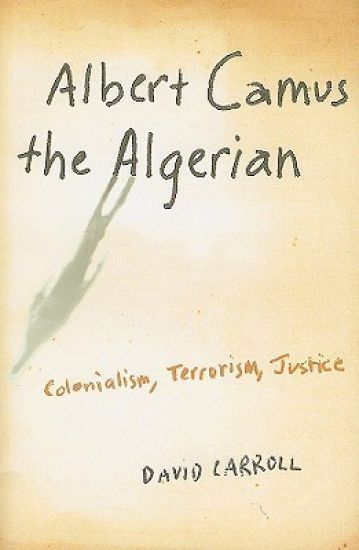
Albert Camus the Algerian

Albert Camus the Algerian

David Carroll

Columbia University Press
2008
pokkari
In these original readings of Albert Camus' novels, short stories, and political essays, David Carroll concentrates on Camus' conflicted relationship with his Algerian background and finds important critical insights into questions of justice, the effects of colonial oppression, and the deadly cycle of terrorism and counterterrorism that characterized the Algerian War and continues to surface in the devastation of postcolonial wars today. During France's "dirty war" in Algeria, Camus called for an end to the violence perpetrated against civilians by both France and the Algerian National Liberation Front (FLN) and supported the creation of a postcolonial, multicultural, and democratic Algeria. His position was rejected by most of his contemporaries on the Left and has, ironically, earned him the title of colonialist sympathizer as well as the scorn of important postcolonial critics. Carroll rescues Camus' work from such criticism by emphasizing the Algerian dimensions of his literary and philosophical texts and by highlighting in his novels and short stories his understanding of both the injustice of colonialism and the tragic nature of Algeria's struggle for independence. By refusing to accept that the sacrifice of innocent human lives can ever be justified, even in the pursuit of noble political goals, and by rejecting simple, ideological binaries (West vs. East, Christian vs. Muslim, "us" vs. "them," good vs. evil), Camus' work offers an alternative to the stark choices that characterized his troubled times and continue to define our own. "What they didn't like, was the Algerian, in him," Camus wrote of his fictional double in The First Man. Not only should "the Algerian" in Camus be "liked," Carroll argues, but the Algerian dimensions of his literary and political texts constitute a crucial part of their continuing interest. Carroll's reading also shows why Camus' critical perspective has much to contribute to contemporary debates stemming from the global "war on terror."
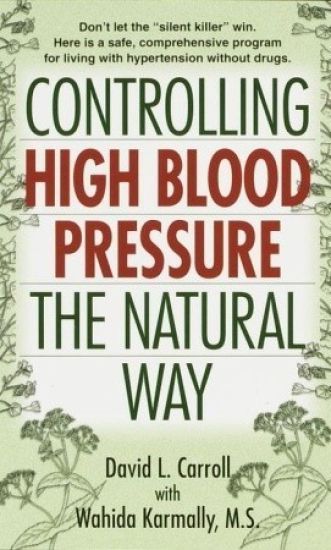
Controlling High Blood Pressure

Controlling High Blood Pressure

David Carroll

Ballantine Books Inc.
2000
nidottu
Of the countless ailments that rack the human machine,high blood pressure is one of the easiest to preventand one of the most responsive to treatment.Who gets high blood pressure? Should you panic if you or someone you love develops hypertension? How can you help yourself, even if you're in a high-risk group?High blood pressure is commonly the result of an unhealthy lifestyle, and it can almost always be controlled--without debilitating medications--simply by eating the right foods, taking the proper herb and vitamin supplements, getting the correct types of exercise, and practicing such stress-reducing techniques as meditation, visualization, tai chi, and yoga. This book gives you a firm grip on all these tools. Start using them today to build yourself a healthy, circulation-friendly life.FEATURING:- A triple-threat healing program that not only revitalizes your circulation system but also boosts your overall health- A thirty-day food regimen--ninety full menus for breakfast, lunch, and dinner, plus many recipes for delicious foods to eat as you control hypertension
George Eliot and the Conflict of Interpretations

George Eliot and the Conflict of Interpretations

David Carroll

Cambridge University Press
2006
pokkari
Two versions of George Eliot, both influential, have emerged from the study of her life and work. One is the radical Victorian thinker, formidably learned in a whole range of intellectual disciplines; the other is the reclusive novelist, celebrating through her fiction the communal values which were being eroded in the modern world. This chronological study of the novels brings the two together and places her within the crisis of belief and value acted out in the mid-nineteenth century. George Eliot saw this crisis as one of interpretation, in a vivid, almost apocalyptic awareness that traditional modes of interpreting the world were breaking down irrevocably. This study shows how, in response, she redefined the nature of Victorian fiction, testing to the point of destruction a variety of Victorian myths, orthodoxies and ideologies in each of her novels.
George Eliot and the Conflict of Interpretations

George Eliot and the Conflict of Interpretations

David Carroll

Cambridge University Press
1992
sidottu
Two versions of George Eliot, both influential, have emerged from the study of her life and work. One is the radical Victorian thinker, formidably learned in a whole range of intellectual disciplines; the other is the reclusive novelist, celebrating through her fiction the communal values which were being eroded in the modern world. This chronological study of the novels brings the two together and places her within the crisis of belief and value acted out in the mid-nineteenth century. George Eliot saw this crisis as one of interpretation, in a vivid, almost apocalyptic awareness that traditional modes of interpreting the world were breaking down irrevocably. This study shows how, in response, she redefined the nature of Victorian fiction, testing to the point of destruction a variety of Victorian myths, orthodoxies, and ideologies in each of her novels.
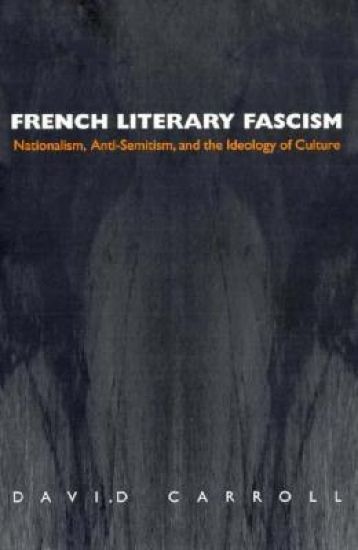
French Literary Fascism

French Literary Fascism

David Carroll

Princeton University Press
1998
pokkari
This is the first book to provide a sustained critical analysis of the literary-aesthetic dimension of French fascism--the peculiarly French form of what Walter Benjamin called the fascist "aestheticizing of politics." Focusing first on three important extremist nationalist writers at the turn of the century and then on five of the most visible fascist intellectuals in France in the 1930s, David Carroll shows how both traditional and modern concepts of art figure in the elaboration of fascist ideology--and in the presentation of fascism as an art of the political. Carroll is concerned with the internal relations of fascism and literature--how literary fascists conceived of politics as a technique for fashioning a unified people and transforming the disparate elements of society into an organic, totalized work of art. He explores the logic of such aestheticizing, as well as the assumptions about art, literature, and culture at the basis of both the aesthetics and politics of French literary fascists. His book reveals how not only classical humanism but also modern aesthetics that defend the autonomy and integrity of literature became models for xenophobic forms of nationalism and extreme "cultural" forms of anti-Semitism. A cogent analysis of the ideological function of literature and culture in fascism, this work helps us see the ramifications of thinking of literature or art as the truth or essence of politics.
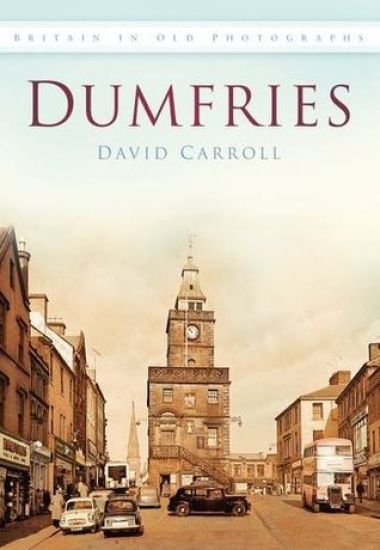
Dumfries

Dumfries

David Carroll

The History Press Ltd
1996
nidottu
The streets of Dumfries, 'Queen of South', rise steeply from either side of the broad River Nith beyond the northern shore of the Solway Firth. Established as a royal burgh in 1186, the town has been touched over the centuries by some of the most significant events in Scotland's colourful history, including the protracted border struggles with England. Dumfries can also boast connections with many of the country's famous names; not least the national bard, Robert Burns, who spent the last five years of his life in the town. This book celebrates the everyday face of Dumfries and its surrounding area, capturing through old photographs the sights of a town that, although it has witnessed many changes in recent years, would still be instantly familiar to the true 'Doonhamer' of a few generations ago.
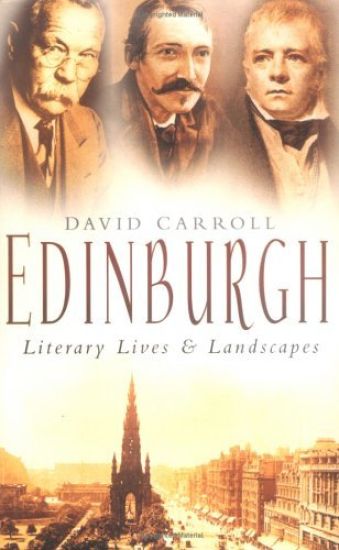
Edinburgh: Literary Lives and Landscapes

Edinburgh: Literary Lives and Landscapes

David Carroll

The History Press Ltd
2004
sidottu
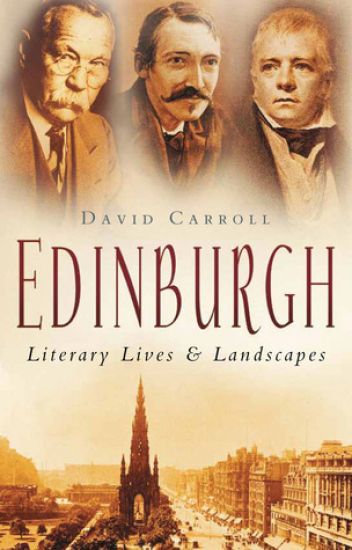
Edinburgh enjoys a long and impressive literary heritage and can claim connections with some of the world’s most famous writers. Sir Arthur Conan Doyle, Robert Louis Stevenson and Sir Walter Scott were all natives of the city, while Robert Burns, Charles Dickens, J.M. Barrie and Samuel Johnson were just a few of those who forged links with what William Cobbett described as ‘the finest city in the kingdom’.Edinburgh has provided the setting for countless novels over the years, not least in more recent times with Muriel Spark’s The Prime of Miss Jean Brodie (1961) and Irvine Welsh’s Trainspotting (1993). Nowadays, the city hosts its annual International Book Festival, when, for a couple of weeks every August, authors and visitors from far and wide flock to Charlotte Square Gardens for ‘the biggest celebration of the written word in the world’.Published to coincide with the 21st Edinburgh International Book Festival, this work includes not only native Edinburgh authors but others on whom the city had a profound influence.
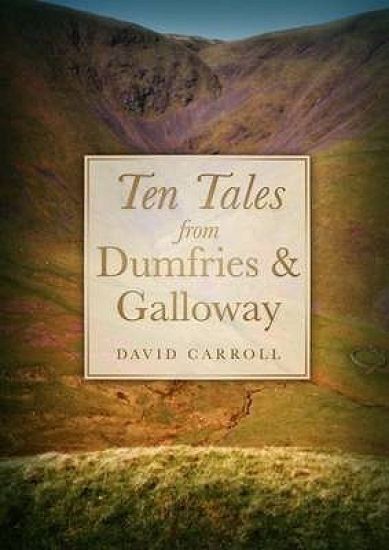
Ten Tales from Dumfries and Galloway

Ten Tales from Dumfries and Galloway

David Carroll

The History Press Ltd
2010
nidottu
Stretching from Langholm in the east to Portpatrick in the west, with its dramatic landscape embracing hills, lochs and forests, Dumfries and Galloway occupies a large corner of south-west Scotland. Scratch just below the surface of this predominantly agricultural region, which nowadays also supports a steadily growing tourist industry, and you will unearth characters, places and events which have made an indelible impression over the past hundred years, as the tales in this book will demonstrate. Galloway can boast the oldest working theatre, the Theatre Royal in Dumfries, and also Scotland's highest village, Wanlockhead; while Kirkcudbright and its surrounding area witnessed the growth of a thriving artists community in the late nineteenth and early twentieth century. Tragedy on a large scale has struck the region more than once, as the Quintinshill rail disaster during the First World War testified, while the discovery of a sulphurous well in a small village transformed Moffat into the Cheltenham of Scotland. Illustrated with over fifty pictures, these and other fascinating stories can all be found in Ten Tales from Dumfries & Galloway.
Burns Country

Burns Country

David Carroll

The History Press Ltd
2009
nidottu
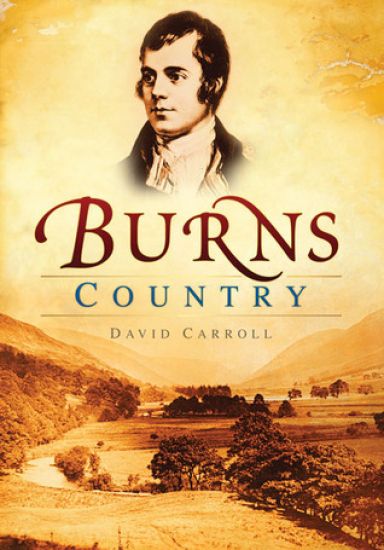
Robert Burns (25 January 1759 - 21 July 1796) is Scotland's most-loved poet and his words immortalised the beautiful and untamed West Coast. Burns was born in Alloway and lived most of his life in Dumfriesshire. Using old photographs drawn from a range of private and public collections, this book celebrates that landscape and how it inspired some of the most famous lines in Scottish literature. David Carroll's selection provides a fascinating journey through the life of Scotland's national poet, which will not only stir the memories of those people long familiar with Ayrshire and Dumfriesshire, but will also serve as an introduction to anyone exploring 'Burns Country' for themselves.
Annandale

Annandale

David Carroll

The History Press Ltd
2009
nidottu
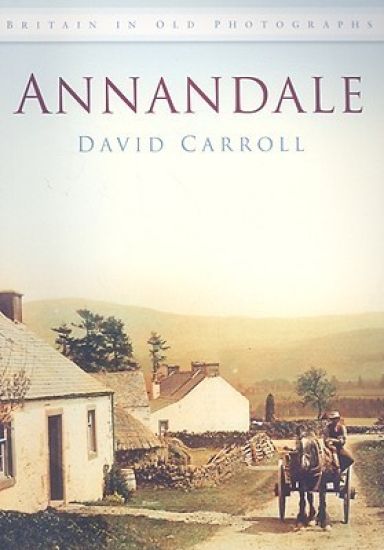
Coursing down from the Devil's Beef Tub, the River Annan meanders through undulating agricultural land for 30 miles or so, before issuing into the Solway Firth. Stretching from the once-famous spa resort of Moffat in the north to Annan in the south, Annandale also embraces the former railway village of Beattock; Lochmaben, whose castle is claimed as the boyhood home of Robert the Bruce; Ecclefechan, birthplace of Thomas Carlyle; and Lockerbie, which since December 1988, has been associated throughout the world with one of the most terrible disasters in aviation history. This book celebrates the more everyday face of Annandale's towns and villages over the past 100 years. It details the changes occurring over this period - communities have expanded, communications have developed and tourism has become an increasingly important part of an economy. Twentieth century progress has wrought great change, as many of the images here will confirm, but other scenes contained in this book would be instantly familiar to people of generations long-since past. This delightful record will give enormous pleasure to lovers of the beautiful Scottish region.
Edinburgh: Literary Lives and Landscapes

Edinburgh: Literary Lives and Landscapes

David Carroll

The History Press Ltd
2011
nidottu
Edinburgh enjoys a long and impressive literary heritage and can claim connections with some of the world’s most famous writers. Sir Arthur Conan Doyle, Robert Louis Stevenson and Sir Walter Scott were all natives of the city, while Robert Burns, Charles Dickens, J.M. Barrie and Samuel Johnson were just a few of those who forged links with what William Cobbett described as ‘the finest city in the kingdom’. Edinburgh has provided the setting for countless novels over the years, not least in more recent times with Muriel Spark’s The Prime of Miss Jean Brodie (1961) and Irvine Welsh’s Trainspotting (1993). Nowadays, the city hosts its annual International Book Festival, when, for a couple of weeks every August, authors and visitors from far and wide flock to Charlotte Square Gardens for ‘the biggest celebration of the written word in the world’. Published to coincide with the 21st Edinburgh International Book Festival, this work includes not only native Edinburgh authors but others on whom the city had a profound influence.
Dumfries and Galloway Curiosities

Dumfries and Galloway Curiosities

David Carroll

The History Press Ltd
2013
nidottu
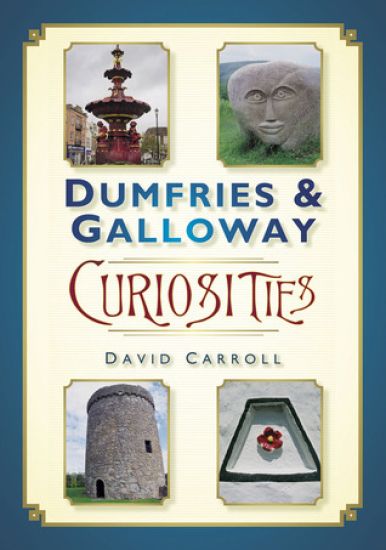
Along with its rich history and spectacular scenery, Dumfries and Galloway is home to a great many curious and unusual buildings, objects and landscape features that have survived the centuries. This well-illustrated book is a guide to 100 of these remarkable sights, including Scotland’s highest village, the world’s narrowest hotel, and even the statue of a rhinoceros on top of a bus shelter. Dumfries & Galloway Curiosities will encourage readers to explore this area of south-west Scotland and perhaps make their own curious discoveries.
The Dumfries Book of Days

The Dumfries Book of Days

David Carroll

The History Press Ltd
2014
nidottu
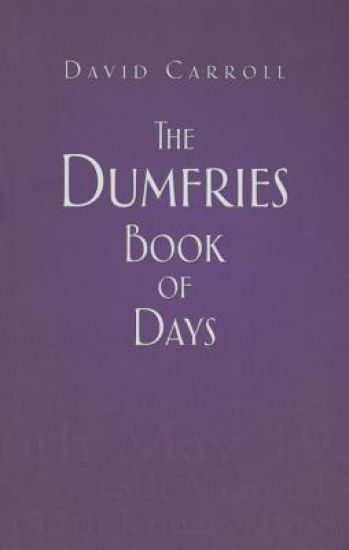
Taking you through the year day by day, The Dumfries Book of Days contains quirky, eccentric, amusing and important events and facts from different periods in the history of the town. Ideal for dipping into, this addictive little book will keep you entertained and informed. Featuring hundreds of snippets of information gleaned from the vaults of Dumfries’s archives and covering the social, criminal, political, religious, industrial, military and sporting history of the town, it will delight residents and visitors alike.