Kirjojen hintavertailu. Mukana 11 244 527 kirjaa ja 12 kauppaa.

Kirjahaku

Etsi kirjoja tekijän nimen, kirjan nimen tai ISBN:n perusteella.

9 kirjaa tekijältä David Caute

The Dancer Defects

The Dancer Defects

David Caute

Oxford University Press
2003
sidottu
The cultural Cold War between the Soviet Union and the West was without precedent. At the outset of this original and wide-ranging historical survey, David Caute establishes the nature of the extraordinary cultural competition set up post-1945 between Moscow, New York, London and Paris, with the most intimate frontier war staged in the city of Berlin. Using sources in four languages, the author of The Fellow-Travellers and The Great Fear explores the cultural Cold War as it rapidly penetrated theatre, film, classical music, popular music, ballet, painting and sculpture, as well as propaganda by exhibition. Major figures central to Cold War conflict in the theatre include Brecht, Miller, Sartre, Camus, Havel, Ionesco, Stoppard and Konstantin Simonov, whose inflammatory play, The Russian Question, occupies a chapter of its own based on original archival research. Leading film directors involved included Eisenstein, Romm, Chiarueli, Aleksandrov, Kazan, Tarkovsky and Wajda. In the field of music, the Soviet Union in the Zhdanov era vigorously condemned 'modernism', 'formalism', and the avant-garde. A chapter is devoted to the intriguing case of Dmitri Shostakovich, and the disputed authenticity of his 'autobiography' Testimony. Meanwhile in the West the Congress for Cultural Freedom was sponsoring the modernist composers most vehemently condemned by Soviet music critics; Stravinsky, Schoenberg, Hindemith among them. Despite constant attempts at repression, the Soviet Party was unable to check the appeal of jazz on the Voice of America, then rock music, to young Russians. Visits to the West by the Bolshoi and Kirov ballet companines, the pride of the USSR, were fraught with threats of cancellation and the danger of defection. Considering the case of Rudolf Nureyev, Caute pours cold water on overheated speculations about KGB plots to injure him and other defecting dancers. Turning to painting, where socialist realism prevailed in Russia, and the impressionist heritage was condemned, Caute explores the paradox of Picasso's membership of the French Communist Party. Re-assessing the extent of covert CIA patronage of abstract expressionism (Pollock, De Kooning), Caute finds that the CIA's role has been much exaggerated, likewise the dominance of the New York School. Caute challenges some recent, one-dimensional, American accounts of 'Cold War culture', which ignore not only the Soviet performance but virtually any cultural activity outside the USA. The West presented its cultural avant-garde as evidence of liberty, even through monochrome canvases and dodecaphonic music appealed only to a minority audience. Soviet artistic standards and teaching levels were exceptionally high, but the fear of freedom and innovation virtually guaranteed the moral defeat which accelerated the collapse of the Soviet Union.
The Dancer Defects

The Dancer Defects

David Caute

Oxford University Press
2005
nidottu
The cultural Cold War between the Soviet Union and the West was without precedent. At the outset of this original and wide-ranging historical survey, David Caute establishes the nature of the extraordinary cultural competition set up post-1945 between Moscow, New York, London, and Paris, with the most intimate frontier war staged in the city of Berlin. Using sources in four languages, the author of The Fellow-Travellers and The Great Fear explores the cultural Cold War as it rapidly penetrated theatre, film, classical music, popular music, ballet, painting, and sculpture, as well as propaganda by exhibition. Major figures central to Cold War conflict in the theatre include Brecht, Miller, Sartre, Camus, Havel, Ionesco, Stoppard, and Konstantin Simonov. Among leading film directors involved were Eisenstein, Romm, Chiarueli, Aleksandrov, Kazan, Tarkovsky, and Wajda. In the field of music, the Soviet Union in the Zhdanov era vigorously condemned 'modernism', 'formalism', and the avant-garde. A chapter is devoted to the intriguing case of Dmitri Shostakovich, and the disputed authenticity of his 'autobiography' Testimony. Meanwhile in the West the Congress for Cultural Freedom was sponsoring the modernist composers most vehemently condemned by Soviet music critics, notably Stravinsky. The Soviet Party was unable to check the appeal of jazz on the Voice of America, then rock music, to young Russians. Visits to the West by the Bolshoi and Kirov ballet companines, the pride of the USSR, were fraught with threats of cancellation and the danger of defection. Caute dampens overheated speculations about KGB plots to injure Rudolf Nureyev and other defecting dancers. Turning to painting, where socialist realism prevailed in the USSR and dissident art was often brutally repressed, Caute explores the paradox of Picasso's membership of the French Communist Party. Re-assessing the extent of covert CIA patronage of abstract expressionist artists like Jackson Pollock, Caute finds that the CIA's role has been much exaggerated. Caute also challenges some recent accounts of 'Cold War culture', which virtually ignore the Soviet performance and cultural activity outside the USA. Soviet artistic standards and teaching levels were exceptionally high, but the regime's endemic fear of free innovation finally accelerated its collapse.
The Fellow-Travellers

The Fellow-Travellers

David Caute

Yale University Press
1988
sidottu
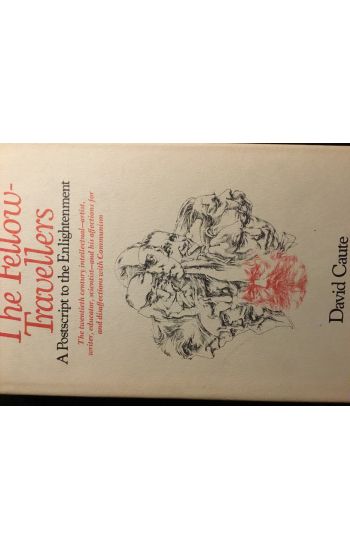
This highly regarded book gives a lucid and balanced account of fellow travellers in Europe and America: those individuals who were not willing to become Communists but were attracted by the socialist systems of the Soviet Union, the Popular Democracies, and Communist China. This revised edition contains new chapters on the effects of the development of the Communist regimes in China, Cuba, and North Vietnam.
Isaac and Isaiah

Isaac and Isaiah

David Caute

Yale University Press
2015
pokkari
Two high-voltage scholars engage in a bitter conflict in this irresistible tale of principle and politics in the Cold War years Rancorous and highly public disagreements between Isaiah Berlin and Isaac Deutscher escalated to the point of cruel betrayal in the mid-1960s, yet surprisingly the details of the episode have escaped historians’ scrutiny. In this gripping account of the ideological clash between two of the most influential scholars of Cold War politics, David Caute uncovers a hidden story of passionate beliefs, unresolved antagonism, and the high cost of reprisal to both victim and perpetrator.Though Deutscher (1907–1967) and Berlin (1909–1997) had much in common—each arrived in England in flight from totalitarian violence, quickly mastered English, and found entry into the Anglo-American intellectual world of the 1950s—Berlin became one of the presiding voices of Anglo-American liberalism, while Deutscher remained faithful to his Leninist heritage, resolutely defending Soviet conduct despite his rejection of Stalin’s tyranny. Caute combines vivid biographical detail with an acute analysis of the issues that divided these two icons of Cold War politics, and brings to light for the first time the full severity of Berlin’s action against Deutscher.
Doubles

Doubles

David Caute

Totterdown Books
2016
pokkari
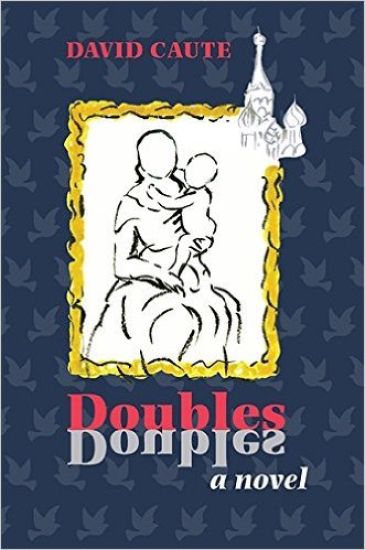
DOUBLES brings to light a buried historical event involving Pablo Picasso and Charles Chaplin. In turmoil as Stalin's death approaches, the Kremlin seeks a propaganda victory. The invitation to Picasso and Chaplin to visit Moscow is seductive. David Caute calls the past into question in this fascinating exploration of how history is written
Politics and the Novel During the Cold War

Politics and the Novel During the Cold War

David Caute

AldineTransaction
2009
sidottu
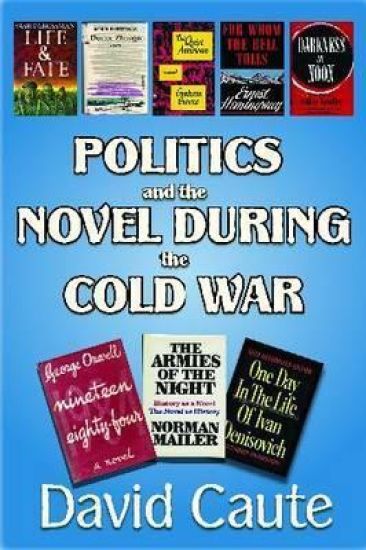
David Cautes wide-ranging study examines how outstanding novelists of the Cold War era conveyed the major issues of contemporary politics and history. In the United States and Western Europe the political novel flourished in the 1930s and 1940s, the crisis years of economic depression, fascism, the Spanish Civil War,the consolidation of Stalinism, and the Second World War.Starting with the high hopes generated by the Spanish Civil War, Caute then explores the god that failed pessimism that overtook the Western political novel in the 1940s. The writers under scrutiny include Hemingway, Dos Passos, Orwell, Koestler, Malraux, Serge, Greene, de Beauvoir, and Sartre. Strikingly different approaches to the burning issues of the time are found among orthodox Soviet novelists such as Sholokhov, Fadeyev, Kochetov, and Pavlenko. Soviet official culture continued to choke on modernism, formalism, satire, and allegory.In Russia and Eastern Europe dissident novelists offered contesting voices as they engaged in the fraught re-telling of life under Stalinism. The emergence of the New Left in the 1960s generated a new wave of fiction challenging Americas global stance. Mailer, Doctorow, and Coover brought fresh literary sensibilities tobear on such iconic events as the 1967 siege of the Pentagon and the execution of the Rosenbergs.
Politics and the Novel During the Cold War

Politics and the Novel During the Cold War

David Caute

AldineTransaction
2016
nidottu
David Cautes wide-ranging study examines how outstanding novelists of the Cold War era conveyed the major issues of contemporary politics and history. In the United States and Western Europe the political novel flourished in the 1930s and 1940s, the crisis years of economic depression, fascism, the Spanish Civil War, the consolidation of Stalinism, and the Second World War.Starting with the high hopes generated by the Spanish Civil War, Caute then explores the god that failed pessimism that overtook the Western political novel in the 1940s. The writers under scrutiny include Hemingway, Dos Passos, Orwell, Koestler, Malraux, Serge, Greene, de Beauvoir, and Sartre. Strikingly different approaches to the burning issues of the time are found among orthodox Soviet novelists such as Sholokhov, Fadeyev, Kochetov, and Pavlenko. Soviet official culture continued to choke on modernism, formalism, satire, and allegory.In Russia and Eastern Europe dissident novelists offered contesting voices as they engaged in the fraught re-telling of life under Stalinism. The emergence of the New Left in the 1960s generated a new wave of fiction challenging Americas global stance. Mailer, Doctorow, and Coover brought fresh literary sensibilities to bear on such iconic events as the 1967 siege of the Pentagon and the execution of the Rosenbergs.
Red List

Red List

David Caute

Verso Books
2022
sidottu
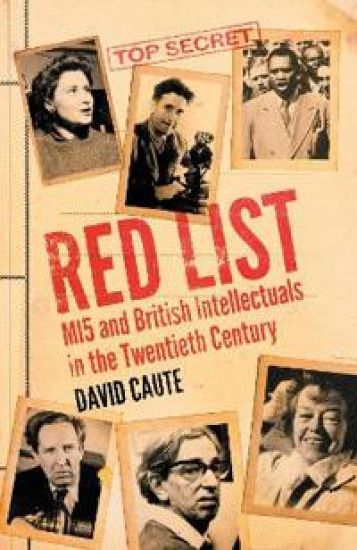
In the popular imagination MI5, or the Security Service, is known chiefly as the branch of the British state responsible for chasing down those who endanger national security-from Nazi fifth columnists to Soviet spies and today's domestic extremists. Yet, working from official documents released to the National Archives,distinguished historian Caute discovers that suspicion also fell on those who merely exercised their civil liberties, posing no threat to national security. In reality, this 'other history' of the Security Service, was dictated not only by the consistent anti-Communist and Imperial aims of the British state but also by the political prejudices of MI5's personnel. The guiding notions were 'Defence of the Realm' and 'subversion.' Caute here exposes the massive state operation to track the activities and affiliations of a range of journalists, academics, scientists, filmmakers, writers actors and musicians, who the Security Service classified as a threat to national security. Guilt by association was paramount. Letters were opened, phones were intercepted, private homes were bugged and citizens were placed under physical surveillance by Special Branch agents. Among the targets of surveillance are found such prominent figures as Arthur Ransome, Paul Robeson, J.B. Priestley, Kingsley Amis, George Orwell, Doris Lessing, Christopher Isherwood, Stephen Spender, Dorothy Hodgkin, Jacob Bronowski, John Berger, Benjamin Britten, Christopher Hill, Eric Hobsbawm, Kingsley Martin, Michael Redgrave, Joan Littlewood, Joseph Losey, Michael Foot and Harriet Harman. More than 200 victims are listed here but further MI5 files will be released to the National Archives.
Red List

Red List

David Caute

Verso Books
2023
nidottu
Based upon official documents released to the National Archives, distinguished historian David Caute, discovers that the British state had a surprising interest in a number of writers, artists, scientists and historians who posed no threat to national security at all. Those at the heart of British media, culture, and academia, it seems, were perpetually under suspicion as potential subversives. Caute here exposes the massive state operation that went to extraordinary lengths to surveil their every move. Guilt by association was paramount. Letters were opened, phones were intercepted, private homes were bugged and citizens were placed under physical surveillance by Special Branch agents. Among the targets of surveillance are found such prominent figures as Arthur Ransome, Paul Robeson, J.B. Priestley, Kingsley Amis, George Orwell, Doris Lessing, Christopher Isherwood, Stephen Spender, Dorothy Hodgkin, Jacob Bronowski, John Berger, Benjamin Britten, Christopher Hill, Eric Hobsbawm, Kingsley Martin, Michael Redgrave, Joan Littlewood, Joseph Losey, Michael Foot and Harriet Harman. More than 200 victims are listed here but further MI5 files will be released to the National Archives.