Kirjojen hintavertailu. Mukana 12 390 323 kirjaa ja 12 kauppaa.

Kirjahaku

Etsi kirjoja tekijän nimen, kirjan nimen tai ISBN:n perusteella.

9 kirjaa tekijältä David Chanoff, Louis W. Sullivan

We'll Fight It Out Here

We'll Fight It Out Here

David Chanoff; Louis W. Sullivan

Johns Hopkins University Press
2022
sidottu
How a coalition of Black health professions schools made health equity a national issue.Winner of the Phillis Wheatley Award from the Sons & Daughters of the United States Middle PassageRacism in the US health care system has been deliberately undermining Black health care professionals and exacerbating health disparities among Black Americans for centuries. These health disparities only became a mainstream issue on the agenda of US health leaders and policy makers because a group of health professions schools at Historically Black Colleges and Universities banded together to fight for health equity. We'll Fight It Out Here tells the story of how the Association of Minority Health Professions Schools (AMHPS) was founded by this coalition and the hard-won influence it built in American politics and health care. David Chanoff and Louis W. Sullivan, former secretary of health & human services, detail how the struggle for equity has been fought in the field of health care, where bias and disparities continue to be volatile national issues. Chanoff and Sullivan outline the history of Black health care, from pre-Emancipation to today, centering on the work of AMHPS, which brought to light health care inequities in 1983 and precipitated virtually all minority health care legislation since then. Based on extensive research in the literature, as well as more than seventy interviews with the people central to this fight for legislative and policy change, We'll Fight It Out Here is the important story of a vital coalition movement, virtually unknown until now, that changed the national understanding of health inequities.The work of this coalition of Black health schools continues, both in supporting the training of more doctors and health professionals from minority backgrounds and in advancing issues related to health equity. By highlighting these endeavors, We'll Fight It Out Here brings attention to a pivotal group in the history of the health equity movement and provides a road map of practical mechanisms that can be used to advance it.
We'll Fight It Out Here

We'll Fight It Out Here

David Chanoff; Louis W. Sullivan

Johns Hopkins University Press
2024
pokkari
How a coalition of Black health professions schools made health equity a national issue.Winner of the Phillis Wheatley Award from the Sons & Daughters of the United States Middle PassageRacism in the US health care system has been deliberately undermining Black health care professionals and exacerbating health disparities among Black Americans for centuries. These health disparities only became a mainstream issue on the agenda of US health leaders and policy makers because a group of health professions schools at Historically Black Colleges and Universities banded together to fight for health equity. We'll Fight It Out Here tells the story of how the Association of Minority Health Professions Schools (AMHPS) was founded by this coalition and the hard-won influence it built in American politics and health care. David Chanoff and Louis W. Sullivan, former secretary of health & human services, detail how the struggle for equity has been fought in the field of health care, where bias and disparities continue to be volatile national issues. Chanoff and Sullivan outline the history of Black health care, from pre-Emancipation to today, centering on the work of AMHPS, which brought to light health care inequities in 1983 and precipitated virtually all minority health care legislation since then. Based on extensive research in the literature, as well as more than seventy interviews with the people central to this fight for legislative and policy change, We'll Fight It Out Here is the important story of a vital coalition movement, virtually unknown until now, that changed the national understanding of health inequities.The work of this coalition of Black health schools continues, both in supporting the training of more doctors and health professionals from minority backgrounds and in advancing issues related to health equity. By highlighting these endeavors, We'll Fight It Out Here brings attention to a pivotal group in the history of the health equity movement and provides a road map of practical mechanisms that can be used to advance it.
Anthony Benezet

Anthony Benezet

David Chanoff

UNIVERSITY OF GEORGIA PRESS
2025
sidottu
Wilberforce, Clarkson, Wesley. Britain’s great abolitionist activist Granville Sharp. Each of these consequential figures of eighteenth-century Atlantic world were galvanized by the moral power of a modest Quaker teacher who never ventured more than a few miles from his home in Philadelphia: Anthony Benezet. While Benezet was buried in an unmarked grave, his fingerprints are all over the extinction of the Atlantic slave trade and the gathering strength of America’s own burgeoning abolitionist movement. He was a figure of global importance, “a saint,” Garry Wills called him, a great bearer to the rest of the world of the American ideals (no matter how compromised) of equality and liberty.Anthony Benezet lived, by chance, at the nexus of radical Christianity and revolutionary democracy, and he fused the power of those two streams of morality in a way that changed lives and challenged political institutions so compellingly that the world became a different place in no small part because of him. But for all the magnitude of Benezet’s impact, he is, simply, not known (aside from scholars of the period). He does not exist in any meaningful way in the widely read histories and biographies that define and amplify America’s historical consciousness.In Anthony Benezet: Quaker, Abolitionist, Anti-Racist, preeminent biographer David Chanoff tells Benezet’s story—who he was, what he did, how he did it, and why it was that William Penn’s “Holy Experiment” of Pennsylvania provided the matrix for the historic transformation the abolitionist educator brought about. Indeed, Chanoff carves out a place for this forgotten American hero as a pioneering figure among those who launched American ideals onto the world stage.
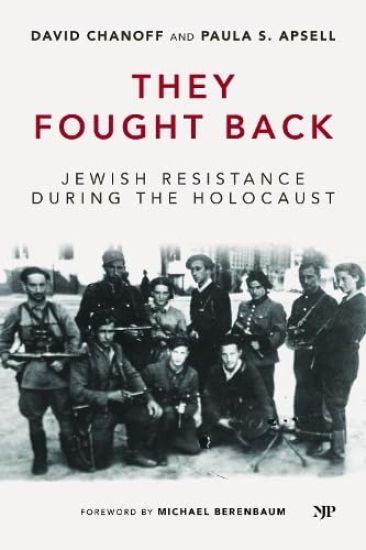
They Fought Back

They Fought Back

David Chanoff; Paula S. Apsell

UNIVERSITY OF TORONTO PRESS
2026
pokkari
They Fought Back traces the phases of Jewish resistance during the Holocaust, beginning with the cultural and spiritual resistance of Europe’s ghettoized Jews and culminating in armed resistance in ghettos, forests, and death camps. Confronted with the destruction of their previous lives, newly ghettoized Jews began reconstructing elements of the institutions that had once defined their communities: schools, orphanages, clinics, soup kitchens, libraries, orchestras, and even cabarets and theatres. Ghetto inhabitants transformed spaces of fear and sudden death into centres of intense activity, sustaining life and dignity while countering despair. This resistance was rooted in a determination to live. In its later phase of armed resistance, few fighters believed survival was possible. Many, shaped by the ethos of Jewish youth movements, focused instead on how to face death with purpose, seeking to inflict damage on their oppressors, save what lives they could, and preserve Jewish honour. The stories presented in this work explore the psychological and communal consequences of confronting not only life-threatening danger but the certainty of death, examining how individuals and communities respond in extremis.
From Crisis to Calling

From Crisis to Calling

Sasha Chanoff; David Chanoff

Readhowyouwant
2016
pokkari
Making the Hardest Decisions As a young aid worker, Sasha Chanoff was sent to evacuate a group of refugees from the violence - torn Congo. But when he arrived he discovered a second group. Evacuating them too could endanger the entire mission. But leaving them behind would mean their certain death. ves. Why is moral courage the essential factor at such times? How do we access our own rock - bottom values, and how can we take advantage of them to make the best decisions? Through Sasha's own extraordinary story and those of eight other brave leaders from business, government, nongovernment organizations, and the military, this book reveals five principles for confronting crucial decisions and inspires all of us to use our moral core as a lodestar for leadership.
In the Jaws of History

In the Jaws of History

Bui Diem; David Chanoff

Indiana University Press
1999
pokkari
" . . . the ultimate insider's account of the war from the South Vietnamese side, including the appalling story of how the American intervention actually happened." —Washington Post "This book gives Americans a rare opportunity—the chance to see the Vietnam experience through Vietnamese eyes. Few Vietnamese know their recent history as well as Bui Diem does. And none has told it better." —Ambassador William Jorden " . . . well-written and at times illuminating . . . " —Library Journal In the Jaws of History is the most important book written on the Vietnam War from the viewpoint of the South, from an author who was a senior official of the South Vietnamese government and later ambassador to the U.S.
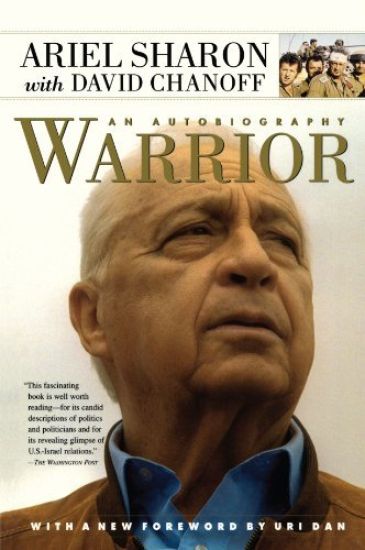
Warrior

Warrior

Ariel Sharon; David Chanoff

Simon Schuster
2001
pokkari
Israel's newest prime minister as of February 6, 2001, Ariel Sharon is a dynamic and controversial leader. A hero in Israel's wars, perhaps the most daring and successful commander in Israel's extraordinary military history, Sharon has always been a warrior, whether the enemies were hostile Arab nations, terrorists, Time magazine, or rival politicians. The public man is well known -- aggressive in battle, hard-line in politics -- but the private man has always been obscured by Sharon's dazzling career and powerful personality. In this compelling and dramatic auto-biography, the real Sharon appears for the first time: a complex man, a loving father, a figure of courage and compassion. He is a warrior who commands the respect and love of his troops, a visionary, and an uncompromising, ruthless pragmatist. Sharon tells his story with frankness, power, intelligence, and a brilliant gift for detail. Always controversial, he is as outspoken as his friends -- and enemies -- would expect him to be.
Destined to Live

Destined to Live

William Ungar; David Chanoff

University Press of America
2000
sidottu
This biography is the author's account of how he, as a young Polish soldier, suffered tremendous personal losses during the Holocaust. It tells the story of how despite losing several of his loved ones, he did not succumb to anguish and despair.