Kirjojen hintavertailu. Mukana 11 342 296 kirjaa ja 12 kauppaa.

Kirjahaku

Etsi kirjoja tekijän nimen, kirjan nimen tai ISBN:n perusteella.

8 kirjaa tekijältä David Clay Large

Where Ghosts Walked

Where Ghosts Walked

David Clay Large

WW Norton Co
1998
sidottu
Munich was the birthplace of Nazism and became the chief cultural shrine of the Third Reich. In exploring the question of why Nazism flourished in the 'Athens of the Isar', David Clay Large has written a compelling account of the cultural roots of the Nazi movement, allowing us to see that the conventional explanations for the movement's rise are not enough. Large's account begins in Munich's 'golden age', four decades before World War I, when the city's artists and writers produced some of the outstanding work of the modernist spirit. He sees a dark side to the city, a protofascist cultural heritage that would tie Adolf Hitler's movement to its soul. Large prowls his volatile world of seamy basement meeting places, finding that attacks on modernity and liberalism flourished, along with virulent anti-Semitism and German nationalism. From the violent experience of the Munich Soviet, through Hitler's failed Beer-Hall Putsch of 1923 and on to his appointment as German chancellor in 1933, Large unfurls a narrative full of insight and implication.
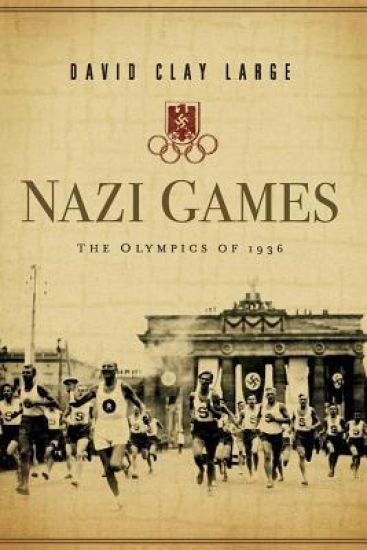
Nazi Games

Nazi Games

David Clay Large

WW Norton Co
2007
sidottu
A historical account of the 1936 Olympics offers insight into how the games represented a critical collision of athletics and politics for Nazi Germany that continues to have ramifications in the modern world, sharing details about the role of the Nazi Propaganda Ministry, international efforts to boycott the games, and the significant athletic feats performed by competitors.
Between Two Fires

Between Two Fires

David Clay Large

WW Norton Co
1991
nidottu
A collection of essays on various incidents of European history that occurred in the 1930s which build up an image of Europe on the brink. Episodes are linked to illustrate this, such as the Stavinsky affair in France, the murder of Ernst Roehm, and the civil war in the red quarters of Vienna.
Nazi Games

Nazi Games

David Clay Large

WW NORTON CO
2007
nidottu
The torch relay—that staple of Olympic pageantry—first opened the summer games in 1936 in Berlin. Proposed by the Nazi Propaganda Ministry, the relay was to carry the symbolism of a new Germany across its route through southeastern and central Europe. Soon after the Wehrmacht would march in jackboots over the same terrain. The Olympic festival was a crucial part of the Nazi regime's mobilization of power. Nazi Games offers a superb blend of history and sport. The narrative includes a stirring account of the international effort to boycott the games, derailed finally by the American Olympic Committee and the determination of its head, Avery Brundage, to participate. Nazi Games also recounts the dazzling athletic feats of these Olympics, including Jesse Owens's four gold-medal performances and the marathon victory of Korean runner Kitei Son, the Rising Sun of imperial Japan on his bib.
Munich 1972

Munich 1972

David Clay Large

Rowman Littlefield Publishers
2012
sidottu
Set against the backdrop of the turbulent late 1960s and early 1970s, this compelling book provides the first comprehensive history of the 1972 Munich Olympic Games, notorious for the abduction of Israeli Olympians by Palestinian terrorists and the hostages’ tragic deaths after a botched rescue mission by the German police. Drawing on a wealth of newly available sources from the time, eminent historian David Clay Large explores the 1972 festival in all its ramifications. He interweaves the political drama surrounding the Games with the athletic spectacle in the arena of play, itself hardly free of controversy. Writing with flair and an eye for telling detail, Large brings to life the stories of the indelible characters who epitomized the Games. Key figures range from the city itself, the visionaries who brought the Games to Munich against all odds, and of course to the athletes themselves, obscure and famous alike. With the Olympic movement in constant danger of terrorist disruption, and with the fortieth anniversary of the 1972 tragedy upon us in 2012, the Munich story is more timely than ever.
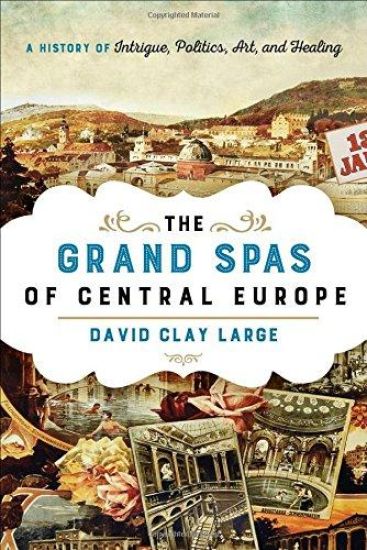
The Grand Spas of Central Europe

The Grand Spas of Central Europe

David Clay Large

Rowman Littlefield
2015
sidottu
The Grand Spas of Central Europe leads readers on an irresistible tour through the grand spa towns of Central Europe—fabled places like Baden-Baden, Bad Ems, Bad Gastein, Karlsbad, and Marienbad. Noted historian David Clay Large follows the grand spa story from Greco-Roman antiquity to the present, focusing especially on the years between the French Revolution and World War II, a period in which the major Central European Kurorte (“cure-towns”) reached their peak of influence and then slipped into decline. Written with verve and affection, the book explores the grand spa towns, which in their prime were an equivalent of today’s major medical centers, rehab retreats, golf resorts, conference complexes, fashion shows, music festivals, and sexual hideaways—all rolled into one. Conventional medicine being quite primitive through most of this era, people went to the spas in hopes of curing everything from cancer to gout. But often as not “curists” also went to play, to be entertained, and to socialize. In their heyday the grand spas were hotbeds of cultural creativity, true meccas of the arts. High-level politics was another grand spa specialty, with statesmen descending on the Kurorte to negotiate treaties, craft alliances, and plan wars. This military scheming was just one aspect of a darker side to the grand spa story, one rife with nationalistic rivalries, ethnic hatred, and racial prejudice. The grand spas, it turns out, were microcosms of changing sociopolitical realities—not at all the “timeless” oases of harmony they often claimed to be. The Grand Spas of Central Europe holds up a gilt-framed but clear-eyed mirror to the ever-changing face of European society—dimples, warts, and all.