Kirjojen hintavertailu. Mukana 11 969 814 kirjaa ja 12 kauppaa.

Kirjahaku

Etsi kirjoja tekijän nimen, kirjan nimen tai ISBN:n perusteella.

12 kirjaa tekijältä David Colander

Economics

Economics

David Colander

McGraw-Hill Professional
2013
sidottu
The integrated solutions for Colander's Economics 9e have been specifically designed to help today's students succeed in the principles of economics course. Colander's trademark colloquial approach focuses on modern economics, institutions, history, and modeling, and is organized around learning objectives to make it easier for students to understand the material and for instructors to build assignments within Connect. McGraw-Hill's adaptive learning component, LearnSmart, provides assignable modules that help students master core topics. Significant improvements in pedagogy such as reworked end-of-chapter problems, seamless integration within the Connect eBook, and instant feedback on assignments will engage students in the ninth edition like never before and instill the "economic sensibility" necessary to apply economic concepts to the real world.Connect is the only integrated learning system that empowers students by continuously adapting to deliver precisely what they need, when they need it, and how they need it, so that your class time is more engaging and effective.
The Making of an Economist, Redux

The Making of an Economist, Redux

David Colander

Princeton University Press
2008
pokkari
Economists seem to be everywhere in the media these days. But what exactly do today's economists do? What and how are they taught? Updating David Colander and Arjo Klamer's classic The Making of an Economist, this book shows what is happening in elite U.S. economics Ph.D. programs. By examining these programs, Colander gives a view of cutting-edge economics--and a glimpse at its likely future. And by comparing economics education today to the findings of the original book, the new book shows how much--and in what ways--the field has changed over the past two decades. The original book led to a reexamination of graduate education by the profession, and has been essential reading for prospective graduate students. Like its predecessor, The Making of an Economist, Redux is likely to provoke discussion within economics and beyond. The book includes new interviews with students at Harvard, Princeton, Stanford, MIT, Chicago, and Columbia. In these conversations, the students--the next generation of elite economists--colorfully and frankly describe what they think of their field and what graduate economics education is really like. The book concludes with reflections by Colander, Klamer, and Robert Solow. This inside look at the making of economists will interest anyone who wants to better understand the economics profession. An indispensible tool for anyone thinking about graduate education in economics, this edition is complete with colorful interviews and predictions about the future of cutting-edge economics.
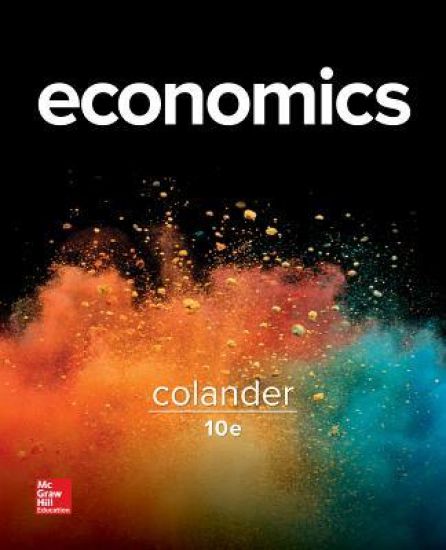
Economics

Economics

David Colander

McGraw-Hill Education
2016
sidottu
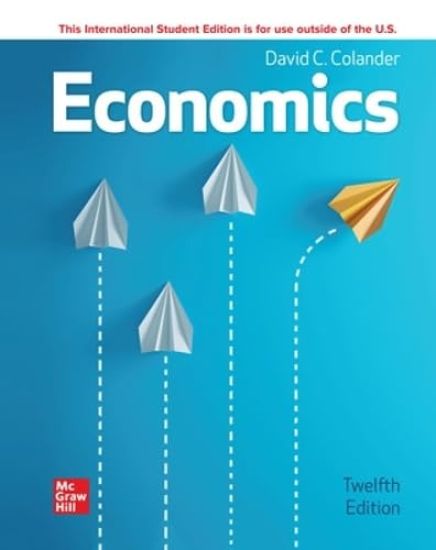
The integrated solutions for Colander’s Economics 10e have been specifically designed to help today’s students succeed in the principles of economics course. Colander’s trademark colloquial approach focuses on modern economics, institutions, history, and modeling, and is organized around learning objectives to make it easier for students to understand the material and for instructors to build assignments within Connect. McGraw-Hill’s adaptive learning component, LearnSmart, provides assignable modules that help students master core topics. Significant improvements in pedagogy such as reworked end-of-chapter problems, seamless integration within the Connect eBook, and instant feedback on assignments will engage students in the tenth edition like never before and instill the “economic sensibility” necessary to apply economic concepts to the real world.Connect is the only integrated learning system that empowers students by continuously adapting to deliver precisely what they need, when they need it, and how they need it, so that your class time is more engaging and effective.
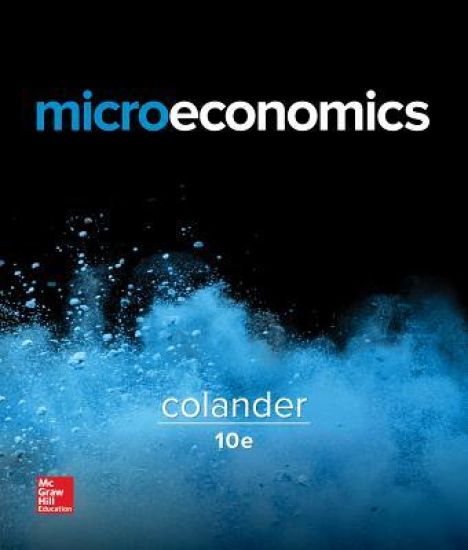
Microeconomics

Microeconomics

David Colander

McGraw-Hill Education
2016
nidottu
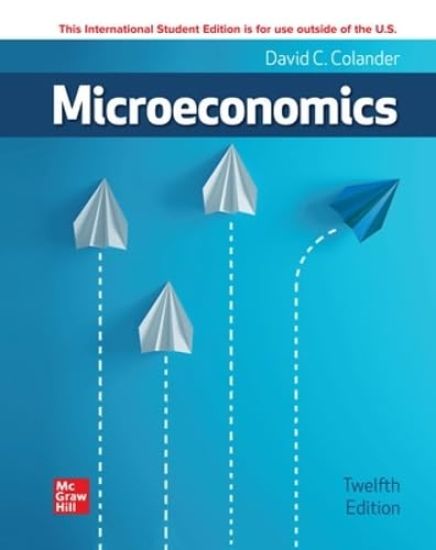
The integrated solutions for Colander ' Microeconomics 10e have been specifically designed to help today's students succeed in the principles of economics course. Colander's trademark colloquial approach focuses on modern economics, institutions, history, and modeling,and is organized around learning objectives to make it easier for students to understand the material and for instructors to build assignments within Connect. McGraw-Hill's adaptive learning component,LearnSmart, provides assignable modules that help students master core topics. Significant improvements in pedagogy such as reworked end-of-chapter problems, seamless integration within the Connect eBook,and instant feedback on assignments will engage students in the ninth edition like never before and instill the “economic sensibility” necessary to apply economic concepts to the real world.Connect is the only integrated learning system that empowers students by continuously adapting to deliver precisely what they need, when they need it, and how they need it, so that your class time is more engaging and effective.
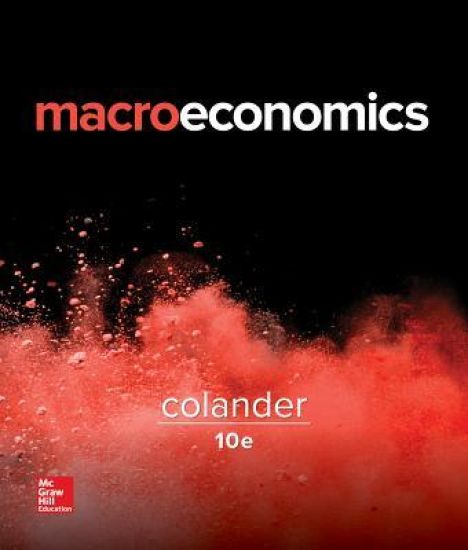
Macroeconomics

Macroeconomics

David Colander

McGraw-Hill Education
2016
nidottu
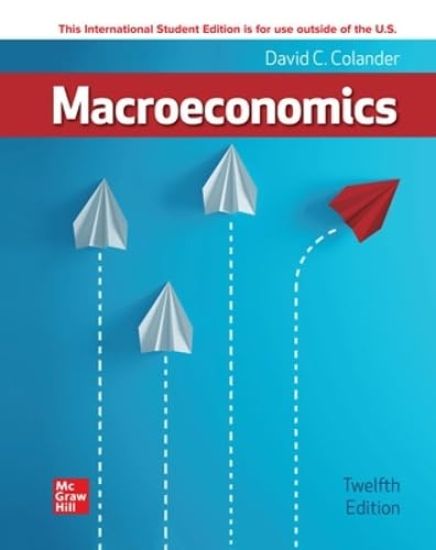
The integrated solutions for Colander's Macroeconomics 10e have been specifically designed to help today's students succeed in the principles of economics course. Colander's trademark colloquial approach focuses on modern economics, institutions, history, and modeling, and is organized around learning objectives to make it easier for students to understand the material. Significant improvements in pedagogy such as reworked end-of-chapter problems and instant feedback on assignments will engage students in the ninth edition like never before and instill the “economic sensibility” necessary to apply economic concepts to the real world.Connect is the only integrated learning system that empowers students by continuously adapting to deliver precisely what they need, when they need it, and how they need it, so that your class time is more engaging and effective.
The Lost Art of Economics

The Lost Art of Economics

David Colander

Edward Elgar Publishing Ltd
2001
sidottu
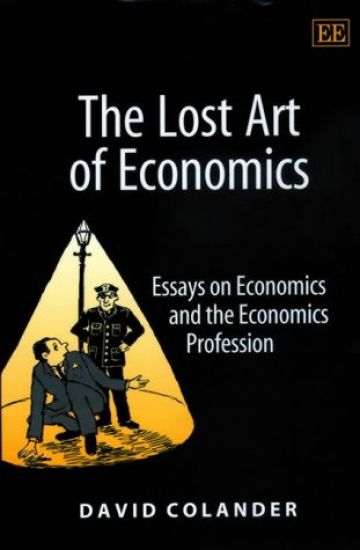
Economics is the study of a complex system in which simple laws are not always forthcoming. That complexity mandates three branches of the profession: positive, normative and the art of economics. The economics profession has focused on one of these - positive economics, and in doing so has lost the art of economics. In a series of provocative essays the author argues that most of what economists do is applied policy, which belongs in the art of economics, not in normative or positive economics. The essays explore the forces in academic institutions that have led economics to its current position, as well as the implications of the lost art for the economics profession and its future. In the end, the author is positive about the future of the profession, and predicts that in 2050 it will no longer be as Solow suggested it currently is - 'the overeducated in pursuit of the unknowable'. Instead it will be the 'appropriately educated in search of the knowable'.The essays are written in a highly accessible style, and can be enjoyed by most non-economists, as well as by those economists who don't take themselves too seriously. It can be usefully read by all economists, even those who do take themselves too seriously.
The Lost Art of Economics

The Lost Art of Economics

David Colander

Edward Elgar Publishing Ltd
2003
nidottu
Economics is the study of a complex system in which simple laws are not always forthcoming. That complexity mandates three branches of the profession: positive, normative and the art of economics. The economics profession has focused on one of these - positive economics, and in doing so has lost the art of economics. In a series of provocative essays the author argues that most of what economists do is applied policy, which belongs in the art of economics, not in normative or positive economics. The essays explore the forces in academic institutions that have led economics to its current position, as well as the implications of the lost art for the economics profession and its future. In the end, the author is positive about the future of the profession, and predicts that in 2050 it will no longer be as Solow suggested it currently is - 'the overeducated in pursuit of the unknowable'. Instead it will be the 'appropriately educated in search of the knowable'.The essays are written in a highly accessible style, and can be enjoyed by most non-economists, as well as by those economists who don't take themselves too seriously. It can be usefully read by all economists, even those who do take themselves too seriously.
The Making of a European Economist

The Making of a European Economist

David Colander

Edward Elgar Publishing Ltd
2009
sidottu
David Colander's highly original and thought provoking book considers ongoing changes in graduate European economics education. Following up on his earlier classic studies of US graduate economic education, he studies the 'economist production function' in which universities take student 'raw material' and transform it into economists, In doing so he provides insight into economists and economics.He argues that until recently Europe had a different 'economist production function' than did the US; thus European economists were different from their US counterparts. However, this is now changing, and Colander suggests that the changes are not necessarily for the best. Specifically, he suggests that in their attempt to catch up with US programs, European economics is undermining some of their strengths-strengths that could allow them to leapfrog US economics in the future, and be the center of 21st century economics. Student views on the ongoing changes and ensuing difficulties are reported via surveys of, and interviews with, students in global European graduate programs. The conclusion draws broad policy implications from the study, and suggests a radically different market approach to funding economic research that Colander argues will help avoid the pitfalls into which European economics is now falling. This unique and path-breaking book will prove essential reading for economists, as well as academics, students and researchers with a special interest in economics education, the methodology of economics, or the history of economic thought.
The Making of a European Economist

The Making of a European Economist

David Colander

Edward Elgar Publishing Ltd
2009
nidottu
David Colander's highly original and thought provoking book considers ongoing changes in graduate European economics education. Following up on his earlier classic studies of US graduate economic education, he studies the 'economist production function' in which universities take student 'raw material' and transform it into economists, In doing so he provides insight into economists and economics.He argues that until recently Europe had a different 'economist production function' than did the US; thus European economists were different from their US counterparts. However, this is now changing, and Colander suggests that the changes are not necessarily for the best. Specifically, he suggests that in their attempt to catch up with US programs, European economics is undermining some of their strengths-strengths that could allow them to leapfrog US economics in the future, and be the center of 21st century economics. Student views on the ongoing changes and ensuing difficulties are reported via surveys of, and interviews with, students in global European graduate programs. The conclusion draws broad policy implications from the study, and suggests a radically different market approach to funding economic research that Colander argues will help avoid the pitfalls into which European economics is now falling. This unique and path-breaking book will prove essential reading for economists, as well as academics, students and researchers with a special interest in economics education, the methodology of economics, or the history of economic thought.