Kirjojen hintavertailu. Mukana 11 699 587 kirjaa ja 12 kauppaa.

Kirjahaku

Etsi kirjoja tekijän nimen, kirjan nimen tai ISBN:n perusteella.

7 kirjaa tekijältä David Cowart

The Tribe of Pyn

The Tribe of Pyn

David Cowart

The University of Michigan Press
2015
nidottu
In The Tribe of Pyn, Cowart offers illuminating readings of several important novelists now at the height of their powers, whose work has received fairly limited scholarly attention thus far. Jonathan Franzen, Alice Walker, David Foster Wallace, Gloria Naylor, Richard Powers, and a raft of others are examined with lapidary care. Wrestling with the challenges inherent to distinguishing generational character (especially in the postmodern context, which is often marked by its disavowal of ideas of origin, etc.), Cowart teases out interactions and entanglements that help illuminate the work of the younger writers at the center of this study and also that of the trailblazers on its ragged frontiers. By comparing literary figures born in the 1940s, 1950s, 1960s, and later with those born in the 1920s and 1930s, Cowart seeks to map the changing terrain of contemporary letters. Hardly epigones, he argues, the younger writers add fresh inflections to the grammar of literary postmodernism. Younger writers can continue to “make it new,” Cowart establishes, without needing to dismantle the aesthetic they have inherited from a parental generation.
The Tribe of Pyn

The Tribe of Pyn

David Cowart

The University of Michigan Press
2015
sidottu
In The Tribe of Pyn, Cowart offers illuminating readings of several important novelists now at the height of their powers, whose work has received fairly limited scholarly attention thus far. Jonathan Franzen, Alice Walker, David Foster Wallace, Gloria Naylor, Richard Powers, and a raft of others are examined with lapidary care. Wrestling with the challenges inherent to distinguishing generational character (especially in the postmodern context, which is often marked by its disavowal of ideas of origin, etc.), Cowart teases out interactions and entanglements that help illuminate the work of the younger writers at the center of this study and also that of the trailblazers on its ragged frontiers. By comparing literary figures born in the 1940s, 1950s, 1960s, and later with those born in the 1920s and 1930s, Cowart seeks to map the changing terrain of contemporary letters. Hardly epigones, he argues, the younger writers add fresh inflections to the grammar of literary postmodernism. Younger writers can continue to “make it new,” Cowart establishes, without needing to dismantle the aesthetic they have inherited from a parental generation.
Thomas Pynchon: The Art of Allusion

Thomas Pynchon: The Art of Allusion

David Cowart

SOUTHERN ILLINOIS UNIVERSITY PRESS
1980
sidottu
This fresh examination of Pynchon's use of painting, film, music, and literature shows that his true art lies in humanis­tic allusions that stress the possibility of spiritually separating oneself from the modern wasteland.Cowart disagrees with critics who see Pynchon as a scientist writing about entropy, although Pynchon does illus­trate the nihilistic world for which he is famous in allusions to painting and film, both of which mask a Void. But more important, these allusions call into question what is real and what is not. Through musical and literary allu­sions Pynchon suggests the speculative world, the world of unrealized possibil­ity. Music hints at the dimensions of ex­perience people miss because of the nar­row range of experiences to which they are attuned. Literary allusions support and extend the almost mystical sense created by musical allusions, thus sug­gesting that in Pynchon's view, human consciousness need not be trapped by entropic drift.
Don DeLillo

Don DeLillo

David Cowart

University of Georgia Press
2003
pokkari
Don DeLillo, author of twelve novels and winner of the National Book Award, the PEN/Faulkner Award, the William Dean Howells Medal, and the Jerusalem Prize, has begun to rival Thomas Pynchon as the definitive postmodern novelist. Always thought-provoking and occasionally controversial, DeLillo has become the voice of the bimillennial moment.Charting DeLillo's emergence as a contemporary novelist of major stature, David Cowart discusses each of DeLillo's twelve novels, including his most recent work, The Body Artist (2001). Rejecting the idea that DeLillo lacks affinities across the cultural spectrum, Cowart argues that DeLillo's work invites comparison with that of wide range of antecedents, including Dunbar, Whitman, Wittgenstein, Heidegger, Freud, Lacan, Derrida, Hemingway, Joyce, Rilke, and Eliot. At the same time, Cowart explores the ways in which DeLillo's art anticipates, parallels, and contests ideas that have become the common currency of poststructuralist theory. The major site of DeLillo's engagement with postmodernism, Cowart argues, is language, which DeLillo represents as more mysterious—numinous even—than current theory allows. For DeLillo, language remains what Cowart calls "the ground of all making."Don DeLillo: The Physics of Language is a provocative investigation of the most compelling issues of contemporary fiction.
Thomas Pynchon and the Dark Passages of History

Thomas Pynchon and the Dark Passages of History

David Cowart

University of Georgia Press
2012
sidottu
Thomas Pynchon helped pioneer the postmodern aesthetic. His formidable body of work challenges readers to think and perceive in ways that anticipate—with humor, insight, and cogency—much that has emerged in the field of literary theory over the past few decades. For David Cowart, Pynchon’s most profound teachings are about history—history as myth, as rhetorical construct, as false consciousness, as prologue, as mirror, and as seedbed of national and literary identities.In one encyclopedic novel after another, Pynchon has reconceptualized historical periods that he sees as culturally definitive. Examining Pynchon’s entire body of work, Cowart offers an engaging, metahistorical reading of V.; an exhaustive analysis of the influence of German culture in Pynchon’s early work, with particular emphasis on Gravity’s Rainbow; and a critical spectroscopy of those dark stars, Mason & Dixon and Against the Day. He defends the California fictions The Crying of Lot 49, Vineland, and Inherent Vice as roman fleuve chronicling the decade in which the American tapestry began to unravel. Cowart ends his study by considering Pynchon’s place in literary history.Cowart argues that Pynchon has always understood the facticity of historical narrative and the historicity of storytelling—not to mention the relations of both story and history to myth. Thomas Pynchon and the Dark Passages of History offers a deft analysis of the problems of history as engaged by our greatest living novelist and argues for the continuity of Pynchon’s historical vision.
Thomas Pynchon and the Dark Passages of History

Thomas Pynchon and the Dark Passages of History

David Cowart

University of Georgia Press
2012
pokkari
Thomas Pynchon helped pioneer the postmodern aesthetic. His formidable body of work challenges readers to think and perceive in ways that anticipate—with humor, insight, and cogency—much that has emerged in the field of literary theory over the past few decades. For David Cowart, Pynchon’s most profound teachings are about history—history as myth, as rhetorical construct, as false consciousness, as prologue, as mirror, and as seedbed of national and literary identities.In one encyclopedic novel after another, Pynchon has reconceptualized historical periods that he sees as culturally definitive. Examining Pynchon’s entire body of work, Cowart offers an engaging, metahistorical reading of V.; an exhaustive analysis of the influence of German culture in Pynchon’s early work, with particular emphasis on Gravity’s Rainbow; and a critical spectroscopy of those dark stars, Mason & Dixon and Against the Day. He defends the California fictions The Crying of Lot 49, Vineland, and Inherent Vice as roman fleuve chronicling the decade in which the American tapestry began to unravel. Cowart ends his study by considering Pynchon’s place in literary history.Cowart argues that Pynchon has always understood the facticity of historical narrative and the historicity of storytelling—not to mention the relations of both story and history to myth. Thomas Pynchon and the Dark Passages of History offers a deft analysis of the problems of history as engaged by our greatest living novelist and argues for the continuity of Pynchon’s historical vision.
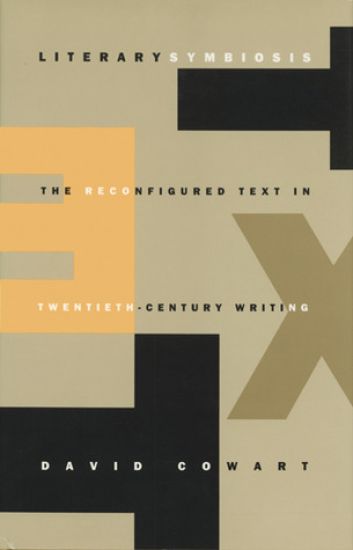
Literary Symbiosis

Literary Symbiosis

David Cowart

University of Georgia Press
2012
pokkari
"It is only the unimaginative who ever invents," Oscar Wilde once remarked. "The true artist is known by the use he makes of what he annexes, and he annexes everything." Converying a similar awareness, James Joyce observes in Finnegan's Wake that storytelling is in reality "stolen-telling," that art always involves some sort of "theft" or borrowing.Usually literary borrowings are so integrated into the new work as to be disguised; however, according to David Cowart, recent decades have seen an increasing number of texts that attach themselves to their sources in seemingly parasitic—but, more accurately, symbiotic—dependence. It is this kind of mutuality that Cowart examines in his wide-ranging and richly provocative study Literary Symbiosis. Cowart considers, for instance, what happens when Tom Stoppard, in Rosencrantz and Guildenstern Are Dead, rewrites Hamlet from the point of view of its two most insignificant characters, or when Jean Rhys, in Wide Sargasso Sea, imagines the early life of Bertha Rochester, the mad-woman in the attic in Jane Eyre.In such works of literary symbiosis, Cowart notes, intertextuality surrenders its usual veil of near invisibility to become concrete and explicit—a phenomenon that Cowart sees as part of the postmodern tendency toward self-consciousness and self-reflexivity. He recognizes that literary symbiosis has some close cousins and so limits his compass to works that are genuine reinterpretations, writings that cast a new light on earlier works through "some tangible measure of formal or thematic evolution, whether on the part of the guest alone or the host and guest together." Proceeding from this intriguing premise, he offers detailed readings of texts that range from Auden's "The Sea and the Mirror," based on The Tempest, to Valerie Martin's reworking of The Strange Case of Dr. Jekyll and Mr. Hyde as Mary Reilly, to various fictions based on Robinson Crusoe. He also considers, in Nabokov's Pale Fire, a compelling example of text and parasite-text within a single work.Drawing on and responding to the ideas of disparate thinkers and critics—among them Freud, Harold Bloom, Jacques Lacan, Jacques Derrida, Hillis Miller, and Henry Louis Gates Jr.—Cowart discusses literary symbiosis as Oedipal drama, as reading and misreading, as deconstruction, as Signifying, and as epistemic dialogue. Although his main examples come from the contemporary period, he refers to works dating as far back as the classical era, works representing a range of genres (drama, fiction, poetry, opera, and film). The study of literary symbiosis, Cowart contends, can reveal much about the dynamics of literary renewal in every age. If all literature redeems the familiar, he suggests, literary symbiosis redeems the familiar in literature itself.