Kirjojen hintavertailu. Mukana 11 627 064 kirjaa ja 12 kauppaa.

Kirjahaku

Etsi kirjoja tekijän nimen, kirjan nimen tai ISBN:n perusteella.

22 kirjaa tekijältä David Cressy

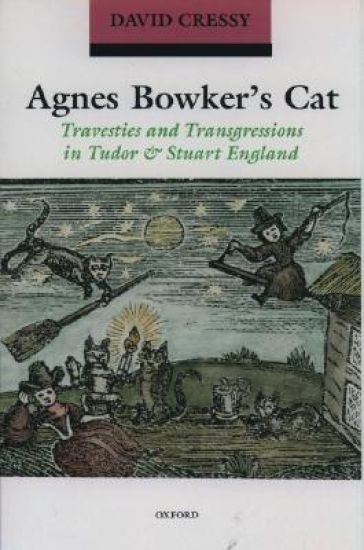
Agnes Bowker's Cat

Agnes Bowker's Cat

David Cressy

Oxford University Press
2001
nidottu
The author reveals how, in Tudor and Stuart times, a series of troubling and unorthodox happenings - bestiality and monstrous births, nakedness and cross-dressing, excommunication and irregular burial, iconoclasm and vandalism - disturbed the margins and set the authorities on edge.
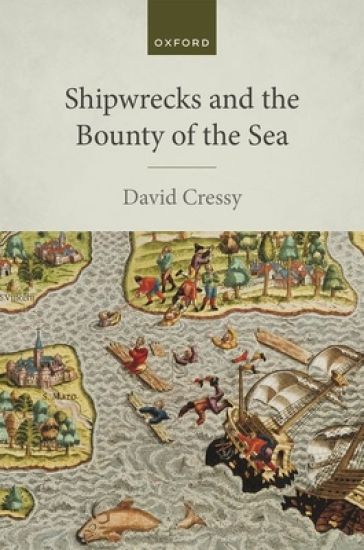
Shipwrecks and the Bounty of the Sea

Shipwrecks and the Bounty of the Sea

David Cressy

Oxford University Press
2022
sidottu
Shipwrecks and the Bounty of the Sea is a work of social history examining community relationships, law, and seafaring over the long early modern period. It explores the politics of the coastline, the economy of scavenging, and the law of 'wreck of the sea' from the beginning of the reign of Elizabeth I to the end of the reign of George II. England's coastlines were heavily trafficked by naval and commercial shipping, but an unfortunate percentage was cast away or lost. Shipwrecks were disasters for merchants and mariners, but opportunities for shore dwellers. As the proverb said, it was an ill wind that blew nobody any good. Lords of manors, local officials, officers of the Admiralty, and coastal commoners competed for maritime cargoes and the windfall of wreckage, which they regarded as providential godsends or entitlements by right. A varied haul of commodities, wines, furnishings, and bullion came ashore, much of it claimed by the crown. The people engaged in salvaging these wrecks came to be called 'wreckers', and gained a reputation as violent and barbarous plunderers. Close attention to statements of witnesses and reports of survivors shows this image to be largely undeserved. Dramatic evidence from previously unexplored manuscript sources reveals coastal communities in action, collaborating as well as competing, as they harvested the bounty of the sea.
Birth, Marriage, and Death

Birth, Marriage, and Death

David Cressy

Oxford University Press
1997
sidottu
From childbirth and baptism through to courtship, weddings, and funerals, every stage in the life-cycle of Tudor and Stuart England was accompanied by ritual. Even under the protestantism of the reformed Church, the spiritual and social dramas of birth, marriage, and death were graced with elaborate ceremony. Powerful and controversial protocols were in operation, shaped and altered by the influences of the Reformation, the Revolution, and the Restoration. Each of the major rituals was potentially an arena for argument, ambiguity, and dissent. Ideally, as classic rites of passage, these ceremonies worked to bring people together. But they also set up traps into which people could stumble, and tests which not everybody could pass. In practice, ritual performance revealed frictions and fractures that everyday local discourse attempted to hide or to heal. Using fascinating first-hand evidence, David Cressy shows how the making and remaking of ritual formed part of a continuing debate, sometimes strained and occasionally acrimonious, which exposed the raw nerves of society in the midst of great historical events. In doing so, he vividly brings to life the common experiences of living and dying in Tudor and Stuart England.
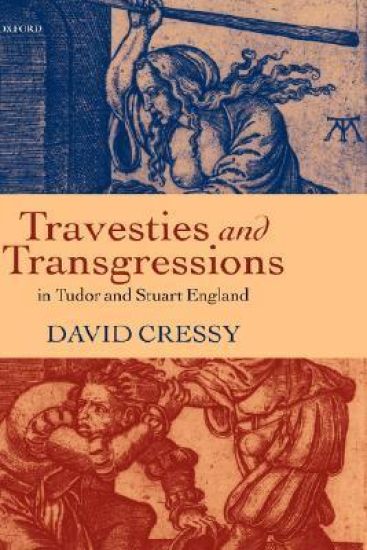
Travesties and Transgressions in Tudor and Stuart England
In Travesties and Transgressions, David Cressy examines how the orderly, Protestant, and hierarchical society of post-Reformation England coped with the cultural challenges posed by beliefs and events outside the social norm. He uses a series of linked stories and close readings of local texts and narratives to investigate unorthodox happenings such as bestiality and monstrous births, seduction and abortion, excommunication and irregular burial, nakedness and cross-dressing. Each story, and the reaction it generated, exposes the strains and stresses of its local time and circumstances. The reigns of Elizabeth, James, and Charles I were witness to endless religious disputes, tussles for power within the aristocracy, and arguments galore about the behaviour and beliefs of common people. Questions raised by 'unnatural' episodes were debated throughout society at local and national levels, and engaged the attention of the magistrates, the bishops, the crown, and the court. The resolution of such questions was not taken lightly in a world in which God and the devil still fought for people's souls.
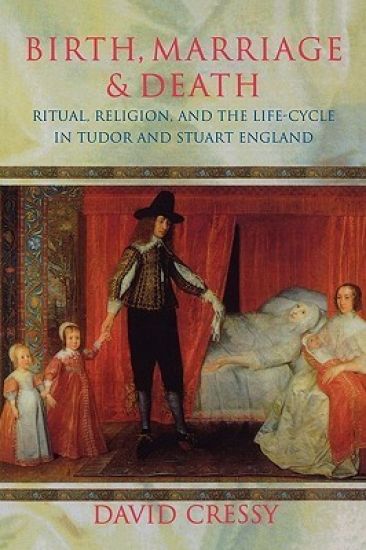
Birth, Marriage, and Death

Birth, Marriage, and Death

David Cressy

Oxford University Press
1999
nidottu
A vivid picture of the classic rites of passage in Tudor and Stuart England. From childbirth and baptism through to courtship, weddings, and funerals, every stage in the life-cycle of Tudor and Stuart England was accompanied by ritual. Even under the protestantism of the reformed Church, the spiritual and social dramas of birth, marriage, and death were graced with elaborate ceremony. Powerful and controversial protocols were in operation, shaped and altered by the influences of the Reformation, the Revolution, and the Restoration. Using fascinating first-hand evidence, David Cressy shows how the making and the re-making of ritual formed part of a continuing debate, sometimes strained and occasionally acrimonious, which exposed the raw nerves of society in the midst of great historical events. In doing so, he vividly brings to life the common experiences of living and dying in Tudor and Stuart England. `...a massive compendium of information...its material is so extensive and often so novel in itself that it opens a door on a lost world of experience, dispelling popular myths and removing areas of scholarly ignorance.' Times Literary Supplement, June 1997 `David Cressy's detailed study examines how each elaborate rite of passage was shaped and altered by the wider events of the Reformation, the Commonwealth, and the Restoration.' History Today, April 1997 `...detailed and absorbing book.' The Observer, May 1997
Charles I and the People of England

Charles I and the People of England

David Cressy

Oxford University Press
2015
sidottu
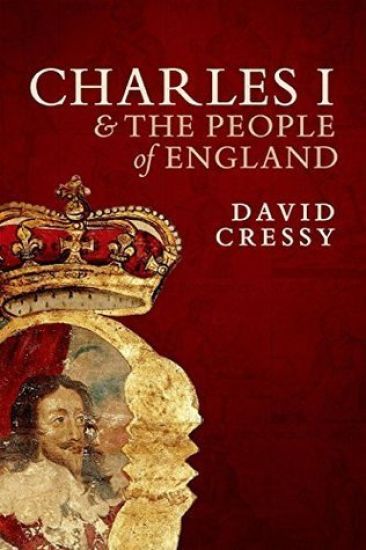
The story of the reign of Charles I - through the lives of his people. Prize-winning historian David Cressy mines the widest range of archival and printed sources, including ballads, sermons, speeches, letters, diaries, petitions, proclamations, and the proceedings of secular and ecclesiastical courts, to explore the aspirations and expectations not only of the king and his followers, but also the unruly energies of many of his subjects, showing how royal authority was constituted, in peace and in war - and how it began to fall apart. A blend of micro-historical analysis and constitutional theory, parish politics and ecclesiology, military, cultural, and social history, Charles I and the People of England is the first major attempt to connect the political, constitutional, and religious history of this crucial period in English history with the experience and aspirations of the rest of the population. From the king and his ministers to the everyday dealings and opinions of parishioners, petitioners, and taxpayers, David Cressy re-creates the broadest possible panorama of early Stuart England, as it slipped from complacency to revolution.
Charles I and the People of England

Charles I and the People of England

David Cressy

Oxford University Press
2018
nidottu
The story of the reign of Charles I -- told through the lives of his people. Prize-winning historian David Cressy mines the widest range of archival and printed sources, including ballads, sermons, speeches, letters, diaries, petitions, proclamations, and the proceedings of secular and ecclesiastical courts, to explore the aspirations and expectations not only of the king and his followers, but also the unruly energies of many of his subjects, showing how royal authority was constituted, in peace and in war -- and how it began to fall apart. A blend of micro-historical analysis and constitutional theory, parish politics and ecclesiology, military, cultural, and social history, Charles I and the People of England is the first major attempt to connect the political, constitutional, and religious history of this crucial period in English history with the experience and aspirations of the rest of the population. From the king and his ministers to the everyday dealings and opinions of parishioners, petitioners, and taxpayers, David Cressy re-creates the broadest possible panorama of early Stuart England, as it slipped from complacency to revolution.
Gypsies

Gypsies

David Cressy

Oxford University Press
2018
sidottu
Gypsies, Egyptians, Romanies, and -more recently-Travellers. Who are this marginal and mysterious people who first arrived in England in early Tudor times? Are tales of their distant origins on the Indian subcontinent true, or just another of the many myths and stories that have accreted around them over time? In fact, can they even be regarded as a single people or ethnicity at all, or are they little more than a useful concept? Gypsies have frequently been vilified, and not much less frequently romanticized, by the settled population over the centuries, but social historian David Cressy now attempts to disentangle the myth from the reality of Gypsy life over more than half a millennium of English history. In this, the first comprehensive historical study of the doings and dealings of Gypsies in England, from their first appearance in early Tudor times to the present, he draws on original archival research, and a wide range of reading, to trace the many moments when Gypsy lives became entangled with those of villagers and townsfolk, religious and secular authorities, and social and moral reformers. Crucially, it is a story not just of the Gypsy community and its peculiarities, but also of England's treatment of that community, from draconian Elizabethan statutes, through various degrees of toleration and fascination, right up to the tabloid newspaper campaigns against Gypsy and Traveller encampments of more recent years.
Gypsies

Gypsies

David Cressy

Oxford University Press
2020
nidottu
Gypsies, Egyptians, Romanies, and--more recently--Travellers. Who are these marginal and mysterious people who first arrived in England in early Tudor times? Are claims of their distant origins on the Indian subcontinent true, or just another of the many myths and stories that have accreted around them over time? Can they even be regarded as a single people or ethnicity at all? Gypsies have frequently been vilified, and not much less frequently romanticized, by the settled population over the centuries. Social historian David Cressy now attempts to disentangle the myth from the reality of Gypsy life over more than half a millennium of English history. In this, the first comprehensive historical study of the doings and dealings of Gypsies in England, he draws on original archival research, and a wide range of reading, to trace the many moments when Gypsy lives became entangled with those of villagers and townsfolk, religious and secular authorities, and social and moral reformers. Crucially, it is a story not just of the Gypsy community and its peculiarities, but also of England's treatment of that community, from draconian Elizabethan statutes, through various degrees of toleration and fascination, right up to the tabloid newspaper campaigns against Gypsy and Traveller encampments of more recent years.
England's Islands in a Sea of Troubles

England's Islands in a Sea of Troubles

David Cressy

Oxford University Press
2020
sidottu
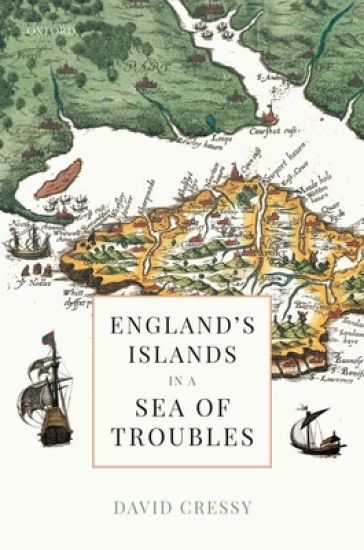
England's Islands in a Sea of Troubles examines the jurisdictional disputes and cultural complexities in England's relationship with its island fringe from Tudor times to the eighteenth century, and traces island privileges and anomalies to the present. It tells a dramatic story of sieges and battles, pirates and shipwrecks, prisoners and prophets, as kings and commoners negotiated the political, military, religious, and administrative demands of the early modern state. The Channel Islands, the Isle of Wight, the Isles of Scilly, the Isle of Man, Lundy, Holy Island and others emerge as important offshore outposts that long remained strange, separate, and perversely independent. England's islands were difficult to govern, and were prone to neglect, yet their strategic value far outweighed their size. Though vulnerable to foreign threats, their harbours and castles served as forward bases of English power. In civil war they were divided and contested, fought over and occupied. Jersey and the Isles of Scilly served as refuges for royalists on the run. Charles I was held on the Isle of Wight. External authority was sometimes light of touch, as English governments used the islands as fortresses, commercial assets, and political prisons. London was often puzzled by the linguistic differences, tangled histories, and special claims of island communities. Though increasingly integrated within the realm, the islands maintained challenging peculiarities and distinctive characteristics. Drawing on a wide range of sources, and the insights of maritime, military, and legal scholarship, this is an original contribution to social, cultural, and constitutional history.
England on Edge

England on Edge

David Cressy

Oxford University Press
2007
nidottu
England on Edge deals with the collapse of the government of Charles I, the disintegration of the Church of England, and the accompanying cultural panic that led to civil war. Focused on the years 1640 to 1642, it examines stresses and fractures in social, political, and religious culture, and the emergence of an unrestrained popular press. Hundreds of people not normally seen in historical surveys make appearances here, in a drama much larger than the struggle of king and parliament. Historians commonly assert that royalists and parliamentarians parted company over issues of principle, constitutional scruples, and religious belief, but a more complex picture emerges from the environment of anxiety, mistrust, and fear. Rather than seeing England's revolutionary transformation as a product of the civil war, as has been common among historians, David Cressy finds the world turned upside down in the two years preceding the outbreak of hostilities. The humbling of Charles I, the erosion of the royal prerogative, and the rise of an executive parliament were central features of the revolutionary drama of 1640-1642. The collapse of the Laudian ascendancy, the splintering of the established church, the rise of radical sectarianism, and the emergence of an Anglican resistance all took place in these two years before the beginnings of bloodshed. The world of public discourse became rapidly energized and expanded, in counterpoint with an exuberantly unfettered press and a deeply traumatized state. These linked processes, and the disruptive contradictions within them, made this a time of shaking and of prayer. England's elite encountered multiple transgressions, some more imagined than real, involving lay encroachments on the domain of the clergy, lowly intrusions into matters of state, the city clashing with the court, the street with institutions of government, and women undermining the territories of men. The simultaneity, concatenation, and cumulative, compounding effect of these disturbances added to their ferocious intensity, and helped to bring down England's ancien regime. This was the revolution before the Revolution, the revolution that led to civil war.
England on Edge

England on Edge

David Cressy

Oxford University Press
2006
sidottu
England on Edge deals with the collapse of the government of Charles I, the disintegration of the Church of England, and the accompanying cultural panic that led to civil war. Focused on the years 1640 to 1642, it examines stresses and fractures in social, political, and religious culture, and the emergence of an unrestrained popular press. Hundreds of people not normally seen in historical surveys make appearances here, in a drama much larger than the struggle of king and parliament. Historians commonly assert that royalists and parliamentarians parted company over issues of principle, constitutional scruples, and religious belief, but a more complex picture emerges from the environment of anxiety, mistrust, and fear. Rather than seeing England's revolutionary transformation as a product of the civil war, as has been common among historians, David Cressy finds the world turned upside down in the two years preceding the outbreak of hostilities. The humbling of Charles I, the erosion of the royal prerogative, and the rise of an executive parliament were central features of the revolutionary drama of 1640-1642. The collapse of the Laudian ascendancy, the splintering of the established church, the rise of radical sectarianism, and the emergence of an Anglican resistance all took place in these two years before the beginnings of bloodshed. The world of public discourse became rapidly energized and expanded, in counterpoint with an exuberantly unfettered press and a deeply traumatized state. These linked processes, and the disruptive contradictions within them, made this a time of shaking and of prayer. England's elite encountered multiple transgressions, some more imagined than real, involving lay encroachments on the domain of the clergy, lowly intrusions into matters of state, the city clashing with the court, the street with institutions of government, and women undermining the territories of men. The simultaneity, concatenation, and cumulative, compounding effect of these disturbances added to their ferocious intensity, and helped to bring down England's ancien regime. This was the revolution before the Revolution, the revolution that led to civil war.
Dangerous Talk

Dangerous Talk

David Cressy

Oxford University Press
2010
sidottu
Dangerous Talk examines the 'lewd, ungracious, detestable, opprobrious, and rebellious-sounding' speech of ordinary men and women who spoke scornfully of kings and queens. Eavesdropping on lost conversations, it reveals the expressions that got people into trouble, and follows the fate of some of the offenders. Introducing stories and characters previously unknown to history, David Cressy explores the contested zones where private words had public consequence. Though 'words were but wind', as the proverb had it, malicious tongues caused social damage, seditious words challenged political authority, and treasonous speech imperilled the crown. Royal regimes from the house of Plantagenet to the house of Hanover coped variously with 'crimes of the tongue' and found ways to monitor talk they deemed dangerous. Their response involved policing and surveillance, judicial intervention, political propaganda, and the crafting of new law. In early Tudor times to speak ill of the monarch could risk execution. By the end of the Stuart era similar words could be dismissed with a shrug. This book traces the development of free speech across five centuries of popular political culture, and shows how scandalous, seditious and treasonable talk finally gained protection as 'the birthright of an Englishman'. The lively and accessible work of a prize-winning social historian, it offers fresh insight into pre-modern society, the politics of language, and the social impact of the law.
Dangerous Talk

Dangerous Talk

David Cressy

Oxford University Press
2012
nidottu
Dangerous Talk examines the 'lewd, ungracious, detestable, opprobrious, and rebellious-sounding' speech of ordinary men and women who spoke scornfully of kings and queens. Eavesdropping on lost conversations, it reveals the expressions that got people into trouble, and follows the fate of some of the offenders. Introducing stories and characters previously unknown to history, David Cressy explores the contested zones where private words had public consequence. Though 'words were but wind', as the proverb had it, malicious tongues caused social damage, seditious words challenged political authority, and treasonous speech imperilled the crown. Royal regimes from the house of Plantagenet to the house of Hanover coped variously with 'crimes of the tongue' and found ways to monitor talk they deemed dangerous. Their response involved policing and surveillance, judicial intervention, political propaganda, and the crafting of new law. In early Tudor times to speak ill of the monarch could risk execution. By the end of the Stuart era similar words could be dismissed with a shrug. This book traces the development of free speech across five centuries of popular political culture, and shows how scandalous, seditious and treasonable talk finally gained protection as 'the birthright of an Englishman'. The lively and accessible work of a prize-winning social historian, it offers fresh insight into pre-modern society, the politics of language, and the social impact of the law.
Saltpeter

Saltpeter

David Cressy

Oxford University Press
2013
sidottu
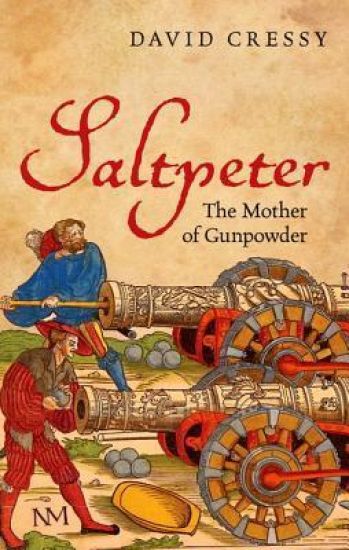
This is the story of saltpeter, the vital but mysterious substance craved by governments from the Tudors to the Victorians as an 'inestimable treasure.' National security depended on control of this organic material - that had both mystical and mineral properties. Derived from soil enriched with dung and urine, it provided the heart or 'mother' of gunpowder, without which no musket or cannon could be fired. Its acquisition involved alchemical knowledge, exotic technology, intrusions into people's lives, and eventual dominance of the world's oceans. The quest for saltpeter caused widespread 'vexation' in Tudor and Stuart England, as crown agents dug in homes and barns and even churches. Governments hungry for it purchased supplies from overseas merchants, transferred skills from foreign experts, and extended patronage to ingenious schemers, while the hated 'saltpetermen' intruded on private ground. Eventually, huge saltpeter imports from India relieved this social pressure, and by the eighteenth century positioned Britain as a global imperial power; the governments of revolutionary America and ancien régime France, on the other hand, were forced to find alternative sources of this treasured substance. In the end, it was only with the development of chemical explosives in the late Victorian period that dependency on saltpeter finally declined. Saltpeter, the Mother of Gunpowder tells this fascinating story for the first time. Lively and entertaining in its own right, it is also a tale with far-reaching implications. As David Cressy's engaging narrative makes clear, the story of saltpeter is vital not only in explaining the inter-connected military, scientific, and political 'revolutions' of the seventeenth century; it also played a key role in the formation of the centralized British nation state - and that state's subsequent dominance of the waves in the eighteenth and nineteenth centuries.
Literacy and the Social Order

Literacy and the Social Order

David Cressy

Cambridge University Press
2006
pokkari
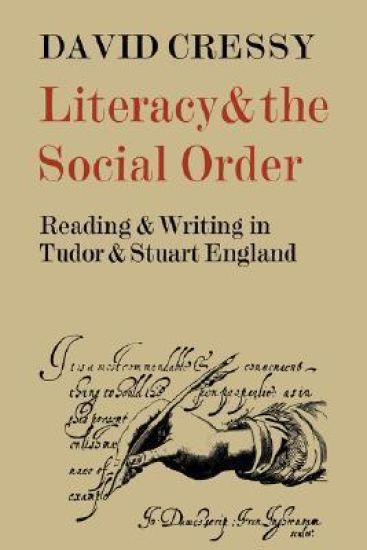
In this exploration of the social context of reading and writing in pre-industrial England, David Cressy tackles important questions about the limits of participation in the mainstream of early modern society. To what extent could people at different social levels share in political, religious, literary and cultural life; how vital was the ability to read and write; and how widely distributed were these skills? Using a combination of humanist and social-scientific methods, Dr Cressy provides a detailed reconstruction of the profile of literacy in sixteenth- and seventeenth-century England, looking forward to the eighteenth century and also making comparisons with other European societies.
Coming Over

Coming Over

David Cressy

Cambridge University Press
1987
pokkari
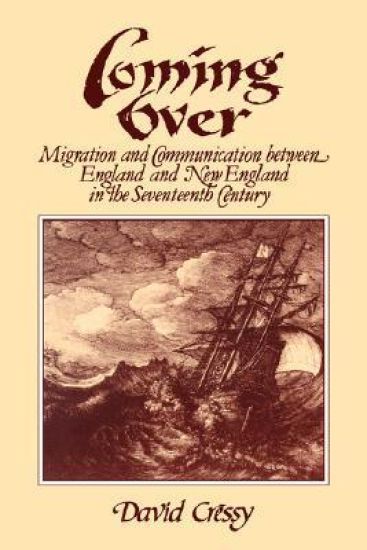
Coming Over discusses the English migration to New England in the seventeenth century and shows the importance of English connections in the lives of American colonists. David Cressy reviews the information available to prospective migrants, the decisions they had to reach and the actions necessary before they could settle in America. English men and women moved to New England with a variety of motives, and in a multitude of circumstances. 'Puritanism', involving religious harassment in England and the desire to follow God's ordinances in America, was only one of many factors impelling people to move. Rather than developing in wilderness isolation, the society and culture of seventeenth-century New England were constantly shaped by their English roots. A two-way flow of correspondence, messages and information linked colonists to their homeland. Family duties, political sympathies, friendships, business and legal obligations all led to a continuing attachment across the Atlantic. In treating early America from a British perspective, as a part of English history, Professor Cressy provides us with many insights into the seventeenth century.
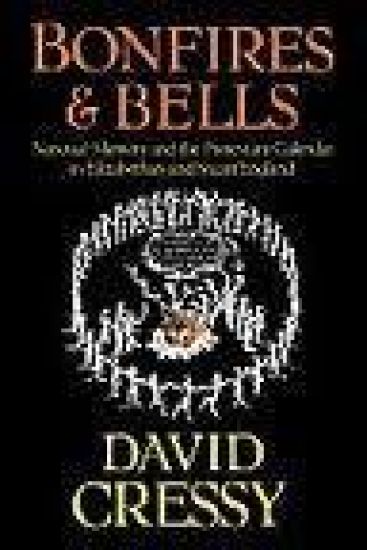
Bonfires and Bells

Bonfires and Bells

David Cressy

The History Press Ltd
2004
nidottu
Following the Reformation, bonfires and bells were the most public markers of a new calendar that was uniquely English and that developed in the 200 years following it. David Cressy presents the reader with a picture of an English people who were at odds with the Puritan killjoys of their day.
Society and Culture in Early Modern England

Society and Culture in Early Modern England

David Cressy

Ashgate Publishing Limited
2003
sidottu
The common theme of this selection of articles by David Cressy, published over the last twenty-five years, is the linkage of elite and popular culture and the participation of ordinary people in the central events of their age. The collection also traces a development in historical style and method, from quantitative applications using statistics to qualitative telling of tales. Seven essays under the heading 'Opportunities' explore problems of education, literacy and cultural attainment within the gendered and hierarchically ordered society of Elizabeth and Stuart England. Eight more under the heading 'Passages' examine social and cultural interactions, kinship, migration, community celebrations, and rituals in the life-cycle. The collection brings together a coherent body of research that is much cited in current scholarship and continues to shape the agenda for the social and cultural history of early modern England.