Kirjojen hintavertailu. Mukana 12 083 983 kirjaa ja 12 kauppaa.

Kirjahaku

Etsi kirjoja tekijän nimen, kirjan nimen tai ISBN:n perusteella.

6 kirjaa tekijältä David Crook

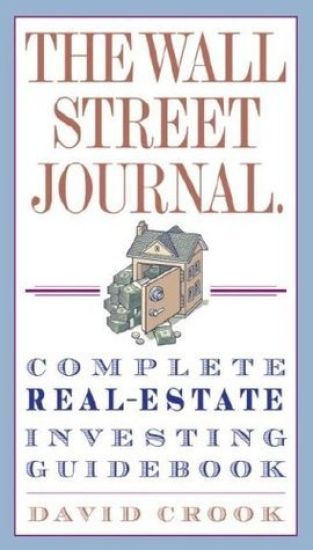
The Wall Street Journal. Complete Real-Estate Investing Guidebook
The conservative, thoughtful, thrifty investor's guide to building a real-estate empire. Profitable real-estate investing opportunities exist everywhere as long as you know what to look for and understand how to make prudent deals that transform property into profits. David Crook, of The Wall Street Journal, shows how to make safe and sane investments that ensure a good night's sleep as your real-estate portfolio grows, your properties appreciate and your income increases. The Wall Street Journal Complete Real-Estate Investing Guidebook offers the most authoritative information on: - Why real-estate investing is a great wealth-building alternative to stocks and bonds and why it's crucial that you avoid get-rich schemes- How to get the financing and make the contacts to get started- How to start small and local, be hands-on and go step-by-step with a vacation home to rent out, a pure rental property or a small apartment building- How to find and value great properties, do the numbers and ensure you have that beautiful thing called cash flow- How the government blesses real-estate investors with tax breaks and loopholes, and how you can be one of the anointed- How to deal with the nuts-and-bolts of being a landlord and have a strife-free relationship with your tenants
Orlando di Lasso's Imitation Magnificats for Counter-Reformation Munich
After the Mass Ordinary, the Magnificat was the liturgical text most frequently set by Renaissance composers, and Orlando di Lasso's 101 polyphonic settings form the largest and most varied repertory of Magnificats in the history of European music. In the first detailed investigation of this repertory, David Crook focuses on the forty parody or imitation Magnificats, which Lasso based on motets, madrigals, and chansons written by such composers as Josquin and Rore. By examining these Magnificats in their social, historical, and liturgical contexts and in terms of composition theory, Crook opens a new window on the breadth and subtlety of an important composer often harshly judged on his use of preexistent music. Crook places Lasso amidst the Counter-Reformation reforms at the Bavarian court where he composed the Magnificats, and where there emerged a fanatical Marian cult that favored this genre. In a section on compositional procedure, Crook explains that Lasso abandoned the traditional eight psalm-tone melodies in his imitation Magnificats, considers the new ways he found to represent the tones, and describes how Lasso's experimentation reflected the complex relationship between mode and tone in Renaissance theory and practice. Arguing that Lasso's varied uses of preexistent music defy current definitions of parody technique, Crook, in his final chapter, reveals the imitation Magnificats as vastly more imaginative and innovative than previous characterizations suggest. Originally published in 1994. The Princeton Legacy Library uses the latest print-on-demand technology to again make available previously out-of-print books from the distinguished backlist of Princeton University Press. These editions preserve the original texts of these important books while presenting them in durable paperback and hardcover editions. The goal of the Princeton Legacy Library is to vastly increase access to the rich scholarly heritage found in the thousands of books published by Princeton University Press since its founding in 1905.
Orlando di Lasso's Imitation Magnificats for Counter-Reformation Munich
After the Mass Ordinary, the Magnificat was the liturgical text most frequently set by Renaissance composers, and Orlando di Lasso's 101 polyphonic settings form the largest and most varied repertory of Magnificats in the history of European music. In the first detailed investigation of this repertory, David Crook focuses on the forty parody or imitation Magnificats, which Lasso based on motets, madrigals, and chansons written by such composers as Josquin and Rore. By examining these Magnificats in their social, historical, and liturgical contexts and in terms of composition theory, Crook opens a new window on the breadth and subtlety of an important composer often harshly judged on his use of preexistent music. Crook places Lasso amidst the Counter-Reformation reforms at the Bavarian court where he composed the Magnificats, and where there emerged a fanatical Marian cult that favored this genre. In a section on compositional procedure, Crook explains that Lasso abandoned the traditional eight psalm-tone melodies in his imitation Magnificats, considers the new ways he found to represent the tones, and describes how Lasso's experimentation reflected the complex relationship between mode and tone in Renaissance theory and practice. Arguing that Lasso's varied uses of preexistent music defy current definitions of parody technique, Crook, in his final chapter, reveals the imitation Magnificats as vastly more imaginative and innovative than previous characterizations suggest. Originally published in 1994. The Princeton Legacy Library uses the latest print-on-demand technology to again make available previously out-of-print books from the distinguished backlist of Princeton University Press. These editions preserve the original texts of these important books while presenting them in durable paperback and hardcover editions. The goal of the Princeton Legacy Library is to vastly increase access to the rich scholarly heritage found in the thousands of books published by Princeton University Press since its founding in 1905.
Robin Hood: Legend and Reality

Robin Hood: Legend and Reality

David Crook

The Boydell Press
2020
sidottu
Detailed research into documentary sources offers an exciting new identification of the "real" Robin Hood. For over a century and a half scholars have debated whether or not the legend of Robin Hood was based on an actual outlaw and, if so, when and where he lived. One view is that he was not a legend as such but a myth: an idea, rather than a person who could possibly be identified in historical records and placed in a real historical and geographical context. Other writers have gone even further, arguing that he is a literary concoction, with no traceable original, and that seeking to pin him down to a particular time and location is futile and unnecessary. This survey begins by tracing the development of the legend, and contemporary views about it, between the thirteenth and early twenty-first centuries, taking account both of new interpretative literature on the subject and fresh discoveries from the author's own research in the early records of the English royal administration and common law. It then gives a detailed account of the places that came to be associated with the legend, and of evidence illustrating the importance of the outlaw's name in the development of English surnames. The concluding chapters deal with the administration of criminal law in medieval England, and the evidence that points to the possible origins of the legend in the activities of a notorious Yorkshire criminal, tracked down and beheaded in the county in 1225.
Robin Hood: Legend and Reality

Robin Hood: Legend and Reality

David Crook

BOYDELL BREWER LTD
2022
pokkari
Detailed research into documentary sources offers an exciting new identification of the "real" Robin Hood. For over a century and a half scholars have debated whether or not the legend of Robin Hood was based on an actual outlaw and, if so, when and where he lived. One view is that he was not a legend as such but a myth: an idea, rather than a person who could possibly be identified in historical records and placed in a real historical and geographical context. Other writers have gone even further, arguing that he is a literary concoction, with no traceable original, and that seeking to pin him down to a particular time and location is futile and unnecessary. This survey begins by tracing the development of the legend, and contemporary views about it, between the thirteenth and early twenty-first centuries, taking account both of new interpretative literature on the subject and fresh discoveries from the author's own research in the early records of the English royal administration and common law. It then gives a detailed account of the places that came to be associated with the legend, and of evidence illustrating the importance of the outlaw's name in the development of English surnames. The concluding chapters deal with the administration of criminal law in medieval England, and the evidence that points to the possible origins of the legend in the activities of a notorious Yorkshire criminal, tracked down and beheaded in the county in 1225.
Spitfire Pilot

Spitfire Pilot

David Crook

Grub Street Publishing
2008
nidottu
Spitfire Pilot was written in 1940 in the heat of battle when the RAF stood alone against the might of Hitlers Third Reich. It is a tremendous personal account of one of the fiercest and most idealised air conflicts the Battle of Britain seen through the eyes of a pilot of the famous 609 Squadron, which shot down over 100 planes in that epic contest. Often hopelessly outnumbered, in their state of the art Spitfires, Crook and his colleagues committed acts of unimaginable bravery against the Messerschmidts and Junkers. Many did not make it and the author describes the absence they leave in the squadron with great poignancy. Spitfire Pilot is justly regarded as one of the classics of WWII and this new paperback edition, 66 years on, includes an introduction by the historian Richard Overy.