Kirjojen hintavertailu. Mukana 12 083 983 kirjaa ja 12 kauppaa.

Kirjahaku

Etsi kirjoja tekijän nimen, kirjan nimen tai ISBN:n perusteella.

17 kirjaa tekijältä David Crouch

The Chivalric Turn

The Chivalric Turn

David Crouch

Oxford University Press
2019
sidottu
The Chivalric Turn examines the medieval obsession with defining and practising superior conduct, and the social consequences that followed from it. Historians since the seventeenth century have tended to understand medieval conduct through the eyes of the writers of the Enlightenment, viewing superior conduct as 'knightly' behaviour, and categorising it as chivalry. Using, for the first time, the full range of the considerable twelfth- and thirteenth-century literature on conduct in the European vernaculars and in Latin, The Chivalric Turn describes and defines what superior lay conduct was in European society before chivalry, and maps how and why chivalry emerged and redefined superior conduct in the last generation of the twelfth century. The emergence of chivalry was only one part of a major social change, because it changed how people understood the concept of nobility, which had consequences for the medieval understanding of gender, social class, violence, and the limits of law.
The Chivalric Turn

The Chivalric Turn

David Crouch

Oxford University Press
2020
nidottu
The Chivalric Turn examines the medieval obsession with defining and practising superior conduct, and the social consequences that followed from it. Historians since the seventeenth century have tended to understand medieval conduct through the eyes of the writers of the Enlightenment, viewing superior conduct as 'knightly' behaviour, and categorising it as chivalry. Using, for the first time, the full range of the considerable twelfth- and thirteenth-century literature on conduct in the European vernaculars and in Latin, The Chivalric Turn describes and defines what superior lay conduct was in European society before chivalry, and maps how and why chivalry emerged and redefined superior conduct in the last generation of the twelfth century. The emergence of chivalry was only one part of a major social change, because it changed how people understood the concept of nobility, which had consequences for the medieval understanding of gender, social class, violence, and the limits of law.
The English Aristocracy, 1070-1272

The English Aristocracy, 1070-1272

David Crouch

Yale University Press
2011
sidottu
William the Conqueror's victory in 1066 was the beginning of a period of major transformation for medieval English aristocrats. In this groundbreaking book, David Crouch examines for the first time the fate of the English aristocracy between the reigns of the Conqueror and Edward I. Offering an original explanation of medieval society—one that no longer employs traditional "feudal" or "bastard feudal" models—Crouch argues that society remade itself around the emerging principle of nobility in the generations on either side of 1200, marking the beginning of the ancien régime. The book describes the transformation in aristocrats' expectations, conduct, piety, and status; in expressions of social domination; and in the relationship with the monarchy. Synchronizing English social history with non-English scholarship, Crouch places England's experience of change within a broader European transformation and highlights England's important role in the process. With his accustomed skill, Crouch redefines a fascinating era and the noble class that emerged from it.
The Image of Aristocracy

The Image of Aristocracy

David Crouch

Routledge
1992
sidottu
David Crouch provides a broad definition of aristorcracy by examining the ways aristocrats behaved and lived between 1000 and 1300. He analyses life-style, class and luxurious living in those years. A distinctive feature of the book is that it takes a British, rather than Anglocentric, view - looking at the penetration of Welsh and Scottish society by Anglo-French ideas of aristocracy.
The Image of Aristocracy

The Image of Aristocracy

David Crouch

Routledge
2014
nidottu
David Crouch provides a broad definition of aristorcracy by examining the ways aristocrats behaved and lived between 1000 and 1300. He analyses life-style, class and luxurious living in those years. A distinctive feature of the book is that it takes a British, rather than Anglocentric, view - looking at the penetration of Welsh and Scottish society by Anglo-French ideas of aristocracy.
The Beaumont Twins

The Beaumont Twins

David Crouch

Cambridge University Press
2008
pokkari
This book combines a simple dual biographical study of Waleran of Meulan and Robert of Leicester, the twin sons of Robert, Count of Meulan and Earl of Leicester, with an exploration of the exercise of power in twelfth-century Normandy and England. The twins were dominant and colourful characters, whose lives reveal many new points about the politics of the period, in particular the Norman rebellion of 1123–4, the wars of Stephen's reign in Normandy and England and the early years of Henry II. The book analyses the twins' followings, revenues and lands, and studies their relations with the church, their level of literacy, and heraldry. It also contains the first in-depth study of Norman feudal society in the duchy itself, suggests reasons why Normandy was more difficult to govern than England, and explores the use of patronage in twelfth-century society.
Medieval Britain, c.1000–1500

Medieval Britain, c.1000–1500

David Crouch

Cambridge University Press
2017
sidottu
Though England was the emerging super-state in the medieval British Isles, its story is not the only one Britain can offer; there is a wider context of Britain in Europe, and the story of this period is one of how European Latin and French culture and ideals colonised the minds of all the British peoples. This engaging and accessible introduction offers a truly integrated perspective of medieval British history, emphasising elements of medieval life over political narrative, and offering an up-to-date presentation and summary of medieval historiography. Featuring figures, maps, a glossary of key terms, a chronology of rulers, timelines and annotated suggestions for further reading and key texts, this textbook is an essential resource for undergraduate courses on medieval Britain. Supplementary online resources include additional further reading suggestions, useful links and primary sources.
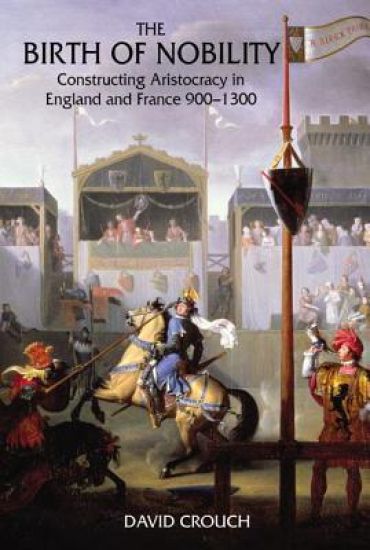
The Birth of Nobility

The Birth of Nobility

David Crouch

Routledge
2005
nidottu
For 300 years separate and mutually uncomprehending English and French historiographies have confused the history of medieval aristocracy. Unpicking the basic assumptions behind both national traditions, this book explains them, reconciles them and offers entirely new ways to take the study of aristocracy forward in both England and France.The Birth of Nobility analyses the enormous international field of publications on the subject of medieval aristocracy, breaking it down into four key debates: noble conduct, noble lineage, noble class and noble power. Each issue is subjected to a thorough review by comparing current scholarship with what a vast range of historical source material actually says. It identifies the points of divergence in the national traditions of each of these debates and highlights where they have been mutually incomprehensible.For students studying medieval Europe.
Flirting with Space

Flirting with Space

David Crouch

Ashgate Publishing Limited
2010
sidottu
The idea of 'flirting' with space is central to this book. Space is conceptualised as being in constant flux as we make our way through various contexts in our daily lives, and is considered in relation to encounters with complexities and flows of material culture. This book focuses on journeys, which are perceived as dynamic processes of contemporary life and its spaces, and how creativity happens in the inter-relations of space and journeys encourage creativity. Unravelled through a range of empirical case studies of journeys through and encountered with space, this book builds new critical syntheses of the intertwining of space and life. Based on investigations undertaken by the author over the past 20 years, it explores the mundane and the exotic, the 'lay' and the 'artistic', combining and inter-relating them in a diversity of time and expression, fleeting and surviving. Such investigations, using both visual and non-visual material, include examinations of allotment holding, the work of artists, caravanning and tourism, photography and parish maps. The analyses of such seemingly disparate subjects are linked together and build on each other to create a fascinating and original view of humanity's interaction with space. Included are fresh discussions of belonging, disorientation and the working of identity and play. The notion of 'gentle politics' is introduced.
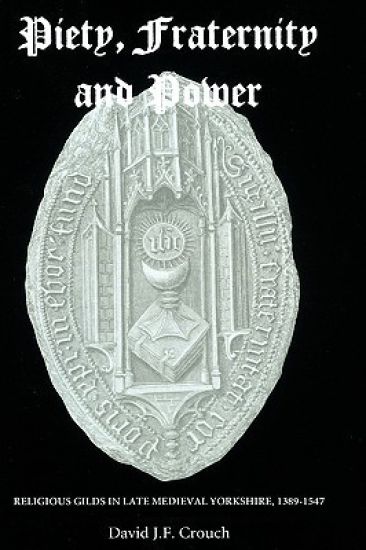
Piety, Fraternity and Power

Piety, Fraternity and Power

David Crouch

York Medieval Press
2000
sidottu
Detailed investigation of the religious gild, showing its importance to all aspects of medieval life. The religious gild was central to the structure of late medieval society, providing lay people with a focus for public expressions of orthodox piety that accorded with the doctrinal views of government between 1399 and 1531. Usingevidence from the county of Yorkshire, this book argues that beyond their devotional and ceremonial roles, the influence of these basically pious institutions permeated all aspects of late medieval political, social and economicactivity. The author begins by discussing the evidence for Yorkshire gilds in the late fourteenth century, moving on to survey the changing distribution, development, and membership of fraternities throughout the county over the next century and a half. Special attention is given to the ways in which the religious gilds of Yorkshire interacted with town government, with clerical bodies, with occupational organisations, and with one another, illustrated with detailed case-studies of the gilds of Corpus Christi, York, and St Mary in Holy Trinity, Hull, which are particularly well-documented. The final section of the book deals with the decline and disappearance of religious gilds during the Reformation, showing how their devotional purposes were eroded by the new policies of central government and how many gilds anticipated their official dissolution. DAVID J.F. CROUCH gained his D.Phil fromthe University of York.
The Birth of Nobility

The Birth of Nobility

David Crouch

Routledge
2016
sidottu
For 300 years separate and mutually uncomprehending English and French historiographies have confused the history of medieval aristocracy. Unpicking the basic assumptions behind both national traditions, this book explains them, reconciles them and offers entirely new ways to take the study of aristocracy forward in both England and France.The Birth of Nobility analyses the enormous international field of publications on the subject of medieval aristocracy, breaking it down into four key debates: noble conduct, noble lineage, noble class and noble power. Each issue is subjected to a thorough review by comparing current scholarship with what a vast range of historical source material actually says. It identifies the points of divergence in the national traditions of each of these debates and highlights where they have been mutually incomprehensible.For students studying medieval Europe.
The Reign of King Stephen

The Reign of King Stephen

David Crouch

Routledge
2016
sidottu
At last: an authoritative, up to date account of the troubled reign of King Stephen, by a leading scholar of the Anglo-Norman world. David Crouch covers every aspect of the period - the king and the empress, the aristocracy, the Church, government and the nation at large. He also looks at the wider dimensions of the story, in Scotland, Wales, Normandy and elsewhere. The result (weaving its discussions around a vigorous narrative core) is a a work of major scholarship. A must for specialist and amateur medievalists alike.
Flirting with Space

Flirting with Space

David Crouch

Routledge
2016
nidottu
The idea of 'flirting' with space is central to this book. Space is conceptualised as being in constant flux as we make our way through various contexts in our daily lives, and is considered in relation to encounters with complexities and flows of material culture. This book focuses on journeys, which are perceived as dynamic processes of contemporary life and its spaces, and how creativity happens in the inter-relations of space and journeys encourage creativity. Unravelled through a range of empirical case studies of journeys through and encountered with space, this book builds new critical syntheses of the intertwining of space and life. Based on investigations undertaken by the author over the past 20 years, it explores the mundane and the exotic, the 'lay' and the 'artistic', combining and inter-relating them in a diversity of time and expression, fleeting and surviving. Such investigations, using both visual and non-visual material, include examinations of allotment holding, the work of artists, caravanning and tourism, photography and parish maps. The analyses of such seemingly disparate subjects are linked together and build on each other to create a fascinating and original view of humanity's interaction with space. Included are fresh discussions of belonging, disorientation and the working of identity and play. The notion of 'gentle politics' is introduced.
William Marshal

William Marshal

David Crouch

Routledge
2016
sidottu
David Crouch’s William Marshal, now in its third edition, depicts this intriguing medieval figure as a ruthless opportunist, astute courtier, manipulative politician and a brutal but efficient soldier. Born the fourth son of a minor baron, he ended his days as Earl of Pembroke and Regent of England, and was the only medieval knight to have a contemporary biography written about him. Using this biography in addition to the many other primary sources dedicated to him, the author provides a narrative of William Marshal and a survey of the times in which he lived and also considers the problems and questions posed by the History. The third edition has been extensively updated and revised, and now includes: expanded sections on the reality of medieval tournaments and warfare as it is described in the biography an in-depth study of Marshal’s family life and children based on the latest research including material from the new edition of the Marshal family acts and letters more on Marshal’s royal patrons and contemporaries, in particular the relationship between Marshal and his nemesis, King John. William Marshal explores the world of medieval knighthood and the the aristocratic life of the times in engaging, readable prose, and is a unique resource for students of medieval history.
William Marshal

William Marshal

David Crouch

Routledge
2016
nidottu
David Crouch’s William Marshal, now in its third edition, depicts this intriguing medieval figure as a ruthless opportunist, astute courtier, manipulative politician and a brutal but efficient soldier. Born the fourth son of a minor baron, he ended his days as Earl of Pembroke and Regent of England, and was the only medieval knight to have a contemporary biography written about him. Using this biography in addition to the many other primary sources dedicated to him, the author provides a narrative of William Marshal and a survey of the times in which he lived and also considers the problems and questions posed by the History. The third edition has been extensively updated and revised, and now includes: expanded sections on the reality of medieval tournaments and warfare as it is described in the biography an in-depth study of Marshal’s family life and children based on the latest research including material from the new edition of the Marshal family acts and letters more on Marshal’s royal patrons and contemporaries, in particular the relationship between Marshal and his nemesis, King John. William Marshal explores the world of medieval knighthood and the the aristocratic life of the times in engaging, readable prose, and is a unique resource for students of medieval history.
Almost Perfekt

Almost Perfekt

David Crouch

BONNIER BOOKS LTD
2019
nidottu
'Engaging' Money Week'A sharp-eyed account of what makes Sweden modern, resilient and rather different' Professor Jonas HinnforsSWEDENA country that defies the laws of economic gravity. A land with high wages, strong unions and generous welfare. A dream location for business and a bastion of social responsibility, coming out on top for childcare, equality and quality of life.WHAT CAN WE LEARN FROM IT?Having lived in Sweden for six years, journalist David Crouch has a unique perspective as an outsider looking in on one of the world's most successful yet divided countries. Based on more than 70 interviews with leading figures in Swedish industry and politics, Almost Perfekt is a journey through Swedish society and what sets it apart from the world today. Why is Sweden so good for businesses like IKEA, Spotify and Skype?How will the country become zero carbon by 2045?And what can we learn about immigration from its ambitious policies?With political and economic upheaval threatening to pull Europe apart, discover the truth of how Sweden really works.'If you want to know how Sweden works, this is the book for you' Andrew Brown, Guardian journalist and author'A great guide to the much-cited but little examined Swedish model and the challenges it now faces' Richard Milne, Financial Times
Tournament

Tournament

David Crouch

Hambledon Continuum
2006
nidottu
The tournament was a mock battle, at its height between 1100 and 1300, conducted by two arbitrary battalions over many square miles of open country. It was a one-day event, but when joined to ancillary festivals it could extend it to several days. The centre of the enthusiasm was across north and north-eastern France, where -- in the twelfth century -- thousands of knights assembled from across northern Europe to seek reputation and profit. But the passion for the tournament extended much further. Tournament holding had penetrated England, Germany and Austria by 1200. The tournament resembled in many senses a modern spectator sport, with spectators, chants, national teams, team colours, inflated salaries, transfer fees, celebrity cults and a lifestyle notable for its excesses. The tournament had a wider significance too. It underpinned the idea of aristocracy; a knight and aristocrat could be defined as a man who frequented the tournament.