Kirjojen hintavertailu. Mukana 11 244 527 kirjaa ja 12 kauppaa.

Kirjahaku

Etsi kirjoja tekijän nimen, kirjan nimen tai ISBN:n perusteella.

58 kirjaa tekijältä David Crystal

David Crystal's 50 Questions About English Usage Pocket Editions
David Crystal provides concise, accessible answers to fifty questions about English language usage. In this compact, user-friendly book, David Crystal draws on his extensive knowledge and experience to answer questions from English language teachers and learners from around the world. The book covers topics ranging from general enquiries about the language as a whole to specific points of grammar, pronunciation, orthography, vocabulary, idiom and style. The author's responses are illustrated by personal anecdotes, placed within historical and literary context and supported by research and corpus data to provide unique, authentic insights.
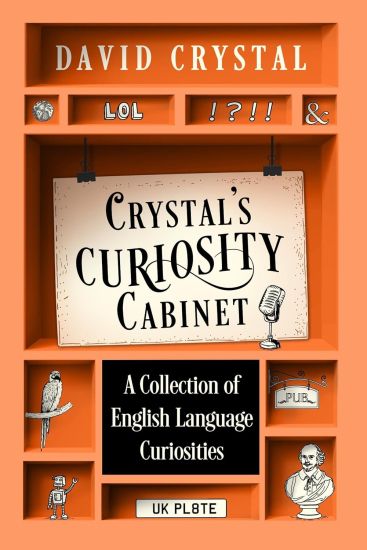
Crystal’s Curiosity Cabinet

Crystal’s Curiosity Cabinet

David Crystal

John Murray Press
2025
sidottu
What do a comic alphabet, a glorious lipogram and a wellerism have in common? Or, an audit of accountants, an illusion of magicians, and an intrusion of spammers? And do you know how Shakespeare pronounced his name?Quirky, original, amusing and enlightening, this charming English Language Miscellany from David Crystal, one of the greatest British linguists of our time, offers fascinating observations on random, weird and witty words and expressions, collected over a number of years.Following the tradition of the Victorian miscellany and cabinets of curiosities, the 150+ random entries reveal the global, national, contemporary and historical impact of language, and will appeal to word lovers and fun-fact-fiends alike.Showcasing linguistic creativity in all its glory, and featuring a wide range of topics that reflect current language issues, such as accents, dialects, etymology, proverbs, place names, punctuation, everyday usage, and language change, this book provides a playful, entertaining and informative read on the bizarre nature of language.
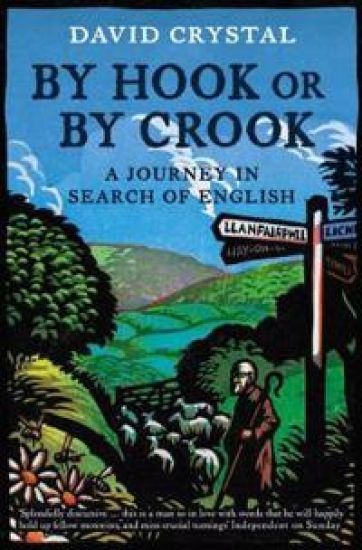
By Hook Or By Crook

By Hook Or By Crook

David Crystal

HARPERCOLLINS PUBLISHERS
2008
nidottu
A delightfully discursive, Bill Bryson-esque and personal journey through the groves and the thickets of the English language, by our foremost scholar of the history and structure of the English language. David Crystal has been described (by the Times Higher Education Supplement) as a sort of 'latter day Dr Johnson', a populist linguist who has promoted the study of the English language in an academic and broadcasting career that has so far spanned 40 years and nearly 100 books. Now he has written an engaging travel book of more general appeal. Inspired by W. G. Sebald's ‘The Rings of Saturn’ and by Bill Bryson's books, he has combined personal reflections, historical allusions and traveller observations to create a mesmerising (and entertaining) narrative account of his encounters with the English language and its speakers throughout the world – from Bangor to Bombay and from Stratford to San Francisco. ‘By Hook or by Crook’ is an attempt to capture the exploratory, seductive, teasing, tantalising nature of language study. As such, it will appeal to the ever-growing market who like to be entertained as well as instructed.
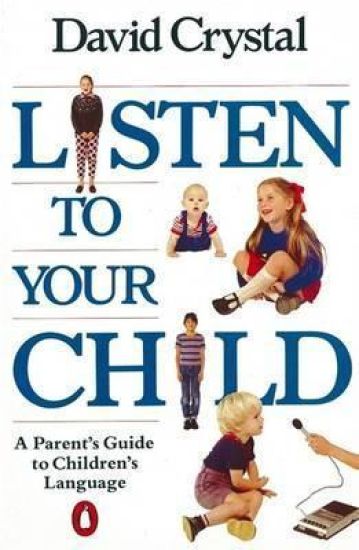
Listen to Your Child

Listen to Your Child

David Crystal

Penguin Books Ltd
1989
pokkari
Learning to talk is probably the greatest milestone in a child's development: a deeply moving and often hilarious experience for all parents. In this charming and informative book, Britain's leading expert on the English language talks you through every stage in your child's language development. Over thirty years after its original publication, this new and updated edition of Listen to your Child shows us that while the world our children are growing up in may have changed, one thing has not: parents still need to listen. Gathering decades of research from psychologists and linguists, Professor Crystal shows how the more we know about language acquisition - from 'cooking' and 'babbling' to melodic 'scribble talk' and simple words and then to incessant chatter - the more there is to delight in.From birth to the early school years, Listen to your Child provides a painless introduction to the study of child language acquisition as well as invaluable advice for parents.
The English Language

The English Language

David Crystal

Penguin Books Ltd
2002
pokkari
This is the definitive survey of the English language - in all its forms. Crystal writes accessibly about the structure of the language, the uses of English throughout the world and finally he gives a brief history of English. The book has been fully revised and there is a fascinating new chapter on 'The effect of technology' on the English language. 'Illuminating guided tour of our common treasure by one of its most lucid and sensible professionals' The Times 'A splendid blend of erudition and entertainment' THES
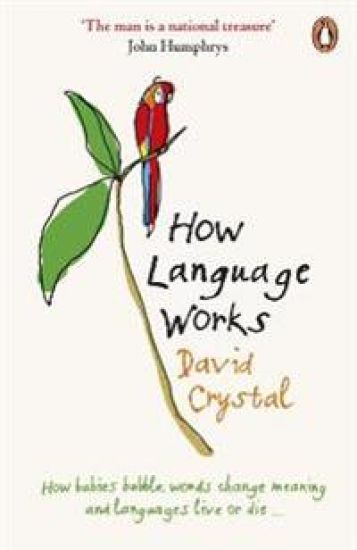
How Language Works

How Language Works

David Crystal

Penguin Books Ltd
2007
pokkari
In this fascinating survey of everything from how sounds become speech to how names work, David Crystal answers every question you might ever have had about the nuts and bolts of language in his usual highly illuminating way. Along the way we find out about eyebrow flashes, whistling languages, how parents teach their children to speak, how politeness travels across languages and how the way we talk show not just how old we are but where we’re from and even who we want to be.
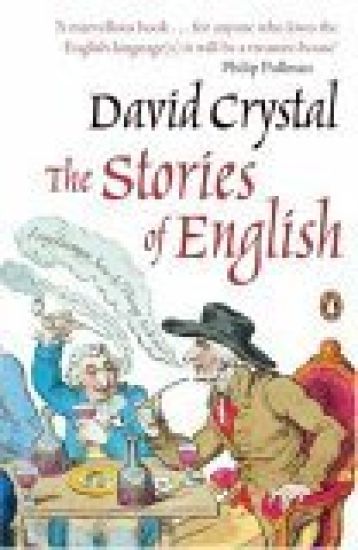
The Stories of English

The Stories of English

David Crystal

Penguin Books Ltd
2005
pokkari
When and why did 'thou' disappear from Standard English? Would a Victorian Cockney have said 'observation' or 'hobservation'? Was Jane Austen making a mistake when she wrote 'Jenny and James are walked to Charmonth this afternoon'?This superbly well-informed - and also wonderfully entertaining - history of the English language answers all these questions, showing how the many strands of English (Standard English, dialect and slang among them) developed to create the richly-varied language of today.
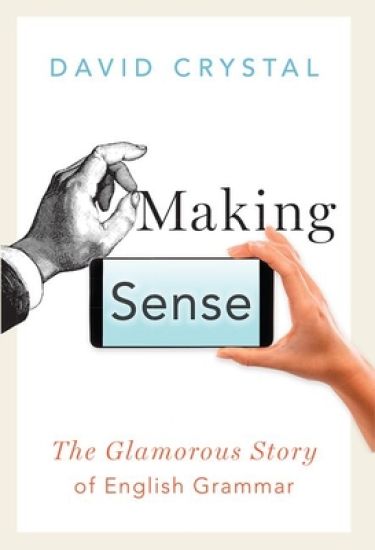
Making Sense: The Glamorous Story of English Grammar
In Making Sense, David Crystal confronts the foe of many: grammar. Once taught relentlessly to all students in the English-speaking world, grammar disappeared from most school curricula, so that terms such as "preposition" and "conjunction" now often confound children and adults alike. Explaining the nuts and bolts of grammar presents a special challenge, because - far more than is the case with spelling and punctuation - the subject is burdened with a centuries-old history of educational practice that many will recall as anything but glamorous. One of the world's foremost authorities on the English language, Crystal sets out to rid grammar of its undeserved reputation as a dry and intimidating subject, pointing out how essential grammar is to clear and effective speech and writing. He moves briskly through the stages by which children acquire grammar, along the way demystifying grammar's rules and irregularities and showing us how to navigate its snares and pitfalls. He offers the fascinating history of grammar, explaining how it has evolved from the first grammarians in ancient Greece to our 21st century digital environment of blogging, emailing, and texting. Many find grammar to be a daunting subject, but in this breezy, entertaining book, Crystal proves that grammar doesn't need to make us uneasy-we can all make sense of how we make sense.
Making Sense: The Glamorous Story of English Grammar

Making Sense: The Glamorous Story of English Grammar

David Crystal

Oxford University Press
2020
nidottu
In Making Sense, David Crystal confronts the foe of many: grammar. Once taught relentlessly to all students in the English-speaking world, grammar disappeared from most school curricula, so that terms such as "preposition" and "conjunction" now often confound children and adults alike. Explaining the nuts and bolts of grammar presents a special challenge, because - far more than is the case with spelling and punctuation - the subject is burdened with a centuries-old history of educational practice that many will recall as anything but glamorous. One of the world's foremost authorities on the English language, Crystal sets out to rid grammar of its undeserved reputation as a dry and intimidating subject, pointing out how essential grammar is to clear and effective speech and writing. He moves briskly through the stages by which children acquire grammar, along the way demystifying grammar's rules and irregularities and showing us how to navigate its snares and pitfalls. He offers the fascinating history of grammar, explaining how it has evolved from the first grammarians in ancient Greece to our 21st century digital environment of blogging, emailing, and texting. Many find grammar to be a daunting subject, but in this breezy, entertaining book, Crystal proves that grammar doesn't need to make us uneasy-we can all make sense of how we make sense.
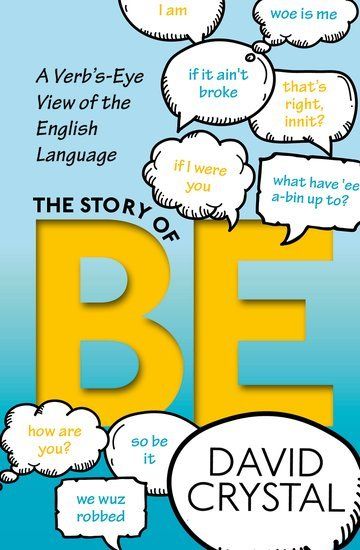
The Story of Be

The Story of Be

David Crystal

Oxford University Press
2017
sidottu
It's the most simple, unassuming, innocent-looking verb: 'to be'. Yet it is jam-packed with more different meanings, forms, and uses than any other English word. As he reveals be's multiple incarnations, David Crystal takes us to the heart of our flexible and changing language. He tells the intriguing story in 26 chapters, each linked to a particular usage. We meet circumstantial be ('how are you?'), numerical be ('two and two is four'), quotative be ('so I was like, "wow"'), and ludic be ('oh no he isn't!'), and a whole swarm of other meanings. Bringing the ideas to life are a host of examples from sources as varied as Beowulf, Jane Austen, pantomime, Hamlet (of course), and Star Wars, with cartoons from Ed McLachlan and Punch peppered throughout. Full of fascinating nuggets of information, it is a book to delight any lover of words and language.
Let's Talk

Let's Talk

David Crystal

Oxford University Press
2020
sidottu
Banter, chit-chat, gossip, natter, tete-a-tete: these are just a few of the terms for the varied ways in which we interact with one another through conversation. David Crystal explores the factors that motivate so many different kinds of talk and reveals the rules we use unconsciously, even in the most routine exchanges of everyday conversation. We tend to think of conversation as something spontaneous, instinctive, habitual. It has been described as an art, as a game, sometimes even as a battle. Whichever metaphor we use, most people are unaware of what the rules are, how they work, and how we can bend and break them when circumstances warrant it.
The Fight for English

The Fight for English

David Crystal

Oxford University Press
2006
sidottu
Tells the story of the battles surrounding English usage. This book combines a chronological survey of key influences in the area of usage with discussion of particular themes such as punctuation, spelling, and pronunciation.
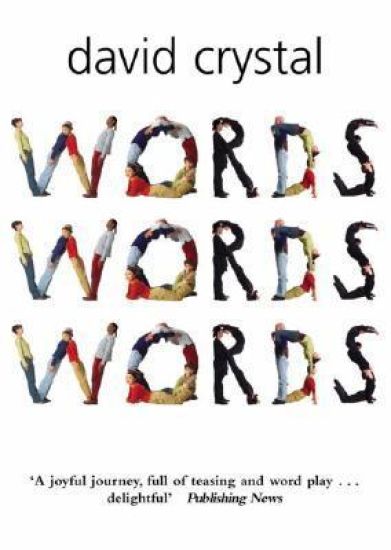
Words Words Words

Words Words Words

David Crystal

Oxford University Press
2007
nidottu
Words, Words, Words is all about the wonder of words. Drawing on a lifetime's experience, David Crystal explores language in all its rich varieties through words: the very building blocks of our communication. Language has no life of its own: it only exists in the mouths and ears, hands, eyes and brains of its users. As we are guided expertly and passionately through the mysteries and delights of word origins, histories, spellings, regional and social variations, taboo words, jargon, and wordplay, the contribution we all play in shaping the linguistic world around us becomes evident. Words, Words, Words is a celebration of what we say and how we say it. It invites us to engage linguistically with who we are: to understand what words tell us about where we come from and what we do. And as they continually shape our lives, it suggests ways that we can look at words anew and get involved with collecting and coining words ourselves.
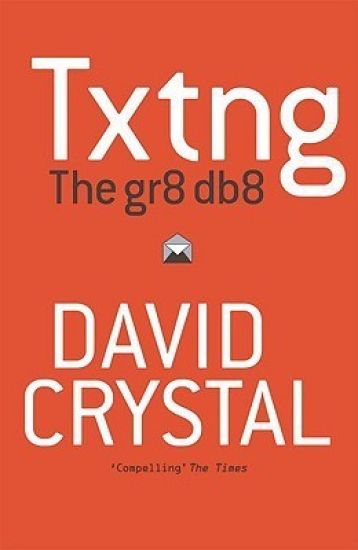
Txtng: The Gr8 Db8

Txtng: The Gr8 Db8

David Crystal

Oxford University Press
2009
nidottu
This book takes a long hard look at the text-messaging phenomenon and its effects on literacy, language, and society. Young people who seem to spend much of their time texting sometimes appear unable or unwilling to write much else. Media outrage has ensued. "It is bleak, bald, sad shorthand," writes a commentator in the UK Guardian. "It masks dyslexia, poor spelling, and mental laziness." Exam answers using textese and reports that examiners find them acceptable have led to headlines in the tabloids and leaders in the qualities. Do young people text as much as people think? Do adults? Does texting spell the end of literacy? Is there a panic in the media? David Crystal looks at the evidence. He investigates how texting began and who uses it, why and what for. He shows how to interpret its mix of pictograms, logograms, abbreviations, symbols, and wordplay, and how it works in different languages. He explores the ways similar devices have been used in different eras and discovers that the texting system of conveying sounds and meaning goes back a long way, all the way in fact to the origins of writing - and he concludes that far from hindering literacy, texting may turn out to help it. Contents List
Begat

Begat

David Crystal

Oxford University Press
2010
sidottu
What do the following have in common? Let there be light - A fly in the ointment - A rod of iron - New wine in old bottles Lick the dust - How are the mighty fallen - Kick against the pricks - Wheels within wheels They are all in the King James Bible. This astonishing book "has contributed far more to English in the way of idiomatic or quasi-proverbial expressions than any other literary source." So wrote David Crystal in 2004. In Begat he returns to the subject not only to consider how a work published in 1611 could have had such influence on the language, but how it can still do so when few regularly hear the Bible and fewer still hear it in the language of Stuart England. No other version of the Bible however popular (such as the Good News Bible) or imposed upon the church (like the New English Bible) has had anything like the same influence. David Crystal shows how its words and phrases have over the centuries found independent life in the work of poets, playwrights, novelists, politicians, and journalists, and how more recently they have been taken up with enthusiasm by advertisers, Hollywood, and hip-hop. Yet the King James Bible owes much to earlier English versions, notably those by John Wycliffe in in the fourteenth century and William Tyndale in the sixteenth. David Crystal reveals how much that is memorable in the King James Bible stems from its forebears. At the same time he shows how crucial were the revisions made by King James's team of translators and editors. "A person who professes to be a critic in the delicacies of the English language ought to have the Bible at his finger's ends," Lord Macaulay advised Lady Holland in 1831. Begat shows how true that remains. It will be a revelation to all who read it.
The Oxford Dictionary of Original Shakespearean Pronunciation
This dictionary is the first comprehensive description of Shakespearean original pronunication (OP), enabling practitioners to deal with any queries about the pronunciation of individual words. It includes all the words in the First Folio, transcribed using IPA, and the accompanying website hosts sound files as a further aid to pronunciation. It also includes the main sources of evidence in the texts, notably all spelling variants (along with a frequency count for each variant) and all rhymes (including those occurring elsewhere in the canon, such as the Sonnets and long poems). An extensive introduction provides a full account of the aims, evidence, history, and current use of OP in relation to Shakespeare productions, as well as indicating the wider use of OP in relation to other Elizabethan and Jacobean writers, composers from the period, the King James Bible, and those involved in reconstructing heritage centres. It will be an invaluable resource for producers, directors, actors, and others wishing to mount a Shakespeare production or present Shakespeare's poetry in original pronunciation, as well as for students and academics in the fields of literary criticism and Shakespeare studies more generally.
Words in Time and Place

Words in Time and Place

David Crystal

Oxford University Press
2014
sidottu
Did you know that the English language has over 150 words for the adjective 'drunk' developed over 1,000 years? Be prepared to learn words you have never heard before, find out fascinating facts behind everyday words, and be surprised at how lively and varied the English language can be. Published to critical acclaim in 2009, the Historical Thesaurus of the Oxford English Dictionary is the first comprehensive thesaurus in the world to arrange words by meaning in order of first recorded use. Using its unique perspective on how the English language has developed, Words in Time and Place takes 15 themes and explores the language in these areas over time - explaining when new words appeared, where they came from, and what such changes say about times in which they emerged. The themes chosen are varied, universal topics and show the semantic range of the thesaurus and what it can tell us about the words used in areas of everyday life. Learn about the different words for dying and money, or types of pop music, as well as words for a privy, oaths, and words for being drunk. Written by the world's leading expert on the English language, David Crystal, the book carries his trademark style of engaging yet authoritative writing. Each chapter features an introduction to the language of that topic, followed by a timeline of vocabulary taken from the historical thesaurus showing all the synonyms arranged in chronological order. The timelines are annotated with additional quotations, facts, and social and historical context to give a clear sense of how words entered the English language, when, and in which context they were used. Words in Time and Place showcases the unique and excellent resource that is the Historical Thesaurus and reveals the linguistic treasures to be found within. This fascinating book will appeal to anyone with an interest in words and in the development of the English language.
Begat

Begat

David Crystal

Oxford University Press
2011
nidottu
What do the following have in common? Let there be light - Whited sepulchres - A rod of iron - New wine into old bottles Lick the dust - How are the mighty fallen - A thorn in the flesh - Wheels within wheels They're all in the King James Bible. This astonishing book has 'contributed far more to English in the way of idiomatic or quasi-proverbial expressions than any other literary source.' wrote David Crystal in 2004. In Begat he returns to the subject: he asks how a work published in 1611 could have had such an influence on the language and looks closely at what that influence has been. He comes to some surprising conclusions. No other version of the Bible however popular (such as the Good News Bible) or imposed upon the church (like the New English Bible) has had anything like the same impact. David Crystal shows how its words and phrases got independent life in the work of poets, playwrights, novelists, and politicians, and how more recently they have been taken up by journalists, advertisers, Hollywood, and hip-hop. He reveals the great debt the King James Bible owes to its English forebears, especially John Wycliffe's in the fourteenth century and William Tyndale's in the sixteenth. He also shows that the revisions and changes made by King James's translators were crucial to its universal success. "A person who professes to be a critic in the delicacies of the English language ought to have the Bible at his finger's ends," Lord Macaulay advised Lady Holland in 1831. David Crystal shows how true this is. His book is a revelation.
Language Play

Language Play

David Crystal

University of Chicago Press
2001
nidottu
In this text, David Crystal examines why we devote so much time and energy to language games, how professionals make a career of them, and how young children instinctively take to them. Crystal makes a simple argument - that since playing with language is so natural, a natural way to learn language is to play with it - while he discusses puns, cross-words, lipograms, comic alphabets, rhymes, funny voices taken from dialect and popular culture, limericks, anagrams, and scat singing.
The Gift of the Gab

The Gift of the Gab

David Crystal

Yale University Press
2017
pokkari
A many-faceted exploration of spoken eloquence: how it works, how it has evolved, and how to tap its remarkable power We all know eloquence when we hear it. But what exactly is it? And how might we gain more of it for ourselves? This entertaining and, yes, eloquent book illuminates the power of language from a linguistic point of view and provides fascinating insights into the way we use words. David Crystal, a world-renowned expert on the history and usage of the English language, probes the intricate workings of eloquence. His lively analysis encompasses everyday situations (wedding speeches, business presentations, storytelling) as well as the oratory of great public gatherings. Crystal focuses on the here and now of eloquent speaking—from pitch, pace, and prosody to jokes, appropriateness, and how to wield a microphone. He explains what is going on moment by moment and examines each facet of eloquence. He also investigates topics such as the way current technologies help or hinder our verbal powers, the psychological effects of verbal excellence, and why certain places or peoples are thought to be more eloquent than others. In the core analysis of the book, Crystal offers an extended and close dissection of Barack Obama’s electrifying “Yes we can” speech of 2008, in which the president demonstrated full mastery of virtually every element of eloquence—from the simple use of parallelism and an awareness of what not to say, to his brilliant conclusion constructed around two powerful words: dreams and answers.