Kirjojen hintavertailu. Mukana 11 342 296 kirjaa ja 12 kauppaa.

Kirjahaku

Etsi kirjoja tekijän nimen, kirjan nimen tai ISBN:n perusteella.

10 kirjaa tekijältä David Cunning

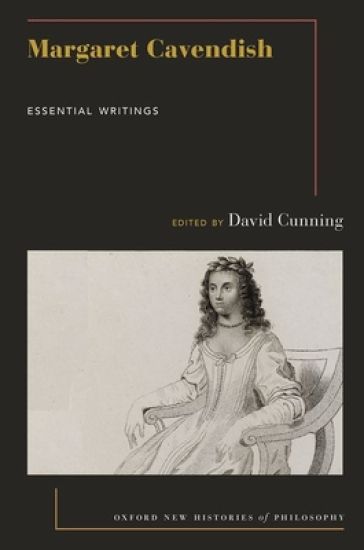
Margaret Cavendish

Margaret Cavendish

David Cunning

Oxford University Press Inc
2019
sidottu
The Seventeenth-Century philosopher, scientist, poet, playwright, and novelist Margaret Cavendish went to battle with the great thinkers of her time, and arguably got the better of them in many cases. She took a creative and systematic stand on the major questions of philosophy of mind, epistemology, metaphysics, and political philosophy. She argued that human beings and all other members of the created universe are purely material creatures, and she held that there are many other ways in which creatures are alike as well: for example, human beings, non-human animals, spiders, cells, and all other beings exhibit skill, wisdom, and activity, and so the universe of matter is not the largely dead and unimpressive region that most of her contemporaries thought it to be. Creatures instead are sophisticated and display a wide spectrum of intelligent activity, ranging from the highly conscious mentality that Descartes posited to be part and parcel of human thought, to embodied forms of cognition that is more common in non-human creatures but that guide a significant portion of human behavior as well. Cavendish then used her fictional work to further illustrate her views and arguments, and also to craft alternative fictional worlds in which the climate for women was very different than on Seventeenth-Century earth - a climate in which women could be taken seriously in the role of philosopher, writer, scientist, military general, and other roles. This is the first volume to provide a cross-section of Cavendish's writings, views and arguments, along with introductory material. It excerpts the key portions of all her texts including annotated notes highlighting the interconnections between them. Including a general introduction by Cunning, the book will allow students to work toward a systematic picture of Cavendish's metaphysics, epistemology, and political philosophy (and including some of her non-philosophical work as well) and to see her in dialogue with philosophers who are part of the traditional canon.
Margaret Cavendish

Margaret Cavendish

David Cunning

Oxford University Press Inc
2019
nidottu
The Seventeenth-Century philosopher, scientist, poet, playwright, and novelist Margaret Cavendish went to battle with the great thinkers of her time, and arguably got the better of them in many cases. She took a creative and systematic stand on the major questions of philosophy of mind, epistemology, metaphysics, and political philosophy. She argued that human beings and all other members of the created universe are purely material creatures, and she held that there are many other ways in which creatures are alike as well: for example, human beings, non-human animals, spiders, cells, and all other beings exhibit skill, wisdom, and activity, and so the universe of matter is not the largely dead and unimpressive region that most of her contemporaries thought it to be. Creatures instead are sophisticated and display a wide spectrum of intelligent activity, ranging from the highly conscious mentality that Descartes posited to be part and parcel of human thought, to embodied forms of cognition that is more common in non-human creatures but that guide a significant portion of human behavior as well. Cavendish then used her fictional work to further illustrate her views and arguments, and also to craft alternative fictional worlds in which the climate for women was very different than on Seventeenth-Century earth - a climate in which women could be taken seriously in the role of philosopher, writer, scientist, military general, and other roles. This is the first volume to provide a cross-section of Cavendish's writings, views and arguments, along with introductory material. It excerpts the key portions of all her texts including annotated notes highlighting the interconnections between them. Including a general introduction by Cunning, the book will allow students to work toward a systematic picture of Cavendish's metaphysics, epistemology, and political philosophy (and including some of her non-philosophical work as well) and to see her in dialogue with philosophers who are part of the traditional canon.
Argument and Persuasion in Descartes' Meditations

Argument and Persuasion in Descartes' Meditations

David Cunning

Oxford University Press Inc
2010
sidottu
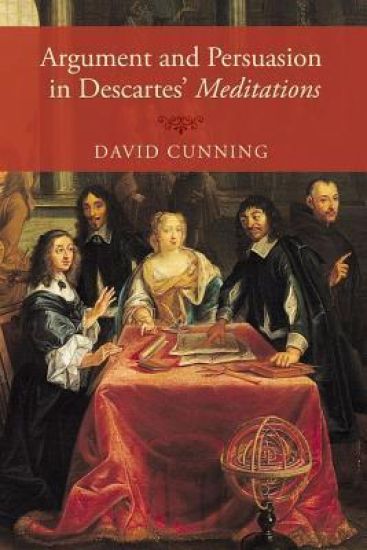
Descartes' Meditations on First Philosophy has proven to be not only one of the canonical texts of Western philosophy, but also the site of a great deal of interpretive activity in scholarship on the history of early modern philosophy over the last two decades. David Cunning's monograph proposes a new interpretation, which is that from beginning to end the reasoning of the Meditations is the first-person reasoning of a thinker who starts from a confused non-Cartesian paradigm and moves slowly and awkwardly toward a grasp of just a few of the central theses of Descartes' system. The meditator of the Meditations is not a full-blown Cartesian at the start or middle or even the end of inquiry, and accordingly the Meditations is riddled with confusions throughout. Cunning argues that Descartes is trying to capture the kind of reasoning that a non-Cartesian would have to engage in to make the relevant epistemic progress, and that the Meditations rhetorically models that reasoning. He proposes that Descartes is reflecting on what happens in philosophical inquiry: we are unclear about something, we roam about using our existing concepts and intuitions, we abandon or revise some of these, and then eventually we come to see a result as clear that we did not see as clear before. Thus Cunning's fundamental insight is that Descartes is a teacher, and the reader a student. With that reading in mind, a significant number of the interpretive problems that arise in the Descartes literature dissolve when we make a distinction between the Cartesian and non-Cartesian elements of the Meditations, and a better understanding of surrounding texts is achieved as well. This important volume will be of great interest to scholars of early modern philosophy.
Argument and Persuasion in Descartes' Meditations

Argument and Persuasion in Descartes' Meditations

David Cunning

Oxford University Press Inc
2014
nidottu
Descartes' Meditations on First Philosophy has proven to be not only one of the canonical texts of Western philosophy, but also the site of a great deal of interpretive activity in scholarship on the history of early modern philosophy over the last two decades. David Cunning's monograph proposes a new interpretation, which is that from beginning to end the reasoning of the Meditations is the first-person reasoning of a thinker who starts from a confused non-Cartesian paradigm and moves slowly and awkwardly toward a grasp of just a few of the central theses of Descartes' system. The meditator of the Meditations is not a full-blown Cartesian at the start or middle or even the end of inquiry, and accordingly the Meditations is riddled with confusions throughout. Cunning argues that Descartes is trying to capture the kind of reasoning that a non-Cartesian would have to engage in to make the relevant epistemic progress, and that the Meditations rhetorically models that reasoning. He proposes that Descartes is reflecting on what happens in philosophical inquiry: we are unclear about something, we roam about using our existing concepts and intuitions, we abandon or revise some of these, and then eventually we come to see a result as clear that we did not see as clear before. Thus Cunning's fundamental insight is that Descartes is a teacher, and the reader a student. With that reading in mind, a significant number of the interpretive problems that arise in the Descartes literature dissolve when we make a distinction between the Cartesian and non-Cartesian elements of the Meditations, and a better understanding of surrounding texts is achieved as well. This important volume will be of great interest to scholars of early modern philosophy.
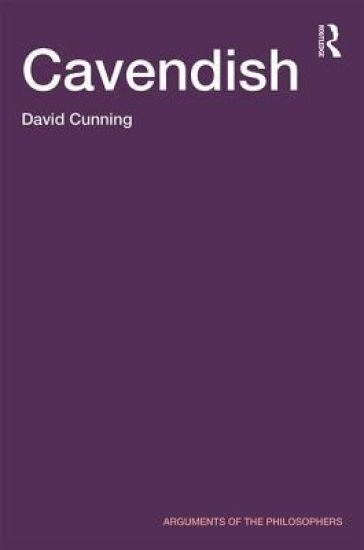
Cavendish

Cavendish

David Cunning

Routledge
2019
nidottu
Margaret Cavendish (1623 - 1673) was a philosopher, poet, scientist, novelist, and playwright of the seventeenth century. Her work is important for a number of reasons. It presents an early and compelling version of the naturalism that is found in current-day philosophy; it offers important insights that bear on recent discussions of the nature and characteristics of intelligence and the question of whether or not the bodies that surround us are intelligent or have an intelligent cause; it anticipates some of the central views and arguments that are more commonly associated with figures like Thomas Hobbes and David Hume.This is the first full account of Cavendish’s philosophy and covers the whole span of her work. David Cunning begins with an overview of Cavendish’s life and work before assessing her contribution to a wide range of philosophical subjects, including her arguments concerning materialism, experimentation, the existence of God, social and political philosophy and free will and compatibilism.Setting Cavendish in both historical and philosophical context, he argues that like Spinoza she builds on central tenets of Descartes’ philosophy and develops them in a direction that Descartes himself would avoid. She defends a plenum metaphysics according to which all individuals are causally interdependent, and according to which the physical universe is a larger individual that constitutes all of reality.Cavendish is essential reading for students of seventeenth-century philosophy, early modern philosophy and seventeenth-century literature.
Descartes

Descartes

David Cunning

TAYLOR FRANCIS LTD
2023
sidottu
René Descartes (1596–1650) is well-known for his introspective turn away from sensible bodies and toward non-sensory ideas of mind, body, and God. Such a turn is appropriate, Descartes supposes, but only once in the course of life, and only to arrive at a more accurate picture of reality that we then incorporate in everyday embodied life. In this clear and engaging book David Cunning introduces and examines the full range of Descartes’ philosophy. A central focus of the book is Descartes’ view that embodied human beings become more perfect to the degree that they move in the direction of finite approximations of independence, activity, immutability, and increased knowledge. Beginning with an introduction and a chapter on Descartes’ life and works, Cunning also addresses the following key topics: Descartes on the wonders of the material universeskepticism as epistemic garbage, and the easy dissolution of hyperbolic doubtDescartes’ three arguments for the existence of Godthe ontology of possibility and necessityfreedom and embodimentarguments for the immateriality of mindsensible bodies and the pragmatic certainty by which to navigate themDescartes’ stoic view on how best to live.Descartes is an outstanding introduction to one of the greatest of Western philosophers. Including a chronology, suggestions for further reading, and a glossary of key terms, it is essential reading for anyone studying Descartes and the history of modern philosophy.
Descartes

Descartes

David Cunning

Routledge
2023
nidottu
René Descartes (1596–1650) is well-known for his introspective turn away from sensible bodies and toward non-sensory ideas of mind, body, and God. Such a turn is appropriate, Descartes supposes, but only once in the course of life, and only to arrive at a more accurate picture of reality that we then incorporate in everyday embodied life. In this clear and engaging book David Cunning introduces and examines the full range of Descartes’ philosophy. A central focus of the book is Descartes’ view that embodied human beings become more perfect to the degree that they move in the direction of finite approximations of independence, activity, immutability, and increased knowledge. Beginning with an introduction and a chapter on Descartes’ life and works, Cunning also addresses the following key topics: Descartes on the wonders of the material universeskepticism as epistemic garbage, and the easy dissolution of hyperbolic doubtDescartes’ three arguments for the existence of Godthe ontology of possibility and necessityfreedom and embodimentarguments for the immateriality of mindsensible bodies and the pragmatic certainty by which to navigate themDescartes’ stoic view on how best to live.Descartes is an outstanding introduction to one of the greatest of Western philosophers. Including a chronology, suggestions for further reading, and a glossary of key terms, it is essential reading for anyone studying Descartes and the history of modern philosophy.
Cavendish

Cavendish

David Cunning

Routledge
2016
sidottu
Margaret Cavendish (1623 - 1673) was a philosopher, poet, scientist, novelist, and playwright of the seventeenth century. Her work is important for a number of reasons. It presents an early and compelling version of the naturalism that is found in current-day philosophy; it offers important insights that bear on recent discussions of the nature and characteristics of intelligence and the question of whether or not the bodies that surround us are intelligent or have an intelligent cause; it anticipates some of the central views and arguments that are more commonly associated with figures like Thomas Hobbes and David Hume.This is the first full account of Cavendish’s philosophy and covers the whole span of her work. David Cunning begins with an overview of Cavendish’s life and work before assessing her contribution to a wide range of philosophical subjects, including her arguments concerning materialism, experimentation, the existence of God, social and political philosophy and free will and compatibilism.Setting Cavendish in both historical and philosophical context, he argues that like Spinoza she builds on central tenets of Descartes’ philosophy and develops them in a direction that Descartes himself would avoid. She defends a plenum metaphysics according to which all individuals are causally interdependent, and according to which the physical universe is a larger individual that constitutes all of reality.Cavendish is essential reading for students of seventeenth-century philosophy, early modern philosophy and seventeenth-century literature.
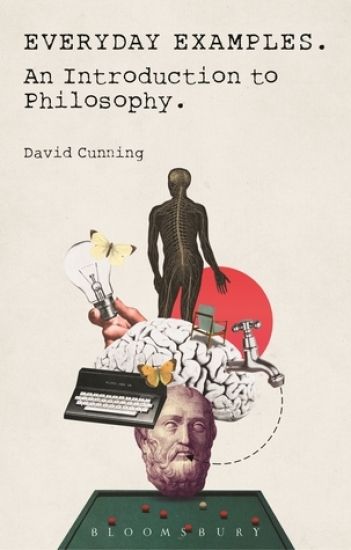
Everyday Examples

Everyday Examples

David Cunning

Bloomsbury Academic
2015
nidottu
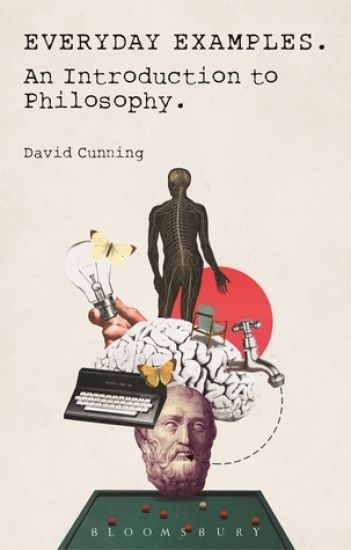
"Free will: mental energy that poofs into existence from scratch?"In pairing key ideas from the history of philosophy with examples from everyday life and culture, David Cunning produces a clear, incisive and engaging introduction to philosophy. Everyday Examples explores historical philosophy and the contemporary theory scene and includes ideas from both the analytic and continental traditions. This broad sweep of topics provides a synoptic overview of philosophy as a discipline and philosophizing as an activity.With examples drawn from everything from The Matrix and Sesame Street to sleepwalking, driving, dancing, playing a sport and observing animals, students are pointed to ways in which they can be a philosopher outside the classroom in the everyday world.As well as providing entertaining and relatable examples from everyday life, this book will be especially useful in the classroom, it is accessible and discussion-oriented, so that students can get first-hand practice at actually 'doing' philosophy. This accessibility does not come at the expense of rigour but, rather, provides a 'way in' to thinking about the major issues, figures and moments in the history of philosophy. The chapters are divided into brief sustainable nuggets so that students can get a definite handle on each issue and also be the expert for the day on a given section.There are suggested study questions at the end of each chapter that bring out the force of each side of the many different issues.An indispensable tool for those approaching philosophy for the first time.
Everyday Examples

Everyday Examples

David Cunning

Bloomsbury Academic
2015
sidottu
"Free will: mental energy that poofs into existence from scratch?"In pairing key ideas from the history of philosophy with examples from everyday life and culture, David Cunning produces a clear, incisive and engaging introduction to philosophy. Everyday Examples explores historical philosophy and the contemporary theory scene and includes ideas from both the analytic and continental traditions. This broad sweep of topics provides a synoptic overview of philosophy as a discipline and philosophizing as an activity.With examples drawn from everything from The Matrix and Sesame Street to sleepwalking, driving, dancing, playing a sport and observing animals, students are pointed to ways in which they can be a philosopher outside the classroom in the everyday world.As well as providing entertaining and relatable examples from everyday life, this book will be especially useful in the classroom, it is accessible and discussion-oriented, so that students can get first-hand practice at actually 'doing' philosophy. This accessibility does not come at the expense of rigour but, rather, provides a 'way in' to thinking about the major issues, figures and moments in the history of philosophy. The chapters are divided into brief sustainable nuggets so that students can get a definite handle on each issue and also be the expert for the day on a given section.There are suggested study questions at the end of each chapter that bring out the force of each side of the many different issues.An indispensable tool for those approaching philosophy for the first time.